Kansas City’s farm-to-table scene is not just a trend — it’s a movement deeply rooted in the city’s commitment to building community and promoting sustainability.
From urban farms to award-winning kitchens, talented and passionate people are looking to transform the way Kansas Citians experience food, and their work is paying off. These key players are making this vibrant culinary landscape fresher, more authentic and undeniably delicious.
No profile of Kansas City’s food scene would be complete without mentioning the backbone of the farm-to-table movement: local growers and farmers. There’s perhaps no better example of sustainable urban agriculture than Young Family Farm.
The Young family has called East Kansas City’s Ivanhoe neighborhood home since 1986, gardening in the vacant lots they’ve slowly acquired as “an extension for our love for gardening and a recognition of the need for healthy food,” according to matriarch Yolanda.
“The love of getting my hands in the dirt is different than starting a business,” she shares. “We’re constantly looking for other creative ways of filling the need for fresh produce and getting the food to people.”
Together with her husband Alan, her brother Stacy and her children Alana, Alex and “AY,” the Youngs grow every vegetable imaginable on their neighborhood farm, selling the harvest at their Saturday produce stand and directly to local restaurants.
While the farm-to-table movement is often associated with high-end dining, at its roots, it’s an opportunity to significantly impact community health. Organizations like Kanbe’s Markets are putting Kansas City on the map as a national leader in showcasing how local food can be a force for good.
“It’s estimated that more than one-third of all the food we grow in the U.S. goes to waste,” Kanbe’s Founder and CEO Max Kaniger shares. “Meanwhile, one in eight Americans don’t know where their next meal is coming from. The root cause of that is clearly a distribution problem, but it’s fixable.”
Kanbe’s aim is to make Kansas City the first metro area in the country to fully eradicate food deserts. Since 2016, the nonprofit Whas provided fresh, affordable produce to neighborhoods that lack access to grocery stores. By sourcing from local farms and wholesale retailers, the organization works with small business owners to install self-service “Healthy Corner Stores” in gas stations and convenience stores throughout the region. Much of Kanbe’s fundraising and community-building work is done in partnership with local restaurants, helping to build a healthier, more equitable city.
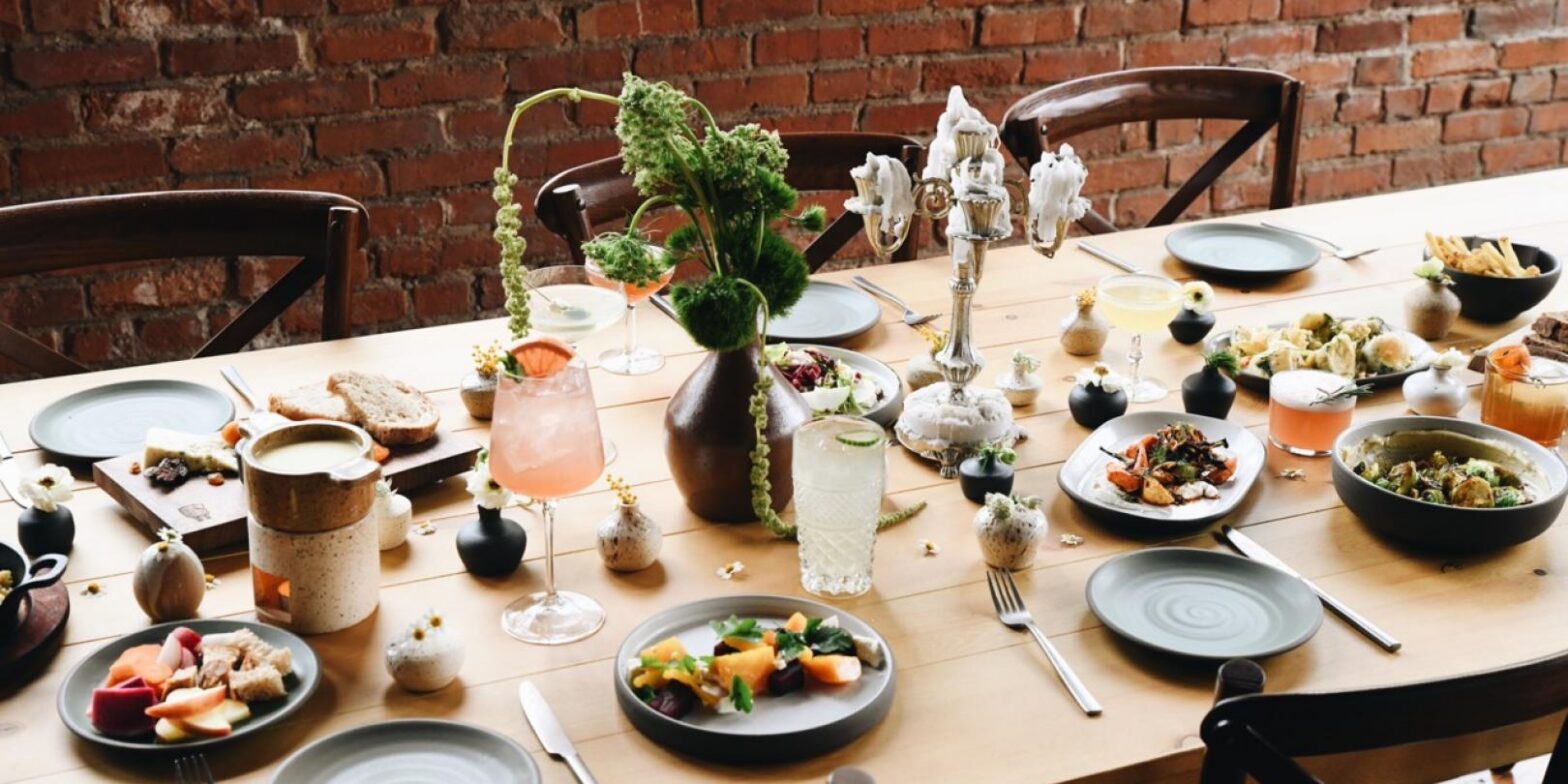
Of course, the term “farm-to-table” was popularized by chefs and restaurateurs looking to return to their roots by offering the freshest, most flavorful dishes possible. There is perhaps no one in Kansas City who has done more for this movement than Chef Ted Habiger, a three-time James Beard Foundation Outstanding Chef Award nominee.
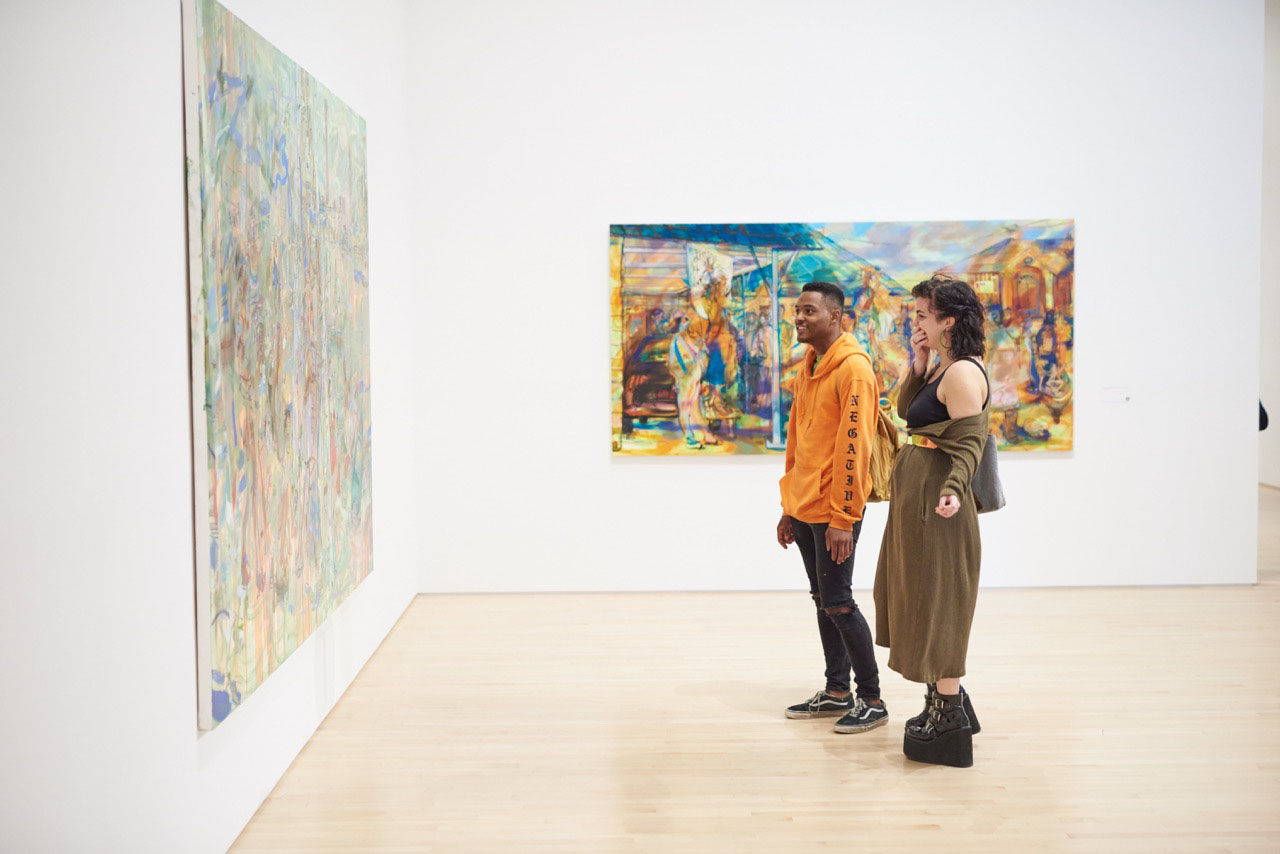
Ted’s restaurant, Room 39, as well as his recent work to overhaul the dining program at the Kemper Museum of Contemporary Art, are both centered on local farmers and sustainable agriculture. He has garnered a loyal following for his straightforward food philosophy: let the ingredients speak for themselves.
“I run ingredients-based restaurants,” Ted says. “Our food is only as good as the farms that we buy from.” The menus at Room 39 are printed daily to reflect what’s in season, highlighting the best of what’s available from local farms.
Whether it’s a summer salad featuring Crum’s Heirloom tomatoes or a winter dish of Campo Lindo chicken and Thane Palmberg Farms’ roasted root vegetables, every dish Ted serves is a celebration of the region’s agricultural prowess.
“I’ve been working with some of the same farmers since 1995. I’ve watched their kids grow up, so there’s a real sense of family. We’re part of their ecosystem, just as they’re part of ours.”
In some cases, farms themselves are getting in on the action. For more than 20 years, Green Dirt Farm, an award-winning sheep’s milk cheese maker nestled in the hills of Weston, Missouri, has proudly produced small-batch, artisan products that highlight the rich, earthy flavors of the region. Their latest venture, Green Dirt on Oak, is a testament to their commitment to sustainability.
“People today are eating as much with their minds and ethics as they are with their palates,” says Executive Chef Oskar Arévalo. “The further apart we grow from the tangible world of agriculture, the greater our yearning to understand and appreciate where our food comes from.”
Green Dirt on Oak’s menu celebrates the farm’s cheeses alongside locally sourced meats and produce. The restaurant’s bucolic feel, amidst the steel and glass of Downtown Kansas City, makes it the perfect spot for a relaxed yet refined dining experience that stays true to the farm’s — and the region’s — unique flavors.
“The entire farm-to-table movement is an expression of our desire to stay connected to the earth under our feet and the people at our table,” Oskar argues. “It’s a privilege to work with animals and products that reflect Kansas City’s story.”
At some restaurants, the intentional use of produce extends from the kitchen into the bar. In the Stockyards District, The Campground leans into a nostalgic, campy vibe, offering a menu that draws heavily on local ingredients. Since its conception, owners Chris Ciesiel and Cristin Llewellyn have seen local food and drink as an imperative.
“We’re privileged to work with some amazing farmers and producers from both sides of the state line,” Chris says. “Our team loves the challenge of working with what’s available on any given week and finding a way to repurpose waste or excess we might have from the kitchen.”
The Campground’s cocktail menu incorporates local, farm-fresh ingredients as well as regional spirits, making it a true reflection of Kansas City’s food scene. Nothing goes to waste — if they receive a batch of local peaches, even the leaves will be used, transformed into a tea-like syrup.
Whether you’re savoring a handcrafted cheese, enjoying a show-stopping meal or picking up locally grown produce at one of the city’s many farmers markets, Kansas Citians are all too eager to participate in a culinary tradition that values sustainability, quality and community. This vibrant scene is a testament to the power of local food — a community-driven movement bringing together the best of what Kansas City has to offer on every plate.
Kansas City has long been called the “Paris of the Plains” thanks to its multitude of fountains and picturesque boulevards. I like to think, however, that our dynamic date-night scene has a little something to do with the connection to such a romantic city.
By day, I am the Food and Drink Editor for a local arts and culture magazine, The Pitch. By night, I explore the best — and most interesting — of Kansas City’s activity and restaurant scene for social media. This leads to a myriad of date nights with my husband, but I’ve narrowed down a few top ideas to give you and your better half a uniquely KC experience.
Get to Know KC
Here is a day-long date that will have you exploring KC nearly top to bottom! Start with wine slushies or a tasting flight among the vines at KC Wine Co in Olathe. The peaceful oasis is just a few miles off I-35.
Next, make your way to downtown KC to the truly iconic WWI Memorial and enjoy the best views of the skyline. After climbing those stairs, you’ll be ready to refuel. Head to any location of Gates BBQ, which has been a quintessential KC spot since 1947. Next, satisfy your sweet tooth with your sweetie at Betty Rae’s Ice Cream.
To take it to the next level, head north to The Elms Hotel & Spa for a romantic night to cap off your big day.
Spark Some Creativity
When dinner and a movie won’t cut it, there are plenty of fun ways to spend quality time together. My top pick is to spend an hour or two at AdhDiy Craft Cafe in the West Bottoms. Go for the full experience by ordering a snack and mocktail alongside your project of choice — such as weaving, painting or even creating a terrarium.
For a more casual outing, grab a coffee at Café Equinox inside the lush greenhouse at Family Tree Nursery in Shawnee. Maybe you’ll come home with a new baby — plant baby, that is.
If you are a foodie couple, sign up for a hands-on cooking class at Hemma Hemma or Billie’s Grocery. Last but not least, an exploratory and progressive dinner at one of KC’s many food halls, such as Strang Chef Collective or Lenexa Public Market, ensures that you both leave happy.
First Dates & Meeting People
Several places come to mind for a first date, group dates or even meeting new people. For a low stakes, free activity, try the Kemper Museum of Contemporary Art — just off the Country Club Plaza, it always features a fresh exhibit or two to keep the conversation flowing.
And, no list would be complete without mentioning KC sports! Chiefs and Royals games are a blast, and KC Current and Sporting KC games may have you feeling even closer to the action and your community.
Speaking of community, people of all types enjoy gathering in the Crossroads Arts District on the first Friday of each month from April through October. First Fridays make for a fabulous date night — be sure to stop for a drink or dessert along the way as you peruse the local art scene.
There’s always something fun going on in KC, so get out there and explore!
And That’s Not All
That’s just a small snapshot of all KC offers for couples. Follow Sarah Sipple for even more date night ideas.
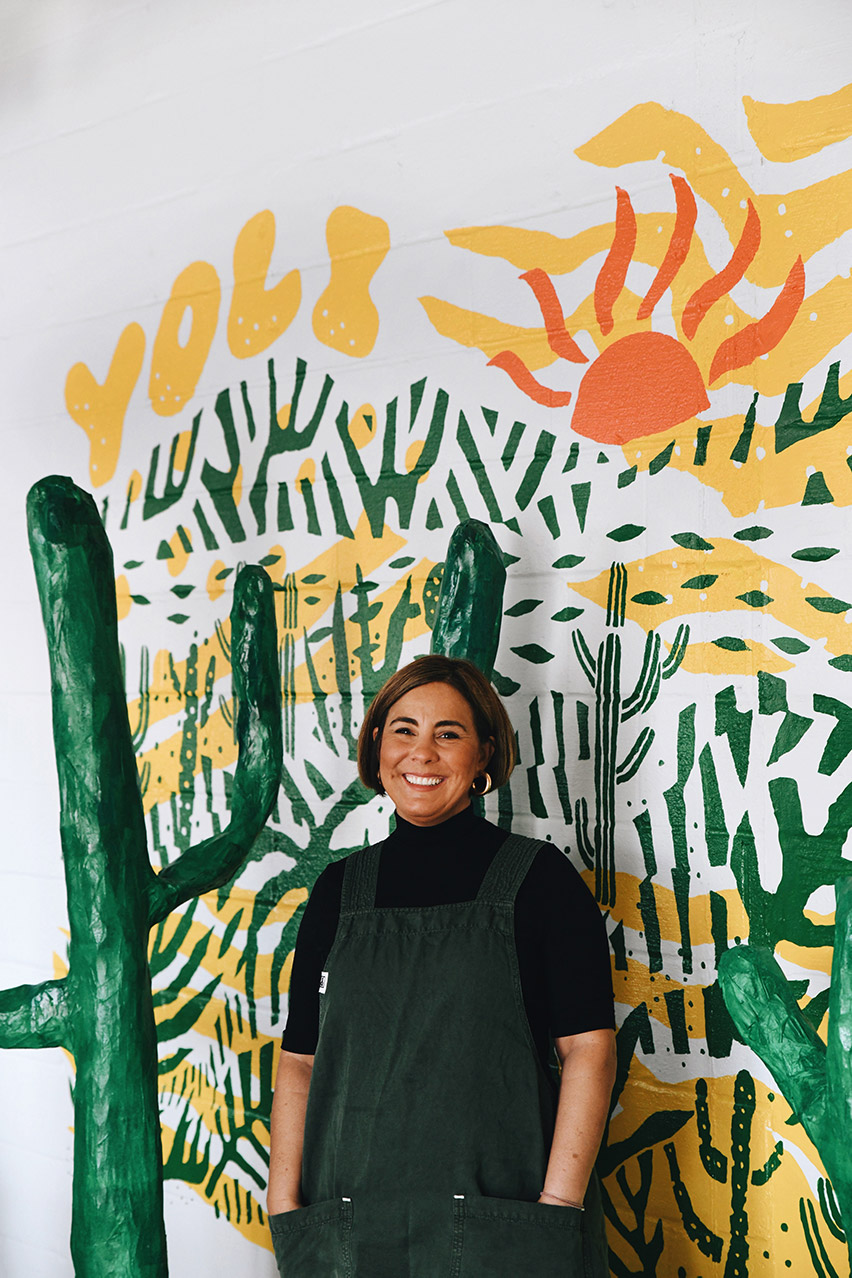
How a lifetime of cultural influence propelled Marissa Gencarelli and Yoli Tortilleria onto the world’s biggest stage.
By Weston Owen | Photos by Paul Andrews
As the lights dimmed and the nominees for Outstanding Bakery reverberated throughout the Lyric Opera of Chicago, Marissa Gencarelli turned to her husband Mark and both exchanged soft smiles. They understood how difficult it was to win a James Beard Award and it was an honor to have even made it this far.
By that point in the ceremony, Marissa had already loosened the straps on her high heels. After all, she probably wouldn’t be making the long walk to accept the prestigious award. There was just no way the winners would be seated that far back in the auditorium, she thought. But it was fine. Alongside so many great nominees — some of the best bakeries in the nation — being mentioned in the same breath was enough for her. The crowd cheered as the anticipation grew. Then silence, deafening.
“And the winner is… Yoli Tortilleria!”
Disbelief and excitement overcame. Heel straps were tightened hastily as Marissa stood and began that long, unexpected walk to the stage. In many ways, it was representative of the long, unconventional journey she’d made to arrive on that spring afternoon in Chicago.
Born in Sonora, Mexico to a local lawyer and a teacher from California, Marissa’s upbringing was woven with multi-cultural experiences. From a young age, and as far back as she can remember, her parents instilled the importance of her heritage and the celebration of her culture in all that she did. Every summer, her family would load up their car and travel across Mexico, making frequent stops along the way to experience the rich history and beauty of Mexican culture — including its local flavors and cuisine.
“Some of my earliest and fondest memories completely transformed how I perceived Mexican culture and food,” Marissa smiled. “For a young girl, those long trips on unpaved roads could be exhausting, but seeing the countryside and experiencing the culture has had the biggest influence on my life.”
Looking back, those road trips meant the world to Marissa, not only because they offered an authentic, invaluable glimpse into a country she cherished but because they were spent alongside the family she loved. So, once she began a family of her own, it was of the utmost importance to preserve that tradition.
After meeting Mark abroad in Italy, they had their first child, Santiago, and moved to Mark’s hometown of Kansas City. They began traveling to Mexico to help pass that cultural love and understanding along to their son. But something interesting happened during those frequent trips. That adoration turned into a desire to bring authentic Mexican cuisine back home.
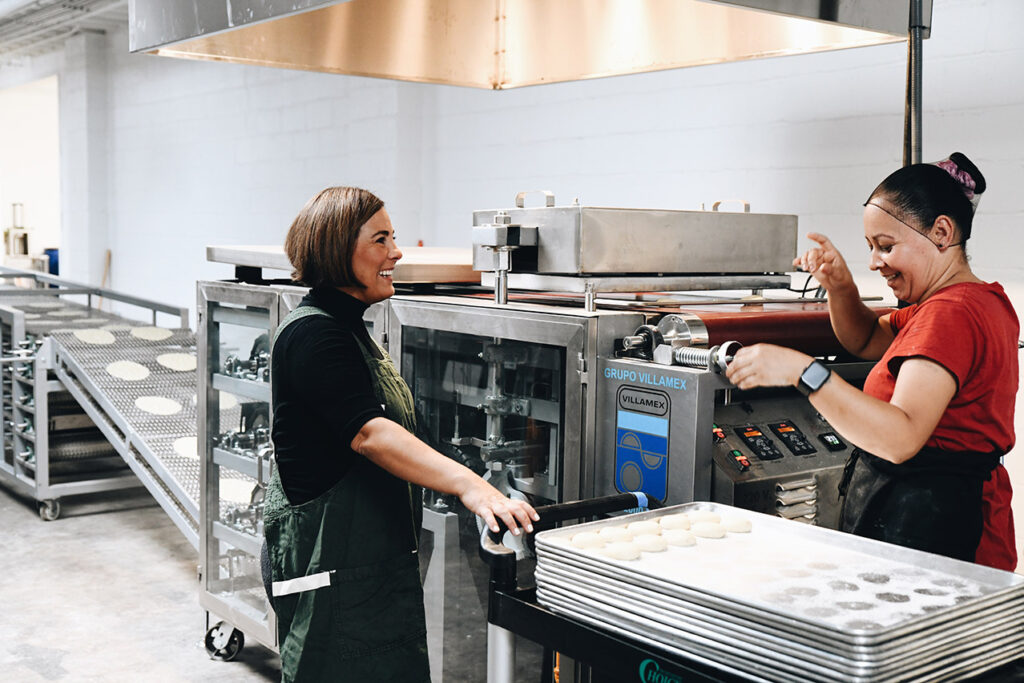
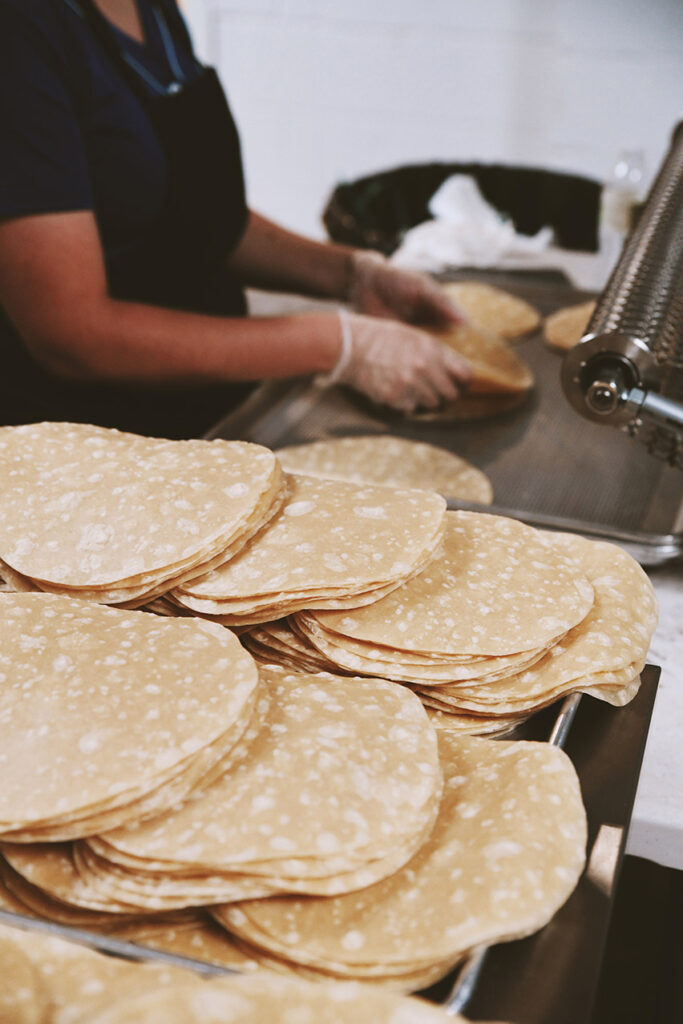
“Whenever we’d travel, we always brought high-quality tortillas back so we could enjoy authentic meals throughout the year. But when we ran out, there were never good local alternatives,” said Marissa. “So, nearly a decade ago, I began cooking tortillas myself. Mark and I would improvise, trying recipes that would introduce different flavors and ingredients to our family. We’d cook two to three times every week, which allowed me to put my heart and soul into the food we prepared.”
Her focus and dedication to create something authentic served as Marissa’s guiding light and thus, the idea of owning their own tortilleria was born. She and Mark continued prepping and honing their craft, all while holding down full-time corporate jobs and welcoming their second child, Siena, to the world.
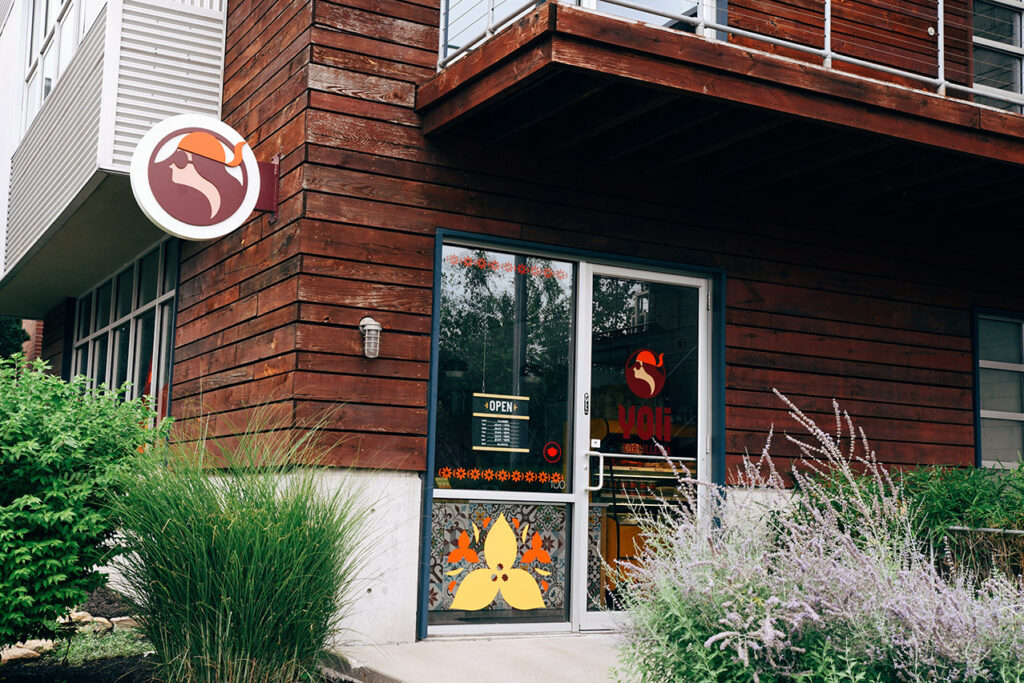
And then there was the brand’s name. It had to pay homage to Marissa’s history while honoring those experiences that had influenced her path. And that’s how Yoli Tortilleria came to be. Yoli, meaning “to live,” embodies an adventurous lifestyle, travel and memories — fully embracing those bumpy rides and cultural encounters. And the emblem, prominently displayed on every product that Yoli creates, is a representation of Marissa’s mother, who was her biggest inspiration and advocate.
Yoli now had an identity and that’s when the magic grew. Local restaurants began carrying Yoli products, exposing the community to incredible Mexican cuisine. Pop-ups showcased the brand, relationships were developed and word spread about this new, up-and-coming tortilleria in Kansas City. That hype — built upon love, hard work, bravery, exploration and passion — eventually led to the long walk one spring afternoon in Chicago.
As Marissa made her way onto the stage, a medallion with James Beard’s likeness — the first of its kind for exemplary bakeries — waited to take its place around her neck. She fumbled through her purse, looking for the scrap of paper she had scribbled a speech on. The spotlight shone bright. All eyes on her.
“Thank you. I wrote this just in case and I’m glad I did. Yoli was born out of dealing where life had taken us. We were in a very weird space and reaching our forties and, more than twenty years ago, I’d lost both of my parents. I have now lived most of my life without them. Baking became our therapy. A way to connect and honor my ancestors, in the middle of North America. Thank you for the opportunity and for helping us honor the very humble tortilla. Gracias totales to the Beard Foundation, to our friends, family, our children — Santiago y Siena, who put up with us so much and all our crazy schedules. And our city, Kansas City. Without you, we would not be here, so thank you so much. Muchas gracias.”
Long, bumpy road trips paved the way to create the truly remarkable. Genuine desire for others to experience Mexican cuisine created the foundation for Yoli Tortilleria, and the influence and support from Marissa’s family dissolved any doubt from those who discounted her dreams. Now, an excited and invigorated industry is fixated on those humble, award-winning tortillas.
For Noeida Kuhnert, family and community mean the world.
By Ann Clifford | Photos by Paul Andrews
Noeida Kuhnert’s Kansas City story begins in Cuba before she was even born. Her parents and brothers fled the country in the early 1960s with little more than the clothes on their backs. Once in the U.S., the family was “adopted” by the First Southern Baptist Church in Kansas City, Kansas. The warm welcome they received became a family legacy.
“My parents and brothers were greeted at the airport by a crowd of members from the church, the mayor and newspaper reporters,” Noeida says. “Though it was difficult for them to start over, the experience was beautiful. The whole community, churches of different denominations, and businesses came together to help. The sense of support and inclusion is one of the reasons why I chose to stay here, start my career and raise my family.”
Noeida carries the spirit of inclusion and giving back through her work and community engagement. An engineer, she has worked for Hallmark for more than 30 years. As the general manager at the company’s Leavenworth facility, she champions the company’s beliefs and values.
Kansas City’s welcoming nature and inclusivity are at the heart of the region’s strength, according to Noeida. “Born and raised here, it’s exciting to see that Kansas City is booming,” she says. “Just like they did for my family, the people in this community continue to come together to make the city a great place to live, work and make lifelong connections.”
“Hallmarkers work to create a more emotionally connected world and make a genuine difference in every life, every day,” she explains. “I love it because it includes how we engage within our four walls as well as in the community around us. At my plant, we have a Diversity, Inclusion and Acts of Kindness team that focuses on using our differences to work toward a common goal and make a difference in our community.”
One cup at a time, Jackie Nguyen is serving as a beacon for Asian culture.
By Weston Owen | Photos by Paul Andrews
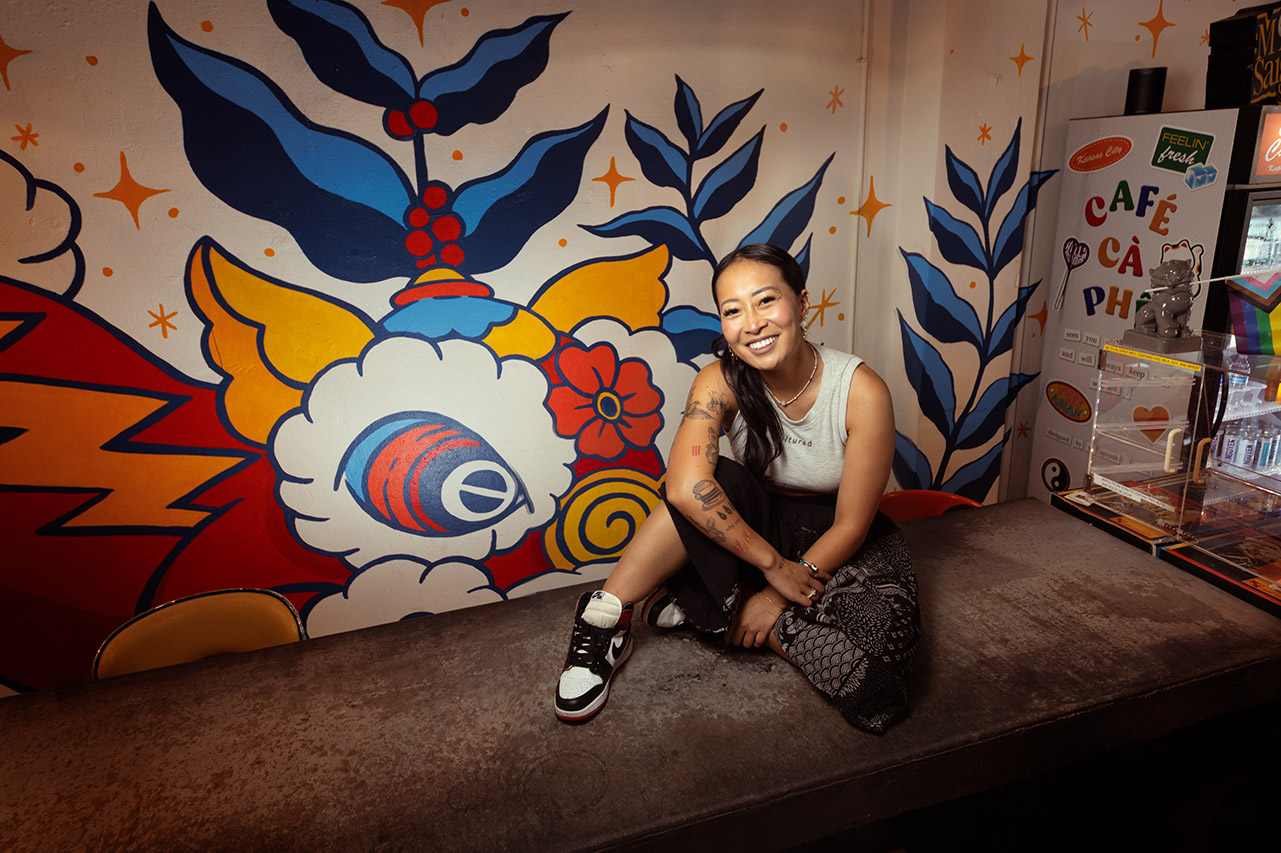
Kansas City is a tapestry of unique stories — individual threads that, when woven together, create a strong and beautiful community. Jackie Nguyen, owner of Kansas City’s first Vietnamese coffee shop, Café Cà Phê, is one of those threads. While her path to our Midwest gem of a city was unexpected and born in a time of uncertainty, her positive impact now radiates, shining a light on Asian culture and marginalized demographics.
In March of 2020, Jackie — who’d been an actor in New York for a decade — was traveling across the United States for her Broadway role in Miss Saigon, a gig she’d worked incredibly hard to land. She received a call that, due to the pandemic, her show was going to be closed indefinitely. Devastating for her and her castmates, she committed to remain resilient and found her way to Kansas City for what she believed would be a temporary stay.
When she arrived, she knew she wanted to carve her niche, yet she found there wasn’t as much Asian diversity or representation as she’d grown up with in San Diego as a first-generation Vietnamese American. That’s when she tapped into a former life — nearly 10 years of being a barista in New York — and started selling Vietnamese coffee in Westport. One cup at a time, word began spreading and Café Cà Phê was born.When she arrived, she knew she wanted to carve her niche, yet she found there wasn’t as much Asian diversity or representation as she’d grown up with in San Diego as a first-generation Vietnamese American. That’s when she tapped into a former life — nearly 10 years of being a barista in New York — and started selling Vietnamese coffee in Westport. One cup at a time, word began spreading and Café Cà Phê was born.
Understanding how much people were enjoying her coffee, which is deeply rooted in Vietnamese flavor profiles, she took the remaining money she had from Miss Saigon and purchased a food truck, which allowed her to travel throughout the Kansas City metro, expanding her visibility and building the brand’s culture. Her product’s popularity continued to grow at breakneck speed, eventually affording her the opportunity to open her own brick-and-mortar storefront in Columbus Park.
And Jackie’s commitment to KC is even bigger than coffee. Recognizing a need, in 2022 she also founded the AANHPI (Asian American, Native Hawaiian and Pacific Islander) Identity Festival, which has grown exponentially each year since its inception. In 2024, the groundbreaking festival celebrated its first year in another trailblazing venue — CPKC Stadium, home of the KC Current and the first stadium purpose-built for a women’s sports team.
While Café Cà Phê has become a local favorite by many in Kansas City, it’s the exposure and acceptance that Jackie found — and created — in KC that has made all the difference. “It’s incredibly moving and inspiring being somewhere that building a community around culture and inclusivity can be reality.”
Jackie’s path to the Midwest may have been unscripted, but her legacy is now woven into the Kansas City story — strengthening this region as a place of belonging and where together, everyone can find their voice.
How KC native, Lisa Peña, is uncovering local history.
By Laken Horton
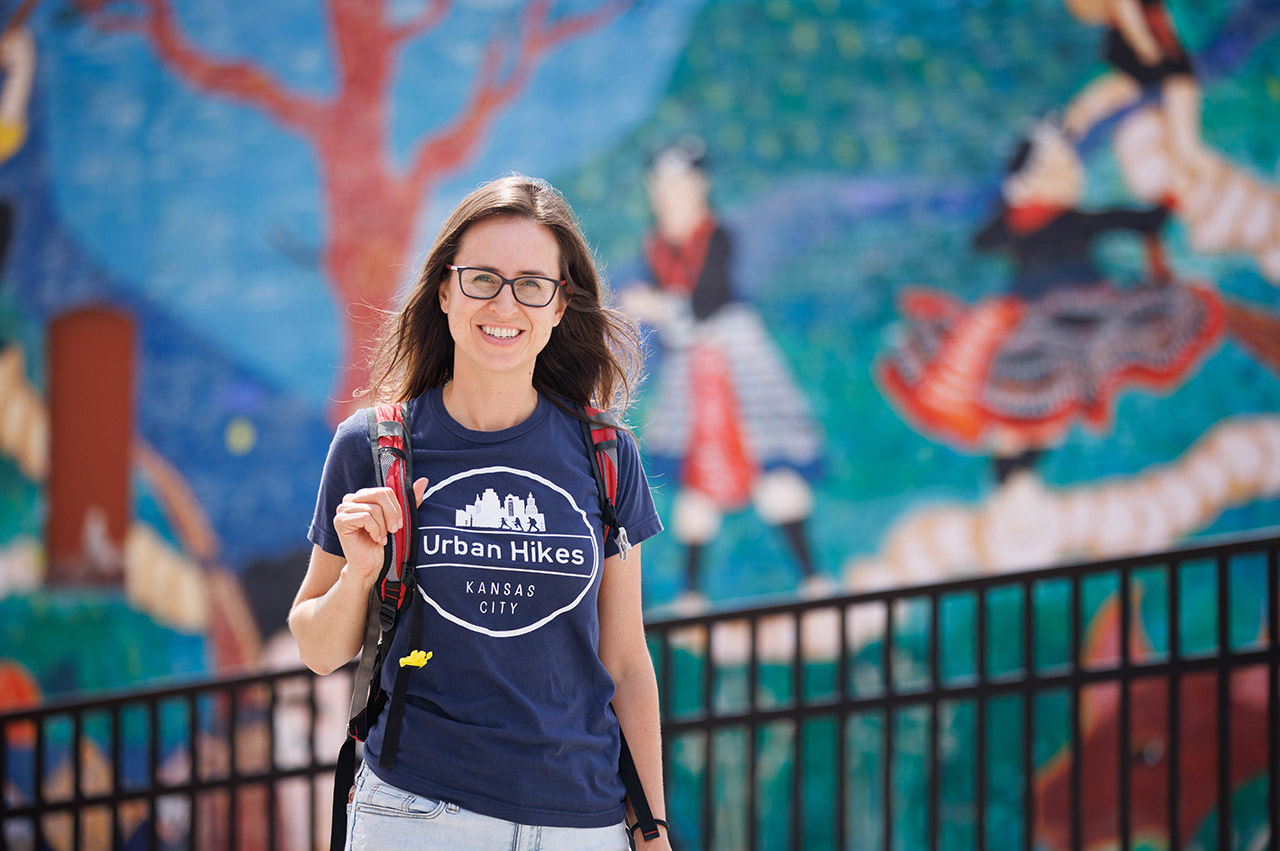
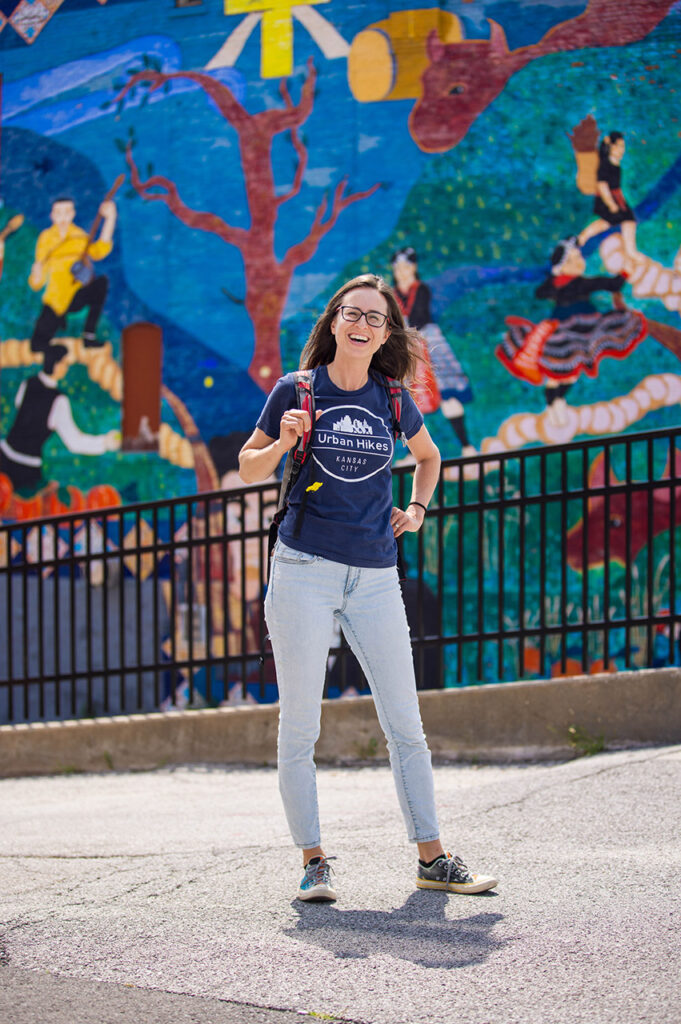
In the heart of Kansas City is an experience that spotlights hidden treasures of the urban landscape. Lisa Peña, the mind behind Urban Hikes KC, has a passion for sharing the narratives, history and vibrant culture that often go unnoticed by visitors and even the most dedicated Kansas Citians.
Having always lived in Kansas City, Kansas, Lisa has a deep-rooted connection to her hometown, its history and community. The inspiration for her venture came while listening to a podcast highlighting California’s urban hikes — an experience that involves journeying through a city’s alleys, under bridges and along sidewalks to gain deeper insight into its untold stories. Soon, Lisa began a journey to bring this experience to KC’s urban communities, with a goal to reshape the way people would view and experience the city.
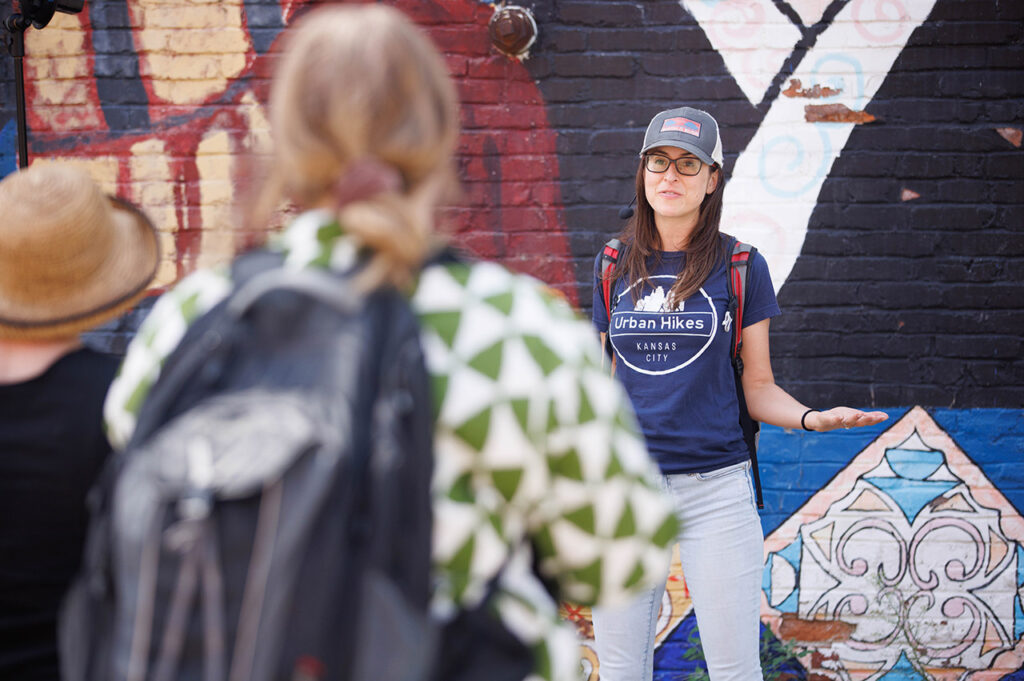
Urban Hikes’ four to five-mile guided tours, led by Lisa and her team members, take hikers or bicyclists through a variety of neighborhood options. Every step becomes an opportunity to chip away at surface knowledge and dive into lesser-known aspects of KC, from the historical architecture and artwork to the stories of perseverance etched into the city streets and walls.
Drawing on her experiences in the Peace Corps in the Dominican Republic, Lisa’s ambition for community connection and empowerment shines through Urban Hikes, as she guides each tour with a goal of unity and shared exploration. Each stop unravels a narrative waiting to be heard — from the vibrant Mexican heritage of the Westside neighborhood to the Quindaro Ruins, a key stop on the Underground Railroad and site of the first school for African Americans west of the Mississippi River.
For history lovers eager to uncover the layers of Kansas City’s past, Urban Hikes offer a new chance to discover a vibrant canvas of diverse stories, demonstrating that the true beauty of a city lies not only in its skyline but in the intricate tales woven into its streets and neighborhoods.
How community and creativity helped propel architectural juggernaut, David Manica.
By Weston Owen | Photos by Paul Andrews
It was in fifth grade when a young David Manica made a profound discovery; the boy who loved sketching houses during Sunday church service learned he could make a living being a professional designer, dreaming those drawings into reality. Little did this ten-year-old know that this realization would lay the foundation on which he’d build his entire life, creating some of the most widely known and recognizable buildings in the world.
From an early age, David — a product of Kansas City — has always loved the sense of community and support from his hometown. And born of that passion was the inspiration to help give back, not only to the familiar faces he’d grown up around but to others all over the globe.
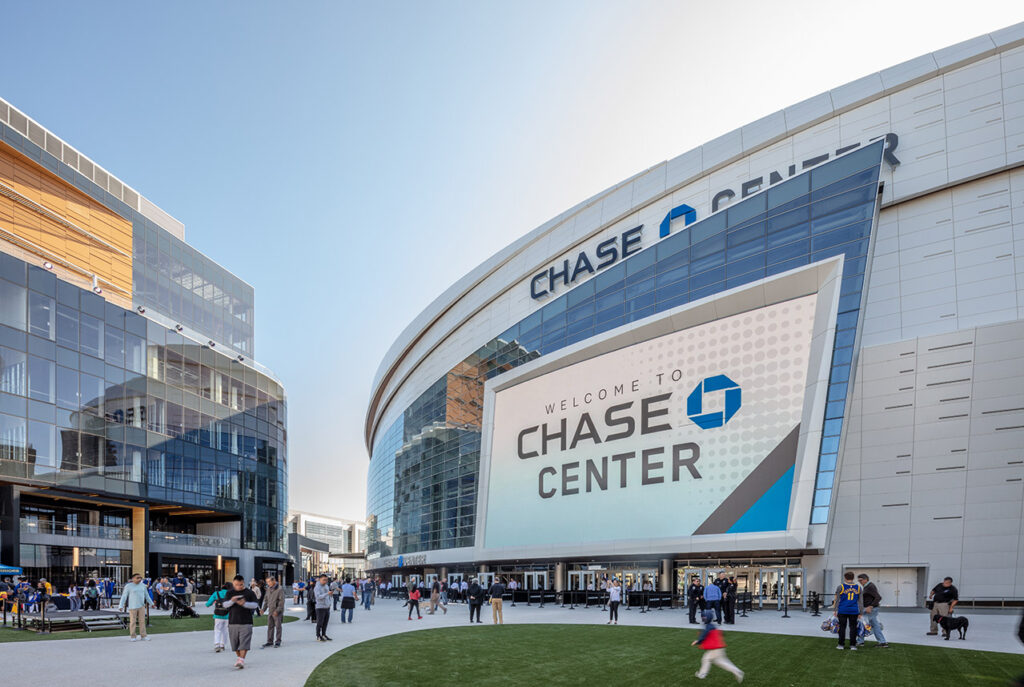
“Early on, I wanted to make a difference,” said David. “I aspired to design structures that conveyed my passion for architecture. One thing I learned very quickly was that if I wanted to work on buildings — specifically arenas, stadiums and entertainment venues where tens of thousands would gather — there was a strong likelihood that my path would keep me rooted right here in Kansas City, the sports architecture capital of the U.S.”
So, fresh out of architecture school at the University of Kansas, David explored local firms to forge his path. That’s when he landed at HOK Sport (now known as Populous). “When I first joined the team, computers were just making their way into the field, so the only computer they had was in the supply closet,” he smiled. “As other architects would come in for their pencils, pens and tracing paper, I was the kid in the closet learning how to design. It was a unique and fortuitous beginning to my career.”
The confines of that closet created something magical. He hit his stride and relentlessly worked his way up within the architecture firm, establishing himself as one of the top sports architects in the United States. Then, in 2007, he decided to venture out and open a business of his own — Manica Architecture.
Launching his own firm was a calculated risk but one he felt confident taking. As projects began coming in — primarily overseas — his international success translated into domestic opportunity, as he expanded his team, business and U.S. footprint and, years later, worked his way into a new industry: Kansas City’s cocktail scene.
“I love to travel and experience different cultures. So when I’m in a new city, I draw inspiration from what its nightlife offers — both from design and unique experience,” he reflected. “I wanted to bring some of that luxury and international flavor back home.”
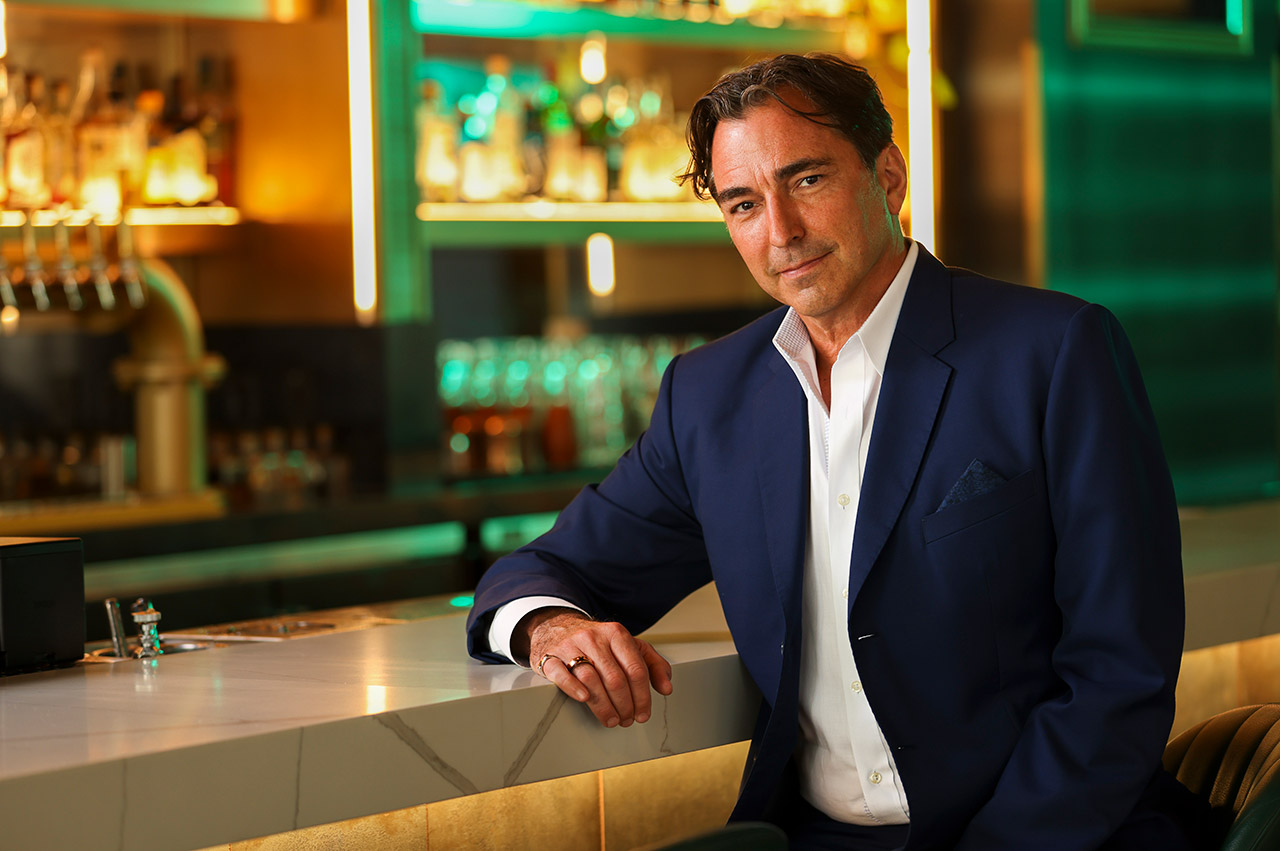
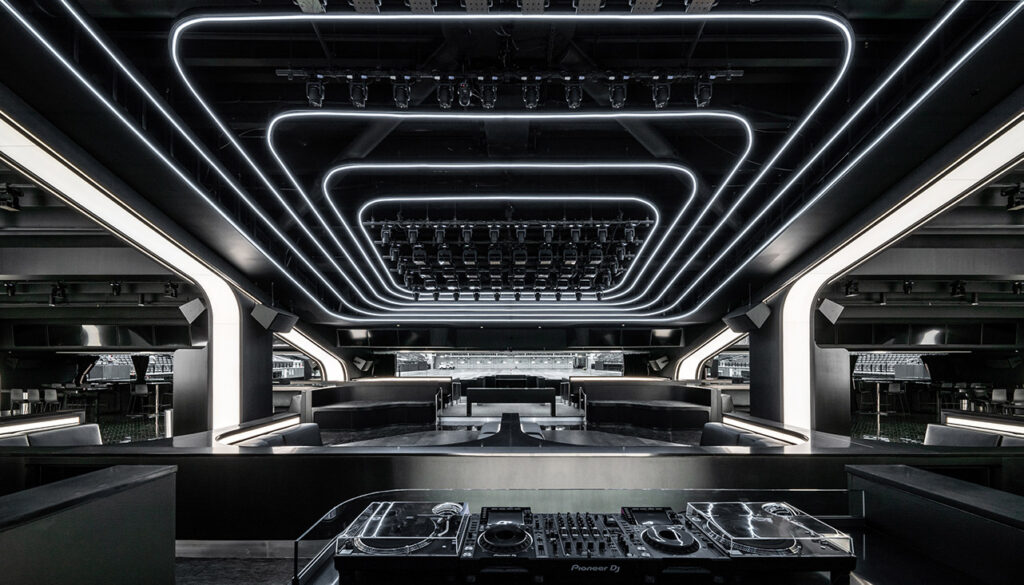
A self-proclaimed “side hustle,” David made his statement in 2017 with The Monarch Bar — a chic, contemporary bar bursting at the seams with style and class. Its immense success paved the way for Verdigris and The Mercury Room — two elevated cocktail experiences where the ambiance is rivaled only by the quality of the drinks served. His newest location, Bar Medici, mirrors the international inspiration that’s continuously served as a blueprint for his ventures.
As David often reflects, “Those who are fortunate enough in their careers, not only get to choose what they do but who they embark on that journey with.” For this Kansas Citian, that journey began sketched on a piece of paper and huddled in a supply closet. Yet, through determination, drive and support from his community, David Manica has forged forward, a foundation paved and defined by design.
This veteran duo is energizing local skate culture.
By Randy Mason | Photos by Paul Andrews
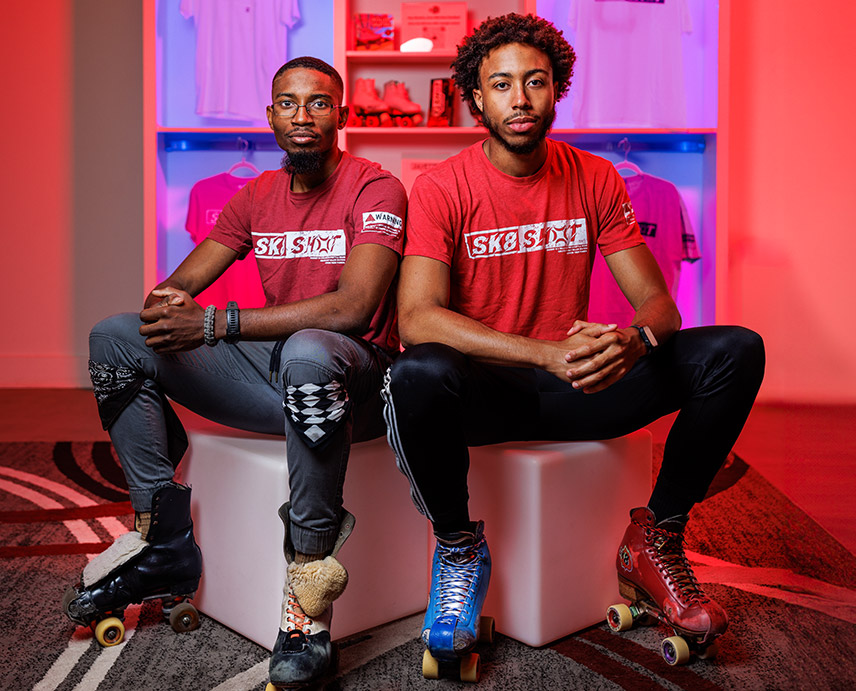
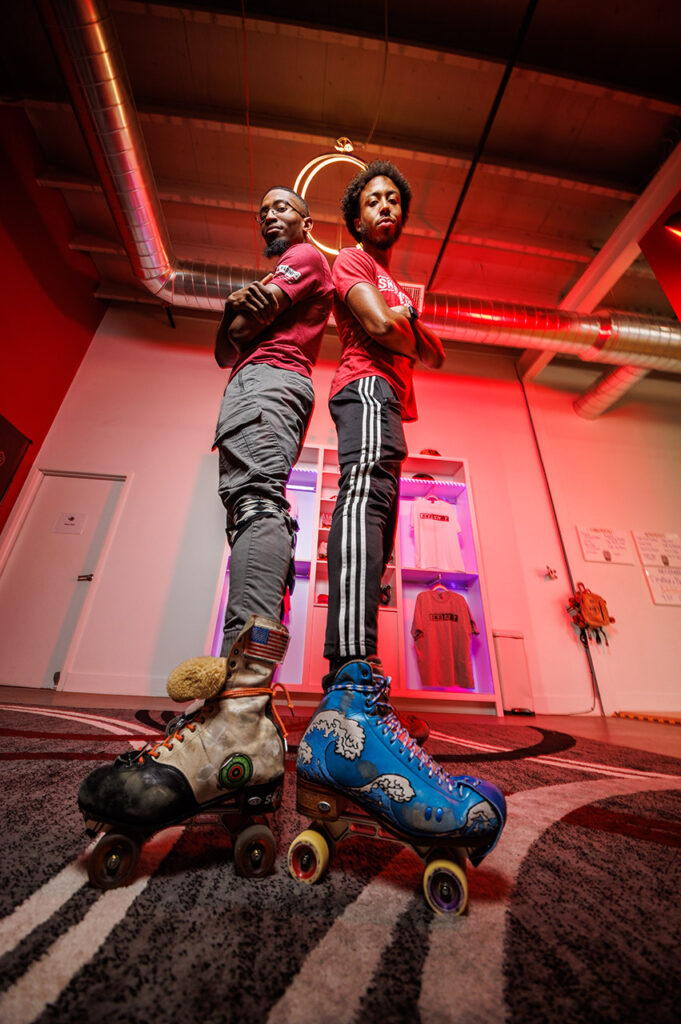
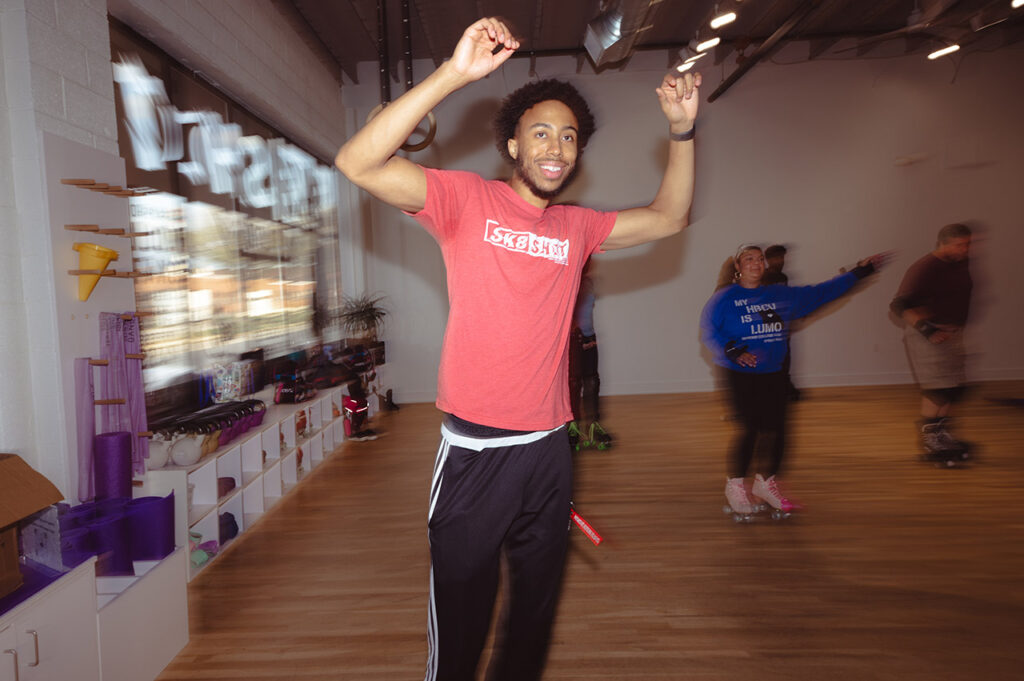
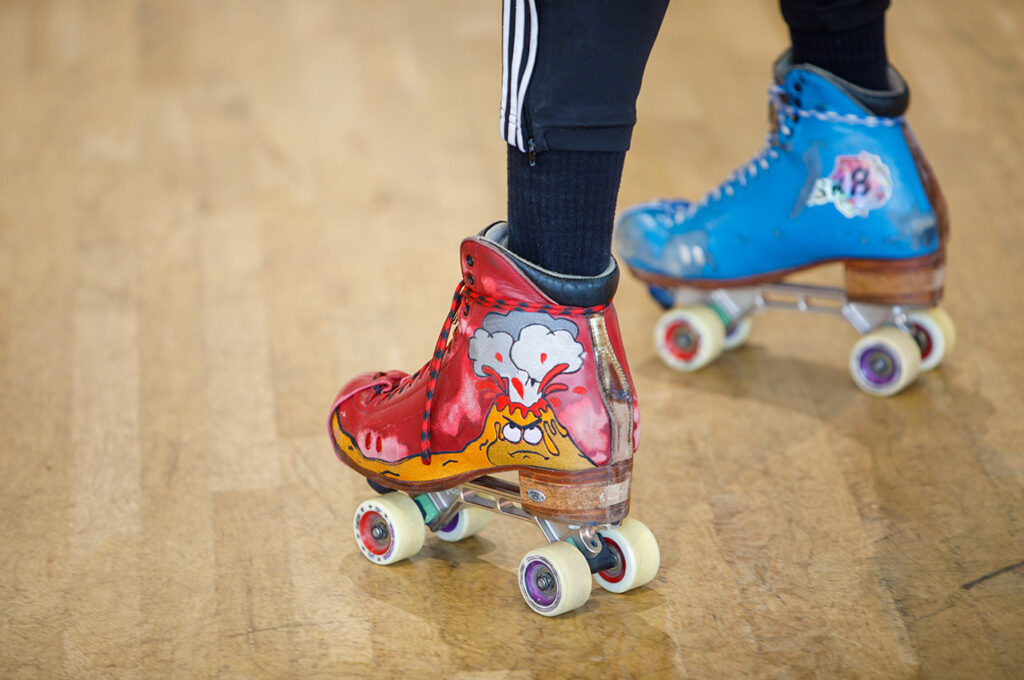
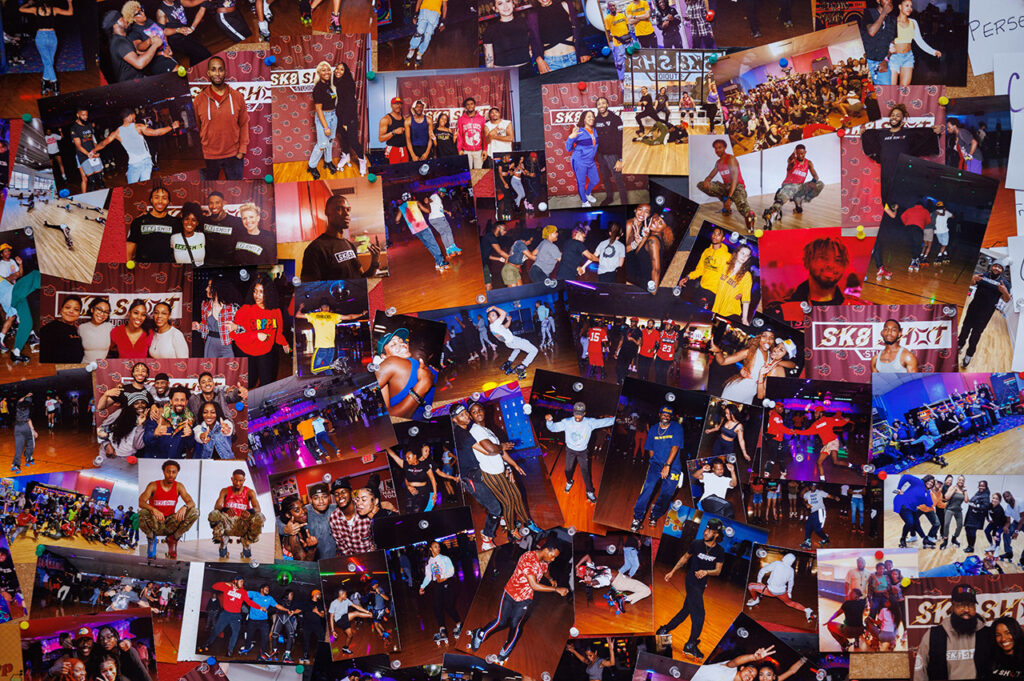
Knejie “KJ” Allen, the co-owner of SK8 SHOT Studios, still recalls the first time he experienced “rhythm and dance” roller skating in his hometown of Houston, Texas.
“I thought, why does everybody not know about this? Everybody needs to do this. Every city should have this,” he says.
KJ’s reaction might sound a little over the top. But not to Adontis Atkins, his SK8 SHOT co-creator. For Adontis, skating resembles the movie “Soul” — where everything surrounding the piano player and his keyboard turns blue and fades away.
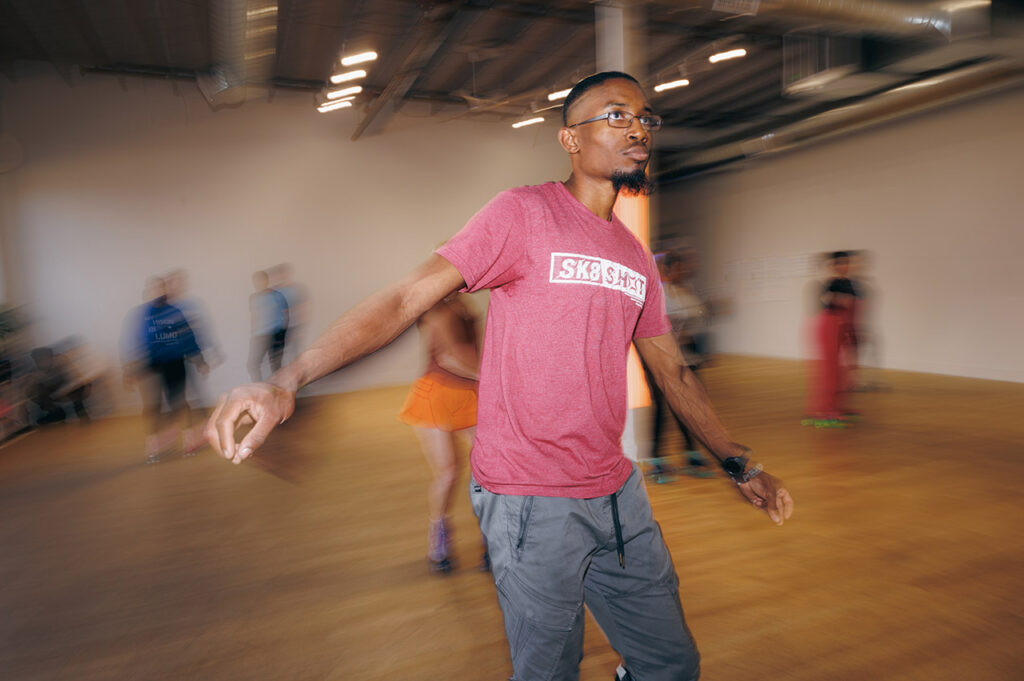
“That’s exactly what it’s like when we’re skating. Especially because we’re totally skating at speed. Things are blurry when you’re not focused on them. You just sink into the music.”
Though both men were stationed at Whiteman Air Force Base near Kansas City, they actually met while attending an Adult Night session at the Winnwood Skate Center.
Adult Nights are where the Black community has historically honed its skating skills, merging dance and sport in one high- energy bundle. It’s a style recently showcased to millions during Usher’s halftime performance at the Super Bowl.
Adontis and KJ also took to the great outdoors, skating together in parks and open spaces armed with Bluetooth speakers and a DIY flair that sparked even more attention.
In late 2023, the duo decided it was time to turn their passion into more than a logo and the line of merchandise they sold at skating rinks and pop-ups.
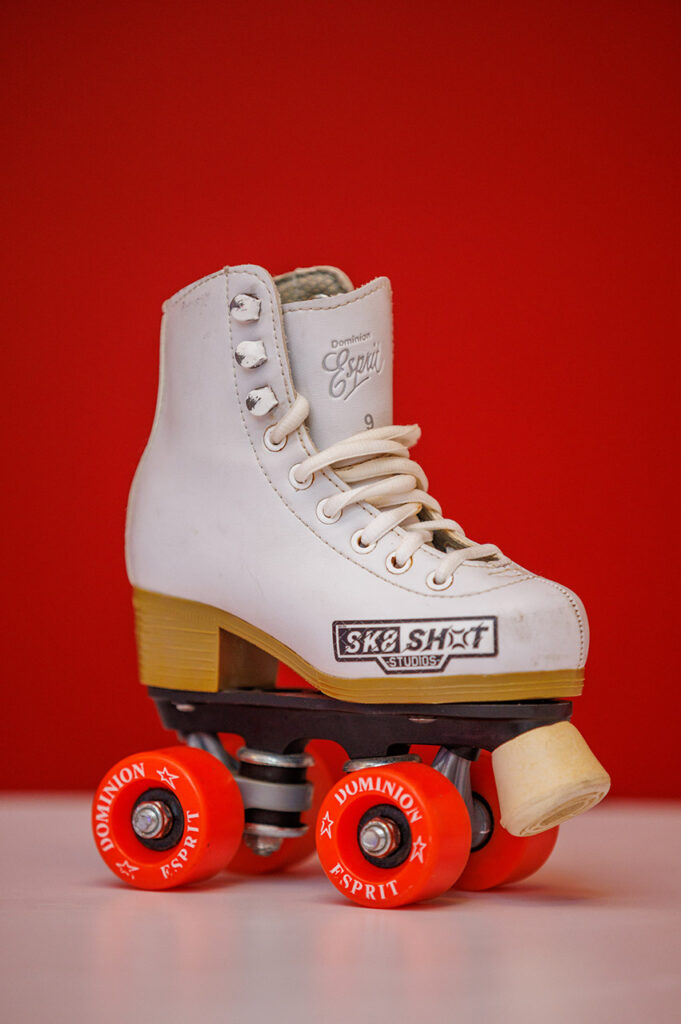
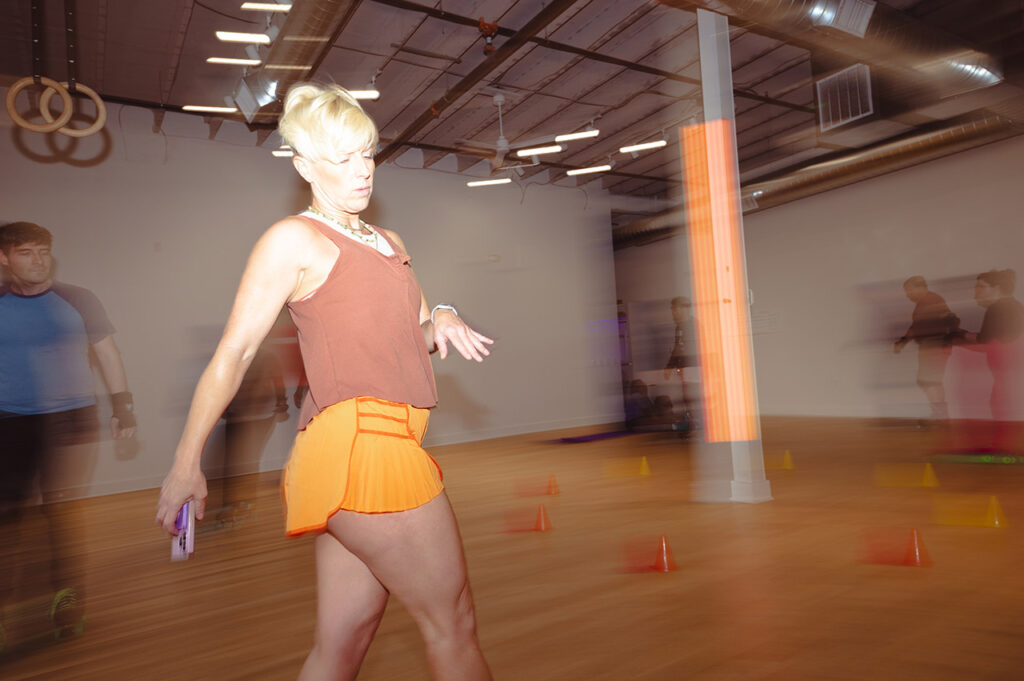
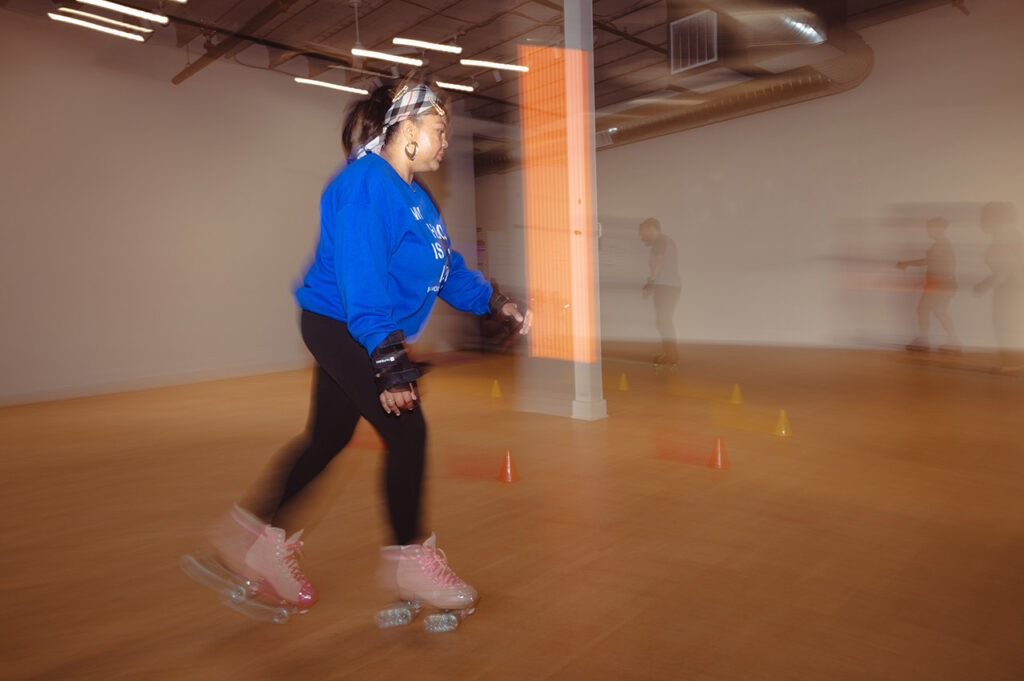
They opened SK8 SHOT Studios in a space on Burlington Avenue in North Kansas City. As KJ points out, it’s not a rink, nor is it strictly a skate shop.
The studio strives to be a “safe, supportive” place to get comfortable with skating basics and potentially master some of the more advanced moves.
“A lot of people are intimidated or embarrassed about their ability or lack of ability at a skating rink,” he says. “There’s a lot of pain involved when it comes to roller skating or trying to learn how to roller skate. And I mean that literally and metaphorically.”
Adontis says that with tools like mats and mirrors, SK8 SHOT’s teachers are able to double down on the kind of details that can’t be learned from a web tutorial. Things like which part of your foot to land on and how to adjust your posture, your neck or the position of your shoulders.
“It’s exciting,” he adds, “when students go from ‘oh, I can’t do this,’ or ‘I’m frustrated about this’ to executing it better than they’d imagined they could.”
Of course, building a lifestyle brand means plenty of lessons for the owners, too.
Their time in the Air Force taught KJ and Adontis many things — from public speaking to how to fix balky electronics. But each day in full brick-and-mortar mode brings new and unexpected challenges.
“There’s hard days,” KJ concedes. “But there’s never days where I’m like, damn, do I still want to do this? At least it’s doing what we love.”
Doing what they love — and doing it with others equally willing to take their skates on the road to “link up across area codes.”
“We want to teach as many people as possible how to skate,” KJ says. “That’s the studio’s mission. We want to build and grow the skate culture in Kansas City and turn it into a place where the rest of the country wants to come here to experience it.”
Catch KJ and Adontis on Max’s hit streaming series, Roller Jam.
How Will Smith is overcoming the unimaginable and inspiring our community.
By Weston Owen | Photos by Paul Andrews
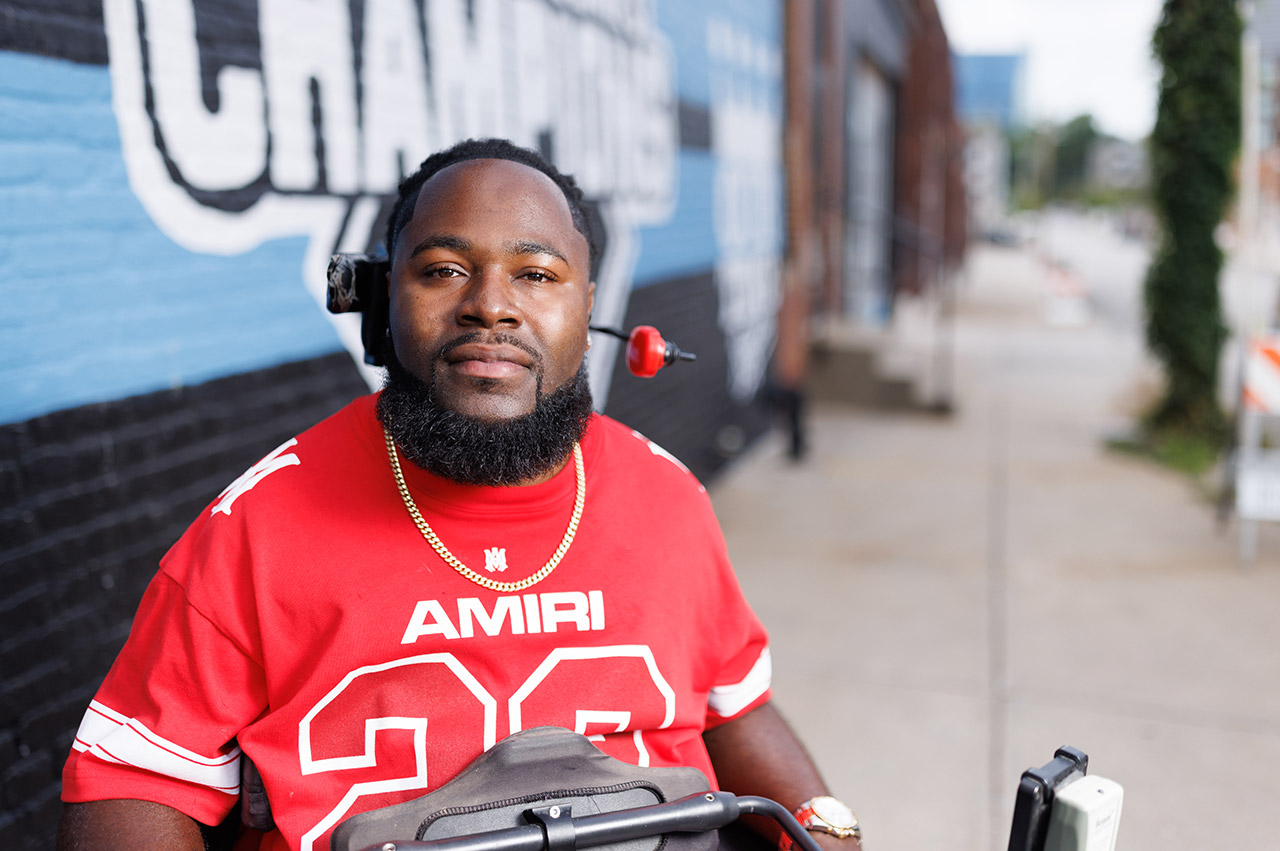
Life is full of trials and tribulations — difficult circumstances that test our character, mental fortitude and resolve. For native Kansas Citian Will Smith, perseverance has always been a way of life, adapting and overcoming any situation he faced.
Coming from a single-parent home, Will grew up as a proud resident of “The Dotte” — Wyandotte County — and decided in eighth grade that, to set his life on the right trajectory, he would focus his energy on sports, specifically football and track. And he certainly hit his stride as a running back, excelling at Wyandotte High School and gaining attention from major universities with scholarship offers on the table.
Will was eager to be the first in his family to attend college to pursue his dreams. But during his senior year, he partially tore his Achilles tendon, dramatically limiting his options. Still, he attended Baker University and eventually transferred to Wheaton College in Chicago. He excelled as a student-athlete there, working his way up the depth chart on the football team, while also developing a strong foundation in faith.
Once he graduated with his new lease on life and diploma in hand, Will was drawn back to his hometown. “I wanted to take the opportunity to share what I’d learned in college and help my family and community overcome their own adversities,” he says.
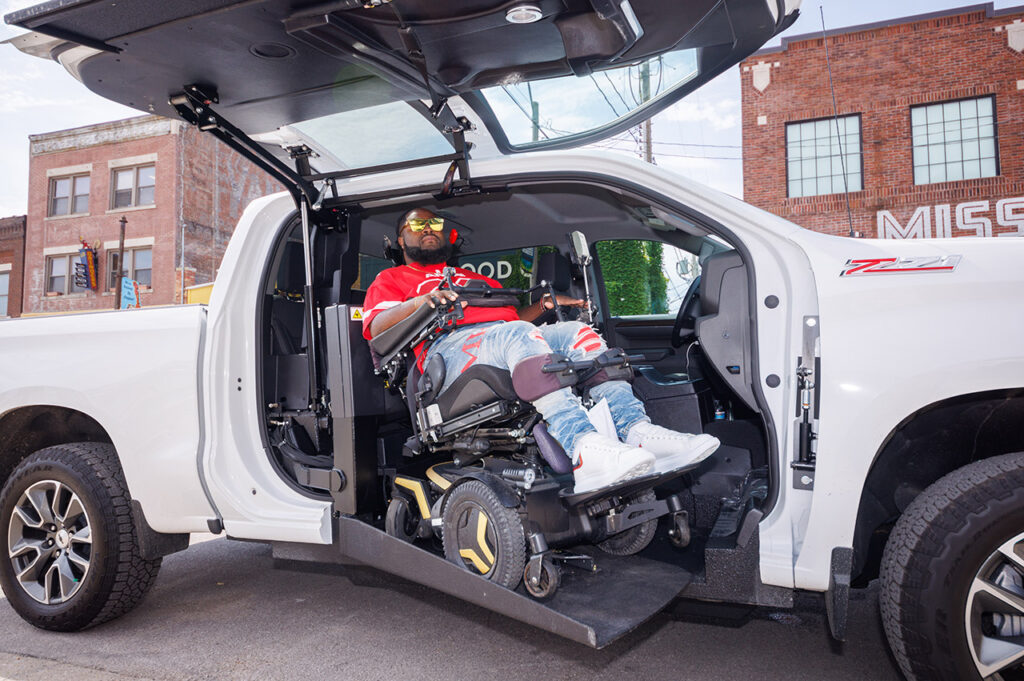
But once Will moved back to Kansas City, he’d soon face one of his life’s greatest challenges — a car accident in March of 2021 rendered him paralyzed.
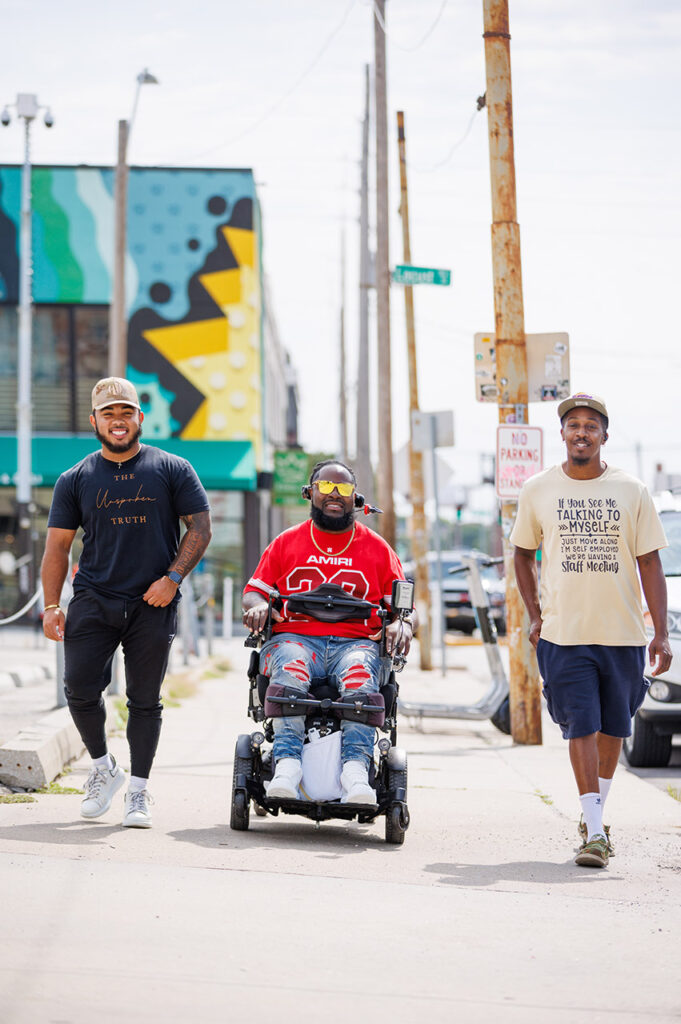
Despite his circumstances, Will always does his best to stay even-keeled, never letting his lows get too low or his highs too high while surrounding himself with friends, family and faith. His professional career has flourished, progressing through several roles at Black & Veatch, a global engineering firm headquartered in Overland Park, Kansas. Both professionally and personally, Will inspires and motivates others by sharing his story across platforms including his own social media and website, Will the Resilience Warrior.
“My body’s been places I’d never allow my mind to go. But in the end, you either fight or you quit. I’m from Wyandotte County, so you know I’ll keep fighting, whatever life throws my way.”
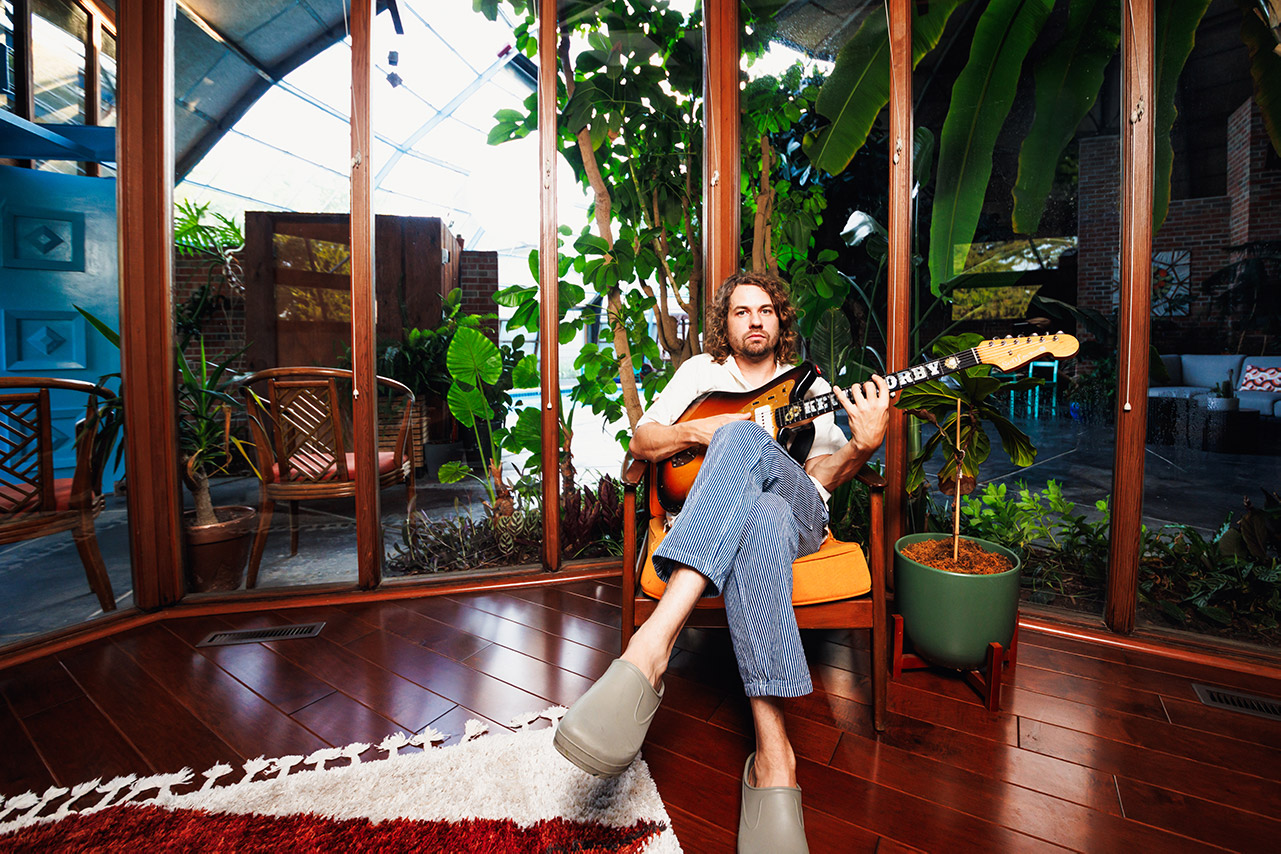
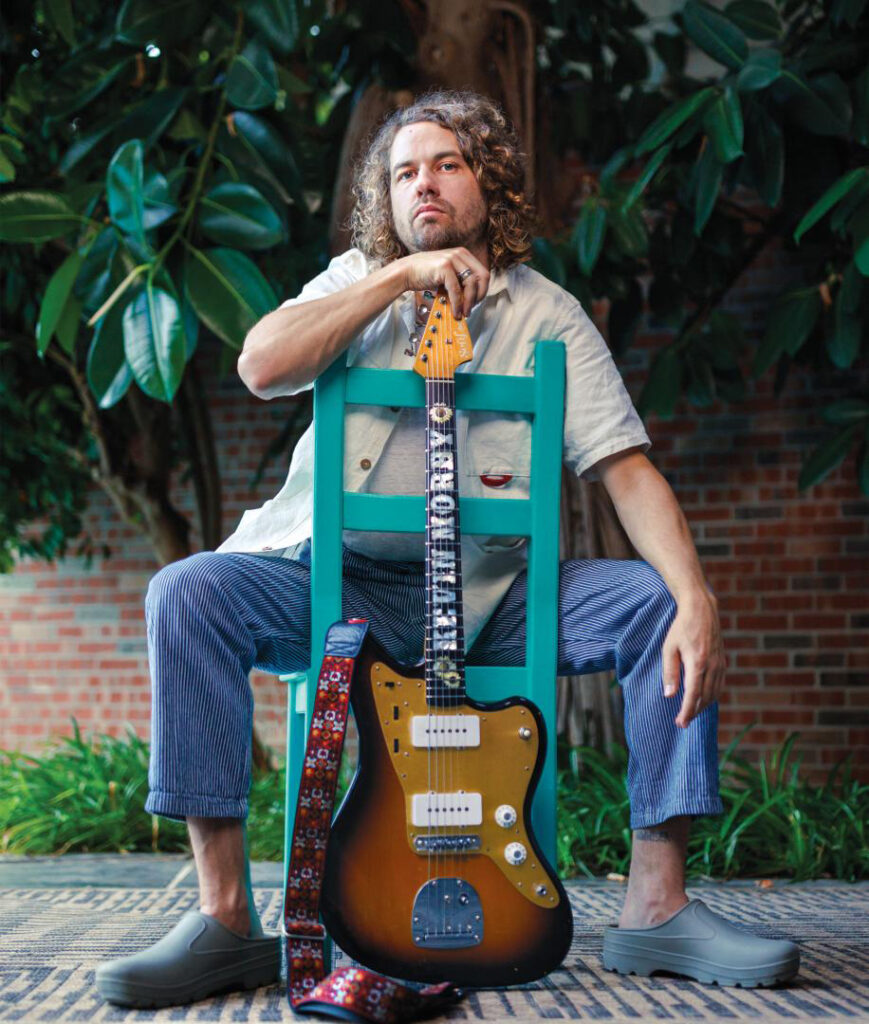
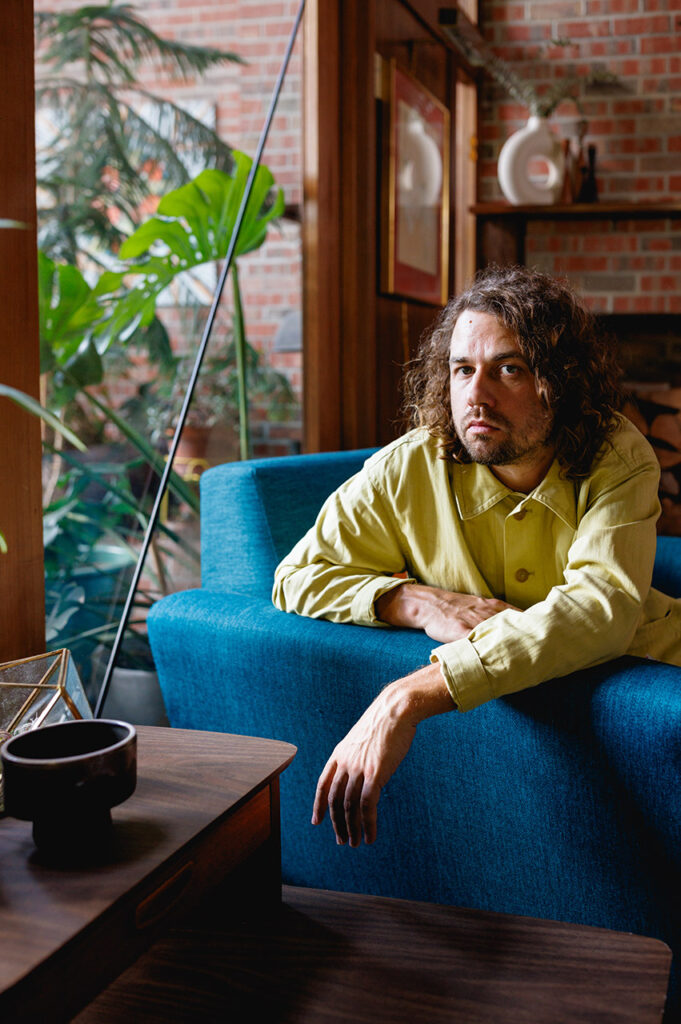
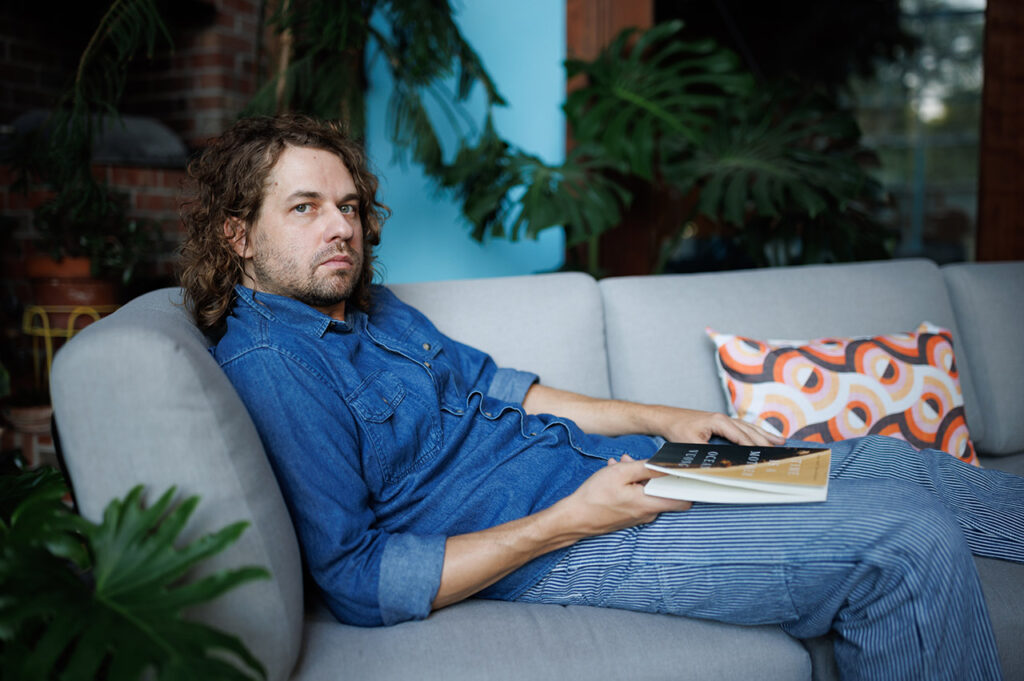
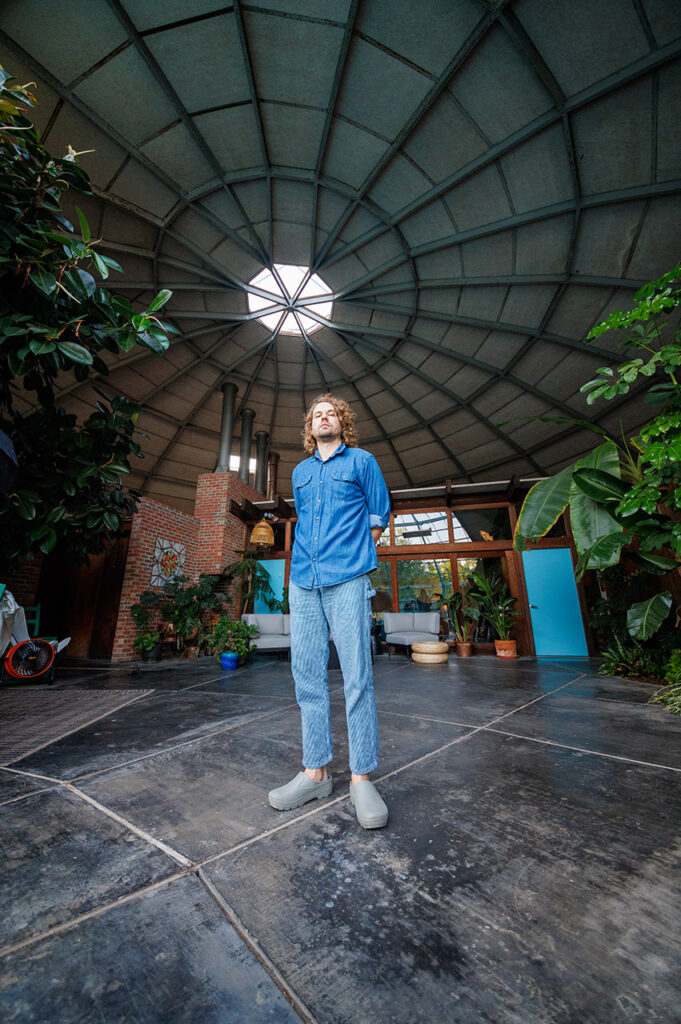
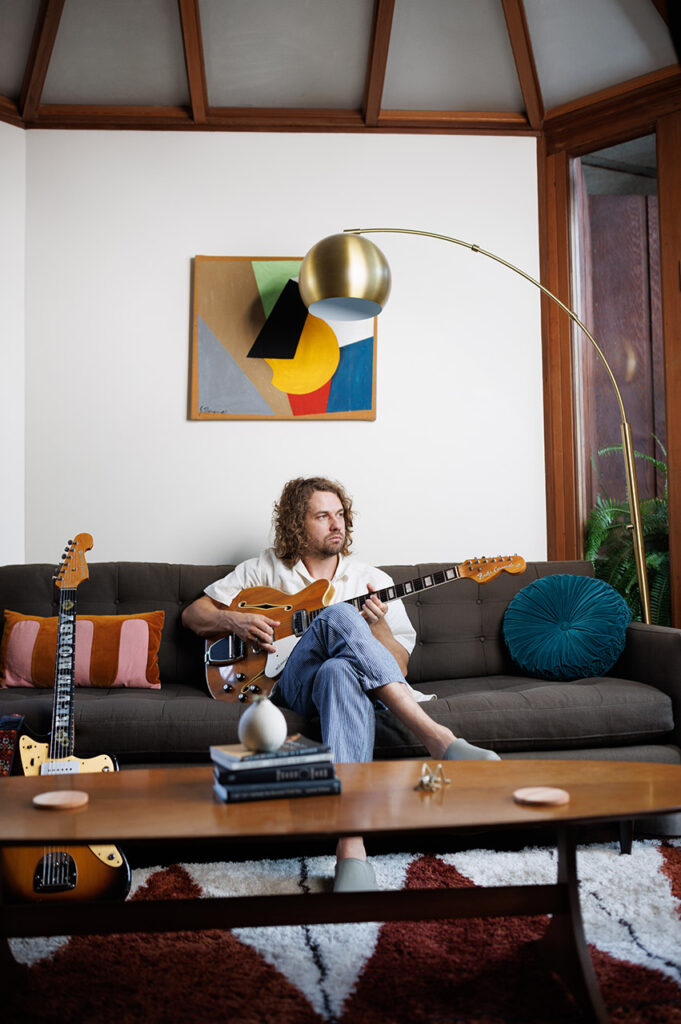
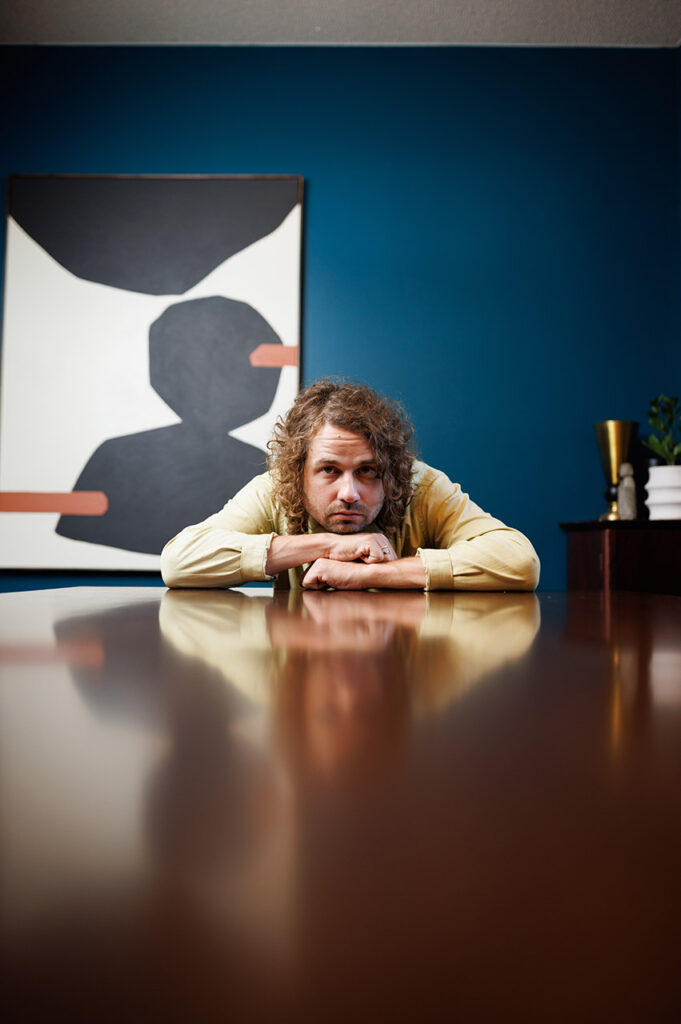
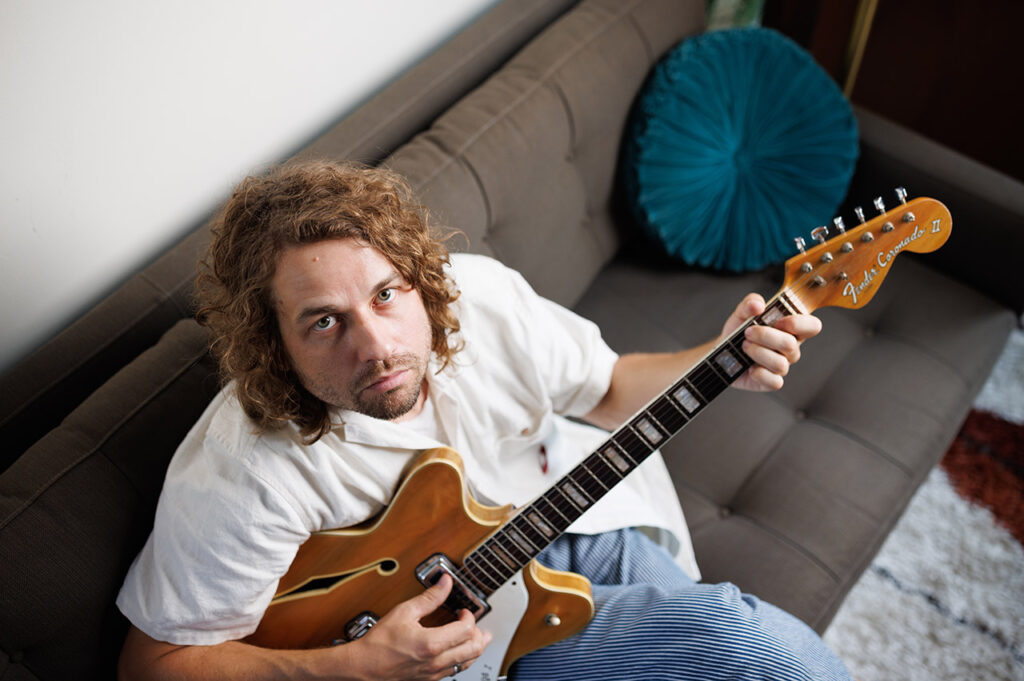
From ramshackle warehouses to headlining international stages, Kevin Morby’s career finds roots in the Heartland.
By Michelle Bacon | Photos by Paul Andrews
Some of Kevin Morby’s most formative moments took place in hollowed-out warehouses, ramshackle punk basements and abandoned loft spaces across Kansas City — sweating it out shoulder-to-shoulder with other kids, mesmerized by clattering rhythms and crunchy guitars.
It was the early 2000s, a time when the Crossroads Arts District was still in its infancy, the historic West Bottoms was sparsely dotted with haunted houses and the city center was largely untouched after business hours. But to Kevin and friends, it was a playground of possibility — one that would lay the groundwork for an esteemed career.
With seven records in 10 years, including the heavily acclaimed “This Is A Photograph,” Kevin has become a pillar of the indie music world. A quick-witted observationist, the singer-songwriter has a penchant for turning the mundane into the sacred — rambling through lonesome prairies and whirring city streets into the liminal spaces we take for granted. His Midwestern roots inspire muted cerebral folk songs with gentle but deliberate paces, in contrast with more turbulent tunes that roll to a pensive boil.
Born in Texas, Kevin and his family moved around the Midwest before landing in the serene KC suburb of Overland Park, Kansas, when he was in fifth grade. It was also around then that his curiosity would point him to music as a way to express himself.
As a freshman at Blue Valley Northwest, Kevin began penning songs and performing under his own name, later joining friends in a band called The Creepy Aliens. Suddenly, he was leaving the comfort of his home, immersing himself in every genre imaginable at underground clubs in the urban core.
“I remember calling my mom on a friend’s cell phone the first time I went down to a show,” he says. “She asked where I was and I had to look at the street sign — it was like, 13th and Grand. We lived at 135th and Antioch. I didn’t know numbers could go that low.”
This music scene was not only Kevin’s gateway to the city proper, but to the prospect that it could become his life’s work. “Saying that I wanted to be a musician ‘for a living’ felt strange because I didn’t understand that concept until I got into the DIY scene. I just wanted to be able to do it and see the world,” he recalls.
The Creepy Aliens would embark on short runs and link up with other DIY acts in the region — musicians self-producing, distributing and performing their own music — giving Kevin his first taste of touring. They’d swap shows and share bills, show up for one another in their respective towns, crash at each other’s apartments. “It all felt like an impossibility until I discovered this underground network where bands were literally doing it all themselves,” he mentions. “Once I accessed that knowledge, it felt like the world completely opened up.”
But Kevin knew he couldn’t forge that path here — not in the early aughts. Shortly after dropping out of high school and turning 18, he boarded a train to New York. Its DIY scene was on the rise, reminiscent of his circle in KC but on a global scale. The eyes and ears of the world were paying attention, and the bright-eyed Kansas wanderer found himself in the center of it all.
“There is a beautiful thing about not being surrounded by culture, so that when you find it, you can access it,” he says. “A lot of these NY kids were over everything by the time they turned 18 because they’d tried everything or knew every famous person or had been to every art gallery. They took it for granted because it was all right in front of them.”
Kevin, on the other hand, dove in and got to work. At 19, he started playing bass in Woods, another burgeoning act on the Brooklyn circuit. His bandmates were 10 years his senior — “real adults with real jobs and responsibilities.” Hurled into the life of a road warrior, he’d quickly learn the basics of hauling gear, wrapping cables, packing a van and riding in said van for 10 hours at a time, night after night.
As he got his bearings, Kevin felt freer to explore his own music. He and Cassie Ramone formed and co-fronted The Babies, which would give him a chance to test his material and lead a band. “This was a vehicle for my songwriting and my emotions,” he says. “It was a way to put a mask on my solo songwriting, to kind of cloak it in these other things.” The group would go on to release a self-titled album in 2011 and its follow up, “Our House On the Hill,” the next year.
By then, Kevin’s beloved New York DIY scene was dwindling. Artists were being priced out, keeping them from fully immersing themselves in their careers. So, in 2013, he and Babies drummer Justin Sullivan relocated to the “cheap desert” of Los Angeles, moved into a “really big house for next to nothing,” and started working on Kevin’s debut solo album, “Harlem River.”
Now in his mid-20s, Kevin found himself at the vanguard of another nascent music scene. Artists he knew from the touring circuit were also heading to LA, eschewing the DIY microcosm for stronger foundations. “A whole new crop of bands were starting to take off. All these professional musicians were moving out there to have a go at it,” he says.
A new sound was emerging, where reflective solo songsters were taking center stage. Surrounded by delicate but dense sonic tapestries, it was lyrically imaginative and often more reminiscent of ‘60s folk luminaries and beat poets. Within the four years he lived in LA, Kevin’s name would become principal in that indie lexicon. He released three more acclaimed albums: “Still Life” (2014), “Singing Saw” (2016) and “City Music” (2017).
By then, Kevin would be nearing his thirties and again finding himself in transition. The cost of living in LA, let alone any major metro area, had become onerous. He began dating Katie Crutchfield, who was forging her own solo project as Waxahatchee, and whose life was following a similar trajectory. Katie grew up in the small underground punk scene of Birmingham, Alabama, making music with twin sister Allison. She and Kevin had moved around the country for their careers and spent most of their time on the road. Both had four albums to their credits, and their latest releases (Kevin’s “City Music” and Waxahatchee’s “Out in the Storm”) leaned into heavier electric sounds than expressed in previous works.
The pair would soon share another commonality, one that was far more fortuitous: an abiding love for Kansas City.
After being signed to Dead Oceans in 2015, Kevin took the advice of fellow musicians Bradford Cox and Kim Deal before him: Once you make any real money from music, buy a house. He snagged one in downtown Overland Park and rented it out to a friend. By 2017, the friend moved out, so Kevin would come back for a couple of months to tend to it, then return to LA. Katie would visit him in KC when their schedules aligned. She, too, was in transition, ready to leave Philadelphia.
“I was in a funny place where I was super jaded about where I was gonna live,” Katie says. “I had been everywhere in America 17 times. I didn’t want to be in NY, LA, Chicago or back south. I just couldn’t make up my mind… I was just sort of floating around.”
But something happened when she visited KC with her partner for the first time. “I remember being really struck by how much I liked it,” she says. “It was a feeling I hadn’t had in a long time, where I went to a new place and felt so connected to it.” Though she hadn’t considered moving to KC, Katie started seeing it as a wonderful middle ground that afforded her all the resources of a big city without all the noise. She began spending more time at Kevin’s Overland Park house between gigs, finding unexpected refuge.
In 2018, she made a life-altering decision, vowing to get sober and take an entire year off touring — an almost unheard-of choice for a musician whose primary income came through a life on the road.
“I was burning the candle at both ends — that’s what I had to do to earn a living,” she recalls. “It was scary, but something told me that’s what I needed to do to make the type of record that I really wanted to make.”
For the better part of that year, Katie cozied up in Kevin’s home while he was on tour — in the back shed studio area he dubbed The Little Los Angeles. “It was just this perfect little space. There was a piano, music gear everywhere,” she says. “I really felt like I could come here and feel that sense of solitude because I didn’t know many people here at the time, but because it had everything I needed, I could still go out and find really great food. [KC] has been really conducive to songwriting for me in that way.”
There, she would “spin silence into gold,” gifting those songs to the world in March 2020 and calling the effort “Saint Cloud.” A major breakthrough, the album doubled Waxahatchee’s fanbase and became a sanctuary for a world forced into abrupt lockdown. Katie’s own self-imposed isolation tapped into an elemental part of her musical identity, extracting pieces of her Southern roots while taking inspiration from the understated beauty of her new surroundings.
“It’s such a big part of it for me to live in a place like KC,” she says, adding that the ambient chatter of industry towns wasn’t working for her approach to songwriting. “Something about it makes my entire process feel more my own. It’s always important for me to shut the world out when I’m trying to receive some type of vision of what’s next, and I really needed that spaciousness to do that.”
As Kevin watched his girlfriend fall in love with KC, he found himself doing the same. “There was something about seeing KC through Katie’s eyes that made it easier for me to see it in a new perspective, rather than feeling like I was back in high school and nothing had changed.”
He also recognized how much it actually had changed. The modest metropolis of his youth had undergone a major transformation in the previous two decades — becoming an affordable, innovative Midwestern hub for artists, entrepreneurs, restaurateurs, tech startups and international sporting events. The DIY scene of Kevin’s teenage years had given way to a bustling community of musicians, many of whom were making the national scene with KC as their home base.
As he grew to appreciate it in a new light, Kevin started to see his life in Kansas City as a bounty. “The fact that I started making a living off my passion made me think, I really can’t mess this up,” he says. After more than a decade of paying his dues, he discovered that building a life here would reap greater rewards. Over the pandemic, Kevin and Katie put down roots and bought a home together in KC.
While their stars rise, the indie-rock couple feels a palpable sense of civic pride as Kansas City continues its renaissance. Both point to the star-studded Big Slick Celebrity Weekend, where they performed in the summer of 2024. Founded in 2010 by KC natives Paul Rudd, Jason Sudeikis and Rob Riggle, the annual gathering includes a slew of A-listers who come together for a softball game, concert and other events raising millions for local hospital, Children’s Mercy.
“It was cool to look around that room and think, all these people are from KC. Everyone has gone out and done something amazing but still reps their hometown and loves it so much. It’s such an inspiring place in that way,” Katie says. Kevin adds that it’s a “very Kansas City thing” to do — for these celebrities to give back to the community that molded them.
He gets to the heart of what he feels is so unique and personal about being from Kansas City. “KC feels like it belongs to me,” he says. “As much as I love NY and LA, they sort of belong to everybody. I have my spots here, and they feel like they’re sacred and secret. You can’t have that in bigger cities.”
In addition to favorite spots like Mutual Musicians Foundation, Big Mood Natural Wines, Earl’s Premier and Baramee Thai Bistro, Kevin and Katie have found an inspiring sense of place across KC’s byways. For Kevin, it’s vantage points like the northland bridges over the Missouri River, the Western Auto sign and suburban haunts he took for granted as a kid, like Glenwood Arts Theater and the former sites of The Rio and Metcalf South Mall in Overland Park.
To cap the conversation, Kevin shares an anecdote he’d recently heard about a fellow KC native — a musician whose shadow still looms large over the city nearly a century later.
“Someone told me that Charlie Parker couldn’t wait to get out of here,” he says. The flourishing KC jazz scene of the 1930s was ground zero for the saxophonist’s improvisational style, but like Kevin, he would have to leave in order for his sound to evolve. Something about that story stuck with the ruminative troubadour.
“There’s a happy ending to not agreeing with a place, going out and doing your thing, and then, at least for me, coming back,” Kevin says.
As the 36-year-old musician enters the next phase of his career, he carries his city with him and displays it like a badge of honor. He feels a debt of gratitude to Kansas City, both for giving him the curiosity to excavate the hidden treasures of humanity through his art and for being a safe, comfortable place to forge ahead and flourish. Kansas City set Kevin’s musical odyssey in motion, and in return, he’s making Kansas City cooler than ever.