KCADC Promotes Jonathan Knecht to Chief Marketing Officer
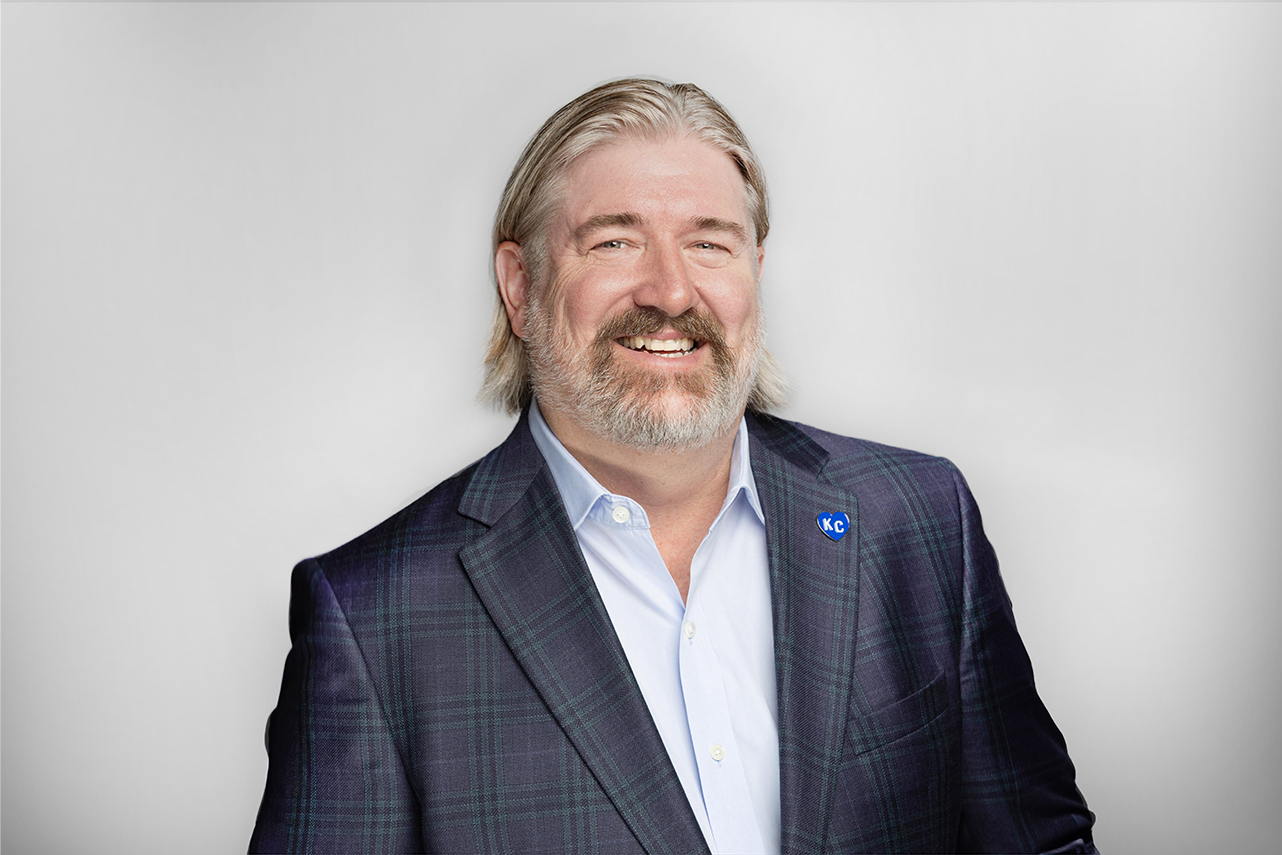
KANSAS CITY, Mo. – September 9, 2026 — The Kansas City Area Development Council (KCADC) has promoted marketing and creative leader Jonathan Knecht to Chief Marketing Officer.
For more than two decades, Knecht has played a central role in evolving the OneKC brand and how KCADC tells the story of the region to businesses, talent and audiences around the world. His awarding-winning work has helped bring the region’s momentum and opportunity to life through campaigns, experiences and strategic storytelling.
That work has become increasingly important as KCADC, in collaboration with 300 corporate leaders and more than 50 community partners across its two-state, 18-county region, has helped attract $9.5 billion in new capital investment and 15,000 jobs to the area over the past five years.
“Jonathan understands that OneKC is bigger than any one organization — it’s the collaboration that drives progress in every corner of our region,” said Tim Cowden, president and CEO of KCADC. “He has helped us build a brand that reflects where Kansas City is headed, and he brings the creativity and vision to turn this momentum into lasting opportunity for decades to come.”
Most recently, Knecht was a creative force behind KC•House, a VIP experience during the World Cup that showcased the Kansas City region to business leaders, site selectors and dignitaries from across the globe. Through KC•House and other hosting experiences, KCADC connected with nearly 40 global corporate targets and decision-makers, creating relationships that will lead to future business opportunities for the region.
As CMO, Knecht will continue to lead KCADC’s marketing and creative efforts while helping shape the broader strategy for how KCADC and the OneKC region are positioned on a national and global stage.
“Kansas City has never had a more compelling story to tell,” said Knecht. “What makes the OneKC story powerful is that it belongs to all of us — the companies investing here, the communities working together and the people who reflect a dynamic, creative culture that fuels unlimited possibilities. I’m excited for our team to keep building on that momentum, finding new ways to connect KC with the opportunities that will shape our region’s future.”
—
About the Kansas City Area Development Council (KCADC)
The Kansas City Area Development Council is an economic development nonprofit that promotes the OneKC region’s business and lifestyle assets to companies and talent around the world. Working closely with its two states and 50-plus county and community partners, the region has attracted more than 64,000 new jobs over its 45-year history. KCADC also leads the efforts behind the KC Animal Health Corridor, KC SmartPort, TeamKC and KC Global Design. | onekc.org
Shared Goals Need Shared Expectations: What It Takes to Build a Team That Works Together
As we head into the season of business planning, it is important to look beyond goals and objectives and examine how your teams are functioning.
Are teams working together toward the same outcomes? Are there clear lines of authority and responsibility? Do business units understand who owns a decision, who needs to be consulted, and who needs to be informed? And, perhaps most importantly, have we created an organizational structure that allows people to succeed?
Strong teams that communicate openly, operate with honesty and integrity, and trust one another are not built on good intentions alone. Trust is built through consistent behavior. It requires clarity, accountability, transparency, and an environment where people can depend on one another.
When a business unit is responsible for an area of work but is not given the information, authority, or support necessary to lead that work, trust begins to erode. Withholding information, excluding key people from decisions, or working around colleagues rather than with them creates an environment where collaboration is expected of some, but not of everyone.
And that is where shared goals can fall short.
Individuals and business units can be committed to the same organizational objectives and still behave in ways that undermine one another. Competing incentives, organizational structures, power dynamics, fear, or the desire to protect one’s own area can influence behavior.
Having the same goal does not guarantee that we will work toward it in the same way.
So, as we think about building winning teams, we need an operating philosophy that creates not only shared goals, but shared expectations for how we work together.
A few principles that can help create the right foundation:
- Expect transparent communication. Information that affects another team’s responsibilities should be shared with the people who need it to do their jobs effectively. Transparency should be an expectation, not a favor.
- Create clarity around ownership and decision-making. People need to know who owns an outcome, who has authority to make decisions, and who needs to be consulted or informed. Clear responsibility reduces ambiguity and builds accountability.
- Create systems that make decisions visible. Documentation is not about bureaucracy. It creates clarity, consistency, and accountability and helps prevent misunderstandings.
- Establish a “no surprises” culture. Teams don’t have to agree on every decision, but they should have the opportunity to provide input when their responsibilities or outcomes are affected.
- Reward collaboration, not territorial behavior. Business units should be encouraged to optimize for the success of the organization, not simply protect their own function, budget, influence, or priorities.
Ultimately, trust isn’t built by telling people to trust one another. It is built when people consistently experience behavior that is trustworthy.
I will communicate with you. I will tell you what you need to know. I will respect your area of responsibility. I will raise concerns directly. I will do what I say I will do. And when we disagree, we will work through it without undermining one another.
Those behaviors create the foundation for trust and, ultimately, high-performing teams.
As you enter your next season of planning, don’t just ask whether your organization has shared goals. Ask whether you have created the structure, culture, accountability, and behaviors necessary to achieve them together.
Because winning teams don’t just agree on where they’re going. They agree on how they get there.
Animal Health Summit spotlights three trends driving the industry’s next era

Speakers point to practical innovation, access to care and longer health span as priorities
KANSAS CITY, Mo., Sept. 3, 2026 — Innovation in animal health is accelerating, but the ideas that take hold will be those that solve the industry’s most fundamental challenges: making care easier to deliver, expanding access to that care, and helping animals live healthier for longer.
Those themes emerged across presentations and discussions at the 2026 Animal Health Summit, which brought together more than 675 animal health executives, investors, entrepreneurs and other industry leaders this week in Kansas City. Here’s more:
Trend 1: Innovation that simplifies
As veterinary teams contend with increasing workloads and an expanding array of technologies, industry leaders said innovation will increasingly be judged by whether it makes care easier to deliver.
“We have to look at it through the lens of, is this going to take work off of the team, or are we adding another step?” said Julia Loew, chief commercial officer for MWI Animal Health. She noted that disconnected technologies can create fragmented records and duplicative work, placing an additional mental load on already stretched veterinary teams. Automation and connected workflows, she said, can instead give time back to veterinary professionals for patient care and team engagement.
In their talk on innovation, industry consultants Chad Terrell and Juerg Baggenstoss of Stonehaven Cozmix estimated that roughly two-thirds of industry growth in the past decade has come from new products and innovation, and they expect innovation to remain a primary engine of growth even as the overall market matures. But they noted that innovation runs the spectrum from blockbuster therapies to simple changes in formulation or delivery that can drive real value.
Artificial intelligence is increasingly part of that equation, but executives suggested a shift is happening. Rauf Gurbuz, US president and general manager of Hill’s Pet Nutrition, said AI differentiation will come from tools grounded in proprietary clinical and biological data and integrated into “the backbone of company operations.” Scott Bormann, SVP, North America, at Merck Animal Health, agreed: “It’s not a matter of whether it’s going to be here. It’s a matter of how you choose to use it.”
Trend 2: Greater focus on access and affordability
Of course, scientific advances don’t mean much if veterinarians, producers or pet owners cannot access them, panelists said. Loew characterized access to care as a “structural issue” across both companion and production animal health. Pet owners increasingly expect care that is continuous and affordable, she said, while the production sector faces persistent shortages of veterinarians and skilled labor needed to deliver new solutions at scale.
“You need to have the right infrastructure, the right economics and the right delivery mechanisms,” Loew said.
Those pressures may also impact competition. The Stonehaven Cozmix team estimated that approximately $15 billion in revenue among leading animal health brands is already off patent or will lose patent protection in coming years, while generics are being introduced more quickly than ever. This may help meet consumer demand for affordable medicines, Terrell and Baggenstoss said, while increasing pressure on both pioneer and generic manufacturers to differentiate through continued innovation.
Trend 3: A shift toward longevity and ‘health span’
As pets live longer, there’s an increasing focus on extending their healthy years. Terrell and Baggenstoss identified longevity—or, as it’s increasingly being referred to, “health span”—as one area likely to attract investment and innovation, alongside oncology, chronic kidney disease and metabolic disease. Advances in treatment and diagnostics are also synergistic: better therapeutic options create greater reason to identify disease earlier, supporting a shift from episodic treatment toward earlier intervention and ongoing care.
That interest is mirrored by pet owners. In his consumer insights presentation, Michael Johnson of BSM Partners said heart health, kidney and urinary health, and longevity rank among the functional benefits pet owners most want in their nutrition products, even though consumers may struggle to evaluate the outcomes of products that improve these factors.
“If you can crack longevity in the pet space and prove it, that is the holy grail,” Johnson said.
Underpinning it all: Trust
Running through each of these trends was another priority emphasized by Summit speakers: trust. Johnson described pet care as operating increasingly within a “trust economy,” where consumers have access to more information than ever but often lack the scientific expertise to assess competing claims. That makes simple communication from trustworthy sources increasingly important.
Trust was also the focus of keynote speaker and Kansas City Royals broadcaster Joel Goldberg, who drew lessons from nearly two decades traveling with the team. “The business of people is the business of trust,” Goldberg told attendees.
His framework—build trust gradually, strengthen it by making life easier and anchor it by making interactions meaningful—also carried a message for an industry rapidly adopting AI and automation. “I’m a firm believer in embracing the technology, but we can’t let go of the personal relationships,” Goldberg said. “The relationship piece still is the heart of it all.”
Production animal draws new attention
Innovation may also be poised to accelerate in livestock and production animal health, where challenges around labor, disease detection, productivity and efficiency are creating opportunities for new approaches—and investment.
During the Summit’s investor Q&A panel, Eric Moore, managing director of DW Healthcare Partners, described production animal health as one of the most interesting areas for private equity today, citing a market that is not yet overcrowded with solutions while increasing numbers of innovators turn their attention to its unmet needs.
In fact, a production animal startup drew the Summit’s Emerging Companies Innovation Award, presented to ProtonDx for Dragonfly, an on-farm molecular diagnostic platform being launched with an initial focus on PRRSV surveillance in swine. The company said its process takes approximately 40 minutes from sample preparation to result, using a simple field-based system that enables faster surveillance at the farm level. The same underlying technology could ultimately support additional livestock and food-safety applications.
The 2026 Summit also recognized industry achievement and community service:
- Iron Paw Award: Richard R. DeLuca Jr., executive vice president and president, Merck Animal Health
- Spirit of Service Award: War Horses for Veterans.
The Animal Health Summit, organized by the KC Animal Health Corridor, is held annually in Kansas City. Next year’s event is scheduled for August 30-31, 2027.
ABOUT THE KC ANIMAL HEALTH CORRIDOR
Companies with a business location in the KC Animal Health Corridor account for more than half of the sales generated by the global animal health industry. The Corridor, anchored by Manhattan, Kansas, and Columbia, Missouri, is home to more than 300 animal health companies, representing the largest concentration in the world. For more information, visit www.kcanimalhealth.com.
Media Contact:
Kristi Fender
kristi.fender@stephens-adv.com
913.396.1938
The Connector | August 2026

Welcome to The Connector. Fetching the freshest animal health news.
Important Things You Need to Know

Register for the 2026 Animal Health Summit by August 21
Don’t miss your chance to register for the 2026 Animal Health Summit. Join the leaders shaping the future of animal health in Kansas City and be part of the conversations driving the industry forward.

Network, Connect, and Unwind at the Rock Island Bridge
Explore the latest market trends, industry performance, and veterinary sector insights while helping support organizations that celebrate the human-animal bond.

Embracing The In Between
As a parent of a college student, I’ve come to appreciate the unique challenges and opportunities of living in the “in-between” — that space between holding on and letting go. This reflection explores how these transitional seasons show up not only in our families, but also in our careers, businesses, and personal growth, reminding us that uncertainty is often where our greatest development takes place.
Industry News
CERES TAG Partners With USDA to Deliver Predator Deterrence via Smart Livestock Ear Tags
Felixvet Introduces Praziquantel Tablets 23 mg for the Removal of Tapeworm Infections in Cats
CatsOnly Veterinary Services Launches to Close the Feline Veterinary Care Gap
Zoetis Announces Agreement to Acquire VitalRADS, Accelerating Diagnostic Capabilities
Mars Appoints Christina Ruggiero as North America Regional President for Pet Nutrition Business
Boehringer Ingelheim Achieves Human Animal Bond Certification
808 Ranch Names Jared Wareham VP of Ag Operations
Parnell Expands PropofolVet Multidose Offering With New 50 mL Presentation
VANE Announces Investment in PawPay
Virbac Reaches $500K in Donations for U.S. Animal Charities
Royal Canin Expands Access to Therapeutic Nutrition in Amazon’s Stores
USDA Announces Phased Reopening of Southern Ports for Livestock Trade
Purina and Senior Dog Veterinary Society Collaborate to Advance Nutrition Care for Aging Dogs
Merck Animal Health Supports Future Poultry Veterinarians With $50,000 in Scholarships
Boehringer Ingelheim Spotlights Next Generation of Veterinary Researchers
Boehringer Ingelheim Expands Equine Health Pipeline With Acquisition of Evax AG
Merck Animal Health Announces USDA Approval of INNOVAX® ND-IBD-ILT
CERES TAG and University of Wyoming Launch New Mountain Grazing Research
Hill’s Pet Nutrition Appoints Wendy Boise as Executive Vice President of People