Gallant Announces First-of-Its-Kind Partnership with MWI Animal Health to Deliver Anticipated FDA-Conditionally Approved Stem Cell Therapy into Veterinary Clinics 

Agreement establishes first ultra-low temperature cold chain in veterinary medicine ahead of anticipated potential first FDA-approved, off-the-shelf stem cell therapy 

SAN DIEGO – (February 27, 2026) – Gallant, an animal health biotechnology company pioneering off-the-shelf stem cell therapies for pets, today announced a landmark fulfillment agreement with MWI Animal Health (MWI), part of global healthcare company Cencora, to create the first-ever ultra-low temperature cold chain for veterinary medicine. This comes as Gallant advances toward delivering the potential first-ever FDA-approved off-the-shelf veterinary stem cell therapy, pending conditional approval by the U.S. Food and Drug Administration Center for Veterinary Medicine (FDA-CVM). 

Together, the companies are laying the foundation for a new category of veterinary care. 

The first expected product from Gallant’s pipeline is sonruvetcel injectable suspension—a potential first-in-class, uterine-derived allogeneic mesenchymal stromal cell (MSC) therapy for cats with refractory feline chronic gingivostomatitis (rFCGS). Partnership with MWI will enable reliable delivery of veterinary stem cell therapies requiring storage at -80°C. 

“Breakthrough science only matters if we can safely and reliably put it into the hands of veterinary professionals,” said Dr. Linda Black, DVM, Ph.D., CEO of Gallant. “With MWI, we are pairing regenerative medicine innovation with world class supply chain management. This partnership helps ensure that, once approved, veterinarians can conveniently access an FDA-regulated, off-the-shelf stem cell therapy with confidence in its quality and integrity.” 

“This partnership demonstrates how distribution innovation can unlock clinical innovation,” said Julia Loew, CCO at MWI Animal Health. “Stem cell therapies require precision handling. By investing in ultra-low temperature logistics tailored to veterinary practice, we are ensuring that this category of innovation can be delivered to clinics in the exact state intended, ready for safe and effective use.” 

Under the agreement, MWI will develop and deploy a scalable, ultra-low temperature fulfillment model. It will support nationwide availability through overnight shipping from MWI’s Edwardsville, Kansas, distribution center, helping to ensure access for clinics across the continental United States and in noncontiguous U.S. markets, including Alaska, Hawaii and Puerto Rico. 

The companies expect the partnership to serve as a model by establishing infrastructure that can support Gallant’s broader pipeline of disease-modifying therapies targeting inflammatory and degenerative conditions in companion animals. 

Expanding the Spectrum of Care 

Recent survey data conducted by Gallant, in collaboration with the American Animal Hospital Association (AAHA), found that nearly 95% of veterinary professionals believe stem cell therapy will become a standard treatment option within the next decade. 79% say they are likely to use or recommend stem cell therapy in the future, and 93% report they would be more likely to offer regenerative therapies in-house if they were off-the-shelf and delivered through a simple IV protocol. 

The Gallant–MWI partnership directly addresses veterinary professionals’ expectations and practice needs by pairing an anticipated FDA-regulated, donor-derived stem cell therapy with a clinic-friendly fulfillment model. 

About Gallant 

Gallant is an animal health biotechnology company creating a new category of veterinary medicine with a pipeline of off-the-shelf, ready-to-use stem cell therapies targeting the root causes of disease in pets. Led by pioneers in veterinary regenerative medicine with deep expertise in development, manufacturing and commercialization, Gallant is making regenerative medicine accessible to everyday practice. Learn more at www.gallant.com. 

Akston CEO Todd Zion Appointed to KC Animal Health Corridor Advisory Board

Beverly, Mass. & Kansas City (Feb. 18, 2026) – Akston, the biotech built for pets, announced today that Todd Zion, PhD, co-founder, president and CEO, has been appointed to the KC Animal Health Corridor Advisory Board in the Entrepreneur in Residence seat. The appointment recognizes Zion’s leadership in biotechnology and ensures the perspective of a growth-stage Animal Health company to the Corridor’s strategic work.

Established in 2017, the Entrepreneur in Residence board seat ensures emerging and growth-stage Animal Health companies have a meaningful voice alongside established industry leaders. The KC Animal Health Corridor, affiliated with the Kansas City Area Development Council, represents the world’s largest concentration of Animal Health assets and advances collaboration, workforce development, public policy and innovation across the ecosystem.

“Todd brings a powerful combination of scientific depth, entrepreneurial leadership and company-building experience to the KC Animal Health Corridor Advisory Board,” said Corridor president Kimberly Young. “His perspective as a pet biotech founder and CEO aligns closely with the intent of the Entrepreneur in Residence seat and supports the future of the Animal Health industry.”

Prior to Akston, Zion was co-founder, president and CEO of SmartCells, Inc., developer of SmartInsulin, the first clinically tested glucose-responsive insulin, which was acquired by Merck & Co., Inc. He holds a PhD in Chemical Engineering from the Massachusetts Institute of Technology and completed his undergraduate studies at Cornell University.

“The KC Animal Health Corridor plays an important role in connecting innovators, established leaders and the broader Animal Health ecosystem,” said Zion. “I’m honored to serve in the Entrepreneur in Residence seat and to contribute the perspective of a growth-stage company in support of collaboration, talent development and long-term sustainable industry impact.”

Zion will serve a three-year term on the advisory board, representing the perspective of entrepreneurs while supporting the Corridor’s strategic priorities and mission to reinforce the region’s position as the global hub for Animal Health.

About Akston
Akston is a biotech company built for pets. Using its proprietary Ambifect® Fc-fusion protein platform, Akston develops immuno-enhancing and targeted protein treatments that aim to reduce treatment frequency while enhancing efficacy. Backed by a vertically integrated structure and state-of-the-art GMP biologics manufacturing, Akston accelerates development from discovery to commercial manufacturing to bring innovation to veterinarians and pets faster. Learn more at www.akstonbio.com.

CERES TAG included in Swiss National Traceability Program

Bern, Switzerland — Tuesday, 17th February 2026

Identitas AG, Switzerland’s national organization for animal identification, traceability, and disease control, has announced the integration of the world’s first smart livestock tag into its national traceability framework following a seven-year technical collaboration with CERES TAG.

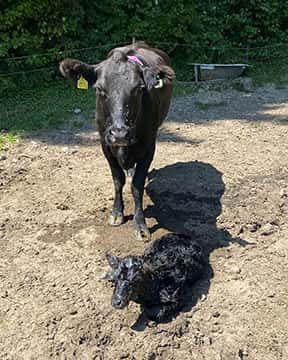
Cattle with calf in a grassy field

The collaboration has spanned development from early prototype through to commercial readiness, including extensive evaluation of performance, reliability, and suitability for European alpine and remote operating conditions.

Identitas AG was established in response to severe biosecurity events in Europe and the United Kingdom that occurred decades ago and resulted in the loss of significant numbers of livestock. Those events led to the implementation of robust national traceability systems with individual animal identification using visual ID ear tags, combined with regulated, manually recorded animal movements. While these systems remain effective, evolving biosecurity risks and operational demands have driven Identitas AG to explore automated, scalable, and future-ready technologies capable of providing more timely situational awareness.

Cattle with newly born calf

Today’s biosecurity environment increasingly requires the ability to know where animals are on a daily basis, alongside indicators of welfare and, where appropriate, performance. Livestock populations represent the highest potential biosecurity risk, and therefore remain a central focus of national traceability and disease preparedness strategies.

A Spokesperson for Identitas AG said: “Switzerland has topological challenges. Satellite connectivity is essential if we are to achieve true automated national traceability across all regions.”

The Spokesperson for Identitas AG added: “Identitas is a national traceability platform operating in German, French, and Italian, and it is essential that Identitas retains full control of all national traceability data. The open platform architecture of CERES TAG allows data to be securely captured and managed directly within Identitas’ multilingual systems from the moment it enters the platform.”

Identitas AG first became aware of CERES TAG in 2018, when the technology was supported by a national meat industry organization with the aim of advancing global leadership in traceability and biosecurity monitoring. CERES TAG was developed as the first direct-to-satellite livestock monitoring platform, designed to operate as an open system that allows end users and national authorities to select software solutions best suited to their operational needs while maintaining data sovereignty.

Since that time, the platform has undergone multiple development cycles to enhance robustness, reliability, and capability in line with regulatory and operational requirements.

“In today’s technology environment, we must ensure we are using the best available tools to strengthen our ability to prevent and respond to biosecurity incursions,” the Spokesperson for Identitas AG said. “At the same time, these tools can improve transparency and everyday understanding of the animals that are central to Switzerland’s economic prosperity in agriculture.”

David Smith, Chief Executive Officer of CERES TAG, commented: “Our long-standing collaboration with Identitas AG has been invaluable in understanding national-level requirements for traceability, data governance, and continuous improvement. Working at a sovereign level has shaped the platform into one that is ready for this next stage in global traceability.”

Identitas AG has commenced initial commercial deployment of the smart tag technology as part of a phased implementation approach. As operational experience and adoption increase, the program is expected to inform future standards for national livestock traceability in Switzerland and beyond.