Always in Motion

Midfielder, captain, connector — Lo’eau LaBonta brings passion to the pitch and her life in Kansas City. 

By Michelle Bacon | Photos by Simon Kuo

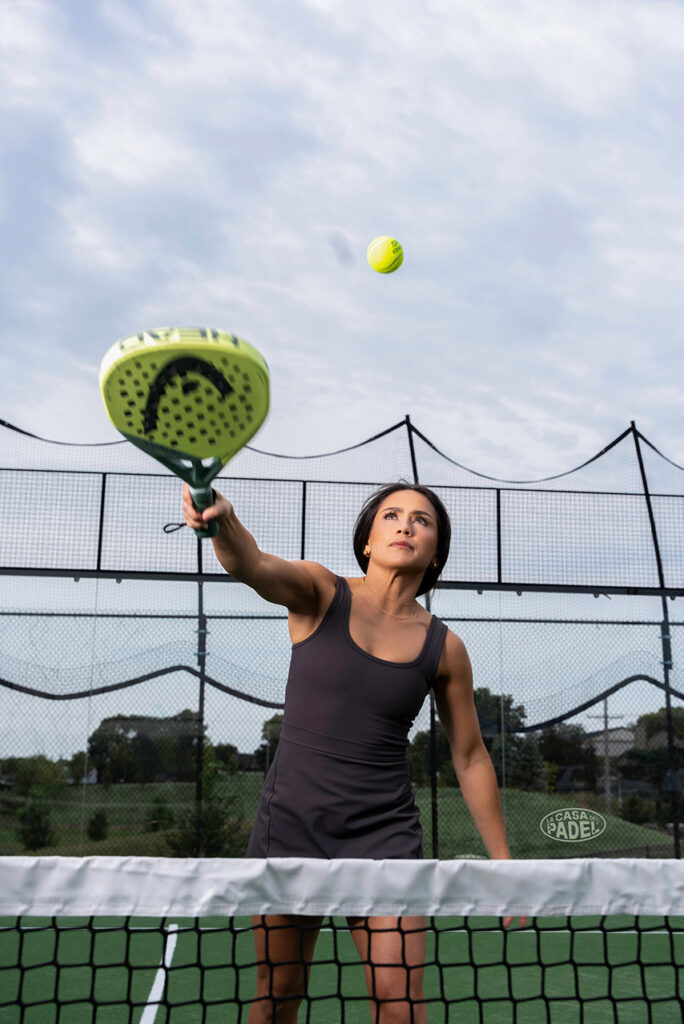
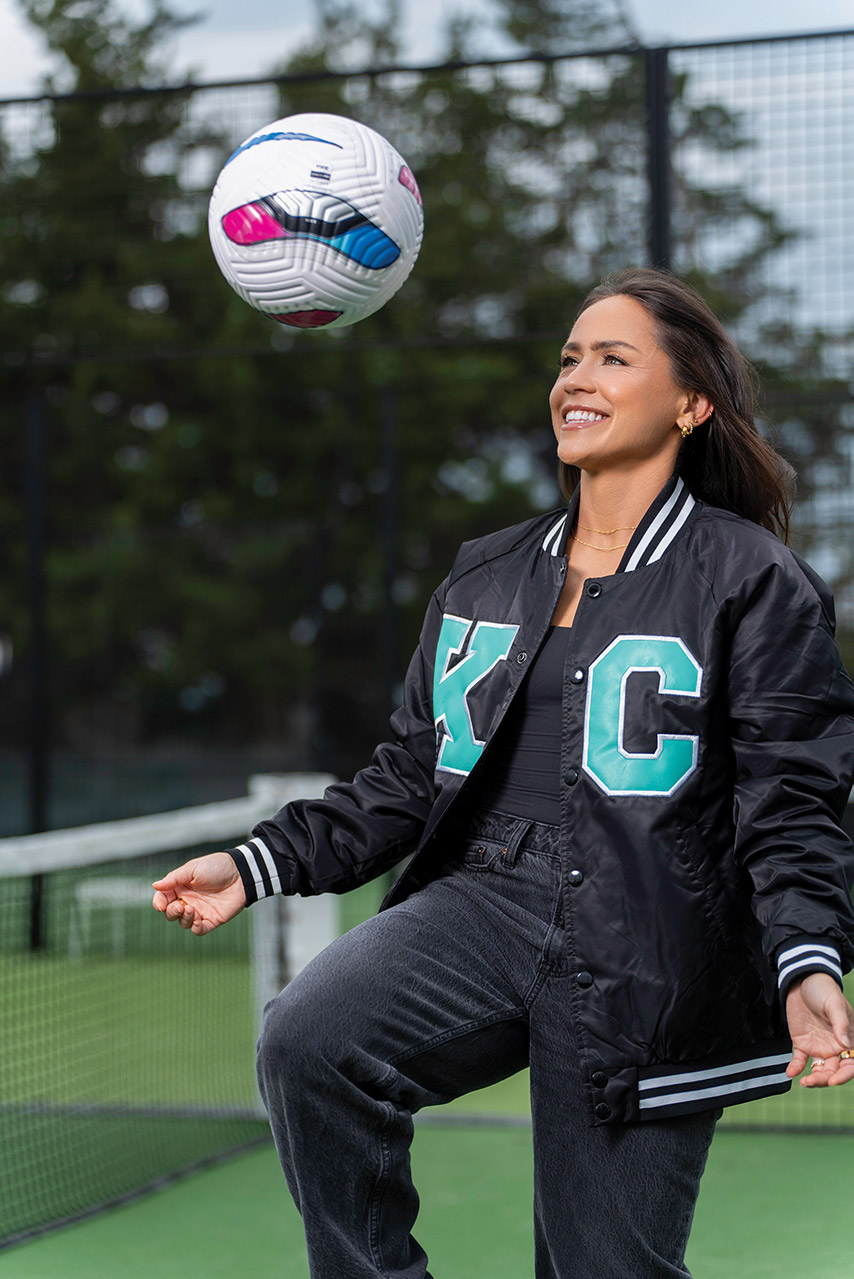
Whether it’s her love of fostering animals and spending quality time with her dog Amigo, eating her way through her Westside Kansas City neighborhood or enjoying a game of padel, Lo’eau LaBonta never stops moving.

“I thrive off chaos,” she quips.

It’s that endless vitality that has made her a pillar of the National Women’s Soccer League-leading KC Current team. A starting midfielder, Lo’eau’s decade of experience has set her up for athletic excellence both on and off the field. But even as the team captain and one of the sport’s most public figures — most notably going viral for her Celly Dance in 2022 — she’s quick to attribute the Teal Rising success to team players, leadership and the city that has invested in it.

“We are the standard right now,” she says of the team, which leads the NWSL with its state-of-the-art training facilities, having the first stadium in the world purpose-built for professional women’s sports and most importantly, producing a viable collective of competitors. 

Though soccer was always her passion, the payoff was anything but immediate. 

“Sports were life,” Lo’eau says of her upbringing in Rancho Cucamonga, CA. Raised mainly by her father, Mark, she and her younger brother, Koa, were entrenched in different sports as kids. She was most drawn to the ever-changing, always immersive game of soccer.

“It’s 45 minutes straight and another 45 after that, but there aren’t many breaks — you’re constantly going,” she says. “It’s a team sport — everything about it, I’ve always loved and have been really passionate about.”

As a student at Stanford University, Lo’eau continued playing but prioritized her education as the end game, pursuing an engineering degree. In that time, she helped the Stanford Cardinals win the 2011 national championship, and a year later, the National Women’s Soccer League was formed.

“I thought, let’s just try this professional soccer career. I’ve been playing my whole life — why not continue?” she recalls. But the path forward was slow, and challenges revealed themselves early on. “I was a semifinalist for the Herman Trophy in college. I was projected to be drafted in the top 10 and I ended up going second to last, so that was already the first big setback.”

From there, she inked a professional contract with Sky Blue FC (now Gotham FC) in 2015, for a modest $7,500 salary. Struggling with the league’s newness and lack of organization, the rookie was cut from the team. Lo’eau returned to Stanford for that engineering degree, and a year later was called to preseason tryouts with FC Kansas City. “And the rest was history,” she says, but not without a few extra barriers.

By then, in 2016, the league’s minimum salary was $10,000 per season, a mere pittance compared to the men’s Major League Soccer team, which guaranteed its reserve players a minimum of $51,500. “Just trying to be a pro athlete at that pay is insane, almost impossible, so I tried to figure out the other things to do to get by,” Lo’eau recalls. “I was having oatmeal for breakfast, lunch, and it was probably an appetizer for my dinner.”

It was also around this time that her now husband Roger Espinoza — at the time a Sporting KC midfielder and now an assistant coach — began to endear her to Kansas City.
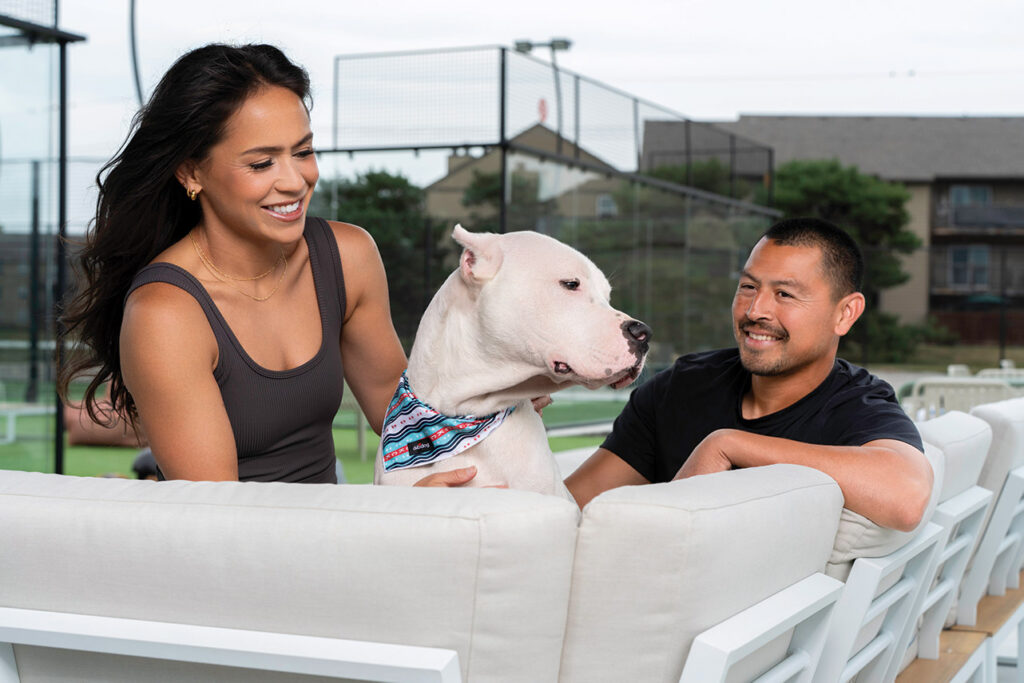
Lo'eau on a couch with her husband and dog.

“Being from California, I have the beach, the mountains,” she says. The rolling Midwestern plains were a change of pace. “[Roger] had lived in KC for almost 10 years, and he was the one who helped me look at KC from a different lens and actually embrace it for what it is.”

Just as she began finding her footing in the city of fountains, she was sent to the Utah Royals in 2018. Under the team’s steadier foundation and clearer direction at the time, Lo’eau’s career ascended. She became a starter, began doubling her number of goals and assists, and rose among the ranks of the NWSL as a true utility player –– quick to support and defend her teammates all over the field. 

When 2020 upended the world with the pandemic — and then shattered her own with the loss of her brother, Koa — Lo’eau turned to what she knew best: structure, movement and care. Fostering animals gave her purpose beyond the field; soccer kept her grounded. 

“As pro athletes, you’re just wired to always show up and be on time,” she says. “[Soccer was] the only thing that really kept me healthy and eating. Having that structure helped me maintain my sanity after losing my only sibling.”

Toward the end of 2020, the Utah Royals sold and transferred back to Kansas City, returning Lo’eau to the Midwest with her fellow teammates. At the time, Sporting KC was the established men’s soccer team, but professional women’s sports were still largely underground. After all, Lo’eau remembers being a part of FC Kansas City when the team won back-to-back NWSL championships (2014-2015), to little local fanfare. 

The formation of KC Current took some time, but Lo’eau was at the forefront for its rapid evolution. “We didn’t have an identity yet, we were playing on a baseball field,” she remembers of the early days. “We were trying to progress the game but were brought back to the reality that it’s just not there yet.” 
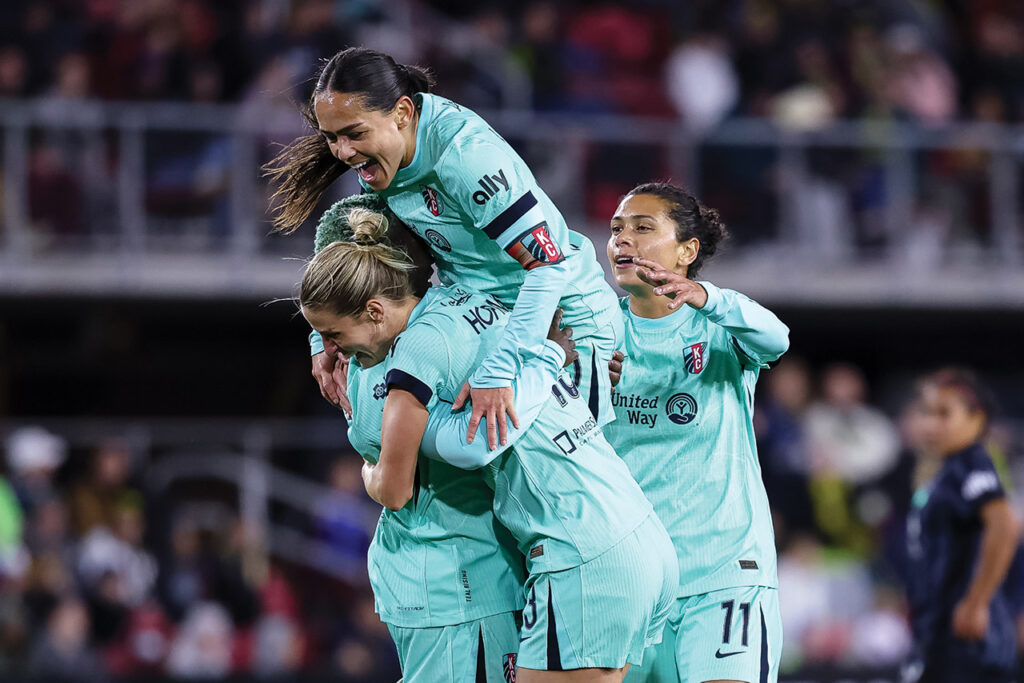
Five years on, the Current is one of Kansas City’s cornerstones — from its historical significance for women’s professional sports to the community ethos of its team. Lo’eau, who originated the infectious “KC BABY!” chant in a team huddle, has played a significant role in the accelerated development. It’s a role she takes seriously. 

As she reflects on the team’s roots, she looks at her early years as a rookie in a fledgling new league. “Being here at the beginning compared to what it is now — there was no culture, no standards,” she says. “That’s what we fought for, so that the younger generation had the best facilities and equality.” She credits co-owners Chris and Angie Long for spearheading the Current’s training facility and stadium, along with head coach Vlatko Andonovski, for rebuilding the team on the field and charging her to set the tone off the field. 

A natural-born connector, Lo’eau looked beyond the team’s early setbacks and cultivated unity, starting specifically in the locker room. 

“When I get to a place, I’m like, what does the locker room look like? Are we all spread out? Is it tight-knit?” she says. “That is where the true conversations happen and you see the true sides, personalities and character of your teammates.” 

With this particular team, she praised each player for setting the same standard of good-natured competition and authenticity. “It was the easiest job for me, because not only were these good quality players, but they were also genuine human beings,” Lo’eau says. “It’s everyone picking each other up and pushing them over the line, and there’s no organization if your players don’t believe in each other and put a product out there on the field.” 

The city itself has followed in step with fervor for the 2025 playoff-seeded team, routinely packing out the 11,500-capacity CPKC Stadium since its 2024 opening. That spirit of community is something Lo’eau recognized early on in her time in Kansas City. She and Roger have since bought a home in the Westside. 

“I love being in new spaces and meeting new people — I feed off the energy of others. You can find whatever you want in these different communities — that’s what I’ve enjoyed the most,” Lo’eau says of KC, often emphasizing her personality as a social butterfly. “Especially when they find out you’re with the Current, they immediately think it’s the coolest thing because of what we’re doing in the city.” 

The veteran midfielder has firsthand experience inside the evolving perspective on women’s sports within the city. “We’re in a pretty unique situation in KC. They embrace their sports teams,” she says, pointing to the Chiefs, the Royals and Sporting KC. “When [Roger and I] would go around town, it always used to be like, ‘Roger, can we get a photo?’, and now it’s actually ‘LaBonta! Lo’eau!’, and he’s right there with me, so I’ve seen the shift. I’ve seen the city now supporting us, and I’ve also been at the beginning, where our name was never discussed at all. So I think it’s the coolest, proudest moment for me.”

As the “cool big sister” of the KC Current, Lo’eau is a team leader in every sense of the word. She contributed to their record-breaking 2024 season, where they scored the most goals in a single season and established the longest team unbeaten streak at 17 games. In May 2025, she made history as the oldest player to debut on the U.S. Women’s National Team, and only the second player of Hawaiian heritage.

There’s no stopping Lo’eau off the field, either. With her dog Amigo, Lo’eau has teamed up with Purina to showcase Kansas City as a pet-friendly destination. She and Roger are involved with organizations like Big Brothers Big Sisters and have started offering soccer training and clinics on the side. Most recently, they also had a hand in opening the first padel center in Kansas — La Casa del Padel.

“Padel is the fastest-growing sport in the world, so we wanted to bring it to KC. It’s a true athlete’s sport. It’s so fun, it’s so quick. The ball is always moving,” she says of the sport, somewhat of a mix between tennis and squash, a more physically demanding contrast to pickleball. “Padel is known around the world, so whoever’s coming here to play the World Cup, they won’t have just soccer games. They can go play padel like they would at home.”

As for the future of Lo’eau and her beloved Kansas City team? According to her, there’s no expiration date in sight. “I don’t ever want to stop playing, [the Current] will continue to grow and I’m just seeing it develop in front of me.” Her legacy, as she sees it — the infamous Celly Dance — is characteristic of the traits that make her the leader she’s become.

“If that’s my legacy, I’m more than happy with it because it is my true personality on the field; it’s exactly who I am,” she says. “At the end of the day, I don’t score that many goals, but I celebrate the little moments, the big moments. I always try to have a good time and celebrate my team.”

She continues to be in awe of the Current’s growth and its stature within the city, the sport and the culture that surrounds it. 

“The stadium is always packed, it’s always loud, it’s teal and red everywhere. It’s such an advantage to play there and be that home team, and I think everyone’s looking at us now,” she says, believing that it sets a standard for other teams in the league as well as seeing how it will impact those coming after them.

“I can probably speak for every player on our team… that’s just the role we have in life — we want to inspire off the field and be in the community,” Lo’eau says. “Anybody on this team will immediately put up their hand to volunteer because that’s the human beings we have. They make you better on the field, but also off.” 

Changing the Game

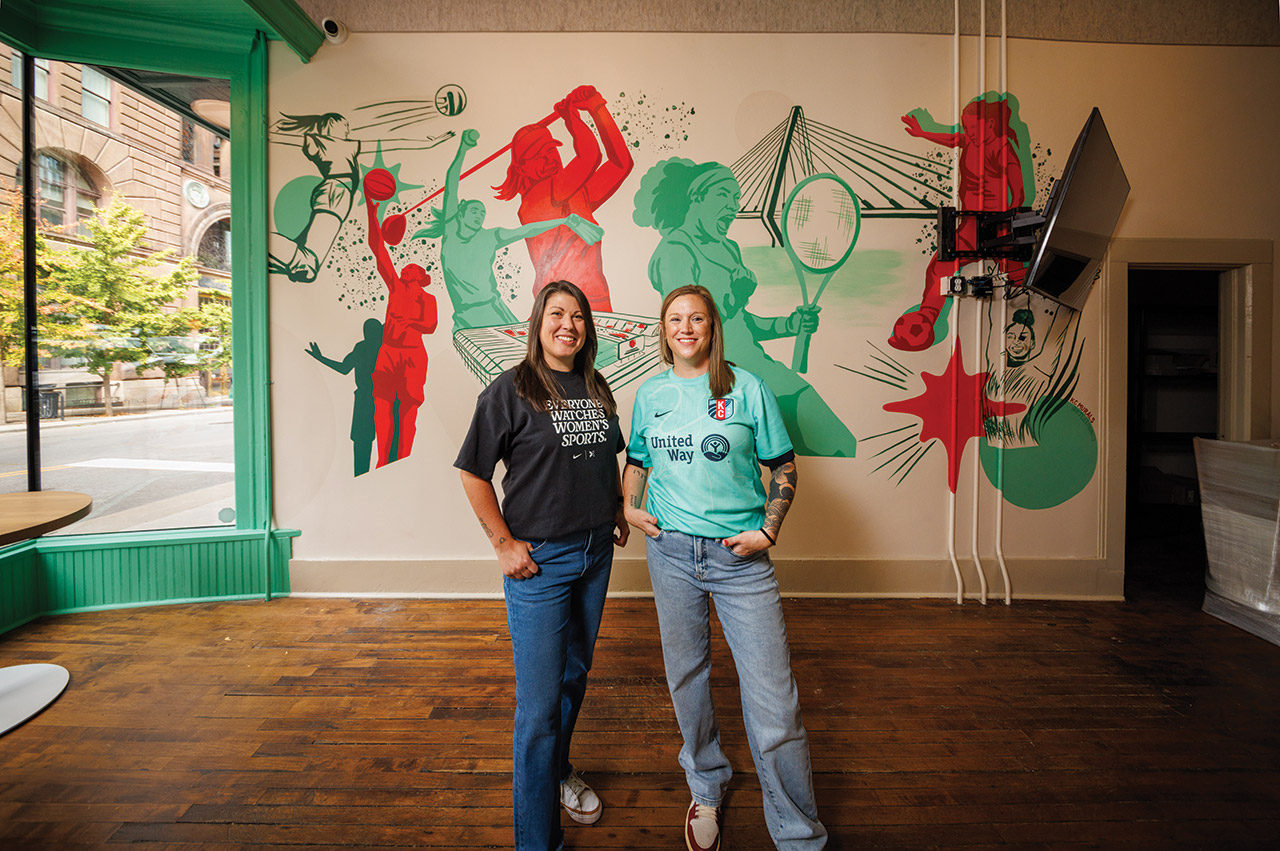
The Dub is “not-your-dad’s-sports-bar.”

Photo by Paul Andrews

Kansas City knows sports, but founders of The Dub, Monica Brady and Rachel Glenn, are proving there’s still room to raise the bar. As the minds behind KC’s first-ever women’s sports-focused bar, they’re creating an inclusive environment for fans to gather, watch and celebrate. 

KC Options sat down with Monica and Rachel to get the scoop on what it’s all about. 

WHAT INITIALLY INSPIRED YOU TO BRING A WOMEN’S SPORTS BAR TO KANSAS CITY?
Monica: We have spent years going to “traditional” sports bars trying to watch a women’s game. The response usually ranged from annoyance to a flat-out “no, we can’t put that on,” so we wanted to create a space where women’s games would always be celebrated. We wanted to create a space we’d want to go to!

WHAT MAKES KC A GOOD BACKDROP FOR A CONCEPT LIKE THIS? 
Rachel: Kansas City is rich with community, especially around our local sports teams. Not just our men’s and professional teams — but sports in general, including women’s. Being in a city that was already championing women’s sports, we knew we were in the right place at the right time to bring the vision to life. 

WHY IS INCLUSIVITY SUCH A CENTRAL VALUE FOR THE DUB, AND HOW WILL YOU BRING THAT TO LIFE?
Monica: Sports bars tend to have a stereotypical environment that not everyone feels comfortable in, and we believe that sports should be accessible to everyone. More than that, it’s rooted in our own beliefs that all people deserve to feel seen, welcomed and respected, no matter their life situation. We lead our lives with a sense of intention and purpose to build community and inclusion, so it only makes sense that The Dub be centered on those values as well. 

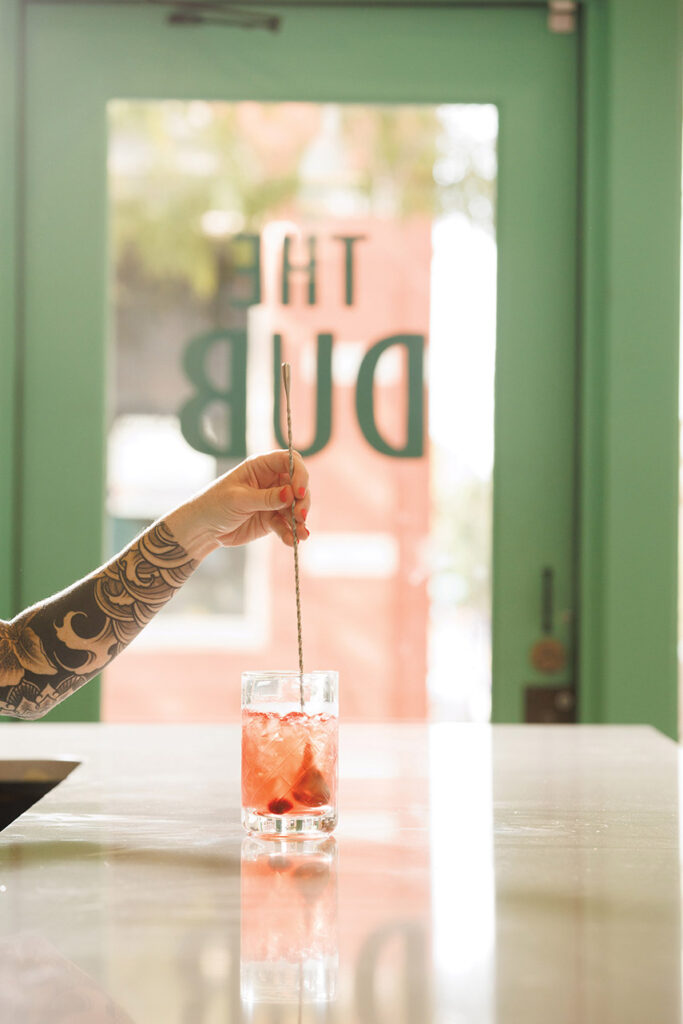
A bartender stirring a drink at The Dub.

MONICA, AS A CERTIFIED SOMMELIER, HOW DOES YOUR BACKGROUND SHAPE THE DRINK EXPERIENCE AT THE DUB?
Monica: My first love is soccer, and my second love is wine, so the environment of The Dub is my haven for combining the two. Much like my belief about sports, I believe that wine should be inclusive to all people. The wine list is approachable and experimental, featuring both classic drinks and fun, on-theme house cocktails. There are also great mocktail options because enjoying sports at The Dub doesn’t require drinking alcohol. 

TELL US ABOUT YOUR COLLABORATION AND GUIDANCE FROM OTHER WOMEN’S SPORTS BAR OWNERS. WHAT HAVE YOU GAINED FROM THAT NETWORK?
Rachel: There’s always a feeling of sisterhood when you talk to women, especially in business, and knowing there are women out there who have done exactly what we are doing gives a sense of community unlike anything we’ve ever experienced before. It’s extremely exciting to see the U.S., Canada and other parts of the world fall in love with women’s sports, and the women we’ve met opening these businesses share that excitement and pride. 

WHAT WOULD IT MEAN TO YOU, PERSONALLY AND FOR YOUR COMMUNITY, TO SEE THE DUB BECOME A GATHERING PLACE WHERE FANS OF WOMEN’S SPORTS CAN FEEL CELEBRATED AND CONNECTED?
Monica: I truly believe that bringing The Dub to life in KC is what I’m meant to do with this era of my life, so I will feel very proud that I was able to give something back to the community and grateful that it is received well. 

Rachel: I believe The Dub has already become a place where women in sports and fans of women’s sports feel celebrated. We’ve had nothing but an outpouring of support from this city so far — and when we can look around and see people building community through our space, I will feel a sense of fulfillment, but also a drive to create more spaces like The Dub throughout the city.

A Little Slice of Heaven

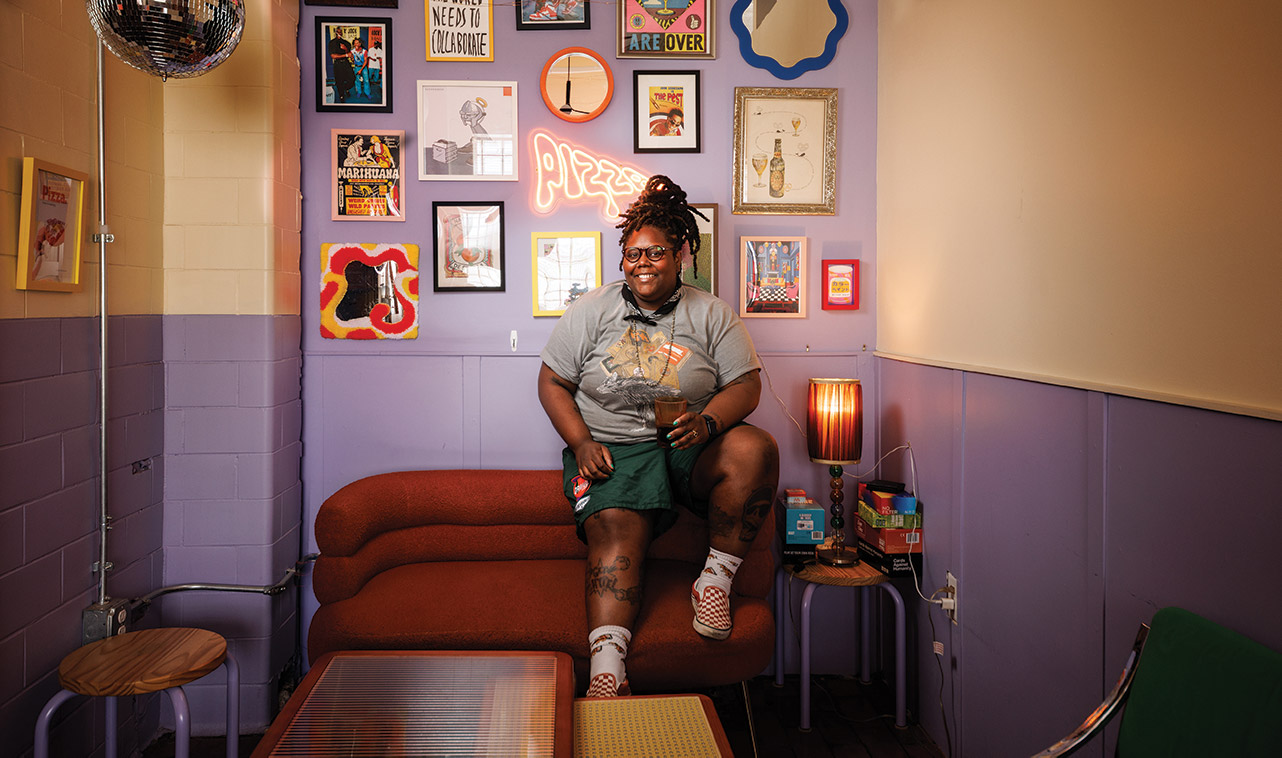
International travel inspired Jhy Coulter to create some of KC’s favorite pizza.

By Weston Owen | Photos by Paul Andrews

Pizza is communal — a familiar, approachable dish that brings family, friends and loved ones together. Yet, for native Kansas Citian Jhy Coulter, its purpose has served a much greater role, one that helped her launch a thriving business and altered her life trajectory. 

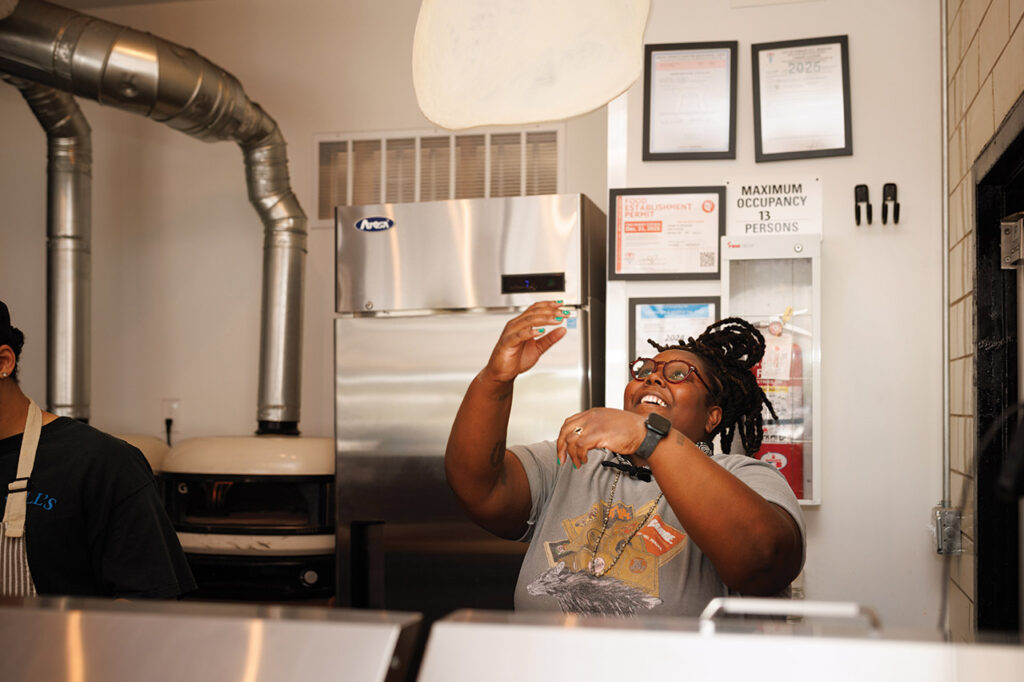
Originally from Olathe, Kansas, Jhy began studying graphic design at the University of Missouri-Kansas City (UMKC) in 2014. Like many college students making their way through school, she began working in the service industry, specifically at a local pizzeria, making deli sandwiches. During one shift, due to short staffing, Jhy was shown how to make pizza. She quickly found that she loved the process — from the methodical preparation to the creativity involved. Everything about pizza-making was fun to her, especially seeing how happy it made people. 

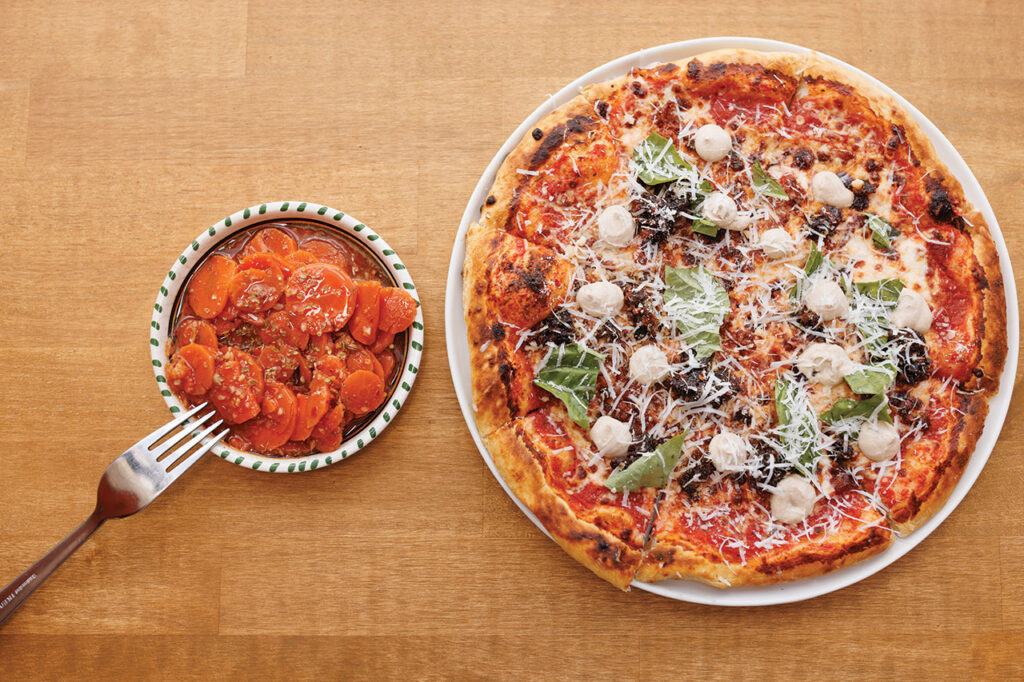
A pizza and carrot salad.

While Jhy was in school and after she graduated in 2017, her partner was teaching English in Spain. When in need of a long-overdue vacation, Jhy visited for what was only meant to be a few weeks. Yet, she found herself drawn to Spanish culture, energized by the community and its shared love for food. So, not only did Jhy end up staying longer than expected, she also decided that she’d join in teaching English abroad.

After months had passed and her teaching program had concluded, Jhy came back to the States and began looking for roles that aligned more closely with her degree in graphic design. Yet that time spent overseas and her exposure to new cuisine had altered her worldview and aspirations. Recalling how much she’d enjoyed her time in the restaurant industry, Jhy chose to return to the kitchen. By 2019, she was learning and growing within Kansas City’s food scene.

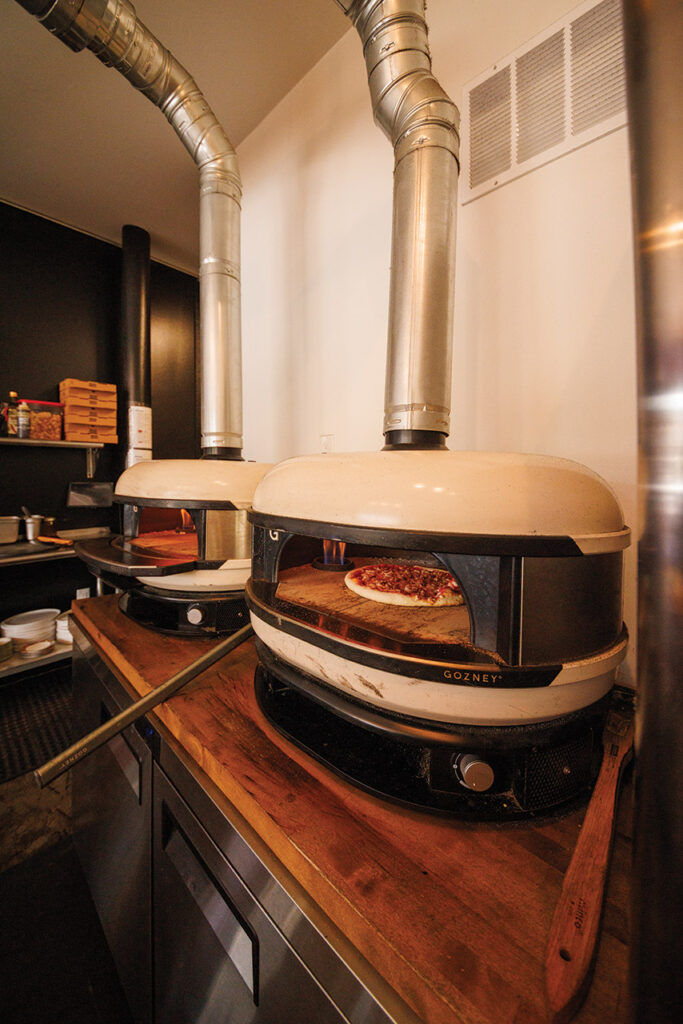
It was then that she entered an Instagram giveaway sponsored by Chef Matty Matheson and Gozney, a manufacturer of commercial ovens. The prize? A Roccbox — the company’s flagship portable pizza oven. While she knew the odds were long, she gave it a shot. Ultimately, despite thousands of entries, it was Jhy who received a direct message that she’d been drawn as the winner.

Elated and with her newly acquired pizza oven, Jhy viewed this as an opportunity to begin forging her own path and perfecting her pizza-making craft, but that didn’t come without some growing pains along the way. 

“At first, I was burning a lot of pizza for family and friends in my backyard,” joked Jhy. “Pushing my boundaries and gaining a deep understanding of the process really helped drive me to create something unique, yet approachable. That’s how the Devoured Pizza brand was born.”

During the height of the pandemic and shortly thereafter, Devoured Pizza skyrocketed. From selling pizza out of her home to partnerships and local pop-ups — more than 200 over a four-year span — Jhy’s pizza gained immense popularity within the community. So much, in fact, that she had to buy another oven to keep up with public demand. 

Jhy Coulter throwing pizza dough in the air.

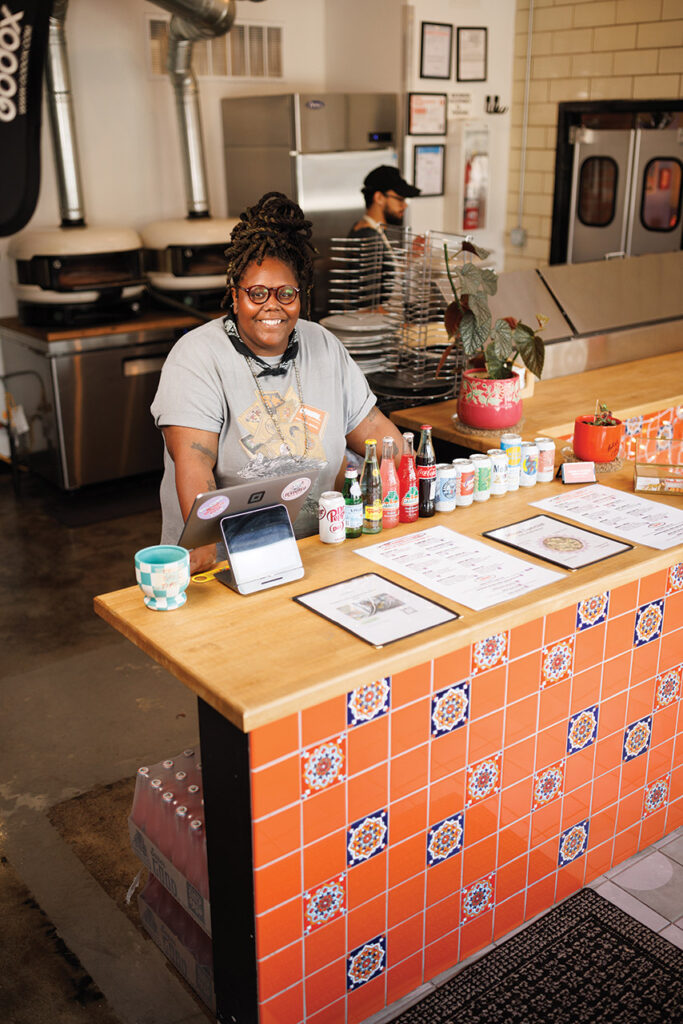
Understanding that opening a brick-and-mortar storefront was the next logical step in her journey, Jhy began raising funds to create a space of her own. After finding the perfect location in one of Kansas City’s favorite neighborhoods, Martini Corner, and spending nearly a year retrofitting and carving out her niche, Orange By: Devoured opened to the public in August of 2024.

Now, a thriving pizza business focused on communal dining experiences and unique topping combinations inspired by her time abroad, the continued support from her community has propelled Jhy’s career in ways she’d never before imagined. While the journey hasn’t been easy, each decision she made led to this moment in time, welcoming a community to gather and exist over a slice or two.

“While Spain’s approach to offering fresh ingredients, approachable plates and communal gathering areas served as my ultimate inspiration, it’s Kansas City and this community that’s given Orange By: Devoured life and personality,” said Jhy. “The namesake may have been born of the bright, vibrant colors of the Spanish countryside, but the warmth and positive energy of KC is why I couldn’t imagine doing this anywhere else.” 

Fire + Glass + Gas = Magic

Second-gen neon shop in the Crossroads is adding a ‘glow’ to KC. 

By Randy Mason | Photos by Paul Andrews

If you see a strange glimmer coming from a nondescript building off to the side of Highway 71, no, you’re not going crazy.

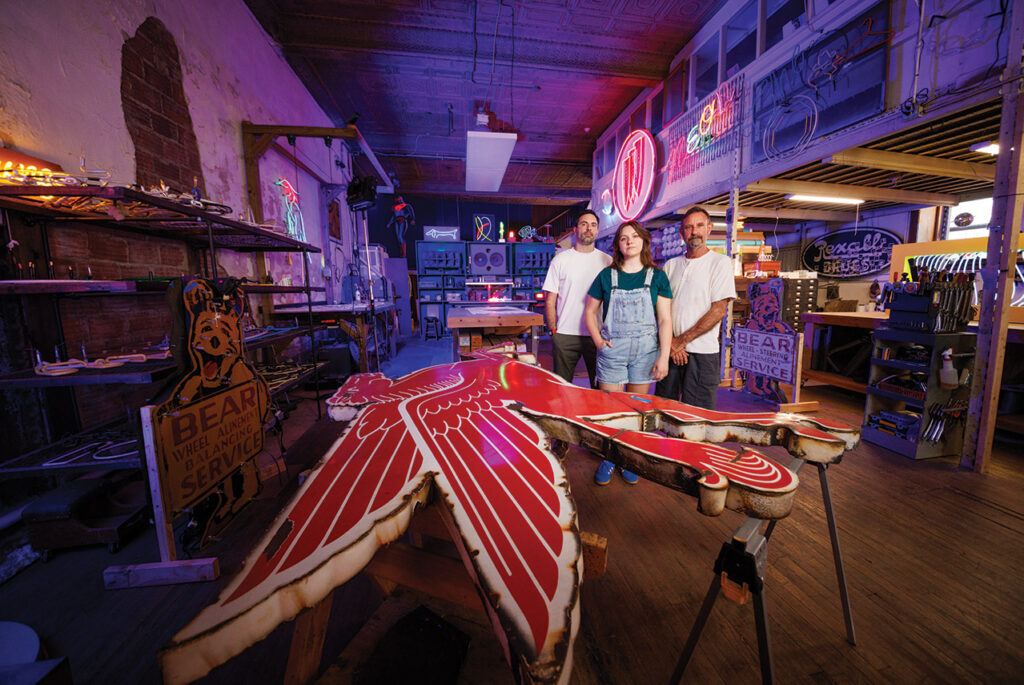
Element Ten, named for neon’s spot on the periodic table, is a small studio at the east end of Kansas City’s Crossroads Arts District. The shop is inconspicuous, unless the front door’s open — the brilliant colors, abstract shapes and a distinctive glow are a dead giveaway.

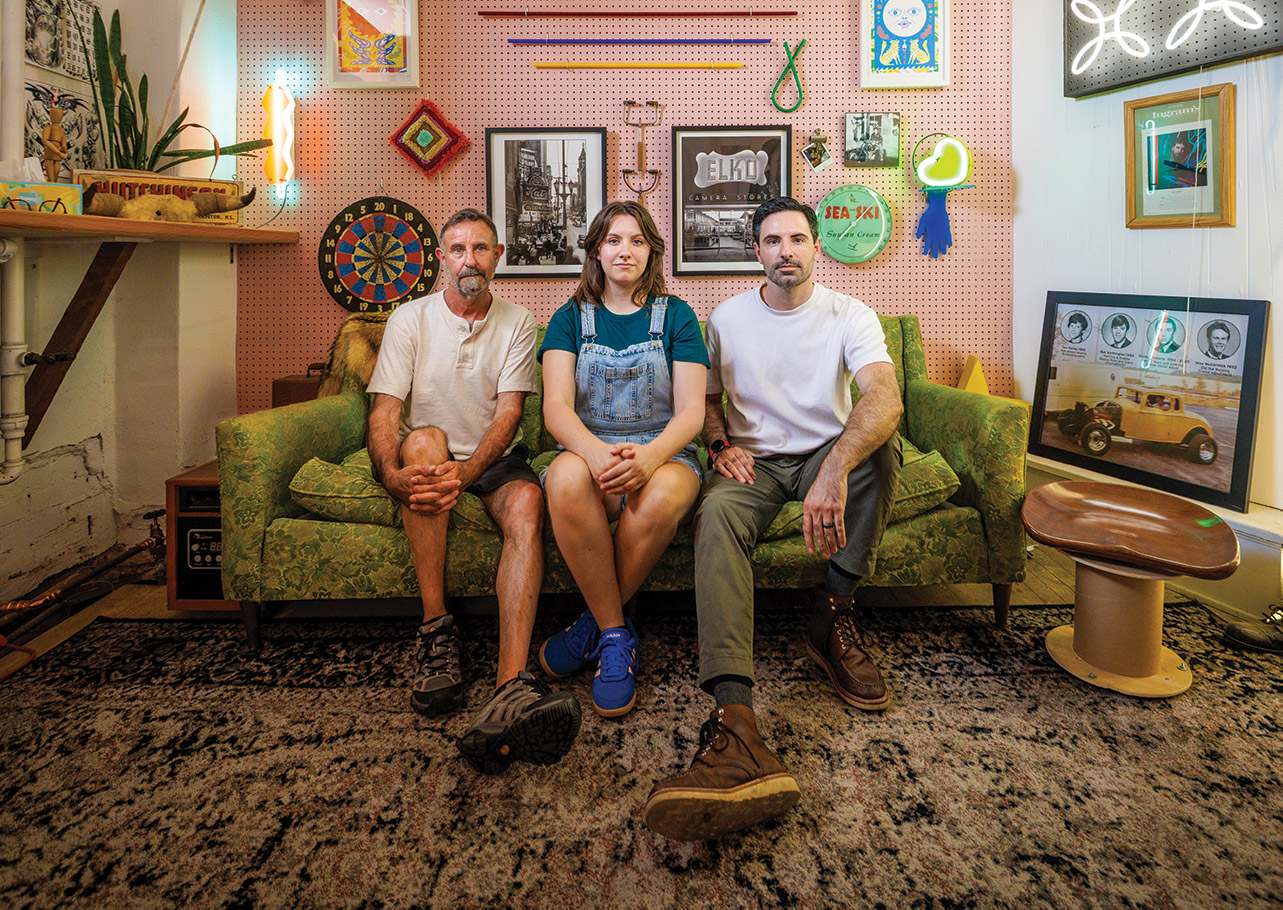
Dylan, Olivia and Randy standing in the Element Ten neon studio.

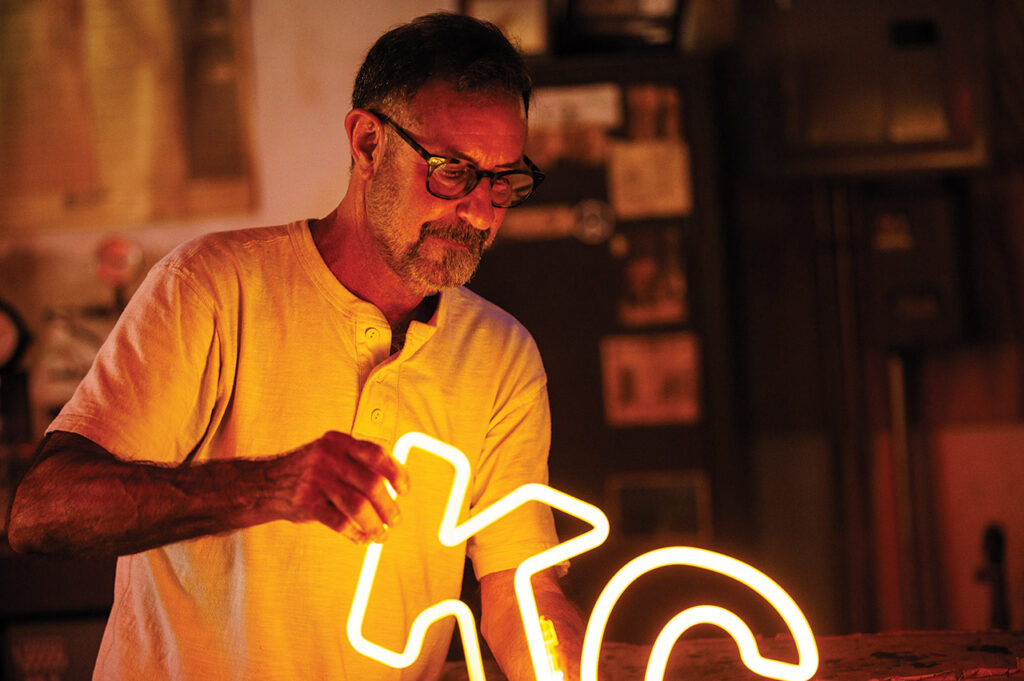
Neon has always been a part of the lives of siblings Dylan Steinmetz and Olivia Shelton. Their father, Randy Steinmetz, traded farming for the sign business more than forty years ago. It wasn’t long before he was hooked on the art form. 

“I told my wife, ‘I know what I want to do,’ the elder Steinmetz grins. “And here we are.”

Dylan still remembers his first time working with glass. “I think I was probably 10 or 11 the first time I got to hold glass and try to bend it. It was kind of familiar, but also kind of exciting,” he said. 

In 2022, this trio formed its own family band — with each member bringing distinctly different skillsets to the table.

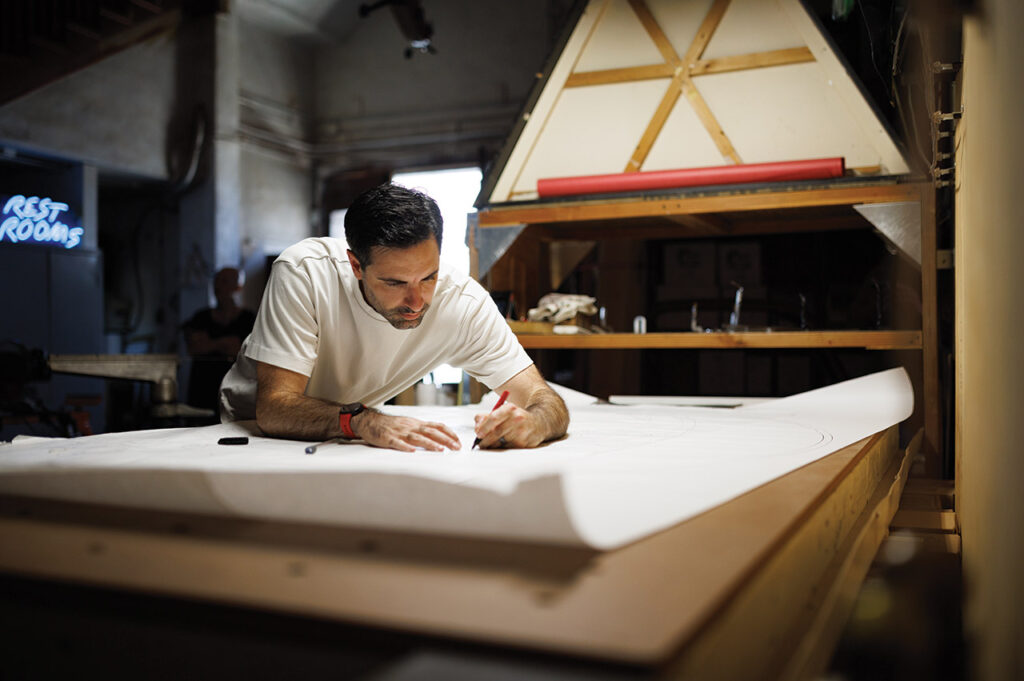
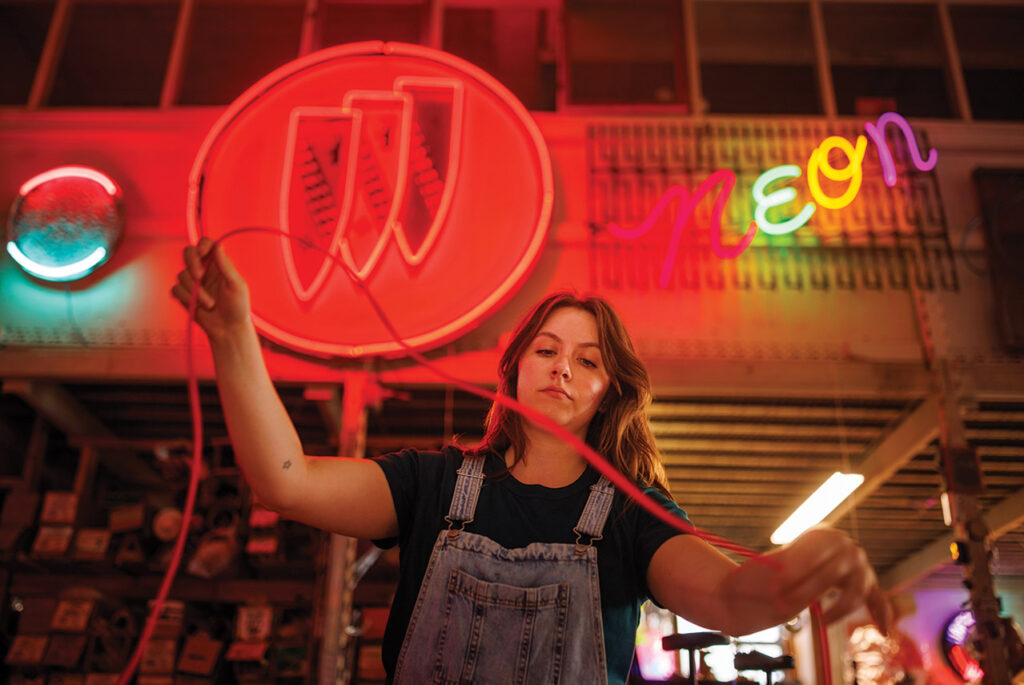
Randy, of course, has decades of know-how and contacts in the signmaking industry. Dylan went to art school in Washington and now leads their drafting stage, while Olivia pursued a career in marketing before she, too (with guidance from her dad) started on neon pieces of her own.

“In our case, the family dynamic is very positive,” Olivia says. “We have a kind of communication that’s often nonverbal. And we understand each other’s sense of humor. That makes it easier.”

In a world where computers play an outsized role in just about everything, working with fire, gas and glass remains very hands-on.

“You have to have a plan before you start making what you’re making,” Dylan explains as he holds up a pattern traced onto paper. “Ideally, you bend the glass once and it lands where you intended to put it.”

What can’t be planned are the jobs that will come through the door. The workload at Element Ten varies from vintage sign repair and restoration to completely new creations commissioned for businesses of all kinds.

The studio has crafted striking signage for Ragazza Food & Wine, the Seven Swans Creperie, and a Japanese collectibles store called Bubble Wrapp, to name just a few.

In 2024, a new cocktail bar named Sagebrush needed a large decorative feature to hang above the bar. Dylan recalls it as “a perfect scenario — with clients who trusted us blindly and liked what we gave them.”

Collaborating with local artists is part of the master plan for Element Ten. They recently teamed up with Paulina Otero, an artist and jewelry maker, on a series of neon wall sconces.

The inter-generational Element Ten team sees a glowing future in the neon business, fusing innovation with the historic nature of neon. 

“The association with neon and nostalgia is alive and well,” Olivia says. “But I think this is a transitional moment where a new generation is excited about what neon can be. And we want to serve both audiences.”

A neon sculpture created by Element Ten.

Touchdown in Kansas City

Supported by family, former Chiefs player Danan Hughes scored big in KC.

By Pete Dulin | Photos by Paul Andrews

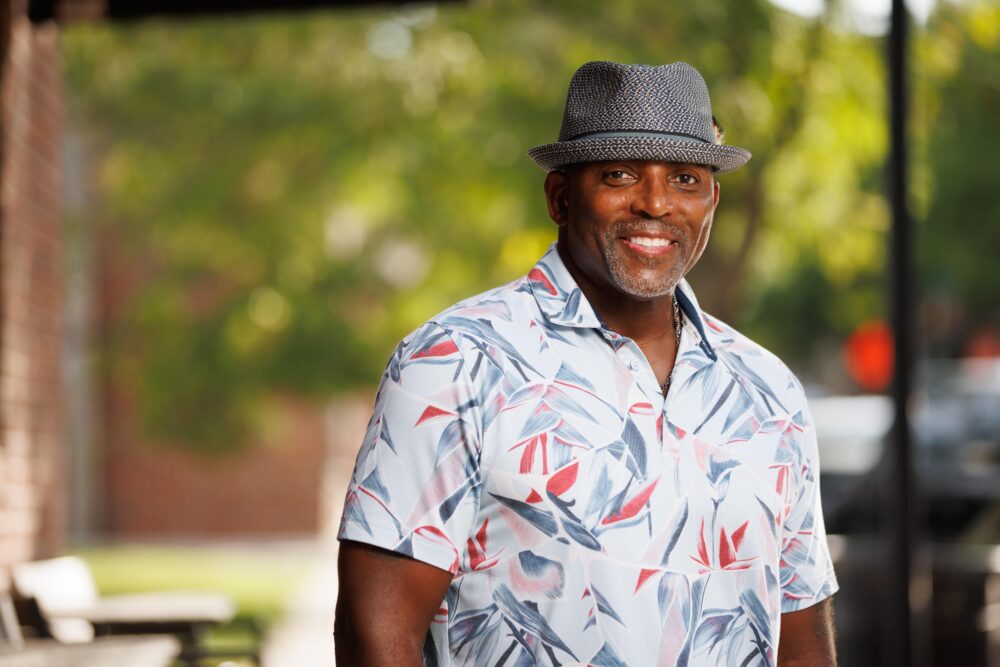
“Neither of us foresaw being this far from New Jersey. We sat down at a table and made a list of pros and cons,” said Danan Hughes, recalling when he contemplated his next steps after six years of playing wide receiver for the Kansas City Chiefs.

Hailing from the East Coast, Danan and his wife, Tiffani, faced a life-changing decision. Stay in Kansas City or leave? By 1999, they were parents of four children with a fifth to come later. 

Overwhelmingly, their list favored staying. Kansas City won them over with the affordable cost of living, excellent area schools, quality of life and the ability to maintain a connection with the Chiefs.

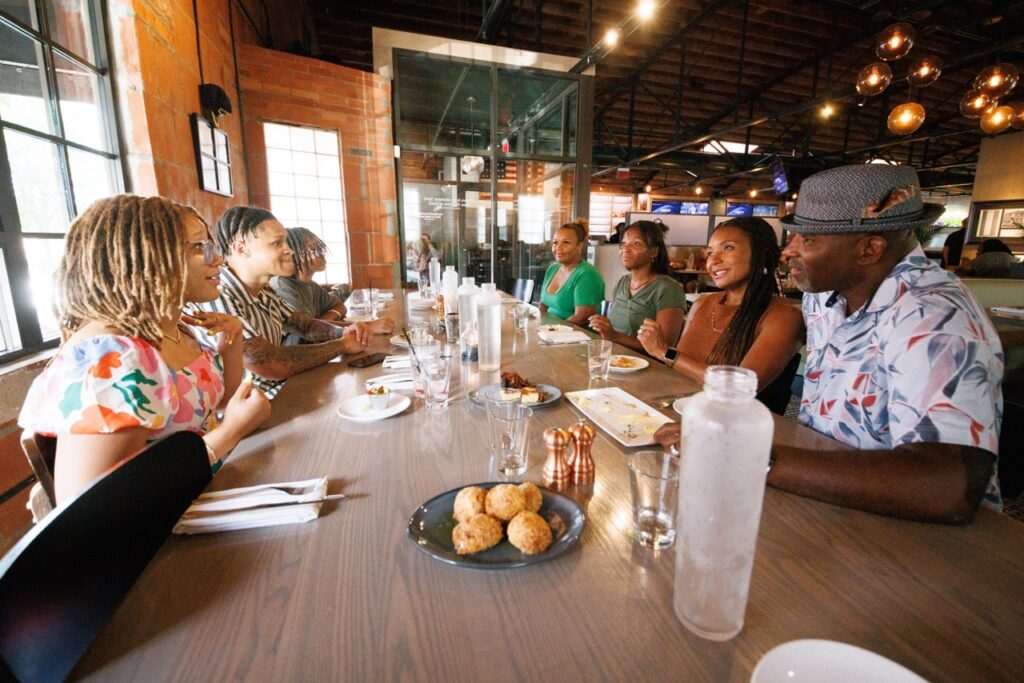
Danan Hughes and family sitting around a table at Third Street Social.

The appeal of KC drew in many of Tiffani’s family members, who packed up their lives in New Jersey to settle near the Hugheses. Danan’s family in New Jersey regularly makes the journey to Kansas City as well. 

“There’s a different style and speed to living here. It’s family first for me and my wife, slow enough to raise a family but fast enough for every lane of life,” said Danan. 

Their adult children and grandchildren have continued their lives in the area. “They see the value in living here,” said Danan. 

The connections and community Danan found as part of the Chiefs were especially valuable when transitioning from pro-player to business pro. Following his football career, a banking contact helped him land a six-month internship, which sparked a long-term career in mortgage lending and business development. 

Over the years, Danan has counseled and aided many families, young athletes and entertainers, teaching them how to manage their credit and loans as first-time home and auto buyers. Most recently, Danan brought that expertise to CommunityAmerica Credit Union, where he continues to help others build strong financial futures. 

Beyond the nine-to-five, Danan fuels his passion for sports as a coach and analyst.

“In the locker room, I coached up many young athletes and became an educational force not only in Kansas City but across the country,” said Danan.

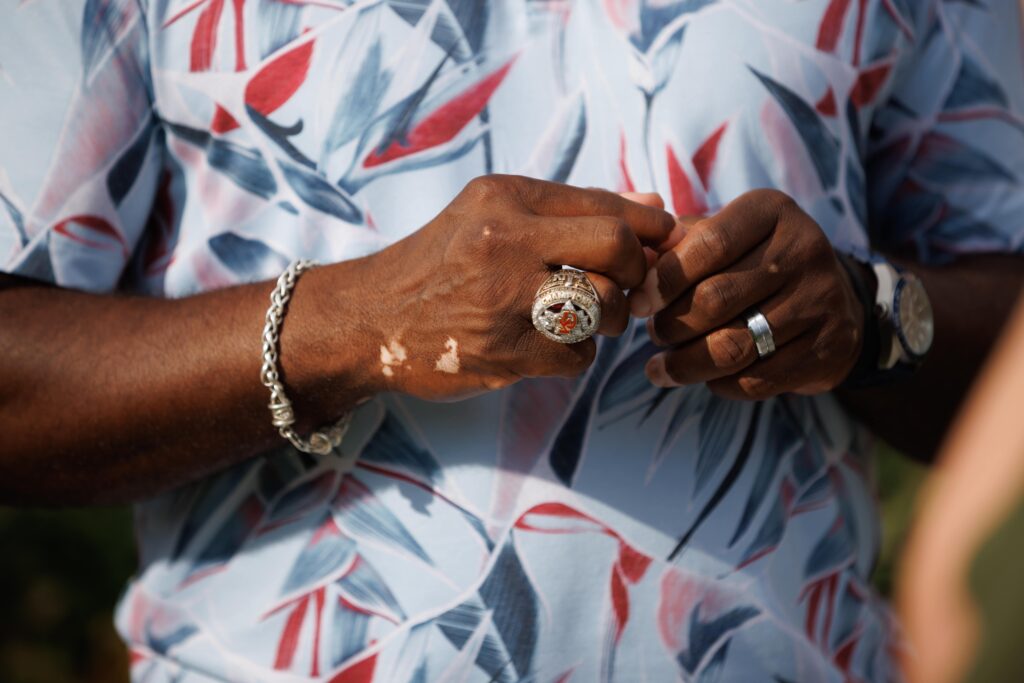
Danan Hughes hands with Chiefs rings.

And his commitment to the Chiefs hasn’t wavered. Danan is the second-term director and president of the Kansas City Chiefs Ambassadors, a group of nearly 60 retired players who work to continually serve the community. 

“The Chiefs teach you early to stay connected. Serve on the board of a charity, raise funds and donate it,” said Danan.

Danan also serves as a color analyst for the Kansas City Chiefs, one of only 32 team-affiliated analysts in the NFL. 

“I’m the only color analyst and former athlete currently doing college basketball, football and baseball as well as professional sports for ESPN and the Big 10 networks. I keep one foot in the locker room. It’s a blessing for me to do this work and zigzag across the country,” said Danan.

And when Danan takes breaks from ‘zigzagging’ the country, the comforts of Kansas City and his family await when his work is done. 

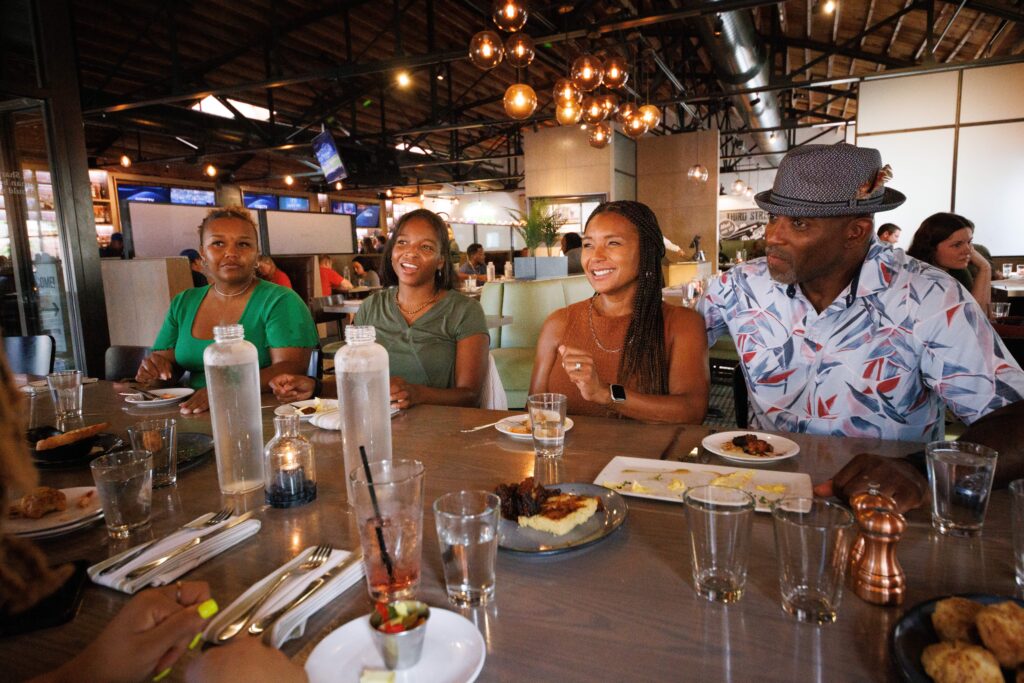
Danan Hughes and his family sitting around a table at Third Street Social.

The Humble, Award-Winning Tortilla

How a lifetime of cultural influence propelled Marissa Gencarelli and Yoli Tortilleria onto the world’s biggest stage.

By Weston Owen | Photos by Paul Andrews

As the lights dimmed and the nominees for Outstanding Bakery reverberated throughout the Lyric Opera of Chicago, Marissa Gencarelli turned to her husband Mark and both exchanged soft smiles. They understood how difficult it was to win a James Beard Award and it was an honor to have even made it this far.

By that point in the ceremony, Marissa had already loosened the straps on her high heels. After all, she probably wouldn’t be making the long walk to accept the prestigious award. There was just no way the winners would be seated that far back in the auditorium, she thought. But it was fine. Alongside so many great nominees — some of the best bakeries in the nation — being mentioned in the same breath was enough for her. The crowd cheered as the anticipation grew. Then silence, deafening.

“And the winner is… Yoli Tortilleria!”

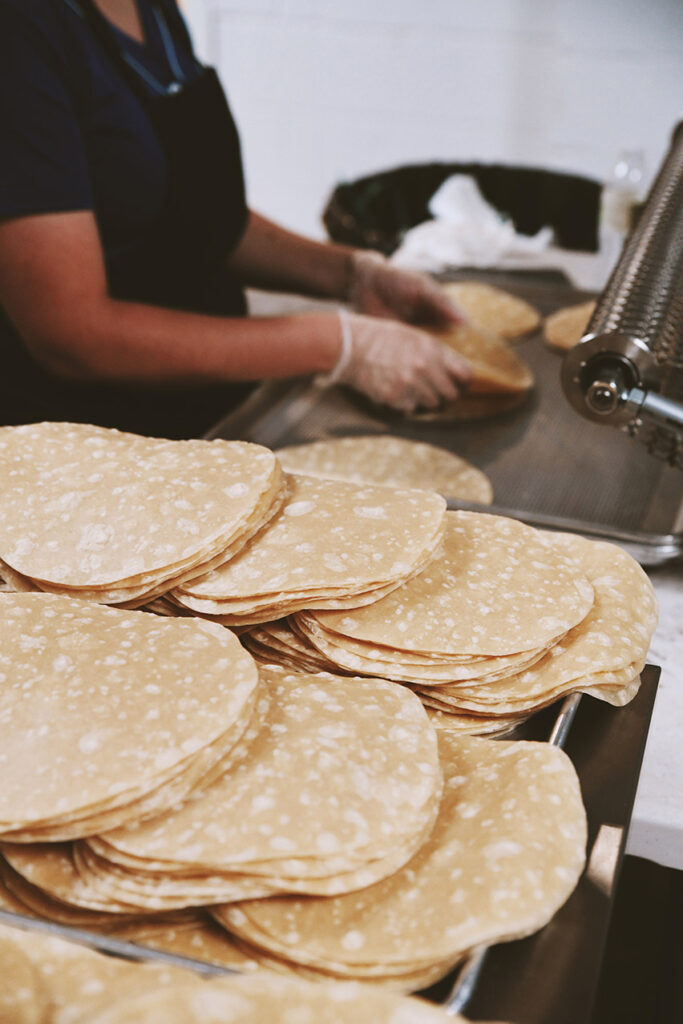
A stack of Yoli tortillas.

Disbelief and excitement overcame. Heel straps were tightened hastily as Marissa stood and began that long, unexpected walk to the stage. In many ways, it was representative of the long, unconventional journey she’d made to arrive on that spring afternoon in Chicago.

Born in Sonora, Mexico to a local lawyer and a teacher from California, Marissa’s upbringing was woven with multi-cultural experiences. From a young age, and as far back as she can remember, her parents instilled the importance of her heritage and the celebration of her culture in all that she did. Every summer, her family would load up their car and travel across Mexico, making frequent stops along the way to experience the rich history and beauty of Mexican culture — including its local flavors and cuisine.

“Some of my earliest and fondest memories completely transformed how I perceived Mexican culture and food,” Marissa smiled. “For a young girl, those long trips on unpaved roads could be exhausting, but seeing the countryside and experiencing the culture has had the biggest influence on my life.”

Looking back, those road trips meant the world to Marissa, not only because they offered an authentic, invaluable glimpse into a country she cherished but because they were spent alongside the family she loved. So, once she began a family of her own, it was of the utmost importance to preserve that tradition.

After meeting Mark abroad in Italy, they had their first child, Santiago, and moved to Mark’s hometown of Kansas City. They began traveling to Mexico to help pass that cultural love and understanding along to their son. But something interesting happened during those frequent trips. That adoration turned into a desire to bring authentic Mexican cuisine back home.

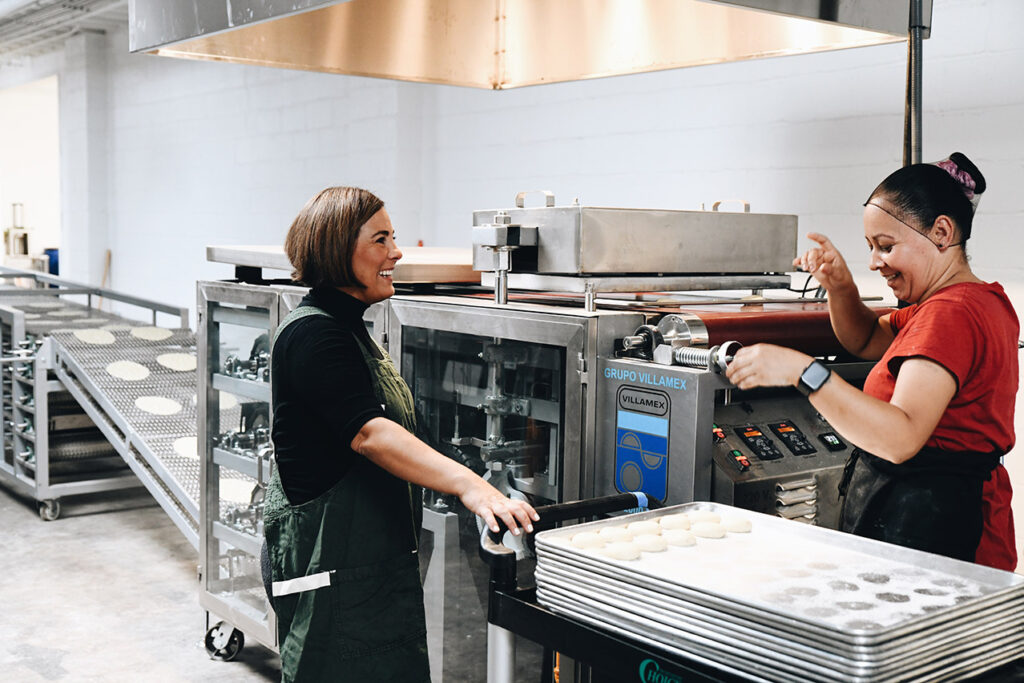
“Whenever we’d travel, we always brought high-quality tortillas back so we could enjoy authentic meals throughout the year. But when we ran out, there were never good local alternatives,” said Marissa. “So, nearly a decade ago, I began cooking tortillas myself. Mark and I would improvise, trying recipes that would introduce different flavors and ingredients to our family. We’d cook two to three times every week, which allowed me to put my heart and soul into the food we prepared.”

Her focus and dedication to create something authentic served as Marissa’s guiding light and thus, the idea of owning their own tortilleria was born. She and Mark continued prepping and honing their craft, all while holding down full-time corporate jobs and welcoming their second child, Siena, to the world.

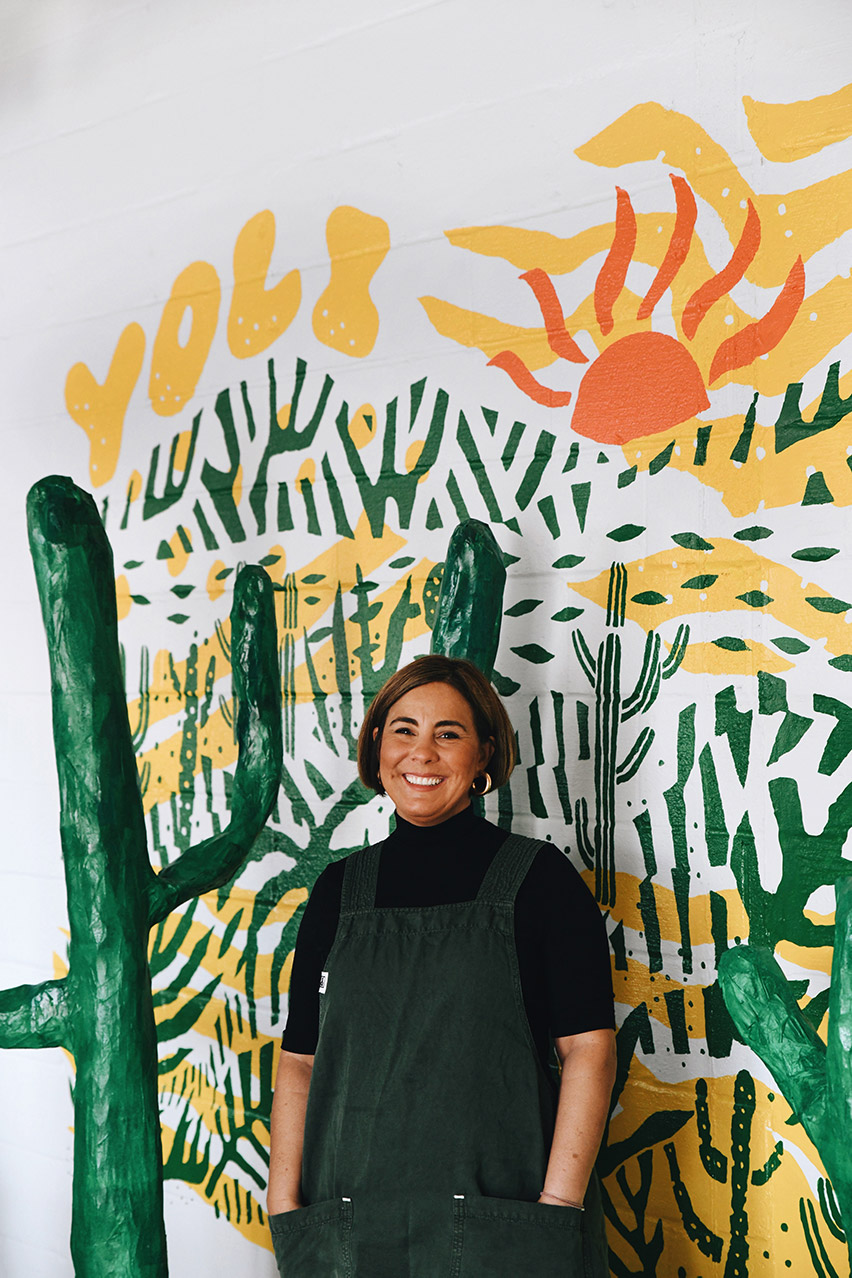
And then there was the brand’s name. It had to pay homage to Marissa’s history while honoring those experiences that had influenced her path. And that’s how Yoli Tortilleria came to be. Yoli, meaning “to live,” embodies an adventurous lifestyle, travel and memories — fully embracing those bumpy rides and cultural encounters. And the emblem, prominently displayed on every product that Yoli creates, is a representation of Marissa’s mother, who was her biggest inspiration and advocate.

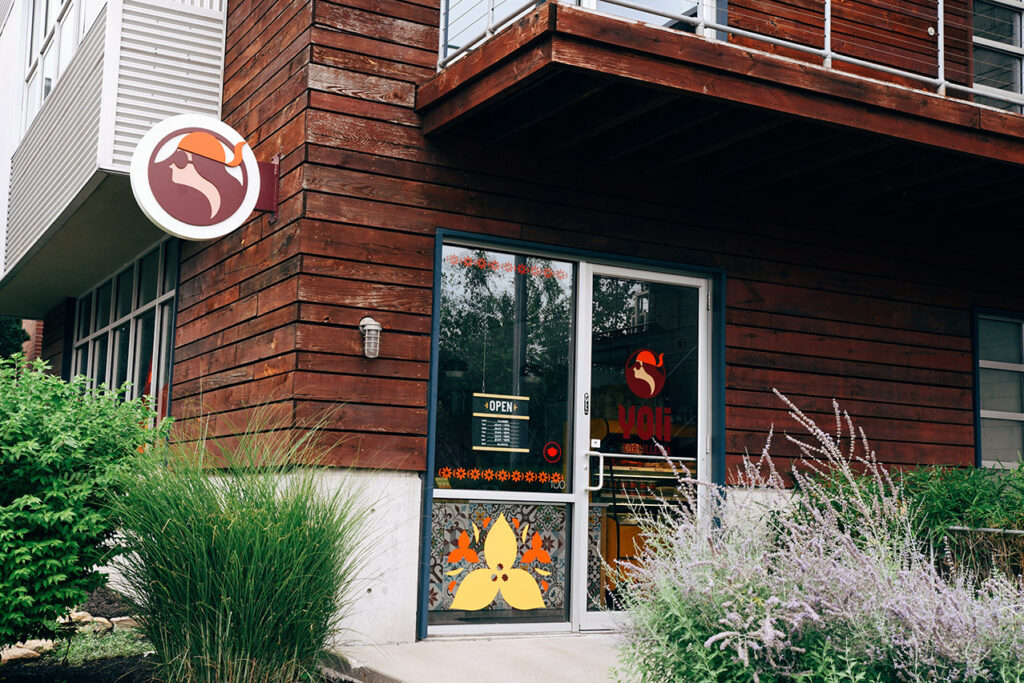
An exterior view of the Yoli Tortilleria.

Yoli now had an identity and that’s when the magic grew. Local restaurants began carrying Yoli products, exposing the community to incredible Mexican cuisine. Pop-ups showcased the brand, relationships were developed and word spread about this new, up-and-coming tortilleria in Kansas City. That hype — built upon love, hard work, bravery, exploration and passion — eventually led to the long walk one spring afternoon in Chicago.

As Marissa made her way onto the stage, a medallion with James Beard’s likeness — the first of its kind for exemplary bakeries — waited to take its place around her neck. She fumbled through her purse, looking for the scrap of paper she had scribbled a speech on. The spotlight shone bright. All eyes on her.

“Thank you. I wrote this just in case and I’m glad I did. Yoli was born out of dealing where life had taken us. We were in a very weird space and reaching our forties and, more than twenty years ago, I’d lost both of my parents. I have now lived most of my life without them. Baking became our therapy. A way to connect and honor my ancestors, in the middle of North America. Thank you for the opportunity and for helping us honor the very humble tortilla. Gracias totales to the Beard Foundation, to our friends, family, our children — Santiago y Siena, who put up with us so much and all our crazy schedules. And our city, Kansas City. Without you, we would not be here, so thank you so much. Muchas gracias.”

Long, bumpy road trips paved the way to create the truly remarkable. Genuine desire for others to experience Mexican cuisine created the foundation for Yoli Tortilleria, and the influence and support from Marissa’s family dissolved any doubt from those who discounted her dreams. Now, an excited and invigorated industry is fixated on those humble, award-winning tortillas.

Acts of Kindness: A KC Story

For Noeida Kuhnert, family and community mean the world. 

By Ann Clifford | Photos by Paul Andrews

Noeida Kuhnert’s Kansas City story begins in Cuba before she was even born. Her parents and brothers fled the country in the early 1960s with little more than the clothes on their backs. Once in the U.S., the family was “adopted” by the First Southern Baptist Church in Kansas City, Kansas. The warm welcome they received became a family legacy.

“My parents and brothers were greeted at the airport by a crowd of members from the church, the mayor and newspaper reporters,” Noeida says. “Though it was difficult for them to start over, the experience was beautiful. The whole community, churches of different denominations, and businesses came together to help. The sense of support and inclusion is one of the reasons why I chose to stay here, start my career and raise my family.”

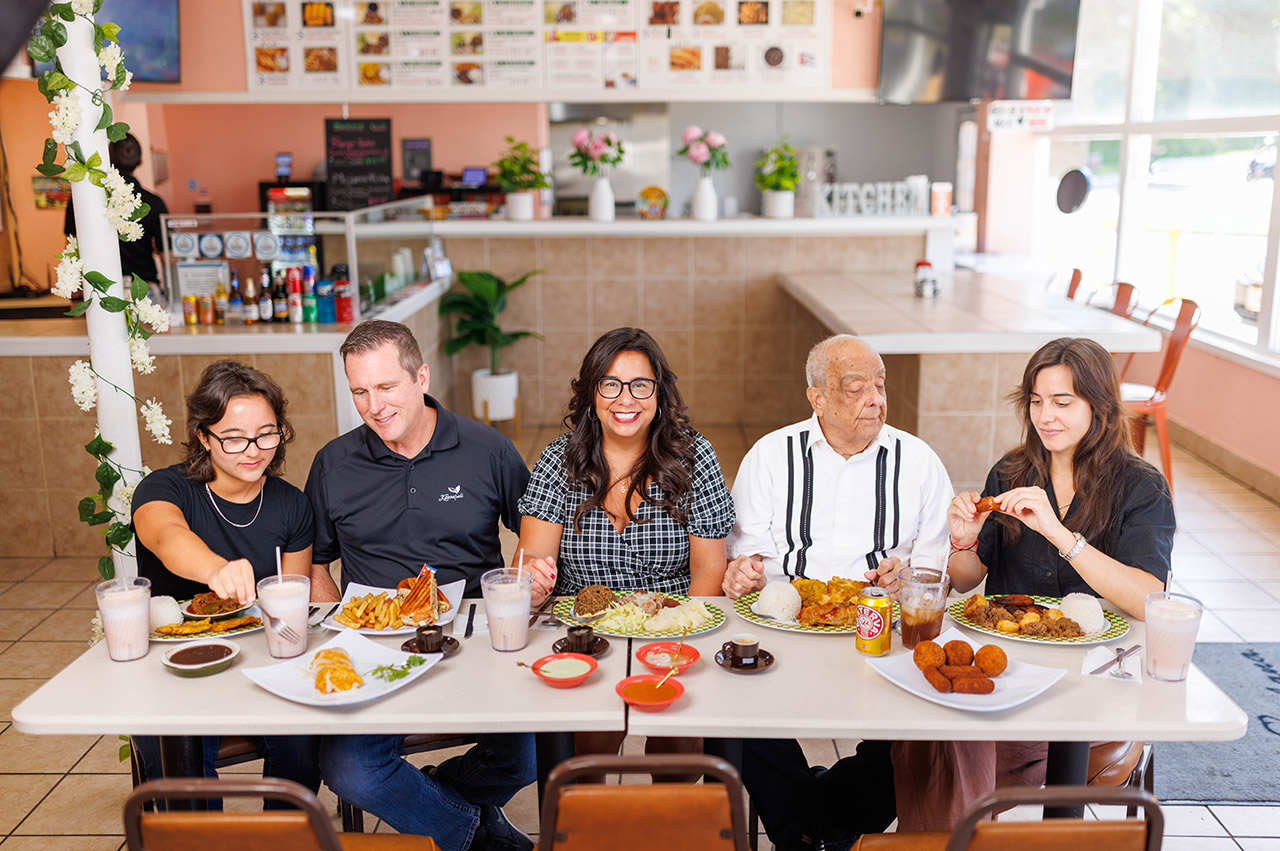
Noeida and family talking over lunch.

Noeida carries the spirit of inclusion and giving back through her work and community engagement. An engineer, she has worked for Hallmark for more than 30 years. As the general manager at the company’s Leavenworth facility, she champions the company’s beliefs and values.

Kansas City’s welcoming nature and inclusivity are at the heart of the region’s strength, according to Noeida. “Born and raised here, it’s exciting to see that Kansas City is booming,” she says. “Just like they did for my family, the people in this community continue to come together to make the city a great place to live, work and make lifelong connections.”

“Hallmarkers work to create a more emotionally connected world and make a genuine difference in every life, every day,” she explains. “I love it because it includes how we engage within our four walls as well as in the community around us. At my plant, we have a Diversity, Inclusion and Acts of Kindness team that focuses on using our differences to work toward a common goal and make a difference in our community.”

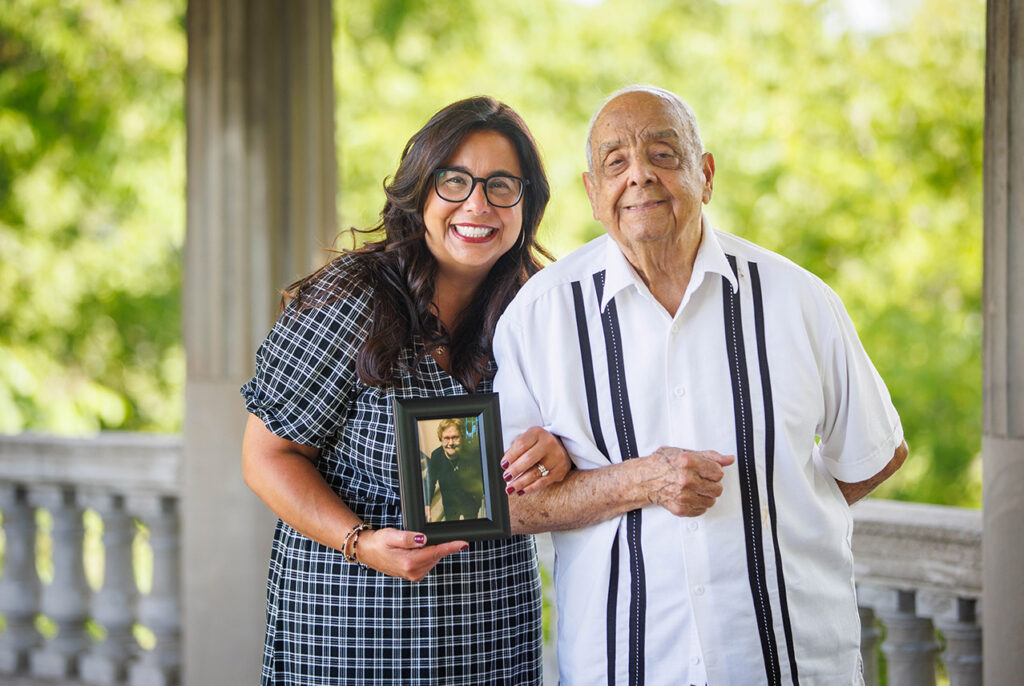
Noeida and her father, holding a picture of her late mother.

Cultivating Community Through Coffee

One cup at a time, Jackie Nguyen is serving as a beacon for Asian culture.

By Weston Owen | Photos by Paul Andrews

Kansas City is a tapestry of unique stories — individual threads that, when woven together, create a strong and beautiful community. Jackie Nguyen, owner of Kansas City’s first Vietnamese coffee shop, Café Cà Phê, is one of those threads. While her path to our Midwest gem of a city was unexpected and born in a time of uncertainty, her positive impact now radiates, shining a light on Asian culture and marginalized demographics.

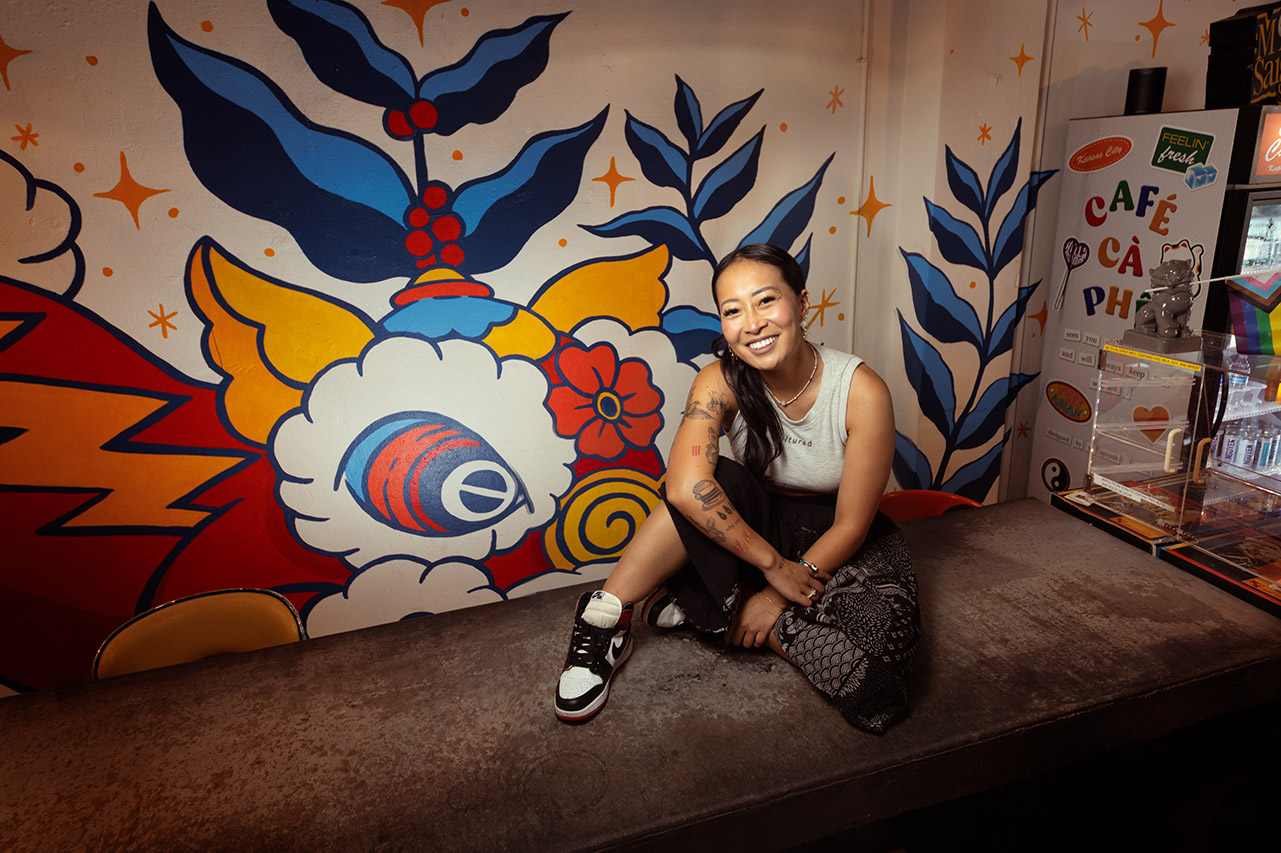
Jackie Nguyen posed in front a "support small biz" mural.

In March of 2020, Jackie — who’d been an actor in New York for a decade — was traveling across the United States for her Broadway role in Miss Saigon, a gig she’d worked incredibly hard to land. She received a call that, due to the pandemic, her show was going to be closed indefinitely. Devastating for her and her castmates, she committed to remain resilient and found her way to Kansas City for what she believed would be a temporary stay.

When she arrived, she knew she wanted to carve her niche, yet she found there wasn’t as much Asian diversity or representation as she’d grown up with in San Diego as a first-generation Vietnamese American. That’s when she tapped into a former life — nearly 10 years of being a barista in New York — and started selling Vietnamese coffee in Westport. One cup at a time, word began spreading and Café Cà Phê was born.When she arrived, she knew she wanted to carve her niche, yet she found there wasn’t as much Asian diversity or representation as she’d grown up with in San Diego as a first-generation Vietnamese American. That’s when she tapped into a former life — nearly 10 years of being a barista in New York — and started selling Vietnamese coffee in Westport. One cup at a time, word began spreading and Café Cà Phê was born.

Understanding how much people were enjoying her coffee, which is deeply rooted in Vietnamese flavor profiles, she took the remaining money she had from Miss Saigon and purchased a food truck, which allowed her to travel throughout the Kansas City metro, expanding her visibility and building the brand’s culture. Her product’s popularity continued to grow at breakneck speed, eventually affording her the opportunity to open her own brick-and-mortar storefront in Columbus Park.

And Jackie’s commitment to KC is even bigger than coffee. Recognizing a need, in 2022 she also founded the AANHPI (Asian American, Native Hawaiian and Pacific Islander) Identity Festival, which has grown exponentially each year since its inception. In 2024, the groundbreaking festival celebrated its first year in another trailblazing venue — CPKC Stadium, home of the KC Current and the first stadium purpose-built for a women’s sports team.

While Café Cà Phê has become a local favorite by many in Kansas City, it’s the exposure and acceptance that Jackie found — and created — in KC that has made all the difference. “It’s incredibly moving and inspiring being somewhere that building a community around culture and inclusivity can be reality.”

Jackie’s path to the Midwest may have been unscripted, but her legacy is now woven into the Kansas City story — strengthening this region as a place of belonging and where together, everyone can find their voice. 

Jackie winking as she pours a cup of iced coffee.

KC’s Hidden Gems

How KC native, Lisa Peña, is uncovering local history. 

By Laken Horton

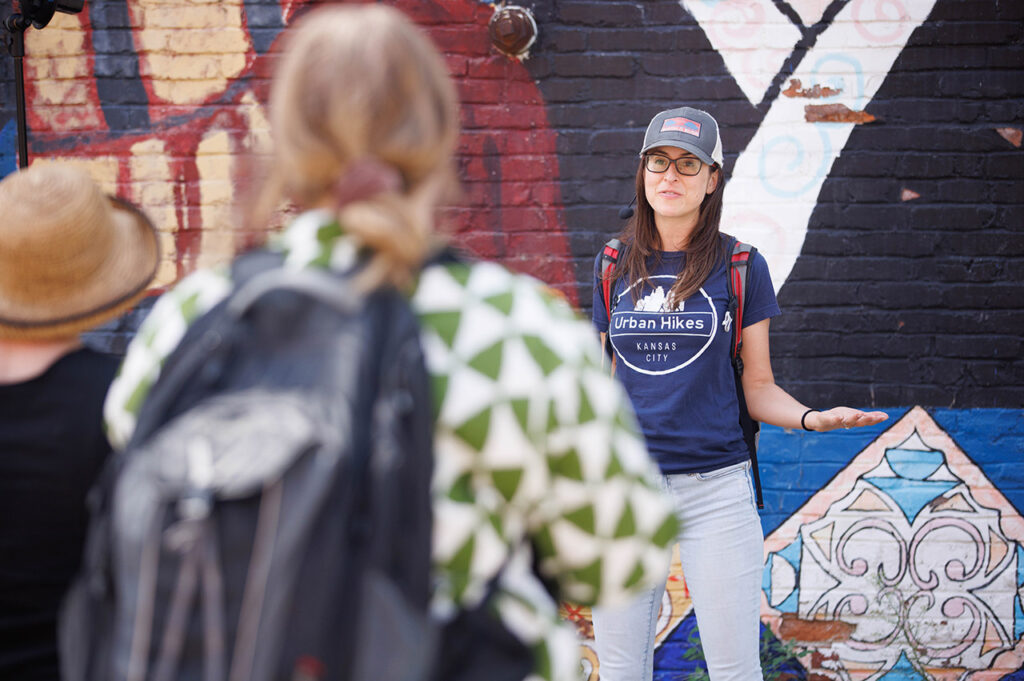
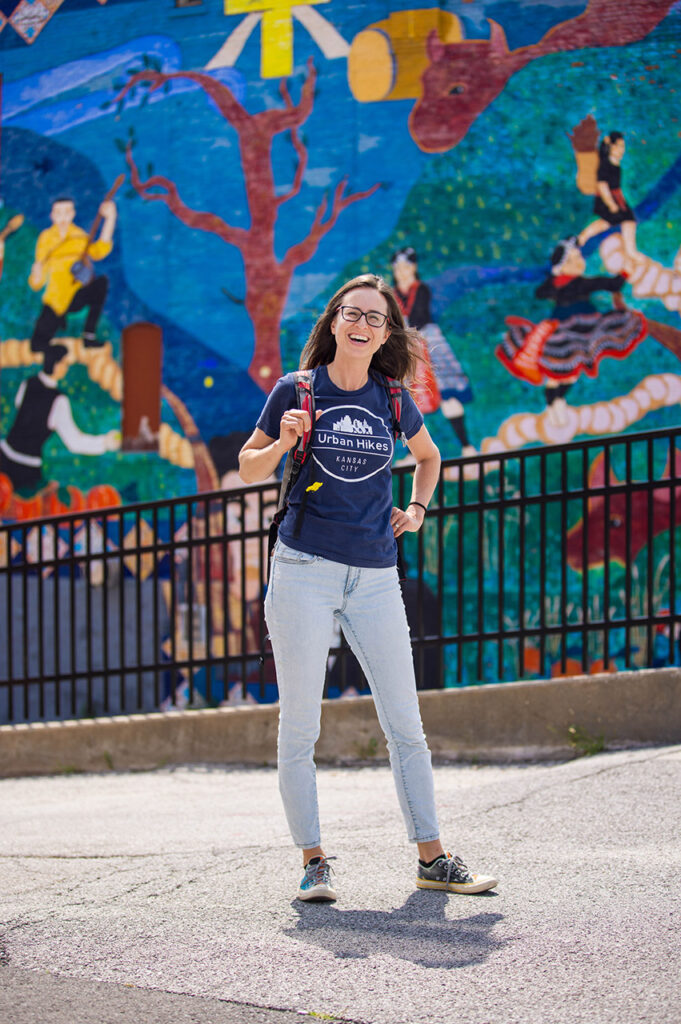
In the heart of Kansas City is an experience that spotlights hidden treasures of the urban landscape. Lisa Peña, the mind behind Urban Hikes KC, has a passion for sharing the narratives, history and vibrant culture that often go unnoticed by visitors and even the most dedicated Kansas Citians.

Having always lived in Kansas City, Kansas, Lisa has a deep-rooted connection to her hometown, its history and community. The inspiration for her venture came while listening to a podcast highlighting California’s urban hikes — an experience that involves journeying through a city’s alleys, under bridges and along sidewalks to gain deeper insight into its untold stories. Soon, Lisa began a journey to bring this experience to KC’s urban communities, with a goal to reshape the way people would view and experience the city.

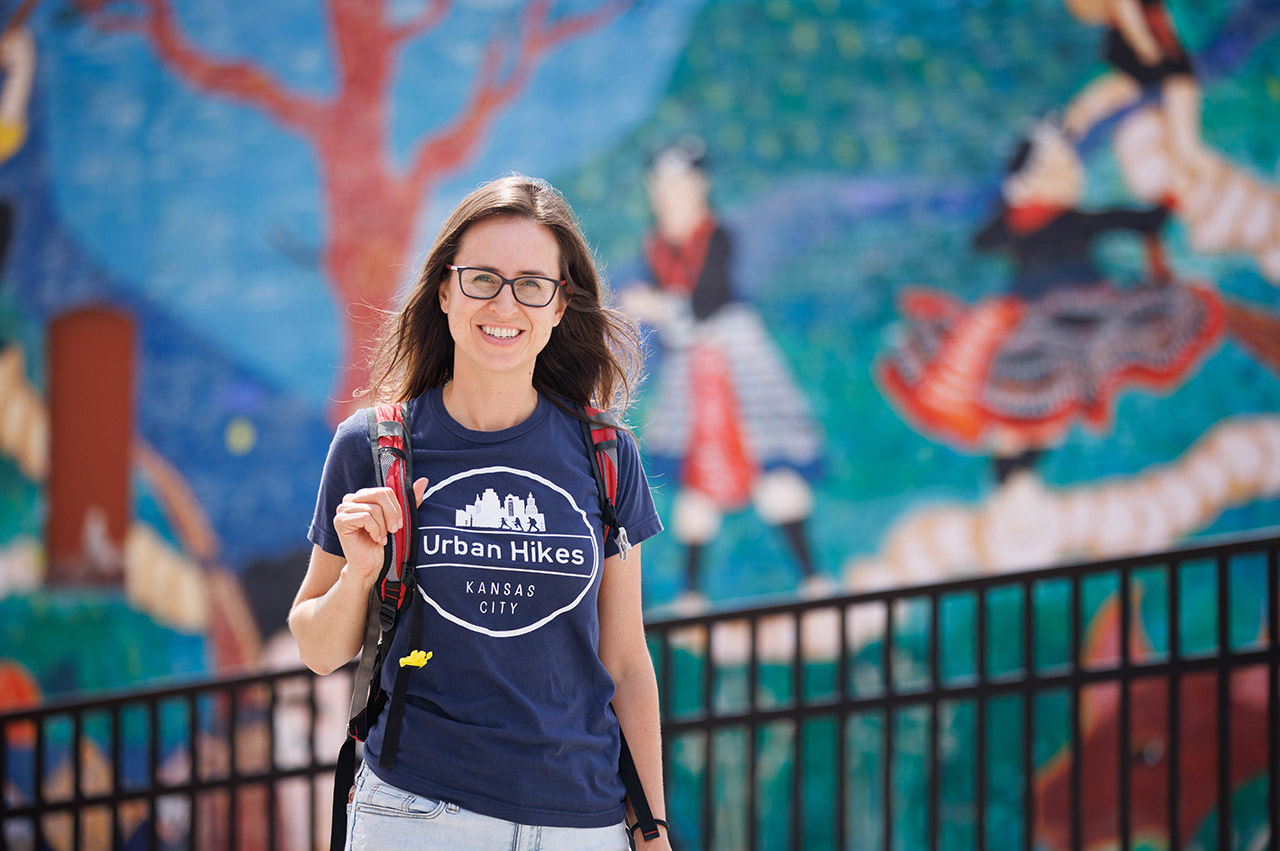
Lisa Pena giving a tour on an Urban Hike.

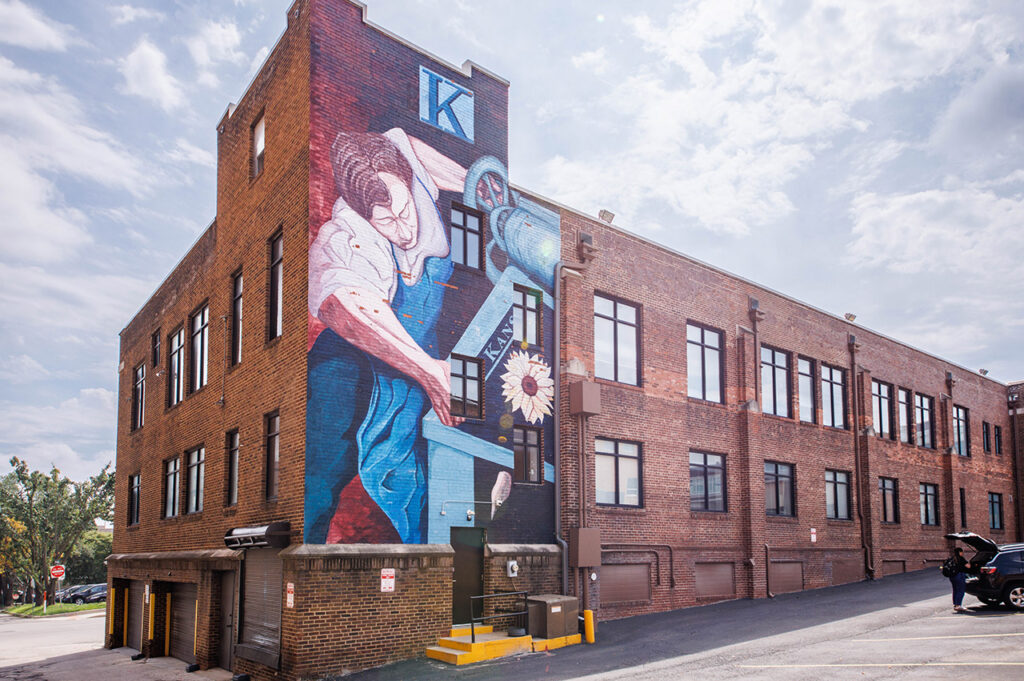
Urban Hikes’ four to five-mile guided tours, led by Lisa and her team members, take hikers or bicyclists through a variety of neighborhood options. Every step becomes an opportunity to chip away at surface knowledge and dive into lesser-known aspects of KC, from the historical architecture and artwork to the stories of perseverance etched into the city streets and walls.

Drawing on her experiences in the Peace Corps in the Dominican Republic, Lisa’s ambition for community connection and empowerment shines through Urban Hikes, as she guides each tour with a goal of unity and shared exploration. Each stop unravels a narrative waiting to be heard — from the vibrant Mexican heritage of the Westside neighborhood to the Quindaro Ruins, a key stop on the Underground Railroad and site of the first school for African Americans west of the Mississippi River.

For history lovers eager to uncover the layers of Kansas City’s past, Urban Hikes offer a new chance to discover a vibrant canvas of diverse stories, demonstrating that the true beauty of a city lies not only in its skyline but in the intricate tales woven into its streets and neighborhoods.

Divine by Design

How community and creativity helped propel architectural juggernaut, David Manica.

By Weston Owen | Photos by Paul Andrews

It was in fifth grade when a young David Manica made a profound discovery; the boy who loved sketching houses during Sunday church service learned he could make a living being a professional designer, dreaming those drawings into reality. Little did this ten-year-old know that this realization would lay the foundation on which he’d build his entire life, creating some of the most widely known and recognizable buildings in the world.

From an early age, David — a product of Kansas City — has always loved the sense of community and support from his hometown. And born of that passion was the inspiration to help give back, not only to the familiar faces he’d grown up around but to others all over the globe.

“Early on, I wanted to make a difference,” said David. “I aspired to design structures that conveyed my passion for architecture. One thing I learned very quickly was that if I wanted to work on buildings — specifically arenas, stadiums and entertainment venues where tens of thousands would gather — there was a strong likelihood that my path would keep me rooted right here in Kansas City, the sports architecture capital of the U.S.”

So, fresh out of architecture school at the University of Kansas, David explored local firms to forge his path. That’s when he landed at HOK Sport (now known as Populous). “When I first joined the team, computers were just making their way into the field, so the only computer they had was in the supply closet,” he smiled. “As other architects would come in for their pencils, pens and tracing paper, I was the kid in the closet learning how to design. It was a unique and fortuitous beginning to my career.”

The confines of that closet created something magical. He hit his stride and relentlessly worked his way up within the architecture firm, establishing himself as one of the top sports architects in the United States. Then, in 2007, he decided to venture out and open a business of his own — Manica Architecture.

Launching his own firm was a calculated risk but one he felt confident taking. As projects began coming in — primarily overseas — his international success translated into domestic opportunity, as he expanded his team, business and U.S. footprint and, years later, worked his way into a new industry: Kansas City’s cocktail scene.

“I love to travel and experience different cultures. So when I’m in a new city, I draw inspiration from what its nightlife offers — both from design and unique experience,” he reflected. “I wanted to bring some of that luxury and international flavor back home.”

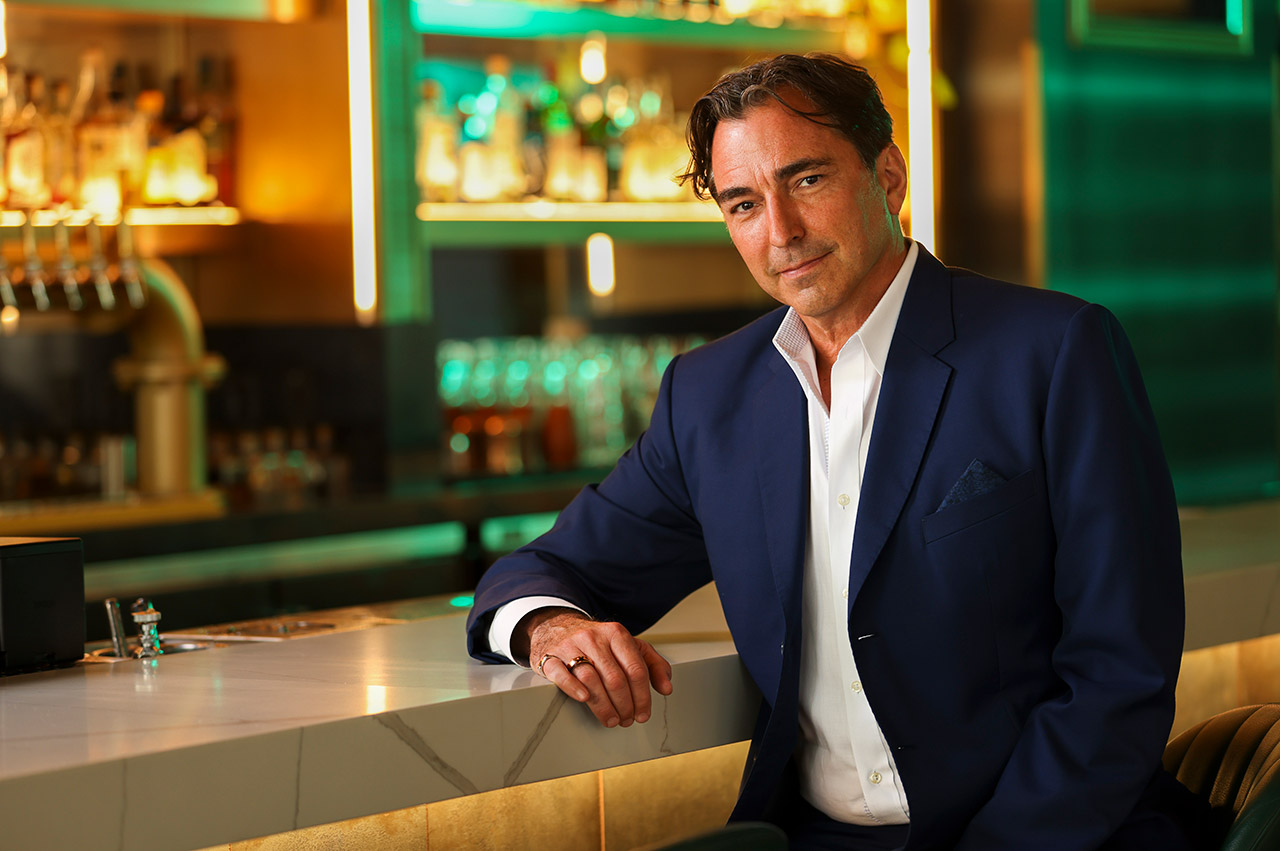
A self-proclaimed “side hustle,” David made his statement in 2017 with The Monarch Bar — a chic, contemporary bar bursting at the seams with style and class. Its immense success paved the way for Verdigris and The Mercury Room — two elevated cocktail experiences where the ambiance is rivaled only by the quality of the drinks served. His newest location, Bar Medici, mirrors the international inspiration that’s continuously served as a blueprint for his ventures.

As David often reflects, “Those who are fortunate enough in their careers, not only get to choose what they do but who they embark on that journey with.” For this Kansas Citian, that journey began sketched on a piece of paper and huddled in a supply closet. Yet, through determination, drive and support from his community, David Manica has forged forward, a foundation paved and defined by design.

David Manica and his wife, Noelle.