Shifting Gears | Automotive Industry at a Crossroads

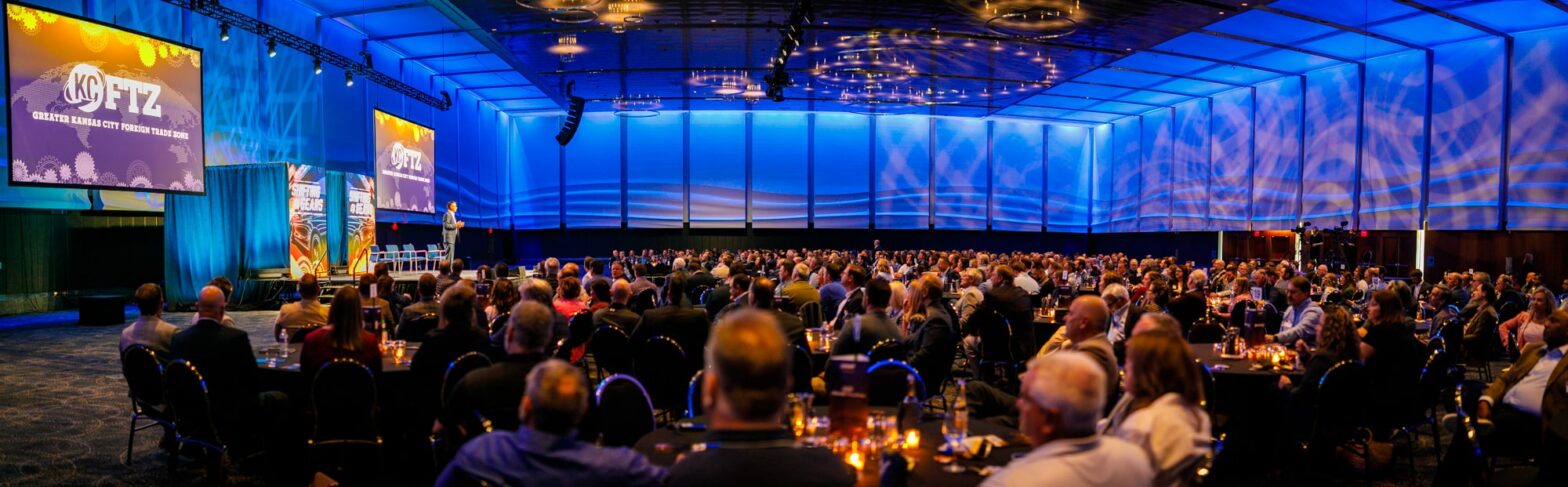
KC SmartPort’s 2025 Annual Industry Briefing gathered 650 industry leaders to share insights into transformations underway in the automotive sector — from electrification and advanced manufacturing to rapidly evolving supply chains, shifting trade policies and rising foreign investment.

Industry Leaders Share Vision for the Future of Mobility

Christopher Smith, chief government affairs officer for Ford Motor Company, delivered the keynote address, offering attendees a look at how Ford is building the future of mobility — emphasizing forward-looking investments in electrification and its commitment to American manufacturing.  

“The automotive industry is at an inflection point: rapid changes in electrification and global trade are fundamentally transforming the way we do business,” said Smith. “Ford is meeting the moment by making forward-looking investments in emerging technologies, and our commitment to building the next generation of automobiles in America is central to our long-term success.” 

Featured speakers also included Andy Hrasky, vice president of operations for Magna International, and Dan Lee, principal of automotive and strategy practice for Plante Moran.

Hrasky highlighted Magna’s agility in automotive innovation and sustainability, emphasizing Kansas City’s skilled workforce as a key competitive advantage as the company deepens its investment in the region. Lee, delving into shifting consumer demands and North American investment trends, discussed the critical role of battery supply chains — highlighting Panasonic Energy’s $4 billion EV battery plant in the KC region as a key driver of future competitiveness.

KC’s Momentum in Automotive on Full Display

With a Gross Regional Product (GRP) of $5 billion, the KC region continues to cement its role as a major North American hub for automotive manufacturing. The region is home to 112 auto industry suppliers, including production powerhouses for Ford and General Motors, and employs nearly 23,000 workers in transportation manufacturing — 60% higher than the national average.

Chris Gutierrez, president of KC SmartPort, emphasized the KC region’s long-standing leadership in the auto sector and how it’s positioned to lead the next era of mobility.

“Kansas City has been a driving force in the automotive industry for decades, and today, that leadership is accelerating into new territory. KC is not just building vehicles — we’re building the future,” said Gutierrez. “As global trends reshape the supply chain and drive new investment, our region is responding with innovation, talent and world-class manufacturing strength. From legacy automakers to new suppliers, the road ahead runs straight through Kansas City.”

Thank you to BNSF Railway, Elevate Edgerton, Panasonic Energy, and all of our sponsors, who made this year’s event possible. 

Kansas City is Shifting Gears | KC SmartPort PULSE

Panoramic photo of the Kansas City FTZ conference room

From Policy Shocks to Supply Chain Shifts: What’s Next for Auto in KC?

KC SmartPort’s 2025 Annual Industry Briefing gathered 650 industry leaders to discuss trends shaping the auto sector and how these shifts are impacting the KC region. Industry experts from Ford, Magna and Plante Moran tackled key topics impacting the automotive sector, such as trade policy uncertainty, supply chain disruptions and evolving product strategies.

Data Deep-Dive: Explore Plante Moran’s in-depth automotive outlook for expert insights into the current state of the industry and what’s driving change in the years ahead.

>> Get the Report

Major Energy Infrastructure Expansions Power Up KC

Evergy is boosting the region’s energy capacity with a newly announced natural gas power plant in Missouri, adding to two 705-megawatt combined-cycle plants previously announced in Kansas. These significant investments position KC to meet rising demand and power the region’s next phase of growth. 

KC Lands Record-Breaking FinTech Win

KC’s cross-industry momentum just hit a new milestone. Fiserv, a Fortune 500 global fintech leader, announced plans to open its newest strategic hub in the region, creating 2,000 jobs — the largest office attraction project in Kansas City’s history.

6 Ways Kansas City Is Winning Global Business & Investment

In a time when international companies are navigating unpredictability in trade policy, energy prices and supply chain, Kansas City is proving why it’s one of the most strategic Foreign Direct Investment (FDI) markets in the U.S.

Today’s international companies are planning not just for next year, but for the next decade and beyond, making macroeconomic stability a top priority. Kansas City delivers long-term value, offering low-risk, high-reward — and international investors are taking notice.

1. Long-Term Stability in a Turbulent Global Market

Foreign investors view KC as a “clarity market” — a welcome contrast to economic chaos elsewhere.

  • A diversified industry base reduces risk for expanding companies.
  • Kansas City’s regulated utility market and expanding energy infrastructure — including Evergy’s recently announced plants in both Kansas and Missouri — offer reliable, long-term operating advantages.

2. Speed-to-Market

Where other markets are stalled by red tape, Kansas City keeps projects moving — fast. That means reduced risk and increased ROI for international companies.

  • KC’s streamlined regulatory environment offers quicker timelines than many international markets.
  • Recent wins, such as Panasonic’s $4B EV battery plant, demonstrate KC’s ability to accelerate projects without sacrificing quality.
  • Kansas City prioritizes site readiness, with infrastructure and utilities in place to help companies move from interest to groundbreaking with minimal delays.

3. America’s Crossroads

KC sits at the heart of North America, where world-class transportation infrastructure meets unmatched connectivity. From this central location, foreign companies can quickly deliver and reliably scale across the continent.

  • Access to four Class 1 rail lines, four intermodal parks and the largest navigable inland waterway in the U.S.
  • 30% more highway miles per capita than any other major U.S. metro — with four major interstates connecting to Mexico and Canada — enabling KC-based companies to reach 90% of the contiguous U.S. within two days or less.
  • KC’s state-of-the-art international airport handles more air cargo than any center in a six-state region — and connects to every major U.S. city in three hours or less.

4. Global Reputation

From industry-leading investments to international sports visibility, Kansas City’s momentum is accelerating — sparking a ripple effect of confidence among site selectors, investors and corporate decision-makers evaluating their next move.

  • Fortune 500 companies and global names, including GooglePanasonic and Fiserv, have recently chosen the region for major operations, investing billions of dollars and creating thousands of jobs. 
  • As a FIFA World Cup 26™ host city, KC will be in the spotlight for soccer fans around the world.

5. Workforce Ready for Tomorrow

Advanced manufacturing and high-growth sectors thrive in KC, driven by a deep talent pool ready to drive success — ensuring a seamless market entry for foreign companies.

  • KC offers a highly educated, skilled and cost-effective workforce, including nearly 200,000 people employed in manufacturing and logistics.
  • State and local partnerships are growing talent pipelines tailored to emerging industries with effective training programs such as Great Jobs KC.
  • The region’s strong work ethic consistently drives above-average productivity and enables rapid scalability

6. Open for Business and Building Relationships

Kansas City combines a pro-business climate with strategic global engagement, creating a launchpad for long-term, advantageous international partnerships.

  • The motto is simple: Get past the noise. Find a solution. KC’s economic development partners help companies cut through complexity and act.
  • Ongoing international outreach efforts are creating long-term business partnerships, not just transactions.
  • The Greater Kansas City Foreign Trade Zone program provides manufacturing and distribution companies strategic and logistical advantages to help manage global supply chain complexities.

To learn more about Kansas City’s global business advantages and explore partnership opportunities, contact our team today.

Automotive Industry Uncertainty | KC SmartPort PULSE

The Road Ahead

Tariffs and the Automotive Industry’s Shifting Landscape

The U.S. auto industry faces rising costs as newly reinstated steel and aluminum tariffs squeeze profit margins and drive up vehicle prices, impacting manufacturers and consumers alike. President Trump confirmed he has no intention to ease these tariffs and reaffirmed his pledge to impose reciprocal levies as soon as April 2. 

These changes in trade policy, combined with a growing reliance on Canadian imports, will greatly impact vehicle pricing, manufacturing investments and long-term strategy in the auto industry. 

As companies and consumers continue to navigate this evolving landscape, KC’s automotive legacy, bolstered by the long-standing presence of Ford and GM, reinforces its position as a key, reliable hub within the industry.

Shifting Gears: KC SmartPort Annual Industry Briefing

Access Exclusive Insights from Auto Industry Leaders on April 16

With trade policies in flux and new challenges shaping the automotive industry, understanding what’s on the horizon is more important than ever.

At this year’s KC SmartPort Annual Industry Briefing, experts from Ford, Magna and Plante Moran will break down the latest shifts in automotive manufacturing, supply chain strategy and policy changes impacting the industry.

Don’t miss this opportunity to prepare for what’s ahead in Kansas City and beyond.

Boost Supply Chain Flexibility with FTZs | KC SmartPort PULSE

Foreign Trade Zones

A Strategic Advantage for U.S. Importers

In an era of shifting trade policies and global supply chain disruptions, adaptability is key

For importers facing trade remedy tariffs, Foreign Trade Zones (FTZs) offer critical advantages, including enhanced cost management and operational flexibility.

Leveraging an FTZ

  • Defer duty payments until goods enter U.S. commerce, improving cash flow.
  • Store imported goods indefinitely for strategic inventory management.
  • Eliminate duties on goods exported from the zone, as well as scrap and waste. 
  • Reduce overall duty exposure through value-added activities within the FTZ.

The KC Advantage

With its central location, robust logistics network and established FTZ infrastructure, Kansas City provides an ideal environment for businesses seeking to optimize their import strategies.

Learn more about Foreign Trade Zones in the KC region.

Containers and crane at sunset

2025 Industrial Market Outlook

A Shift Back to Pre-Pandemic Trends

The U.S. industrial market is set to enter a new cycle in 2025, returning to pre-pandemic demand trends, as highlighted in CBRE’s 2025 Real Estate Market Outlook.

Key Drivers

  • The rise of third-party logistics (3PL) providers
  • Growing e-commerce demand for warehouse and distribution space
  • Reshoring efforts that strengthen supply chain efficiency

As companies prioritize efficiency and modern facilities, Kansas City — a rising industrial powerhouse — is positioned to attract significant new industrial investment.

Shifting Gears: KC SmartPort Annual Industry Briefing

THE AUTOMOTIVE INDUSTRY IS SHIFTING GEARS
The 2025 KC SmartPort Annual Industry Briefing

Join us to explore Kansas City’s rich automotive legacy, the hottest trends impacting the industry and what’s on the horizon for this dynamic sector.

>> Register Today