How community and creativity helped propel architectural juggernaut, David Manica.
By Weston Owen | Photos by Paul Andrews
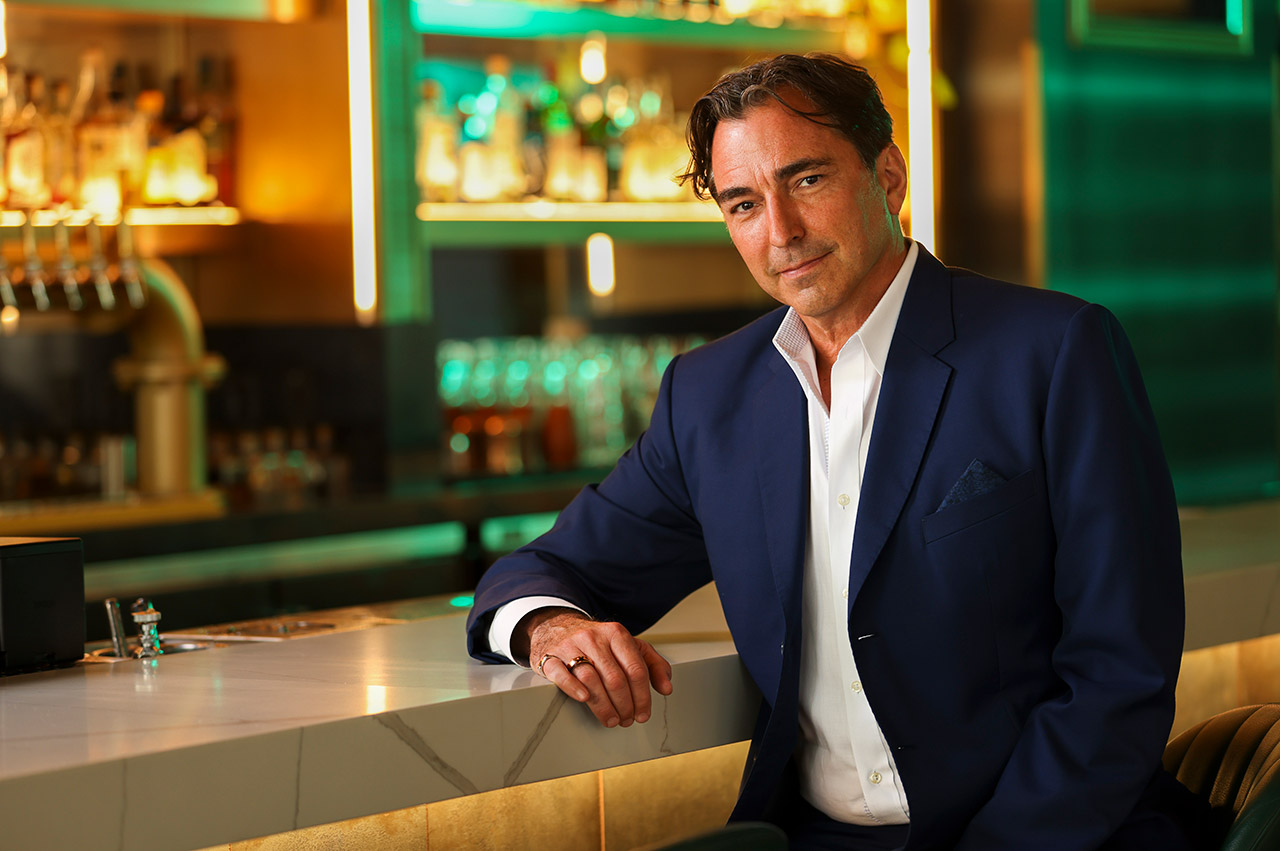
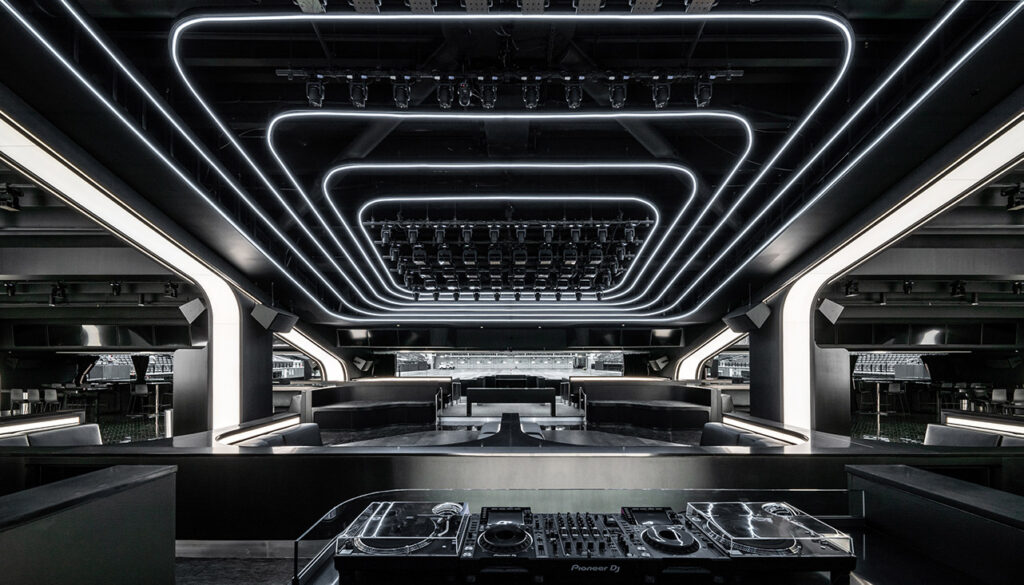
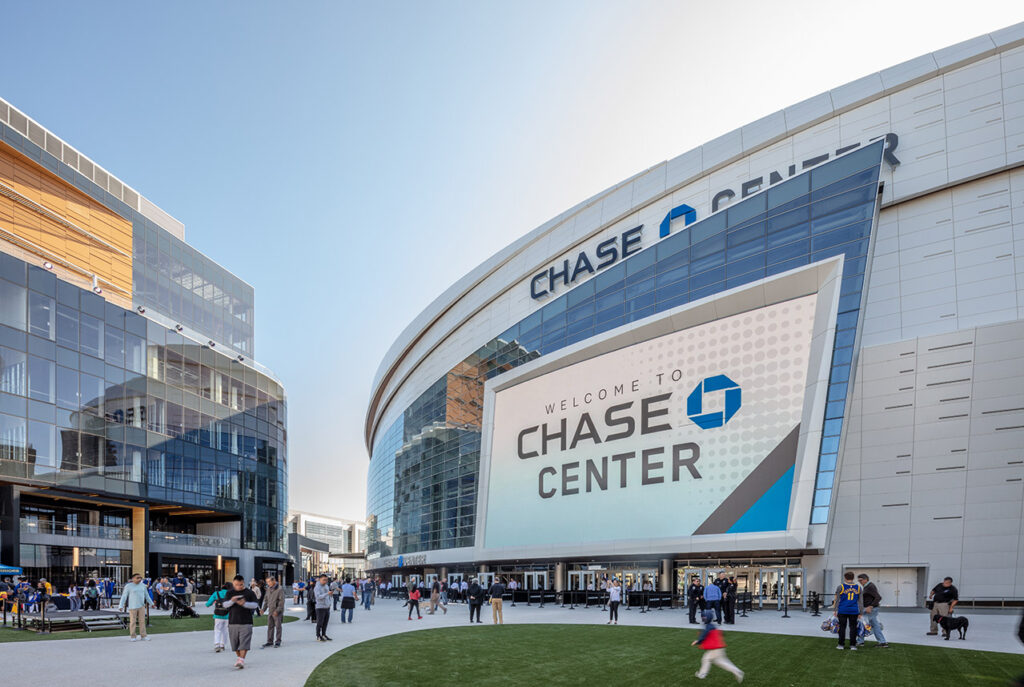
It was in fifth grade when a young David Manica made a profound discovery; the boy who loved sketching houses during Sunday church service learned he could make a living being a professional designer, dreaming those drawings into reality. Little did this ten-year-old know that this realization would lay the foundation on which he’d build his entire life, creating some of the most widely known and recognizable buildings in the world.
From an early age, David — a product of Kansas City — has always loved the sense of community and support from his hometown. And born of that passion was the inspiration to help give back, not only to the familiar faces he’d grown up around but to others all over the globe.
“Early on, I wanted to make a difference,” said David. “I aspired to design structures that conveyed my passion for architecture. One thing I learned very quickly was that if I wanted to work on buildings — specifically arenas, stadiums and entertainment venues where tens of thousands would gather — there was a strong likelihood that my path would keep me rooted right here in Kansas City, the sports architecture capital of the U.S.”
So, fresh out of architecture school at the University of Kansas, David explored local firms to forge his path. That’s when he landed at HOK Sport (now known as Populous). “When I first joined the team, computers were just making their way into the field, so the only computer they had was in the supply closet,” he smiled. “As other architects would come in for their pencils, pens and tracing paper, I was the kid in the closet learning how to design. It was a unique and fortuitous beginning to my career.”
The confines of that closet created something magical. He hit his stride and relentlessly worked his way up within the architecture firm, establishing himself as one of the top sports architects in the United States. Then, in 2007, he decided to venture out and open a business of his own — Manica Architecture.
Launching his own firm was a calculated risk but one he felt confident taking. As projects began coming in — primarily overseas — his international success translated into domestic opportunity, as he expanded his team, business and U.S. footprint and, years later, worked his way into a new industry: Kansas City’s cocktail scene.
“I love to travel and experience different cultures. So when I’m in a new city, I draw inspiration from what its nightlife offers — both from design and unique experience,” he reflected. “I wanted to bring some of that luxury and international flavor back home.”
A self-proclaimed “side hustle,” David made his statement in 2017 with The Monarch Bar — a chic, contemporary bar bursting at the seams with style and class. Its immense success paved the way for Verdigris and The Mercury Room — two elevated cocktail experiences where the ambiance is rivaled only by the quality of the drinks served. His newest location, Bar Medici, mirrors the international inspiration that’s continuously served as a blueprint for his ventures.
As David often reflects, “Those who are fortunate enough in their careers, not only get to choose what they do but who they embark on that journey with.” For this Kansas Citian, that journey began sketched on a piece of paper and huddled in a supply closet. Yet, through determination, drive and support from his community, David Manica has forged forward, a foundation paved and defined by design.
How Jay Sanders’ approach to hospitality has him front and center of Kansas City’s cocktail scene.
By Weston Owen
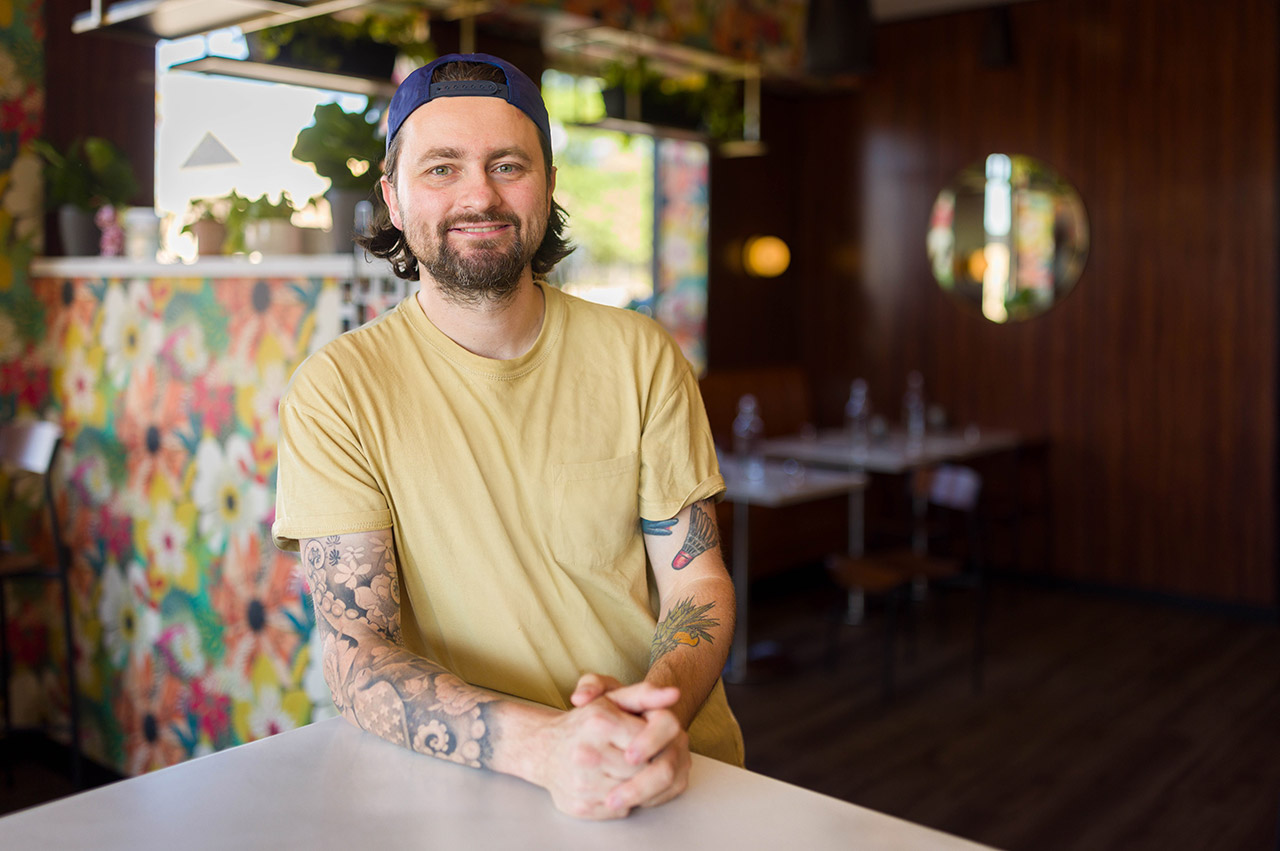
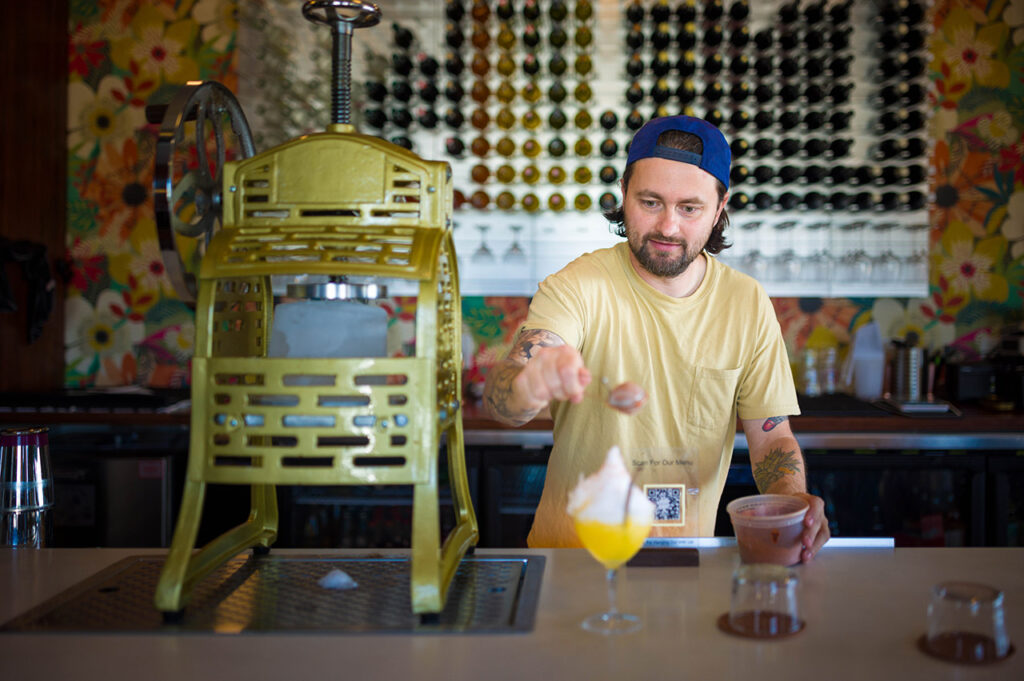
Kansas City is rapidly gaining national recognition as one of the top cocktail destinations in the country. While many have contributed to the industry’s meteoric rise, one of the main influences behind its growth is Jay Sanders — owner of the popular, James Beard Award finalist, Drastic Measures and the brand-new wine, cocktail and non-alcoholic bar, Wild Child.
A master of creating immersive experiences and dynamic drink menus, Jay has drawn inspiration from over a decade behind the bar, especially in his hometown of Kansas City. He’s certainly seen a lot during that time. Concepts that have flourished and others that have floundered. Yet, above all else, there’s one constant as to what experiences resonate with him most.
“I’m always impressed by those who don’t want to bring a New York or LA experience here, but rather work with what Kansas City has to offer. Where you build something that’s true and authentic to our city. Sometimes that’s finding flavor combinations that resonate within our community or developing something special within the city’s pre-existing footprint. Those experiences always catch my attention.”
And Jay certainly knows a thing or two about capturing attention. Drastic Measures, a self-proclaimed “rustic, neighborhood bar” with equal parts mood, ambiance, incredible staff and surreal cocktails, was recently a finalist for the prestigious James Beard Award for Outstanding Bar. It’s garnered both local and national attention for its unique and beautiful drink menu, often made up of very few ingredients but done so in an incredibly elevated fashion.
Riding the wave of Drastic’s success, Jay recently opened its sister location, Wild Child. While the two bars may only be a few steps away from one another, each exudes vastly different vibes. Drastic, embracing a moodier, darker persona, is in deep contrast to the lively, bright and floral personality of Wild Child. But both exemplify the warm, welcoming setting that Jay is so passionate about: setting a tone for the community to come together, enjoy each other’s company, spark conversation and do so over a thoughtfully-presented, laboriously-crafted cocktail.
Jay’s accomplishments have been met with praise and admiration from his peers and he’s fond of the landscape that Kansas City has cultivated. “What makes our city’s cocktail scene so good is that everyone is always very supportive of one another. We know this is an overlooked market, so when somebody does something cool, we meet that with respect instead of envy. And that makes us all work a little bit harder to up our game. It’s a very healthy competition.”
As Kansas City continues to grow and become a destination location, Jay is one of the driving forces behind keeping our community truly unique.
This veteran duo is energizing local skate culture.
By Randy Mason | Photos by Paul Andrews
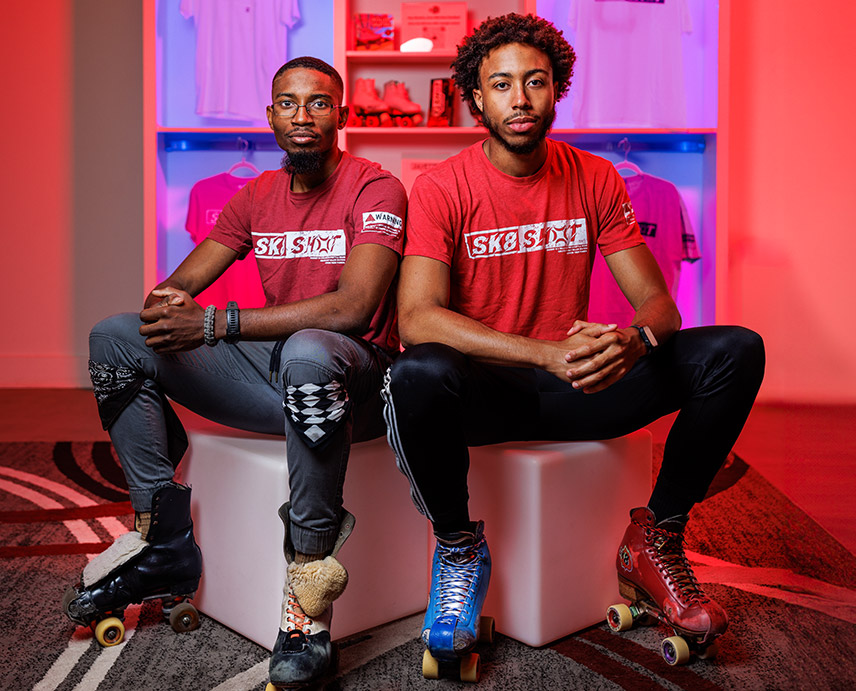
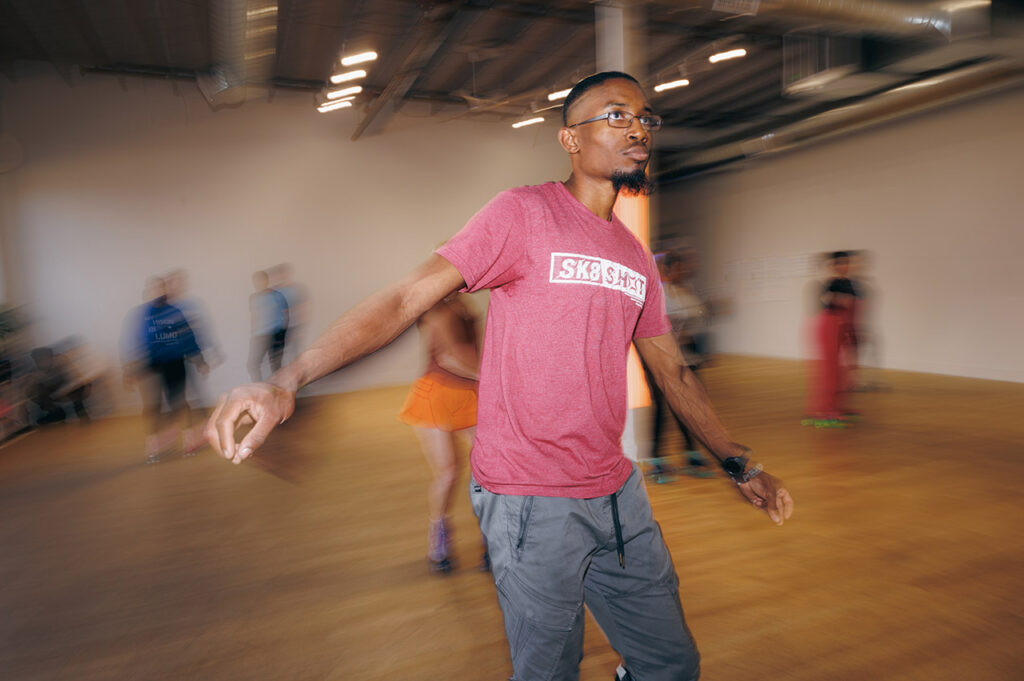
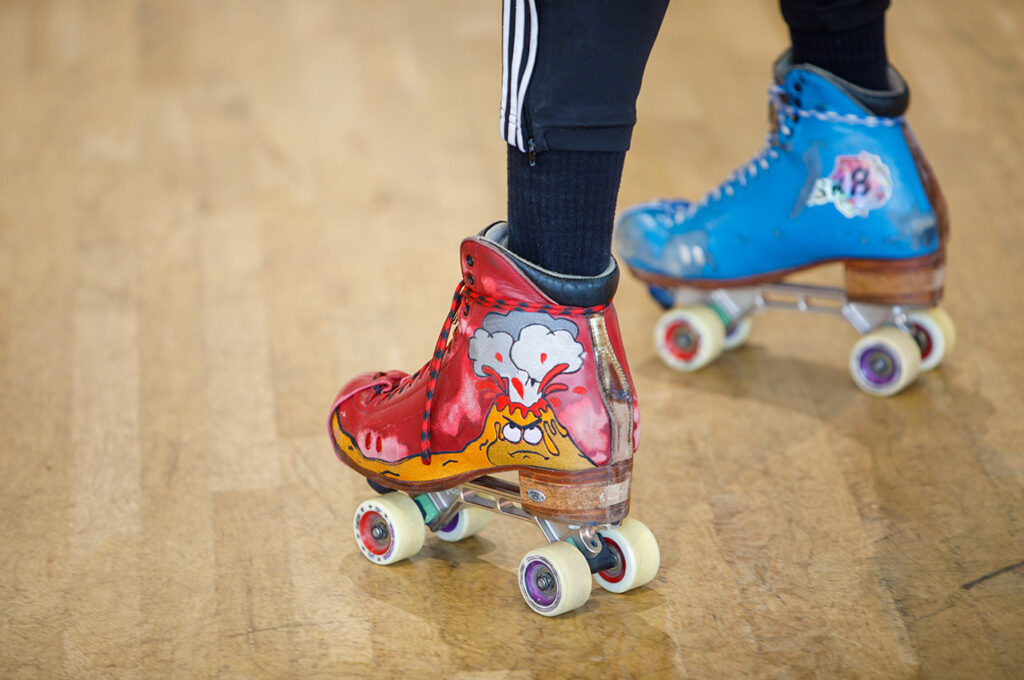
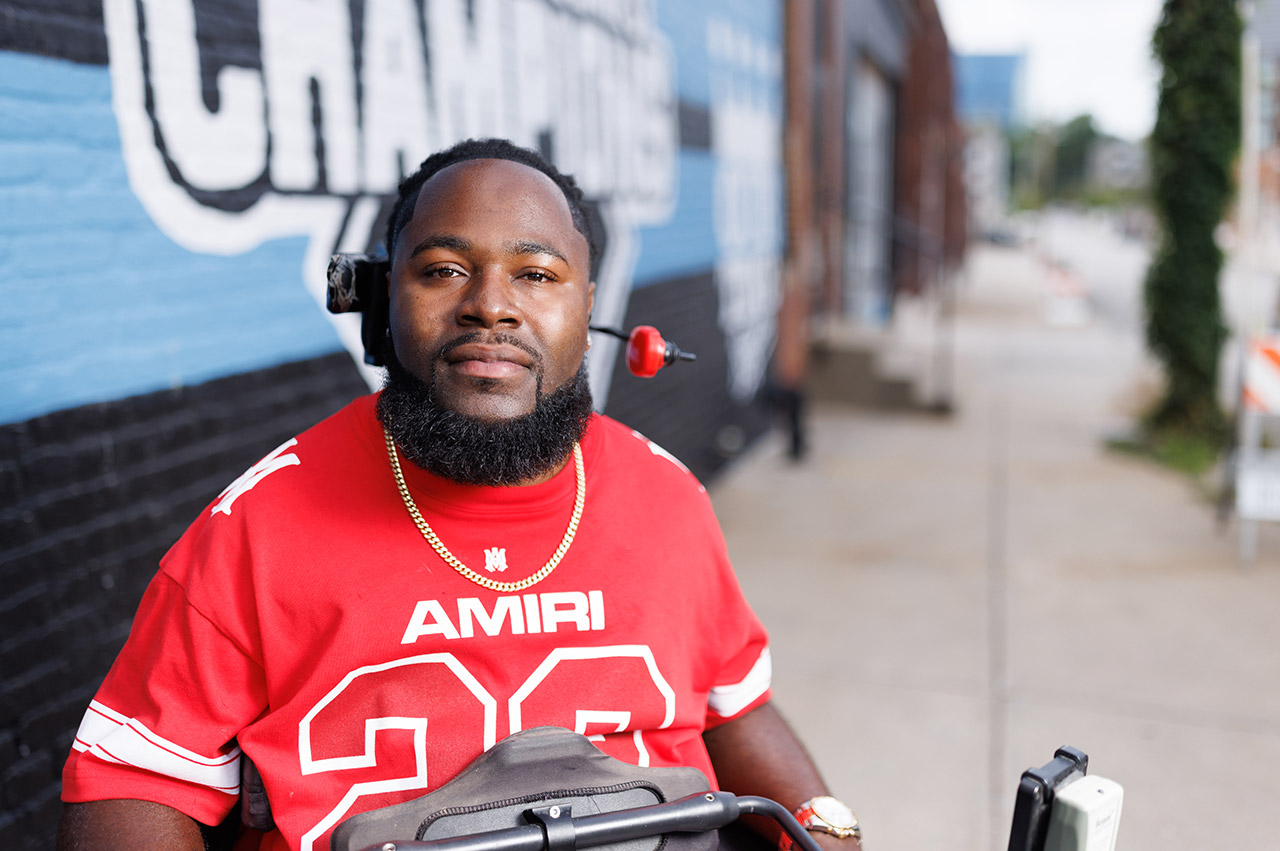
Knejie “KJ” Allen, the co-owner of SK8 SHOT Studios, still recalls the first time he experienced “rhythm and dance” roller skating in his hometown of Houston, Texas.
“I thought, why does everybody not know about this? Everybody needs to do this. Every city should have this,” he says.
KJ’s reaction might sound a little over the top. But not to Adontis Atkins, his SK8 SHOT co-creator. For Adontis, skating resembles the movie “Soul” — where everything surrounding the piano player and his keyboard turns blue and fades away.
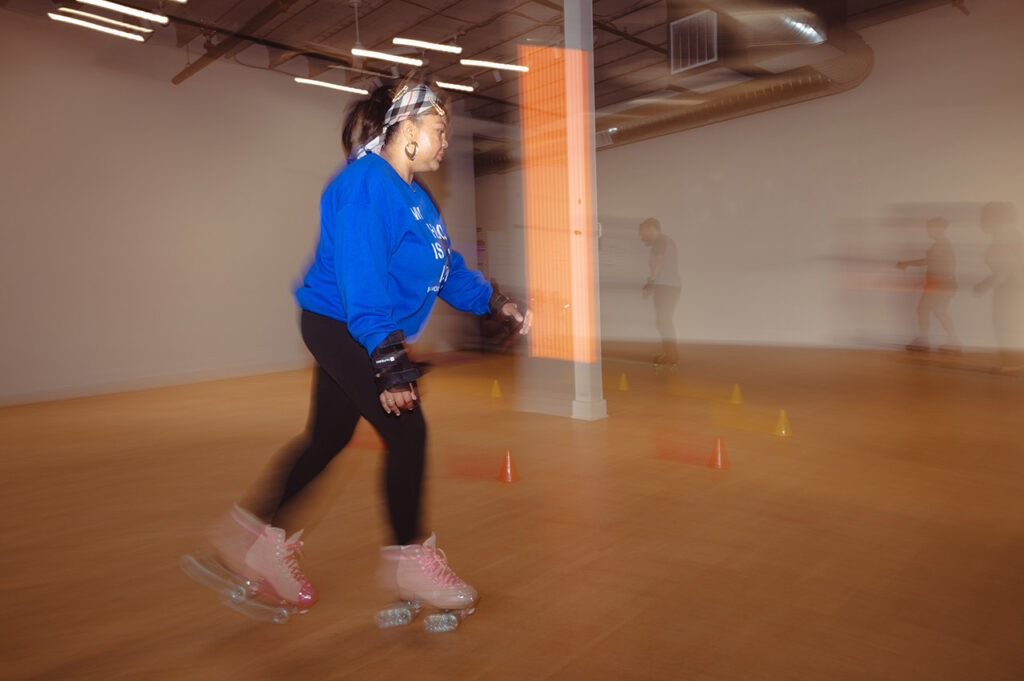
“That’s exactly what it’s like when we’re skating. Especially because we’re totally skating at speed. Things are blurry when you’re not focused on them. You just sink into the music.”
Though both men were stationed at Whiteman Air Force Base near Kansas City, they actually met while attending an Adult Night session at the Winnwood Skate Center.
Adult Nights are where the Black community has historically honed its skating skills, merging dance and sport in one high- energy bundle. It’s a style recently showcased to millions during Usher’s halftime performance at the Super Bowl.
Adontis and KJ also took to the great outdoors, skating together in parks and open spaces armed with Bluetooth speakers and a DIY flair that sparked even more attention.
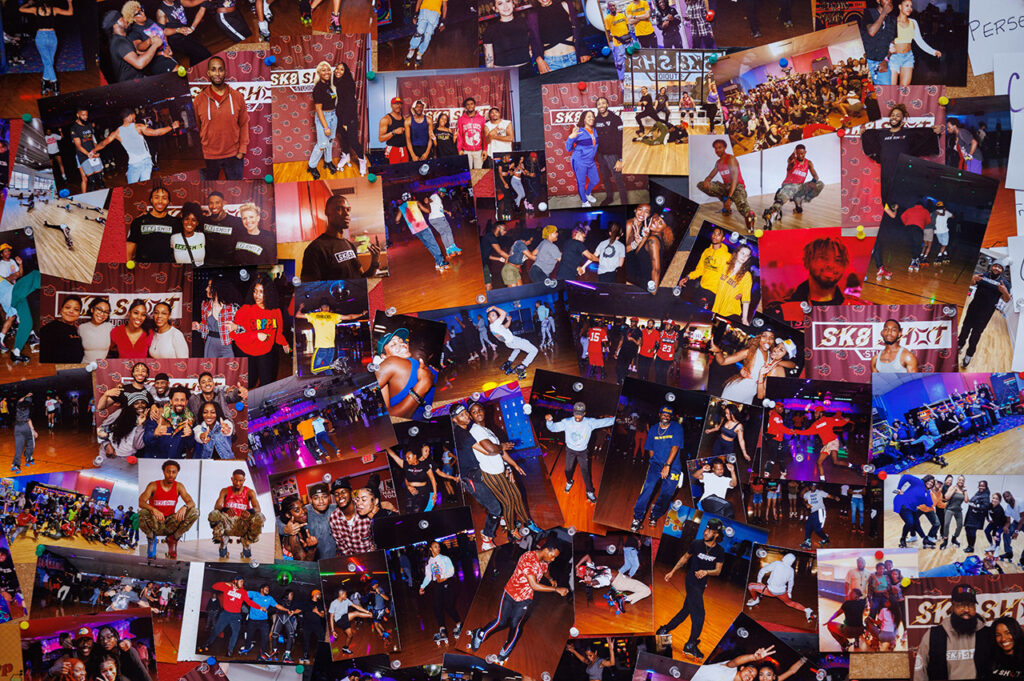
In late 2023, the duo decided it was time to turn their passion into more than a logo and the line of merchandise they sold at skating rinks and pop-ups.
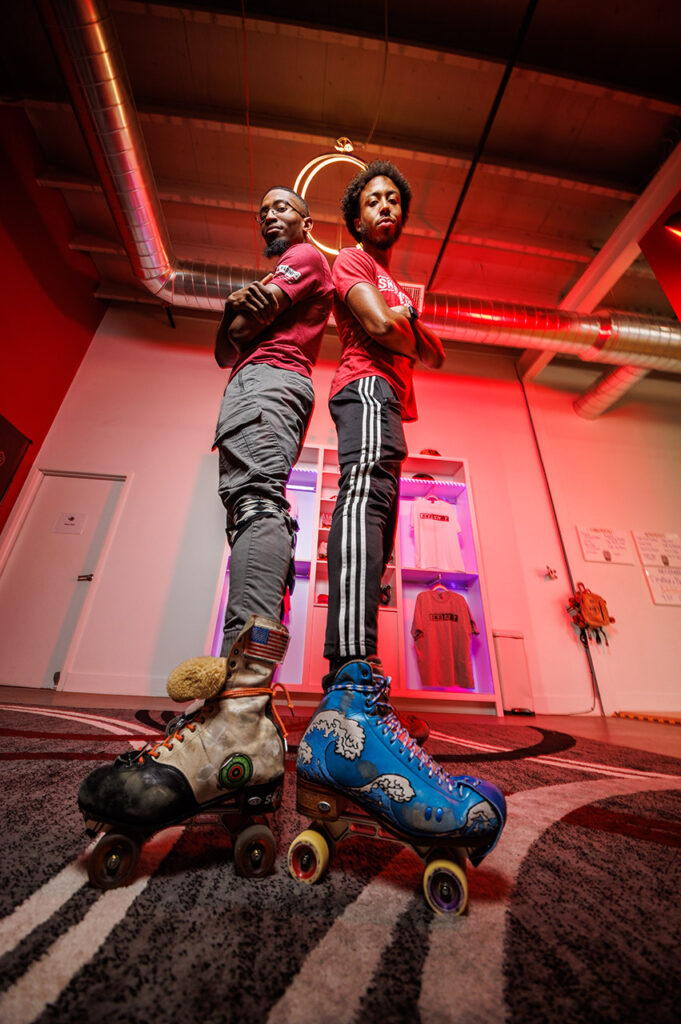
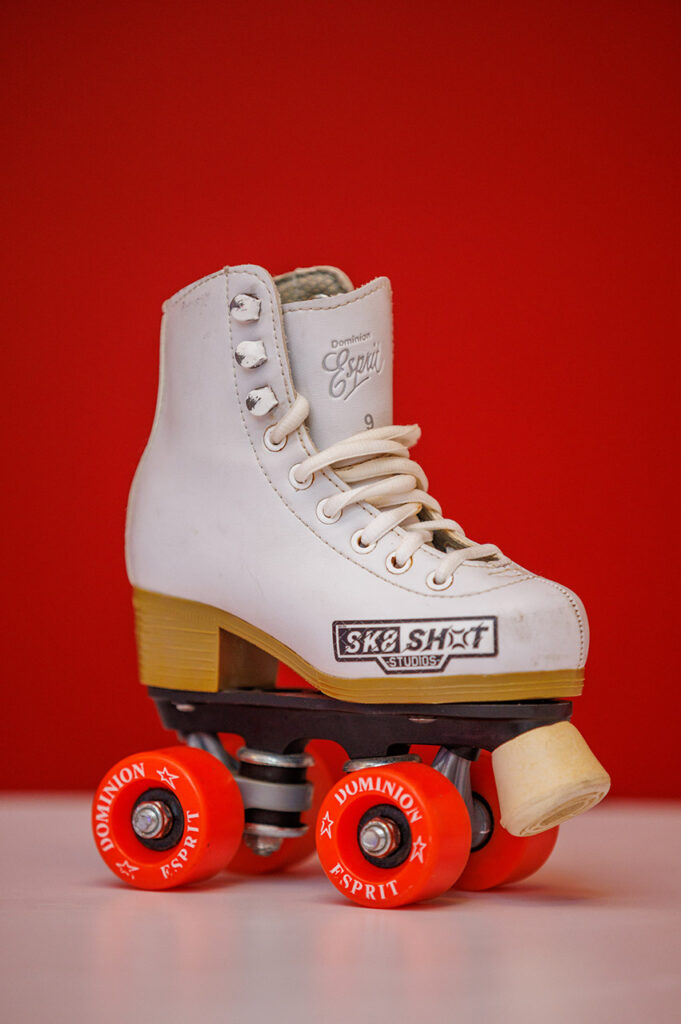
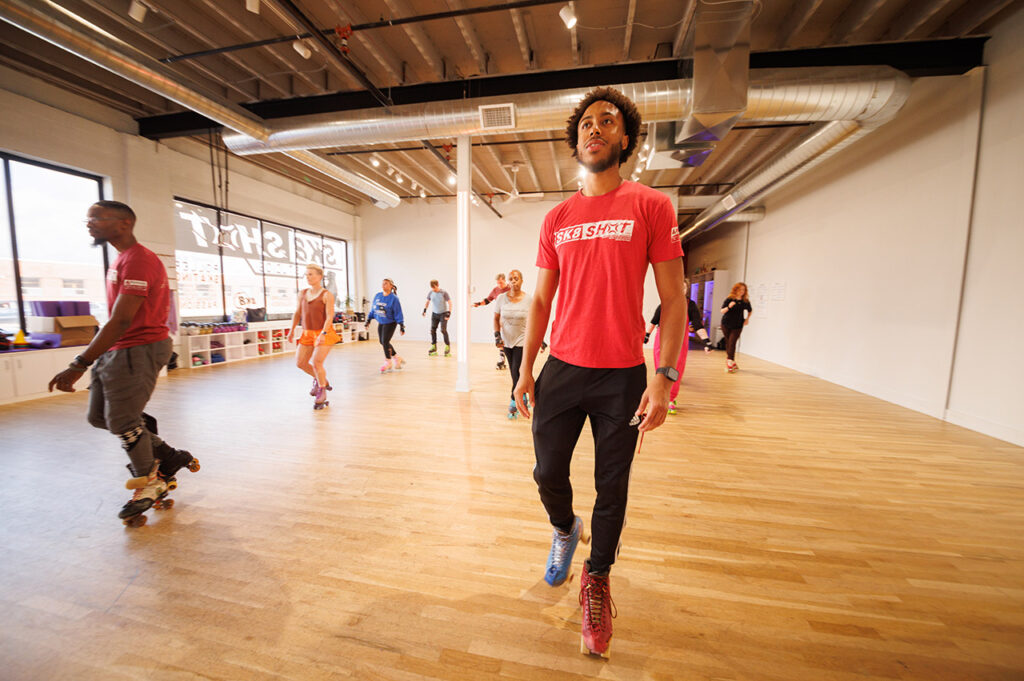
They opened SK8 SHOT Studios in a space on Burlington Avenue in North Kansas City. As KJ points out, it’s not a rink, nor is it strictly a skate shop.
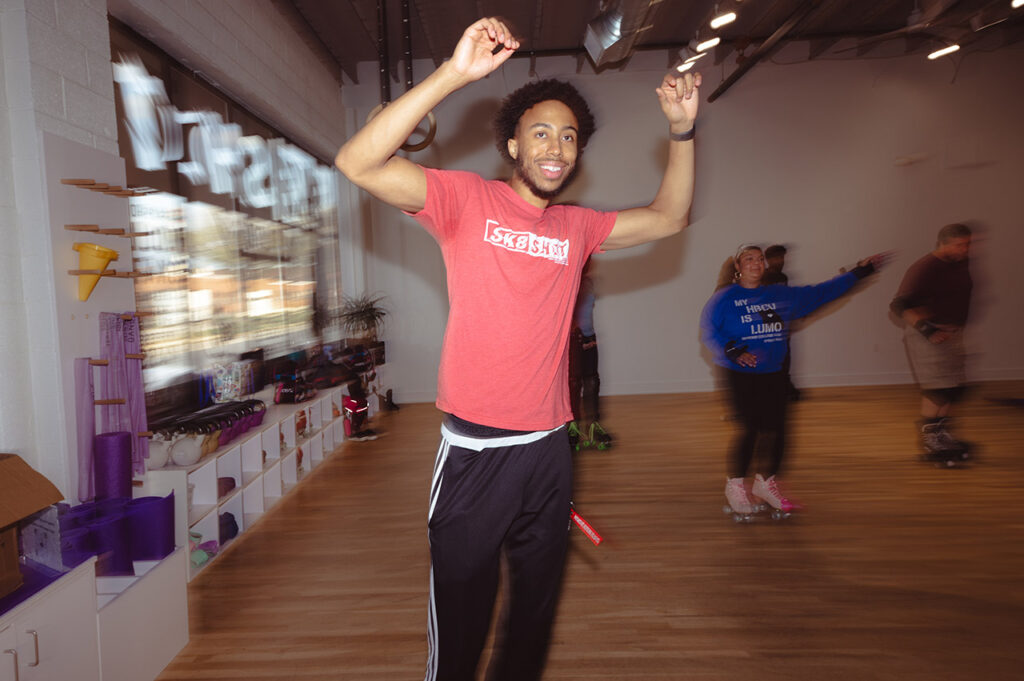
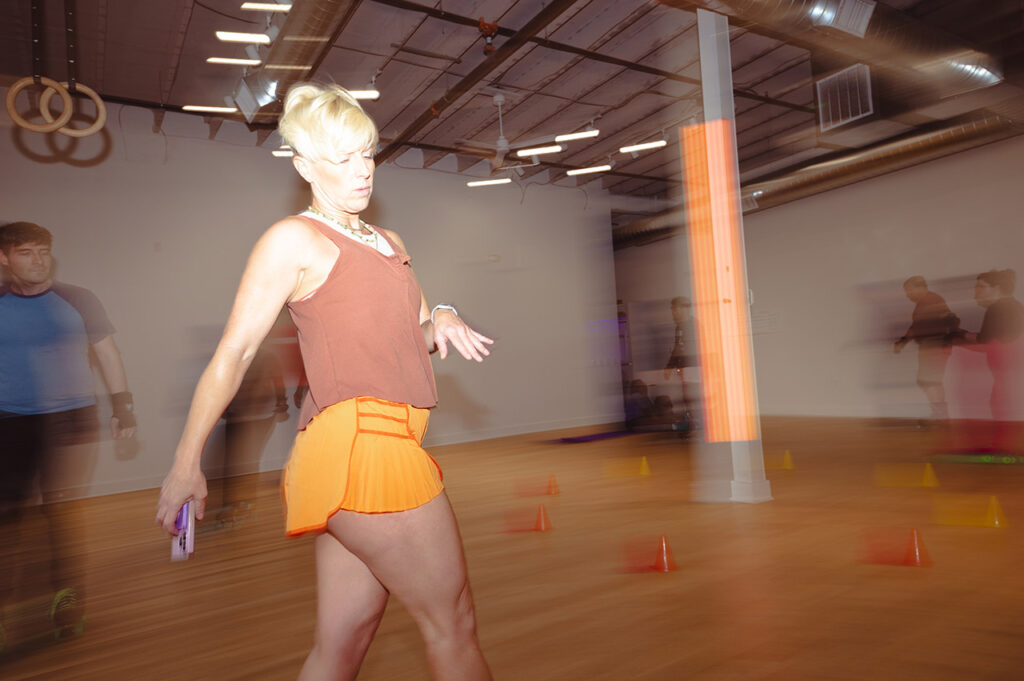
The studio strives to be a “safe, supportive” place to get comfortable with skating basics and potentially master some of the more advanced moves.
“A lot of people are intimidated or embarrassed about their ability or lack of ability at a skating rink,” he says. “There’s a lot of pain involved when it comes to roller skating or trying to learn how to roller skate. And I mean that literally and metaphorically.”
Adontis says that with tools like mats and mirrors, SK8 SHOT’s teachers are able to double down on the kind of details that can’t be learned from a web tutorial. Things like which part of your foot to land on and how to adjust your posture, your neck or the position of your shoulders.
“It’s exciting,” he adds, “when students go from ‘oh, I can’t do this,’ or ‘I’m frustrated about this’ to executing it better than they’d imagined they could.”
Of course, building a lifestyle brand means plenty of lessons for the owners, too.
Their time in the Air Force taught KJ and Adontis many things — from public speaking to how to fix balky electronics. But each day in full brick-and-mortar mode brings new and unexpected challenges.
“There’s hard days,” KJ concedes. “But there’s never days where I’m like, damn, do I still want to do this? At least it’s doing what we love.”
Doing what they love — and doing it with others equally willing to take their skates on the road to “link up across area codes.”
“We want to teach as many people as possible how to skate,” KJ says. “That’s the studio’s mission. We want to build and grow the skate culture in Kansas City and turn it into a place where the rest of the country wants to come here to experience it.”
Catch KJ and Adontis on Max’s hit streaming series, Roller Jam.
How Will Smith is overcoming the unimaginable and inspiring our community.
By Weston Owen | Photos by Paul Andrews
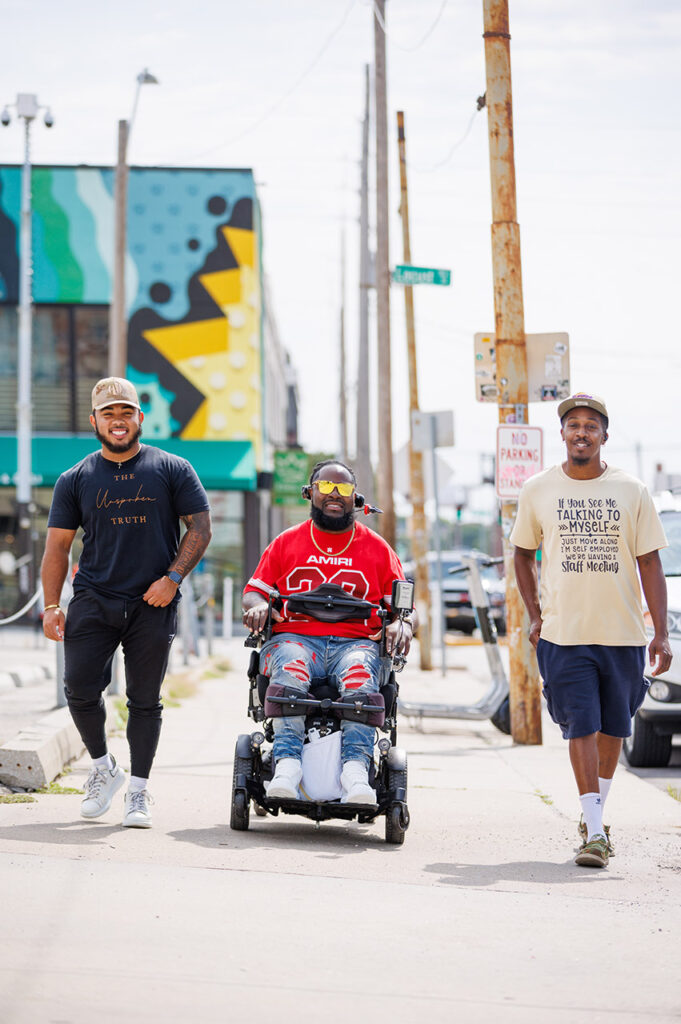
Life is full of trials and tribulations — difficult circumstances that test our character, mental fortitude and resolve. For native Kansas Citian Will Smith, perseverance has always been a way of life, adapting and overcoming any situation he faced.
Coming from a single-parent home, Will grew up as a proud resident of “The Dotte” — Wyandotte County — and decided in eighth grade that, to set his life on the right trajectory, he would focus his energy on sports, specifically football and track. And he certainly hit his stride as a running back, excelling at Wyandotte High School and gaining attention from major universities with scholarship offers on the table.
Will was eager to be the first in his family to attend college to pursue his dreams. But during his senior year, he partially tore his Achilles tendon, dramatically limiting his options. Still, he attended Baker University and eventually transferred to Wheaton College in Chicago. He excelled as a student-athlete there, working his way up the depth chart on the football team, while also developing a strong foundation in faith.
Once he graduated with his new lease on life and diploma in hand, Will was drawn back to his hometown. “I wanted to take the opportunity to share what I’d learned in college and help my family and community overcome their own adversities,” he says.
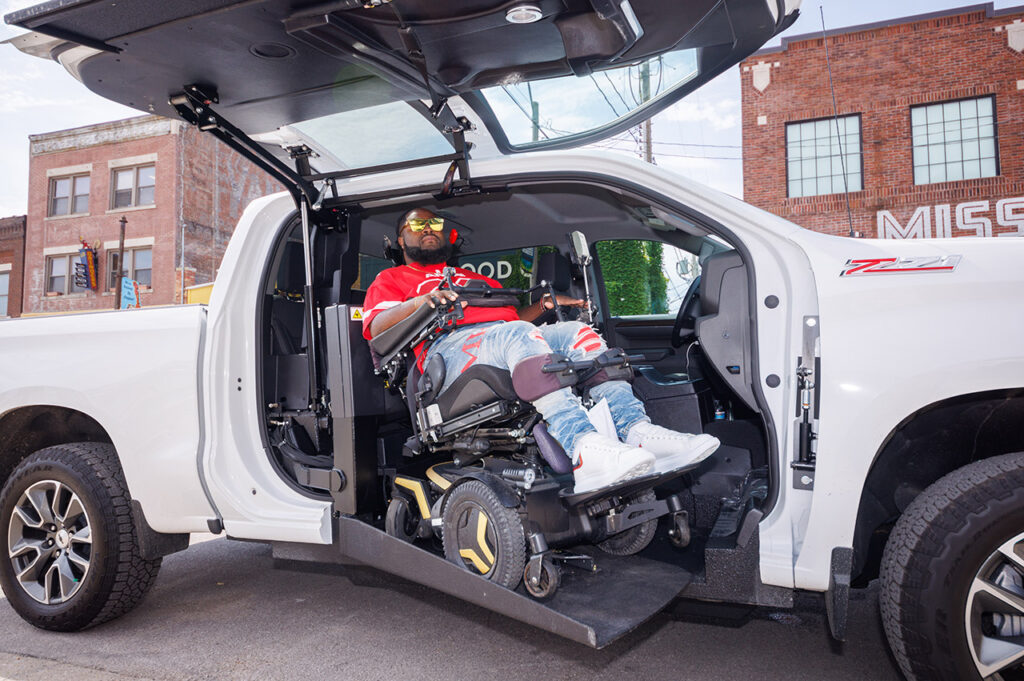
But once Will moved back to Kansas City, he’d soon face one of his life’s greatest challenges — a car accident in March of 2021 rendered him paralyzed.
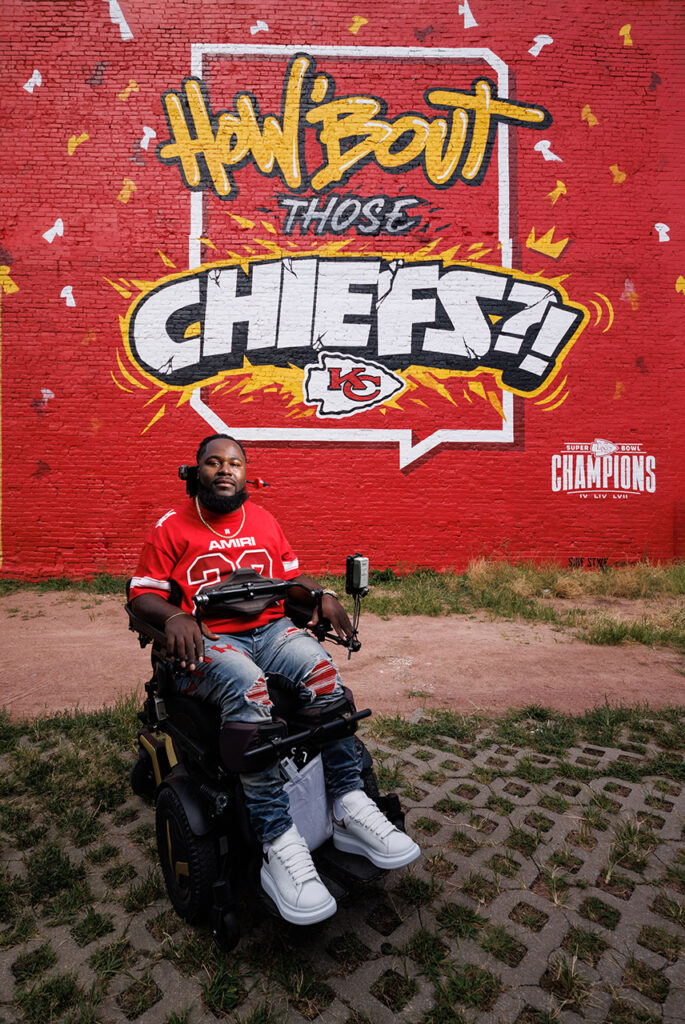
Despite his circumstances, Will always does his best to stay even-keeled, never letting his lows get too low or his highs too high while surrounding himself with friends, family and faith. His professional career has flourished, progressing through several roles at Black & Veatch, a global engineering firm headquartered in Overland Park, Kansas. Both professionally and personally, Will inspires and motivates others by sharing his story across platforms including his own social media and website, Will the Resilience Warrior.
“My body’s been places I’d never allow my mind to go. But in the end, you either fight or you quit. I’m from Wyandotte County, so you know I’ll keep fighting, whatever life throws my way.”
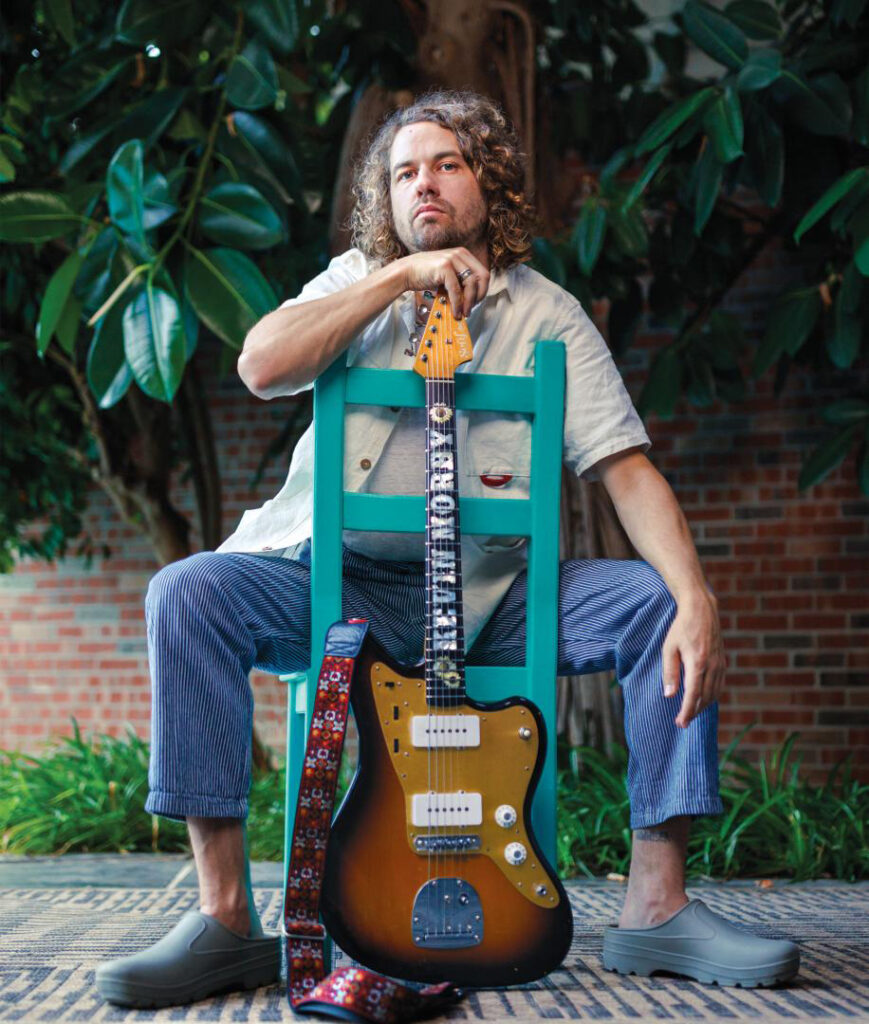
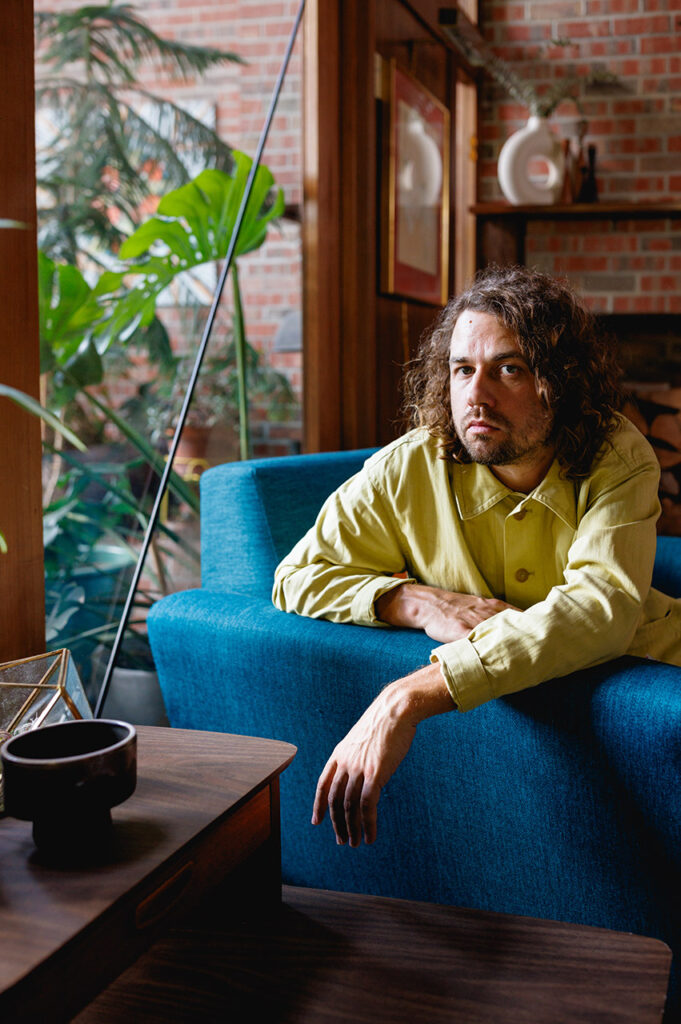
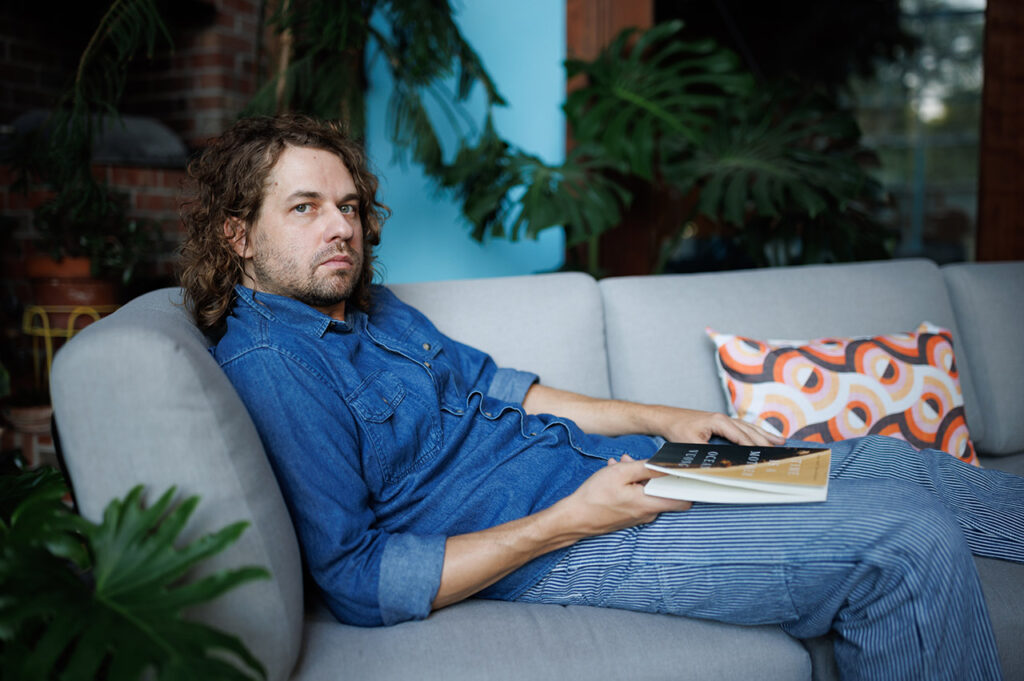
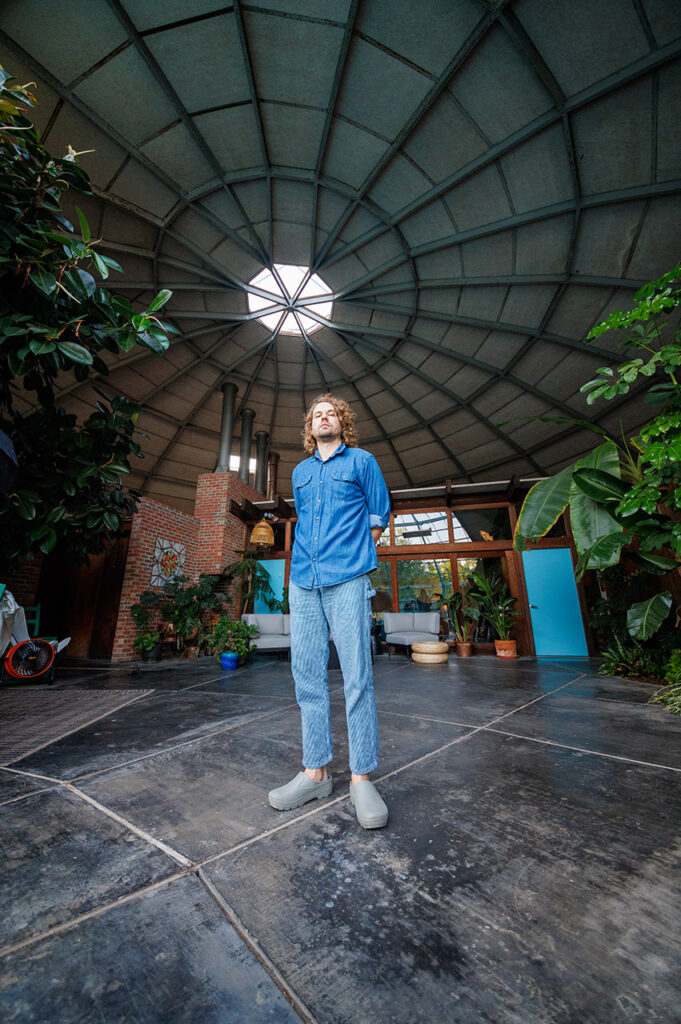
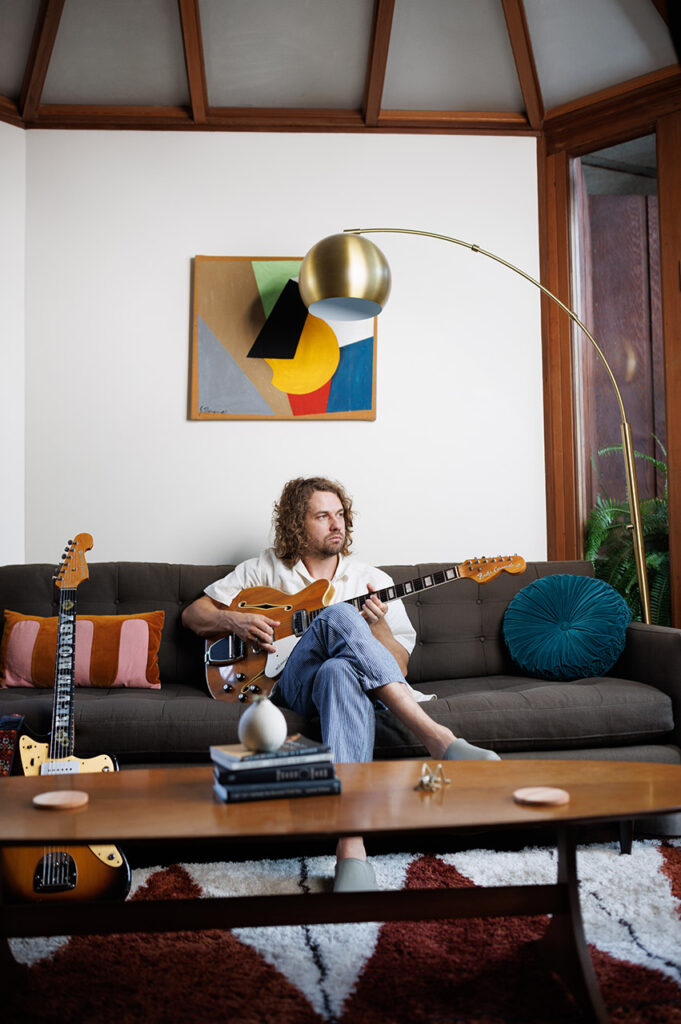
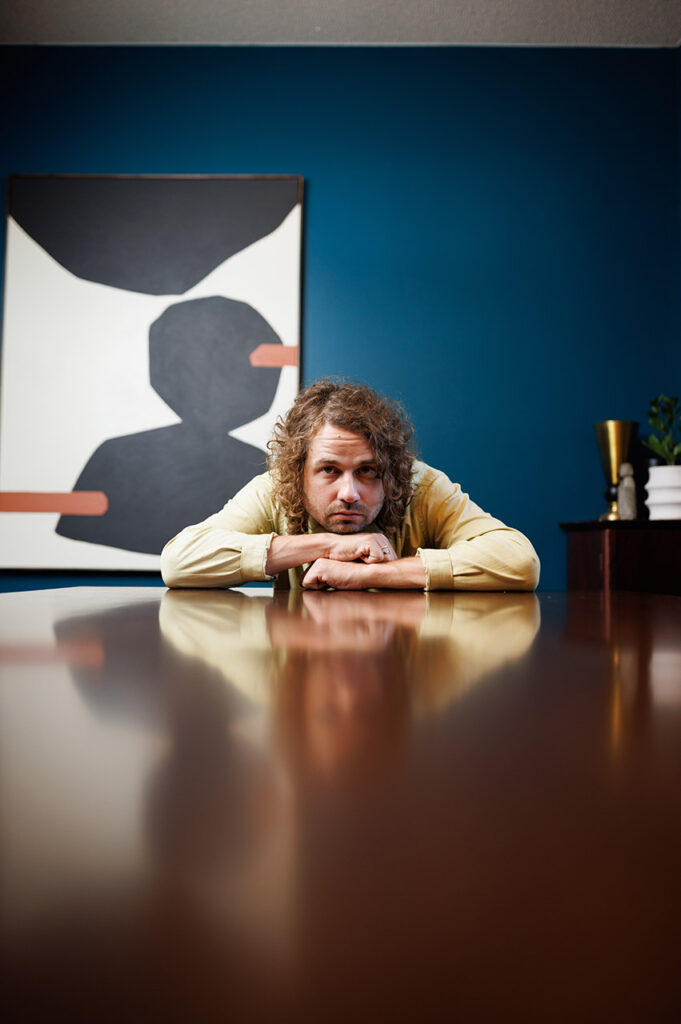
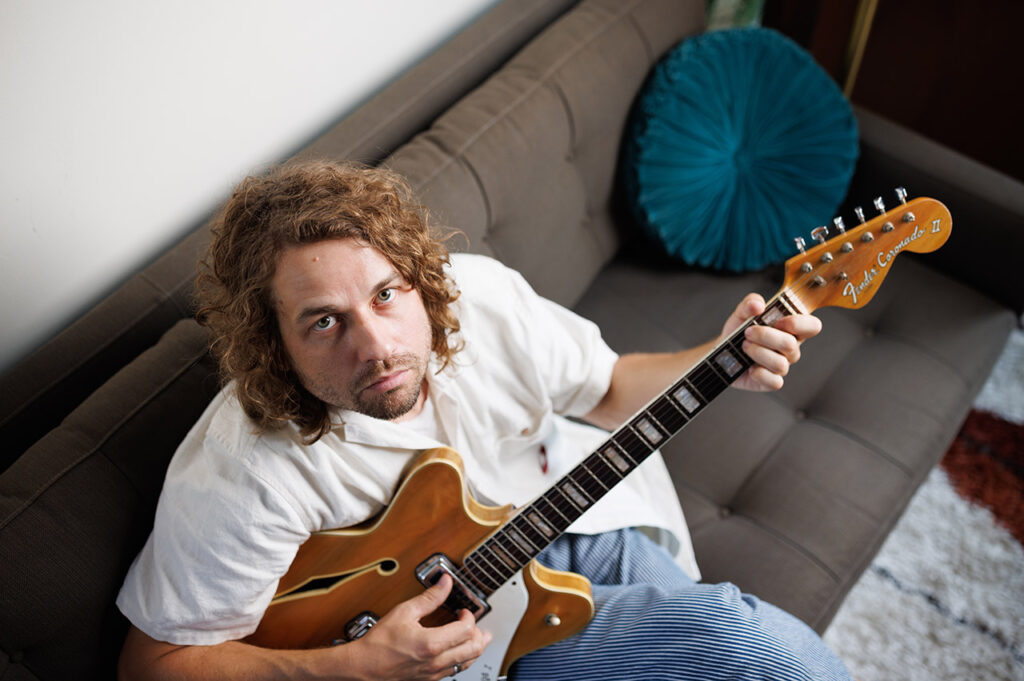
From ramshackle warehouses to headlining international stages, Kevin Morby’s career finds roots in the Heartland.
By Michelle Bacon | Photos by Paul Andrews
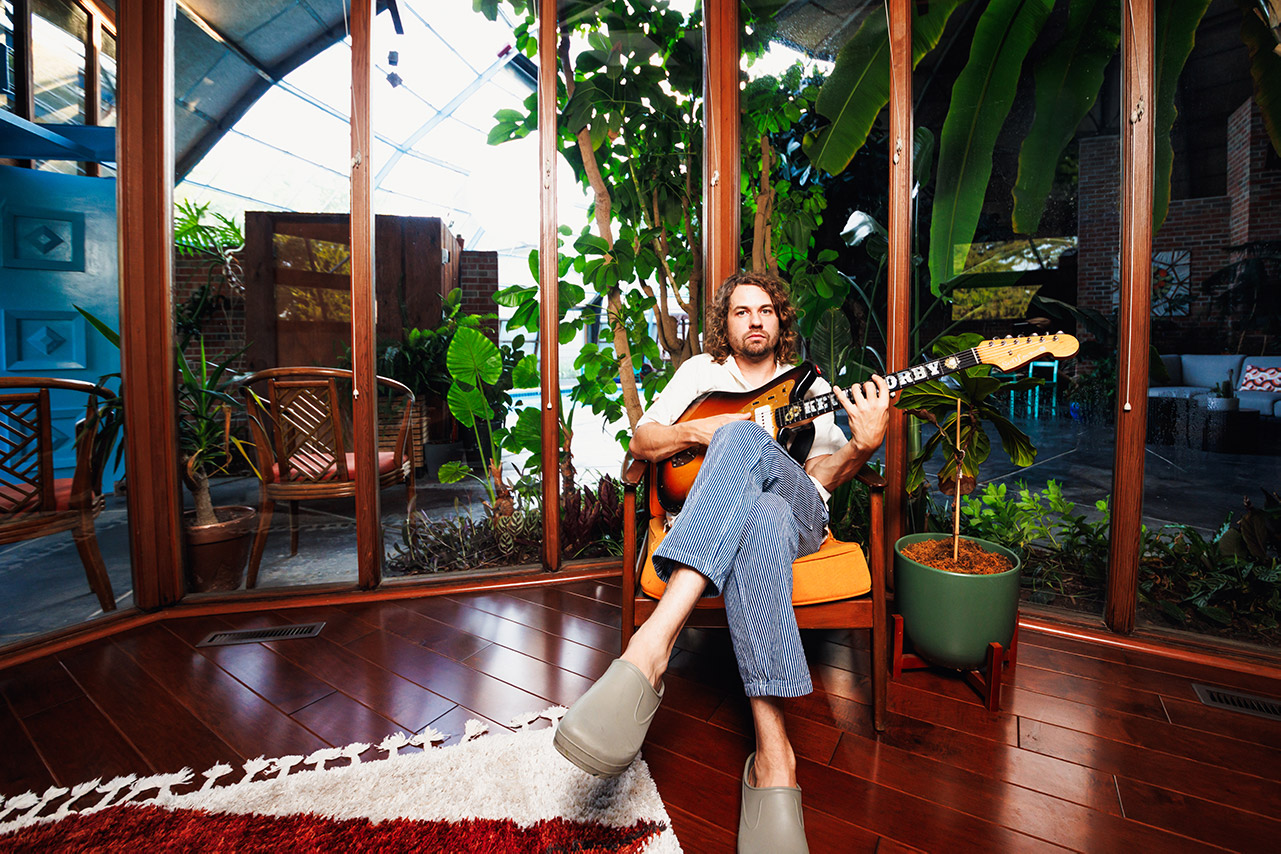
Some of Kevin Morby’s most formative moments took place in hollowed-out warehouses, ramshackle punk basements and abandoned loft spaces across Kansas City — sweating it out shoulder-to-shoulder with other kids, mesmerized by clattering rhythms and crunchy guitars.
It was the early 2000s, a time when the Crossroads Arts District was still in its infancy, the historic West Bottoms was sparsely dotted with haunted houses and the city center was largely untouched after business hours. But to Kevin and friends, it was a playground of possibility — one that would lay the groundwork for an esteemed career.
With seven records in 10 years, including the heavily acclaimed “This Is A Photograph,” Kevin has become a pillar of the indie music world. A quick-witted observationist, the singer-songwriter has a penchant for turning the mundane into the sacred — rambling through lonesome prairies and whirring city streets into the liminal spaces we take for granted. His Midwestern roots inspire muted cerebral folk songs with gentle but deliberate paces, in contrast with more turbulent tunes that roll to a pensive boil.
Born in Texas, Kevin and his family moved around the Midwest before landing in the serene KC suburb of Overland Park, Kansas, when he was in fifth grade. It was also around then that his curiosity would point him to music as a way to express himself.
As a freshman at Blue Valley Northwest, Kevin began penning songs and performing under his own name, later joining friends in a band called The Creepy Aliens. Suddenly, he was leaving the comfort of his home, immersing himself in every genre imaginable at underground clubs in the urban core.
“I remember calling my mom on a friend’s cell phone the first time I went down to a show,” he says. “She asked where I was and I had to look at the street sign — it was like, 13th and Grand. We lived at 135th and Antioch. I didn’t know numbers could go that low.”
This music scene was not only Kevin’s gateway to the city proper, but to the prospect that it could become his life’s work. “Saying that I wanted to be a musician ‘for a living’ felt strange because I didn’t understand that concept until I got into the DIY scene. I just wanted to be able to do it and see the world,” he recalls.
The Creepy Aliens would embark on short runs and link up with other DIY acts in the region — musicians self-producing, distributing and performing their own music — giving Kevin his first taste of touring. They’d swap shows and share bills, show up for one another in their respective towns, crash at each other’s apartments. “It all felt like an impossibility until I discovered this underground network where bands were literally doing it all themselves,” he mentions. “Once I accessed that knowledge, it felt like the world completely opened up.”
But Kevin knew he couldn’t forge that path here — not in the early aughts. Shortly after dropping out of high school and turning 18, he boarded a train to New York. Its DIY scene was on the rise, reminiscent of his circle in KC but on a global scale. The eyes and ears of the world were paying attention, and the bright-eyed Kansas wanderer found himself in the center of it all.
“There is a beautiful thing about not being surrounded by culture, so that when you find it, you can access it,” he says. “A lot of these NY kids were over everything by the time they turned 18 because they’d tried everything or knew every famous person or had been to every art gallery. They took it for granted because it was all right in front of them.”
Kevin, on the other hand, dove in and got to work. At 19, he started playing bass in Woods, another burgeoning act on the Brooklyn circuit. His bandmates were 10 years his senior — “real adults with real jobs and responsibilities.” Hurled into the life of a road warrior, he’d quickly learn the basics of hauling gear, wrapping cables, packing a van and riding in said van for 10 hours at a time, night after night.
As he got his bearings, Kevin felt freer to explore his own music. He and Cassie Ramone formed and co-fronted The Babies, which would give him a chance to test his material and lead a band. “This was a vehicle for my songwriting and my emotions,” he says. “It was a way to put a mask on my solo songwriting, to kind of cloak it in these other things.” The group would go on to release a self-titled album in 2011 and its follow up, “Our House On the Hill,” the next year.
By then, Kevin’s beloved New York DIY scene was dwindling. Artists were being priced out, keeping them from fully immersing themselves in their careers. So, in 2013, he and Babies drummer Justin Sullivan relocated to the “cheap desert” of Los Angeles, moved into a “really big house for next to nothing,” and started working on Kevin’s debut solo album, “Harlem River.”
Now in his mid-20s, Kevin found himself at the vanguard of another nascent music scene. Artists he knew from the touring circuit were also heading to LA, eschewing the DIY microcosm for stronger foundations. “A whole new crop of bands were starting to take off. All these professional musicians were moving out there to have a go at it,” he says.
A new sound was emerging, where reflective solo songsters were taking center stage. Surrounded by delicate but dense sonic tapestries, it was lyrically imaginative and often more reminiscent of ‘60s folk luminaries and beat poets. Within the four years he lived in LA, Kevin’s name would become principal in that indie lexicon. He released three more acclaimed albums: “Still Life” (2014), “Singing Saw” (2016) and “City Music” (2017).
By then, Kevin would be nearing his thirties and again finding himself in transition. The cost of living in LA, let alone any major metro area, had become onerous. He began dating Katie Crutchfield, who was forging her own solo project as Waxahatchee, and whose life was following a similar trajectory. Katie grew up in the small underground punk scene of Birmingham, Alabama, making music with twin sister Allison. She and Kevin had moved around the country for their careers and spent most of their time on the road. Both had four albums to their credits, and their latest releases (Kevin’s “City Music” and Waxahatchee’s “Out in the Storm”) leaned into heavier electric sounds than expressed in previous works.
The pair would soon share another commonality, one that was far more fortuitous: an abiding love for Kansas City.
After being signed to Dead Oceans in 2015, Kevin took the advice of fellow musicians Bradford Cox and Kim Deal before him: Once you make any real money from music, buy a house. He snagged one in downtown Overland Park and rented it out to a friend. By 2017, the friend moved out, so Kevin would come back for a couple of months to tend to it, then return to LA. Katie would visit him in KC when their schedules aligned. She, too, was in transition, ready to leave Philadelphia.
“I was in a funny place where I was super jaded about where I was gonna live,” Katie says. “I had been everywhere in America 17 times. I didn’t want to be in NY, LA, Chicago or back south. I just couldn’t make up my mind… I was just sort of floating around.”
But something happened when she visited KC with her partner for the first time. “I remember being really struck by how much I liked it,” she says. “It was a feeling I hadn’t had in a long time, where I went to a new place and felt so connected to it.” Though she hadn’t considered moving to KC, Katie started seeing it as a wonderful middle ground that afforded her all the resources of a big city without all the noise. She began spending more time at Kevin’s Overland Park house between gigs, finding unexpected refuge.
In 2018, she made a life-altering decision, vowing to get sober and take an entire year off touring — an almost unheard-of choice for a musician whose primary income came through a life on the road.
“I was burning the candle at both ends — that’s what I had to do to earn a living,” she recalls. “It was scary, but something told me that’s what I needed to do to make the type of record that I really wanted to make.”
For the better part of that year, Katie cozied up in Kevin’s home while he was on tour — in the back shed studio area he dubbed The Little Los Angeles. “It was just this perfect little space. There was a piano, music gear everywhere,” she says. “I really felt like I could come here and feel that sense of solitude because I didn’t know many people here at the time, but because it had everything I needed, I could still go out and find really great food. [KC] has been really conducive to songwriting for me in that way.”
There, she would “spin silence into gold,” gifting those songs to the world in March 2020 and calling the effort “Saint Cloud.” A major breakthrough, the album doubled Waxahatchee’s fanbase and became a sanctuary for a world forced into abrupt lockdown. Katie’s own self-imposed isolation tapped into an elemental part of her musical identity, extracting pieces of her Southern roots while taking inspiration from the understated beauty of her new surroundings.
“It’s such a big part of it for me to live in a place like KC,” she says, adding that the ambient chatter of industry towns wasn’t working for her approach to songwriting. “Something about it makes my entire process feel more my own. It’s always important for me to shut the world out when I’m trying to receive some type of vision of what’s next, and I really needed that spaciousness to do that.”
As Kevin watched his girlfriend fall in love with KC, he found himself doing the same. “There was something about seeing KC through Katie’s eyes that made it easier for me to see it in a new perspective, rather than feeling like I was back in high school and nothing had changed.”
He also recognized how much it actually had changed. The modest metropolis of his youth had undergone a major transformation in the previous two decades — becoming an affordable, innovative Midwestern hub for artists, entrepreneurs, restaurateurs, tech startups and international sporting events. The DIY scene of Kevin’s teenage years had given way to a bustling community of musicians, many of whom were making the national scene with KC as their home base.
As he grew to appreciate it in a new light, Kevin started to see his life in Kansas City as a bounty. “The fact that I started making a living off my passion made me think, I really can’t mess this up,” he says. After more than a decade of paying his dues, he discovered that building a life here would reap greater rewards. Over the pandemic, Kevin and Katie put down roots and bought a home together in KC.
While their stars rise, the indie-rock couple feels a palpable sense of civic pride as Kansas City continues its renaissance. Both point to the star-studded Big Slick Celebrity Weekend, where they performed in the summer of 2024. Founded in 2010 by KC natives Paul Rudd, Jason Sudeikis and Rob Riggle, the annual gathering includes a slew of A-listers who come together for a softball game, concert and other events raising millions for local hospital, Children’s Mercy.
“It was cool to look around that room and think, all these people are from KC. Everyone has gone out and done something amazing but still reps their hometown and loves it so much. It’s such an inspiring place in that way,” Katie says. Kevin adds that it’s a “very Kansas City thing” to do — for these celebrities to give back to the community that molded them.
He gets to the heart of what he feels is so unique and personal about being from Kansas City. “KC feels like it belongs to me,” he says. “As much as I love NY and LA, they sort of belong to everybody. I have my spots here, and they feel like they’re sacred and secret. You can’t have that in bigger cities.”
In addition to favorite spots like Mutual Musicians Foundation, Big Mood Natural Wines, Earl’s Premier and Baramee Thai Bistro, Kevin and Katie have found an inspiring sense of place across KC’s byways. For Kevin, it’s vantage points like the northland bridges over the Missouri River, the Western Auto sign and suburban haunts he took for granted as a kid, like Glenwood Arts Theater and the former sites of The Rio and Metcalf South Mall in Overland Park.
To cap the conversation, Kevin shares an anecdote he’d recently heard about a fellow KC native — a musician whose shadow still looms large over the city nearly a century later.
“Someone told me that Charlie Parker couldn’t wait to get out of here,” he says. The flourishing KC jazz scene of the 1930s was ground zero for the saxophonist’s improvisational style, but like Kevin, he would have to leave in order for his sound to evolve. Something about that story stuck with the ruminative troubadour.
“There’s a happy ending to not agreeing with a place, going out and doing your thing, and then, at least for me, coming back,” Kevin says.
As the 36-year-old musician enters the next phase of his career, he carries his city with him and displays it like a badge of honor. He feels a debt of gratitude to Kansas City, both for giving him the curiosity to excavate the hidden treasures of humanity through his art and for being a safe, comfortable place to forge ahead and flourish. Kansas City set Kevin’s musical odyssey in motion, and in return, he’s making Kansas City cooler than ever.
No, you’re not imagining it: Anti-development and anti-growth sentiments are on the rise nationally. Whether it’s feelings of areas being ‘good as they are,’ overdevelopment concerns or just not trusting local government, 26% of Americans reported actively opposing a new development in a January 2025 Emerson College Polling survey.
In the face of NIMBYism (Not in My Backyard), economic developers must master authentic community engagement, partnerships and public relations like never before. It’s time to rethink our approach and reenergize communities around the opportunities that come with local growth.
Rethinking NIMBYism
The environmental NIMBY resistance to nuclear power plants and landfills of the ‘50s and ‘60s is past. Today, the concerns are more far-reaching and the backyard is larger.
A wider lens: Today’s NIMBY covers public health, social justice and impact on property values.
All about the Backyard: Opposition is not necessarily to the project, housing, retail or otherwise on principle as much as it is location-based.
Who benefits from growth: Community members may not feel a personal benefit to themselves or their community — only the developers’ interests.
More challenging than ever: As public concerns about growth become more organized and vocal, economic developers must rise to the occasion with bold, creative strategies, including persuasive communication.
Reframing the Conversation
Reframing development and growth can be a tall order, but getting the community invested in new housing and retail projects, showing up and participating, can balance out naysayers to shine light on the overall vision. Here’s how:
You have to care first: Consistently show residents, through actions, direct outreach and candid conversations that you care about them and are empathetic to their concerns. All opinions stem from people caring about their community.
Ease friction through open communication: Simplifying confusing project attraction processes turns support and participation into easier asks.
Listen up: Host public work sessions and forums to gauge community sentiment and empower them with information. Use tools, including social media, to shape narratives and counter resistance.
Leaders set the tone: Prep civic leaders with the facts – their visible actions and energy shape the way community members feel about development and growth.
Reenergize your Community
Harnessing local energy and strategic engagement can turn big dreams into real progress.
Identify a community’s rallying point: Identify a shared communal value to use as a foundation for framing the overall benefit to residents.
Make the process enjoyable and inclusive: Invite residents to fall in love with the vision and contribute unique insights.
Activate the power of social media: Give residents tools to engage and champion efforts online. Spreading the long-term benefits to fearful neighbors from the mouths of those they trust the most: each other.
Even anti-growth voices often stem from a desire for a better future. By listening and involving residents and voters, we can build communities ripe for growth — shaped and supported by the people who live there.
Jeanine Jerkovic is the Economic Development Director for Surprise, AZ, bringing new retail and employment opportunities to the community. Connect on LinkedIn.
Ready to turn community resistance into community momentum? The KCADC team and our partners are here to help you navigate local engagement with confidence and clarity. Contact us to learn more.
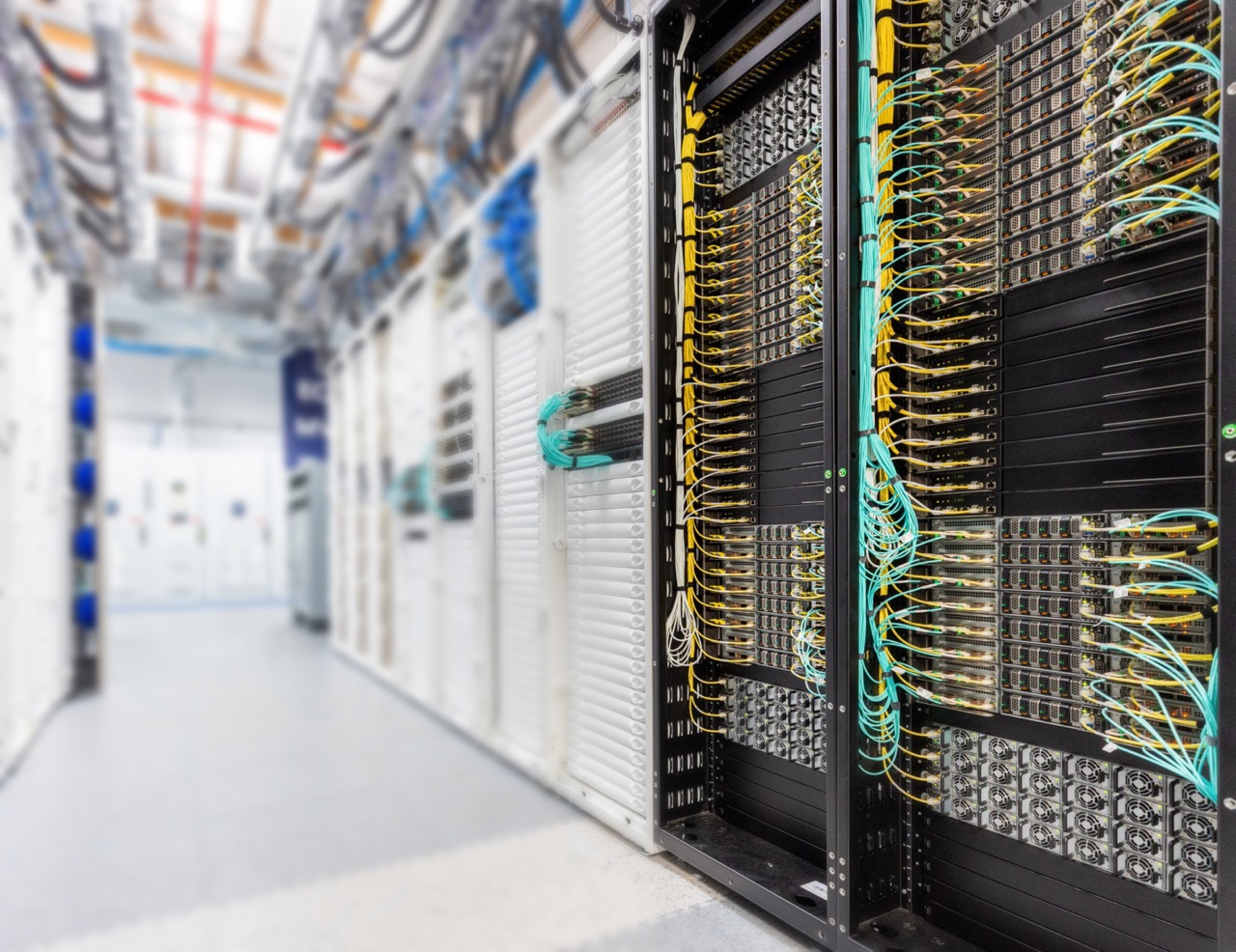
San Francisco, CA – October 28, 2025 – Lambda, the Superintelligence Cloud, today announced it is planning to transform an unoccupied 2009-built facility in Kansas City, Missouri, into a state-of-the-art AI Factory.
This Kansas City deployment is part of Lambda’s mission to build the infrastructure backbone for the Superintelligence era. Under the agreement, Lambda is planning to develop and operate the facility as the sole tenant. The site is expected to launch in early 2026 with 24MW of capacity, and the potential to scale up to more than 100MW in the future.
“Missouri is proud to welcome Lambda as they create new, high-quality jobs and strengthen our state’s technology and innovation ecosystem,” said Governor Mike Kehoe. “Their decision to grow here demonstrates the confidence that leading companies have in our people, our infrastructure, and our pro-business environment. It’s been said that AI is the space race of our time, and we must win. Data centers are the future and critical to our continued ability to drive technological innovation, strengthen our economy, and safeguard our national security interests. Partnerships like this ensure Missouri remains at the forefront of America’s winning strategy.”
“Our Kansas City development perfectly embodies Lambda’s strategy: a prime location for our customers, an accelerated deployment timeline, and an unwavering commitment to on-time delivery,” said Ken Patchett, VP of Datacenter Infrastructure at Lambda. “We believe this success stems from completely rethinking how AI factories should be built and operated.”
Building big, shipping fast
When the facility launches in early 2026, it will initially feature more than 10,000 NVIDIA Blackwell Ultra GPUs—a footprint expected to double over time. The supercomputer is dedicated to a single Lambda customer for large-scale AI training and inference, under a multi-year agreement.
“Today in Kansas City, we are building the infrastructure to capitalize on AI’s boom,” said Mayor Quinton Lucas. “An investment of this scale in the Northland highlights our city’s strength in technology, innovation, and job creation, and brings an empty asset back to life through creative reuse.”
The project enables Lambda to repurpose unused power and transform a formerly advanced data center into an AI-ready, future-proofed facility.
“Choosing Kansas City, Missouri, for a next-generation AI data center sends a clear message: Missouri is the tech leader in the center of the country,” said Subash Alias, CEO of Missouri Partnership. “We applaud Lambda for building an AI factory in the heart of the U.S. This is a generational investment that will expand opportunity for Missourians and accelerate the digital economy.”
“This investment from Lambda showcases the Kansas City region’s ability to creatively reimagine assets and attract transformative investment,” said Tim Cowden, President and CEO, Kansas City Area Development Council. “Data centers are critical to powering the innovation economy, and Kansas City wields the strength of infrastructure, reliable power, and a deep IT talent pool that continues to draw leading technology companies to the region.”
“Lambda’s investment in the Kansas City area emphasizes our state’s growing strength in technology and innovation,” said Michelle Hataway, Director of the Department of Economic Development. “DED is proud to support future-focused projects like this that enhance our workforce, drive sustainable growth across the region, and create opportunities for Missourians to prosper.”
This project was made through many local partners in Kansas City including the State of Missouri, Missouri Dept. of Economic Development, Missouri Partnership, Kansas City Area Development Council (KCADC), Platte County EDC, City of Kansas City, Mo., Economic Development Corporation of Kansas City, Mo., Port KC, Evergy, Spire, Inc., KC Tech Council, Russell Construction, Henderson Engineers, U.S. Engineering, and Capital Electric.
About Lambda
Lambda, The Superintelligence Cloud, builds gigawatt-scale AI factories for training and inference. From prototyping to serving billions of users in production, we build the underlying infrastructure that powers AI. Lambda was founded in 2012 by published AI engineers.
Lambda’s mission is to make compute as ubiquitous as electricity and give everyone in America the power of superintelligence. One person, One GPU.
Forward Looking Statements This press release contains forward-looking statements about the company and its business, including its expectations regarding data center capacity, based on management’s beliefs, assumptions, and expectations. Words such as “anticipate,” “believe,” “continue,” “estimate,” “expect,” “future,” “intend,” “plan,” and “will,” or similar expressions, are intended to identify forward-looking statements. These statements are based on management’s current expectations, are not guarantees of future performance, and are subject to risks and uncertainties that could cause actual results to differ materially from those expressed or implied.
The sold-out event united more than 2,000 civic and business leaders who support Kansas City’s regional growth and rising global influence
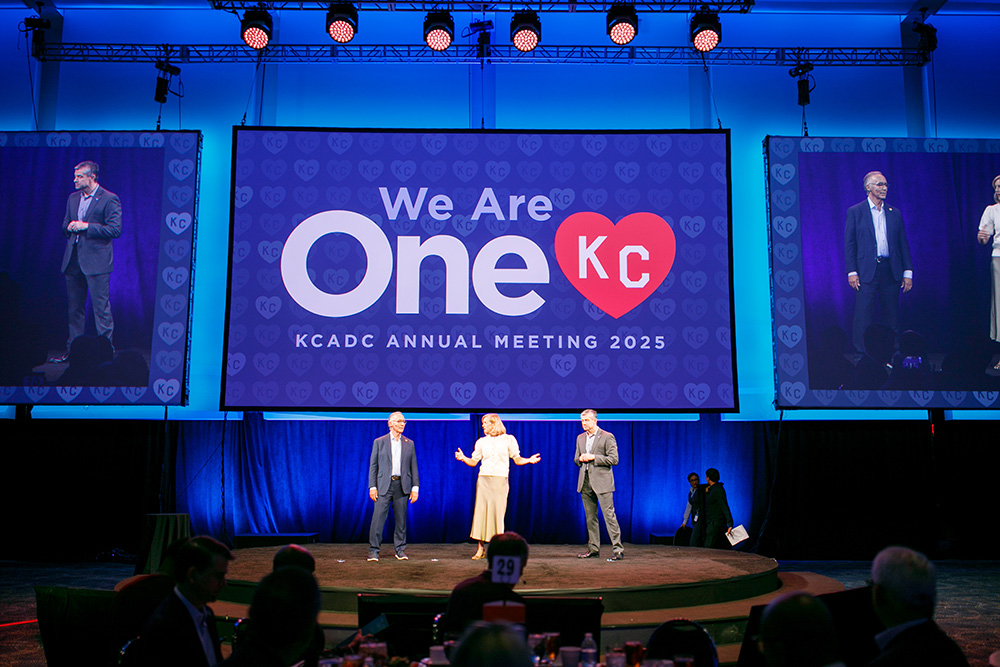
KANSAS CITY – Oct. 30, 2025 – Today, the Kansas City Area Development Council (KCADC) hosted its 2025 Annual Meeting, the KC region’s largest yearly business gathering, convening leaders from across the 18-county, two-state area.
The event’s theme, “We Are OneKC,” emphasized the message of regional unity, positioning the two states and 50+ communities in the greater Kansas City metro as a single, integrated economic region to drive collective success.
In 2025, KCADC and its partners attracted global companies to the region, driving $1.3 billion in capital investment, 3,197 net new jobs and nearly $275 million in wages. The KC region has attracted headliner companies in fintech, animal health and receives continued investment in major tech and data center projects.
A major 2025 investment highlight came from Fiserv, a global leader in payments and financial services technology. Fiserv continues to build deeper connections across the Kansas City region following their plans to establish a new strategic fintech hub in Overland Park, Kansas, bringing 2,000 new jobs and $175 million in capital investment.
“Fiserv is thrilled to join a collaborative and innovative community of professionals in the Kansas City region,” said Joanne Sebby, Chief Risk Officer for Fiserv. “As we evaluated locations across the country, the Kansas City region stood out for its strong spirit of partnership, depth of talent and rising growth. This is the perfect launchpad for our next chapter of fintech innovation.”
The event also spotlighted the region’s leadership in animal health, celebrating Merck Animal Health’s decision to invest $895 million in the Kansas City region earlier this year.
“Merck Animal Health’s decision is a powerful reflection of what we achieve when we work together as OneKC,” said Rob Bratcher, president of Commerce Bank and KCADC senior board co-chair. “It reinforces the Kansas City region’s position as the global leader in animal health innovation — and showcases the strength of a region that collaborates, competes and wins together.”
Best-selling author and co-producer on the Emmy-nominated show “The Bear,” Will Guidara, keynoted the event, inspiring KC’s business and civic leaders to think bigger — embracing radical generosity, intentionality and the unexpected. His message was a timely and critical one as KC prepares to welcome the world for the FIFA World Cup 26™.
Reflecting on a year marked by significant achievements, Tim Cowden, president & CEO of KCADC, encouraged attendees to embrace our singularity as OneKC.
“Kansas City’s success has always been rooted in our ability to work as one region, all aligning around a shared vision for growth,” said Cowden. “This unified approach has built a market that’s robust and resilient, increasingly recognized on a global stage. Together, we’ve positioned KC as a place where innovation thrives, businesses grow and collaboration drives results. KC is rising; the world is taking notice.”
The Kansas City Area Development Council (KCADC) is the region’s leading economic development organization, representing 18 counties across Kansas and Missouri. Consistently ranked as a top regional economic development group, KCADC drives business investment and talent attraction to strengthen the KC region’s global competitiveness.
About the Kansas City Area Development Council (KCADC) Serving the 18-county, two-state Kansas City area, the Kansas City Area Development Council is an economic development nonprofit that promotes the region’s business and lifestyle assets to companies and talent around the world. Working closely with its two states and 50-plus county and community partners, the region has attracted more than 64,000 new jobs over its 45-year history. KCADC also leads the efforts behind the KC Animal Health Corridor, KC SmartPort, TeamKC, KC Global Design and KC Heartland. | onekc.org
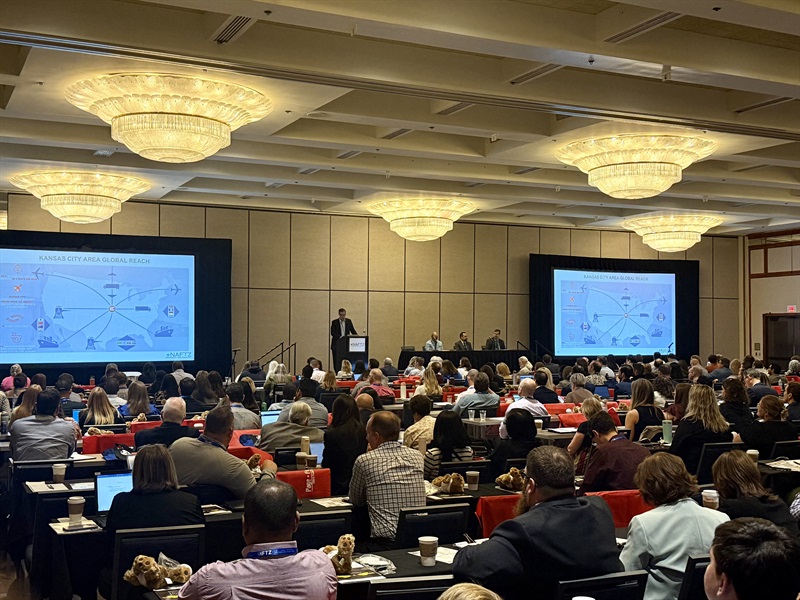
The National Association of Foreign-Trade Zones 2025 Annual Conference was held in Kansas City on September 14-17 at the Westin Crown Center. This year’s event was sold out, achieving record attendance.
KC-AREA PANEL: Chris Gutierrez, President of the Greater Kansas City Foreign Trade Zone (GKCFTZ) & KC SmartPort, led a panel discussion with local Kansas City Operators – Kawasaki, Assa Abloy & MRI Global. The panel discussion and the conference were featured in this KC Business Journal article.
KC-STYLE RECEPTION: Attendees celebrated KC-style at Union Station Grand Hall with a reception featuring live jazz from KC native and jazz legend Lonnie McFadden along with KC-themed food and drinks on Tuesday, September 16. The reception was hosted by GKCFTZ, Miller & Co, Scarbrough Global and Union Station.
The conference provided only a preview of all that Kansas City has to offer.
KANSAS CITY’S UNIQUE ADVANTAGES:
America’s Crossroads: KC sits at the heart of North America, where world-class transportation infrastructure meets unmatched connectivity. From this central location, companies can quickly deliver and reliably scale across the continent.
Workforce Ready: Advanced manufacturing and high-growth sectors thrive in KC, fueled by a deep talent pool ready to drive success – ensuring a seamless market entry.
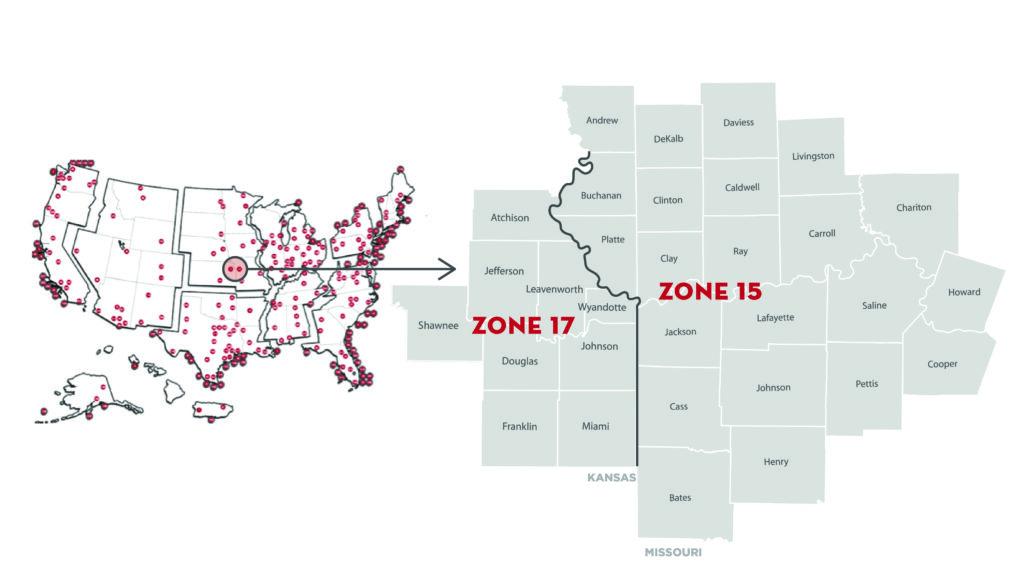
FTZ in the Heartland: The Greater Kansas City Foreign Trade Zone (Zones 15 & 17) provides our region and the companies located here a superior advantage. Industry leaders such as Bayer Crop Science, Kawasaki, Garmin, Panasonic Energy, Assa Abloy and others have realized the benefits of having an FTZ in the center of the country.
The Greater Kansas City Foreign Trade Zone (GKCFTZ) is the regional grantee of the national FTZ program. GKCFTZ sponsors both Foreign-Trade Zone No. 15 with 23 counties in western Missouri and Zone No. 17 with 9 counties in eastern Kansas.
The Greater Kansas City Foreign Trade Zone (GKCFTZ) is the regional grantee of the national FTZ program. GKCFTZ sponsors both Foreign-Trade Zone No. 15 with 23 counties in western Missouri and Zone No. 17 with 9 counties in eastern Kansas.