2026 Trends and Focus Areas: Building the Future of Animal Health Together

As we look toward 2026, the Animal Health Corridor stands at the intersection of global change and unprecedented opportunity. The forces reshaping our industry, such as private equity investment, innovation models, workforce dynamics, species-specific care, and global visibility, are converging in ways that demand leadership, collaboration, and clarity of purpose. The Corridor’s role has never been more important.

What follows are four focus areas that will define the year ahead and guide how we partner with companies, innovators, educators, and communities to advance animal health worldwide.

1. Navigating Industry Transformation Across Investment, Manufacturing, and Workforce Growth

The animal health industry continues to experience high levels of engagement from private equity and strategic investors. We are seeing robust investment activity alongside divestments of business units, portfolio realignments, and renewed attention to operational efficiency. At the same time, economic pressures from inflation to shifts in federal policy to supply chain volatility are accelerating the onshoring of manufacturing and R&D capabilities.

These shifts place workforce at the center of every growth decision. In 2026, access to skilled talent, particularly in biomanufacturing, will be the defining factor for where companies choose to invest and expand.

The Animal Health Corridor is uniquely positioned to serve as an instrumental partner during this transformation. Our region offers a dense concentration of global animal health companies, advanced manufacturing capabilities, and a collaborative ecosystem that reduces friction for companies scaling operations. Just as importantly, we are deeply focused on attracting and developing the next generation of talent.

A key priority moving forward is regional alignment across Kansas and Missouri to support companies growing their manufacturing footprint. We are working alongside educational partners, workforce organizations, and industry leaders to establish a common language around what biomanufacturing is and what careers in biomanufacturing look like. This includes clearly defined and accessible pathways, from short-term certifications and two-year programs to four-year degrees and advanced training.

By aligning curricula with industry needs and clearly articulating career opportunities, the Corridor will help build sustainable talent pipelines that benefit both employers and communities ensuring our region remains the premier destination for animal health manufacturing and investment.

2. Doubling Down on External Innovation and the Pioneers Who Drive It

Breakthroughs in animal health increasingly come from beyond the walls of any single organization. Startups, university spinouts, and entrepreneurial teams are bringing forward new diagnostics, digital tools, therapeutics, vaccines, and platforms that can reshape care delivery and outcomes.

Continued investment in external innovation is not optional, it is essential. In 2026, we must do more than celebrate innovation; we must actively support innovators as they navigate regulatory pathways, scale manufacturing, access capital, and reach global markets.

The Animal Health Corridor plays a critical convening role here. By connecting innovators with established companies, investors, contract partners, and mentors, we help reduce time to market and increase the likelihood of success. Our focus is on creating an environment where bold ideas are met with practical support and where collaboration accelerates impact for animals, veterinarians, producers, and pet owners alike.

3. Advancing Species-Specific Care with a Growing Focus on Feline Health

Animal health is not one-size-fits-all, and species-specific care is gaining well-deserved attention across the industry. While advances in livestock, poultry, canine, and equine health remain vital, we are seeing a particularly strong and overdue focus on feline healthcare.

Cats represent a rapidly growing segment of the companion animal population, yet historically have been underserved in diagnostics, therapeutics, preventive care, and owner engagement resources. In 2026, innovation in feline health will be a critical growth area, spanning stress-free diagnostics, targeted therapeutics, digital engagement solutions, and care models designed with the cat in mind.

The Corridor’s ecosystem is ideally suited to support this evolution. With deep expertise across R&D, clinical development, regulatory science, biomanufacturing, and commercialization, our region can help bring more species-specific solutions to market and improve outcomes across the full spectrum of animal care.

4. A Global Stage: Showcasing the Corridor Through the World Cup

Finally, 2026 offers a once-in-a-generation opportunity to showcase our region to the world. Hosting the World Cup is about more than sport; it is about global visibility, connection, and leadership.

As international attention turns to our region, we have the chance to highlight what makes the Animal Health Corridor extraordinary: a collaborative culture, world-class innovation, economic vitality, and a deep commitment to workforce development. This global moment allows us to attract talent, investment, and partnerships while reinforcing our identity as a hub where science, manufacturing, and community thrive together.

Looking Ahead

The year ahead will demand adaptability, partnership, and long-term thinking. The Animal Health Corridor remains committed to being a catalyst by bringing industry and education together, supporting innovators, developing talent, and ensuring our region continues to lead the world in animal health.

Together, we will navigate change, unlock opportunity, and build a stronger, more resilient future for animals and the people who care for them.

The Connector | December 2025

The Connector, KC Animal Health Corridor logo, woman feeding a cow, a puppy and a kitten

Welcome to The Connector. Fetching the freshest animal health news.

Important Things You Need to Know

It’s getting close. Secure your spot for The Gathering at VMX.

The Corridor’s biggest networking event of the year is fast approaching, and momentum is already building. On January 18, from 3:00 to 4:30 p.m. EST, the Regency Rotunda at the Hyatt Regency will become the hub for connection, conversation, and industry energy. Registration is open. Lock in your spot while space is available. >> SECURE YOUR SPOT


Animalytix Market Update 2026

The 15th annual Animalytix Market Update is coming.

Mark your calendars! The 15th edition of the Animalytix Market Update is coming soon. Taking place February 12 from 10:00 to 11:30 CST via Zoom, this session will deliver a deep, data-focused look at key market segments across the animal health industry.

Proceeds from registration will support the Spirit of Service award recipients, the non-profit organizations strengthening the human-animal bond. >> REGISTER NOW


Spirit of Service and Iron Paw Award

Honor the Best in Animal Health – Nominations Now Open.

The 2026 Spirit of Service and Iron Paw awards from the KC Animal Health Corridor recognize the game-changers shaping our industry. Spirit of Service honors those elevating the human-animal bond, while Iron Paw celebrates powerhouse contributors across academia, research, industry, and government.

Know someone making an impact? Nominate your champions today.

>> SPIRIT OF SERVICE

>> IRON PAW


Animal Health Corridor Summit

The 2026 Animal Health Summit is now accepting applications for Emerging Companies!

The Animal Health Summit is the ultimate stage for groundbreaking companies in animal health, nutrition, diagnostics, and technology. If you’re pushing the boundaries in areas like companion animal care, AgTech, food animal production, or diagnostics, this is your moment to shine. Connect with investors and strategic partners who are actively seeking the next wave of innovation and game-changing solutions. Don’t miss the chance to showcase your vision to a global audience ready to fuel your success. >> APPLY NOW


When an Industry Shows Up, a Generation of Potential Grows

How do you measure the impact of inspiring future careers when there’s no dashboard to prove it? In animal health, meaningful workforce development lives in conversations, classrooms, and moments that don’t fit neatly into a spreadsheet. Discover how we witnessed our true impact at the NAAE Conference—and why showing up matters more than metrics. >> READ FULL BLOG


Industry News

Chewy Announces Third Quarter 2025 Financial Results

Dechra Announces FDA Approval of Emeprev™ (maropitant citrate) Injectable Solution

Zoetis Highlights R&D Leadership and Long-Term Growth Opportunity at Innovation Webcast

Zoetis to Host Innovation Webcast

Elanco Investor Day Defines New Era as Sustainable Growth Company

Hill’s Pet Nutrition and The Veterinary Cooperative Select Otto’s AI Scribe to Offer Free to Clinics Nationwide

Hill’s Pet Nutrition Reaches 16 Million Adoptions Milestone

Cats Claim Record Share of Veterinary Visits as Feline Market Momentum Builds

K-State Joins National Effort to Prepare Next Generation of Veterinary Entomologists

Merck Animal Health Reaches Unprecedented Milestone of 2 Million Cows Monitored with SenseHub® Dairy Technology

Understanding the Recent Equine Herpesvirus (EHV) Outbreak

Cultivating Leaders in Veterinary Pathology

Akston Initiates Clinical Trial of Once-Weekly GLP-1 Weight-Management Therapy for Cats

Elanco’s Credelio™ CAT (lotilaner) Receives First FDA Emergency Use Authorization (EUA) for Treatment of New World Screwworm (NWS) in Cats

DFA Cares Student Scholarship Applications Now Open for 2026

AVMA’s 2025-2026 Fellow Joins Congressional Office

Is Cultured Protein the Future of Protein in Pet Food?

How Pet Food Keeps Millions of Tons of Food Waste Out of Landfills

FDA to Lower Number of Trials Required for Approval of Drugs, Other Medical Products


Putting AI to Work: What’s Now and What’s Next

It’s one of the most pressing topics in hiring today: how artificial intelligence is reshaping the way organizations attract, evaluate and onboard talent.

At a recent TeamKC Roundtable, the network explored real-world examples of what’s working, what still needs human oversight and what policies teams need to drive forward as AI accelerates. Moving far beyond an interesting tool, AI has evolved to become a true thought partner, shaping talent strategies in profound ways.

Key Takeaways:

  • Before diving headfirst into AI, clearly define a problem in order to select the right tool.
  • Do your homework – understand the tool, its limits and how it fits your team.
  • Maintain the human element – treat AI as an enhancer (not a replacement) for the relationships and judgment that define effective talent work.

Dive Deeper

Leaders are increasingly using AI to test tone, translate experience, identify personality traits aligned with team needs and help pinpoint what hiring managers may be overlooking. “If you’re not evolving, you’re moving toward extinction” — a reminder that as candidate expectations shift and applications surge, integrating AI thoughtfully is becoming a necessity, not a luxury.

High-growth organizations are leaning on AI to streamline manual steps, including interview scheduling, resume ranking, sifting for specific skills and matching candidates to the right teams. Many are actively training their platforms so systems better understand company philosophy and the nuances of successful hires. Others have opted to build their own tools for stronger security, consistency and the ability to flex for different workflows.

The rise in efficiency also brings new risks. 

A flood of applicants, many of them fraudulent or AI-generated, has made it harder to separate genuine, qualified people from bots or impersonators. Leaders emphasize the importance of combining AI with human intuition to find the best candidates possible.

Despite the challenges, AI is already reducing headaches.

AI can be great at handling tasks like automated email and communications plans, drafting/consolidating job descriptions, pulling market data, translating military or technical jargon and compiling interview transcripts. This frees up recruiters to stay focused on tone, personality and connection. 

Taken together, these principles provide a roadmap for using AI thoughtfully, maximizing its benefits while keeping human judgment at the center of talent decisions.

Unlock insights, resources and connections to elevate your talent strategy — connect with TeamKC today!

When an Industry Shows Up, a Generation of Potential Grows

One of the questions we hear most often about our workforce priorities is: How do you measure the impact of talking to middle school and high school educators about career exploration in animal health? It’s a fair question and one we’ve reflected on deeply.

The truth is, it’s nearly impossible to draw a clean line from a single conversation with a teacher to a student ultimately stepping into a career in our industry. There’s no dashboard, no tidy funnel, no tracking mechanism that tells us which young minds were influenced by the resources, stories and insights we share.

But does that mean we stop? Absolutely not.

In a world where organizations rely on KPIs and measurable outcomes to justify their time, it’s easy to overlook the kind of work that shapes long-term possibility rather than short-term metrics. Inspiring future talent doesn’t fit neatly into a spreadsheet and that’s exactly why it requires leadership, commitment and collective effort.

In early December, we attended the National Association of Agricultural Educators Conference (NAAE) in Nashville. We spoke with more than 500 educators, from seasoned teachers to students preparing to enter the classroom for the first time. No matter what their level of experience, their reactions were strikingly consistent. Their first question was: “Are these resources free?” And when they learned that an entire industry rallied together to create, brand and share tools designed specifically to help them guide the next generation, they were amazed.

In that moment, the measurement became clear. Not in data points, but in human moments.

Not in metrics, but in momentum.

When educators feel supported, students feel possibility. When an industry shows up, a pathway appears.

We may never know exactly how many students choose animal health because of something they heard, saw or explored through the resources we have developed on exploreahcareers.com. But we do know one thing with absolute certainty: doing nothing guarantees we lose future talent to industries that consistently show up in classrooms.

If educators, students and parents only hear about careers in crop science and equipment, which are excellent careers, then we risk offering young people only a narrow snapshot of what agricultural innovation looks like. Our field has so much more to give. From science and technology to business, care, innovation and global impact, animal health holds a world of opportunity.

Building the next generation of talent isn’t the job of one company. It’s the responsibility and the opportunity of an entire industry.

By standing together, investing together and showing up together, we are shaping not only who enters animal health tomorrow, but how they see themselves today. And while we may not be able to measure that in numbers, we can measure it in purpose.

And purpose is what builds an industry’s future.

Always in Motion

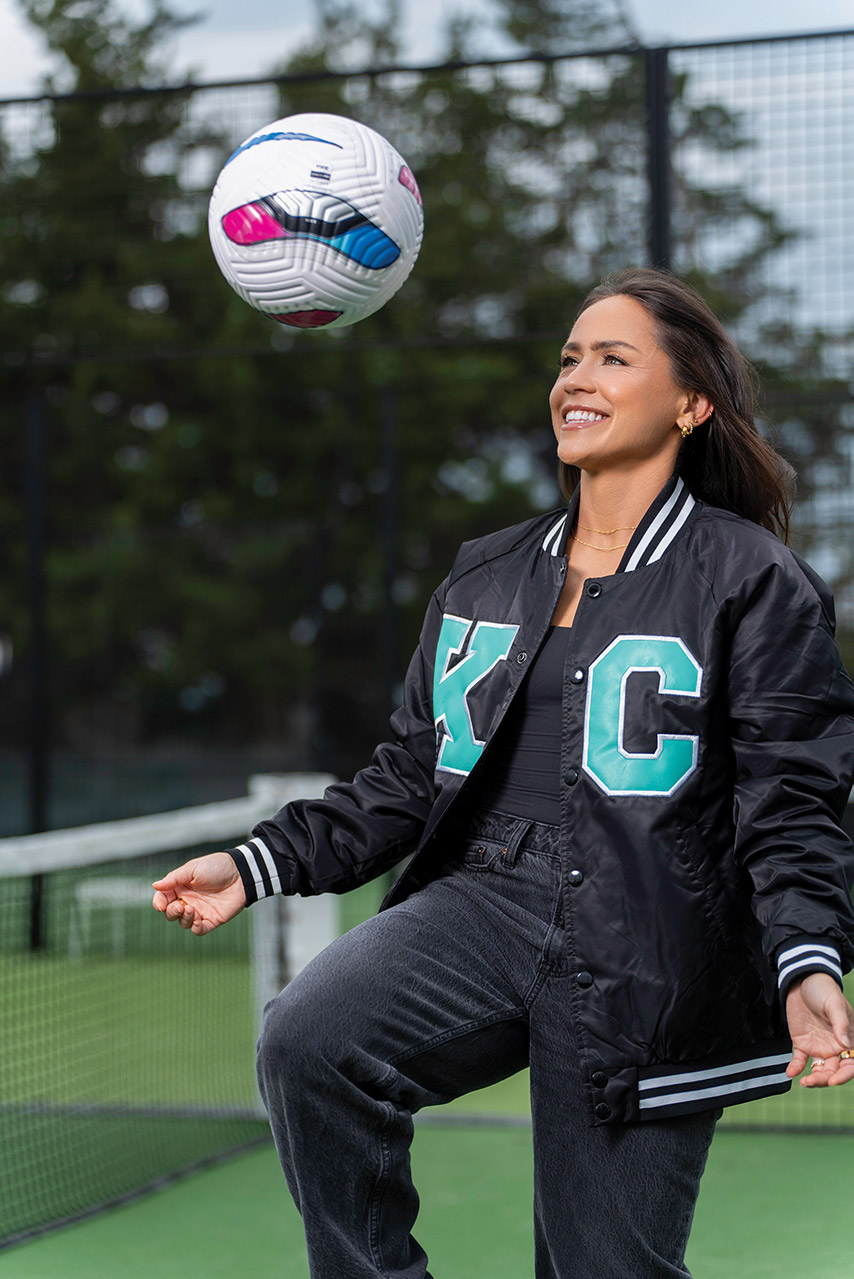
Midfielder, captain, connector — Lo’eau LaBonta brings passion to the pitch and her life in Kansas City. 

By Michelle Bacon | Photos by Simon Kuo

Whether it’s her love of fostering animals and spending quality time with her dog Amigo, eating her way through her Westside Kansas City neighborhood or enjoying a game of padel, Lo’eau LaBonta never stops moving.

“I thrive off chaos,” she quips.

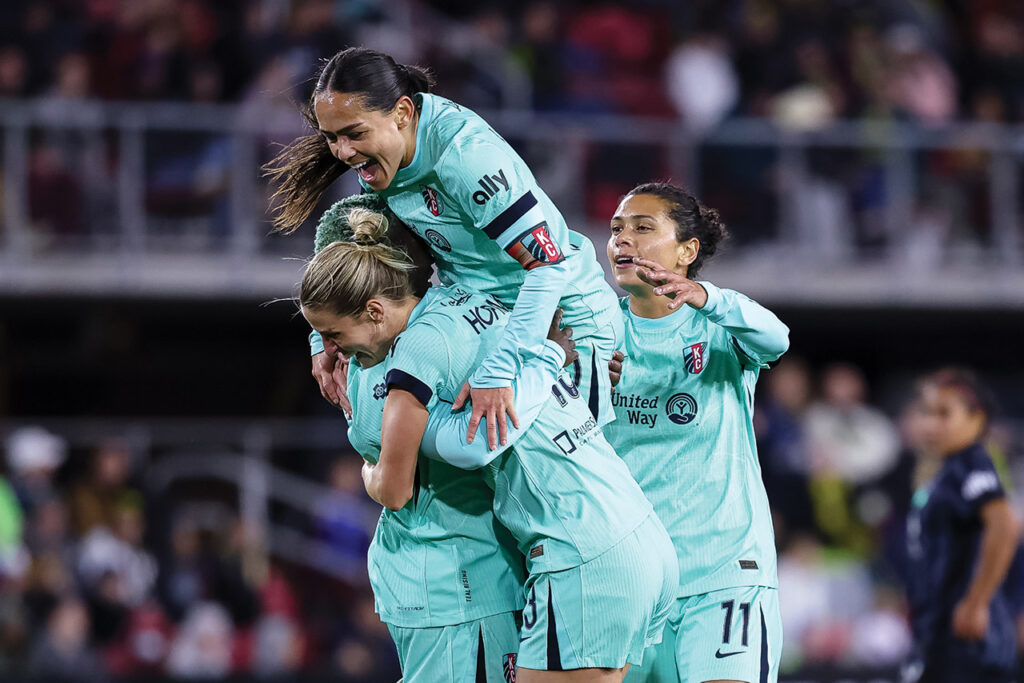
It’s that endless vitality that has made her a pillar of the National Women’s Soccer League-leading KC Current team. A starting midfielder, Lo’eau’s decade of experience has set her up for athletic excellence both on and off the field. But even as the team captain and one of the sport’s most public figures — most notably going viral for her Celly Dance in 2022 — she’s quick to attribute the Teal Rising success to team players, leadership and the city that has invested in it.

“We are the standard right now,” she says of the team, which leads the NWSL with its state-of-the-art training facilities, having the first stadium in the world purpose-built for professional women’s sports and most importantly, producing a viable collective of competitors. 

Though soccer was always her passion, the payoff was anything but immediate. 

“Sports were life,” Lo’eau says of her upbringing in Rancho Cucamonga, CA. Raised mainly by her father, Mark, she and her younger brother, Koa, were entrenched in different sports as kids. She was most drawn to the ever-changing, always immersive game of soccer.

“It’s 45 minutes straight and another 45 after that, but there aren’t many breaks — you’re constantly going,” she says. “It’s a team sport — everything about it, I’ve always loved and have been really passionate about.”

As a student at Stanford University, Lo’eau continued playing but prioritized her education as the end game, pursuing an engineering degree. In that time, she helped the Stanford Cardinals win the 2011 national championship, and a year later, the National Women’s Soccer League was formed.

“I thought, let’s just try this professional soccer career. I’ve been playing my whole life — why not continue?” she recalls. But the path forward was slow, and challenges revealed themselves early on. “I was a semifinalist for the Herman Trophy in college. I was projected to be drafted in the top 10 and I ended up going second to last, so that was already the first big setback.”

From there, she inked a professional contract with Sky Blue FC (now Gotham FC) in 2015, for a modest $7,500 salary. Struggling with the league’s newness and lack of organization, the rookie was cut from the team. Lo’eau returned to Stanford for that engineering degree, and a year later was called to preseason tryouts with FC Kansas City. “And the rest was history,” she says, but not without a few extra barriers.

By then, in 2016, the league’s minimum salary was $10,000 per season, a mere pittance compared to the men’s Major League Soccer team, which guaranteed its reserve players a minimum of $51,500. “Just trying to be a pro athlete at that pay is insane, almost impossible, so I tried to figure out the other things to do to get by,” Lo’eau recalls. “I was having oatmeal for breakfast, lunch, and it was probably an appetizer for my dinner.”

It was also around this time that her now husband Roger Espinoza — at the time a Sporting KC midfielder and now an assistant coach — began to endear her to Kansas City.

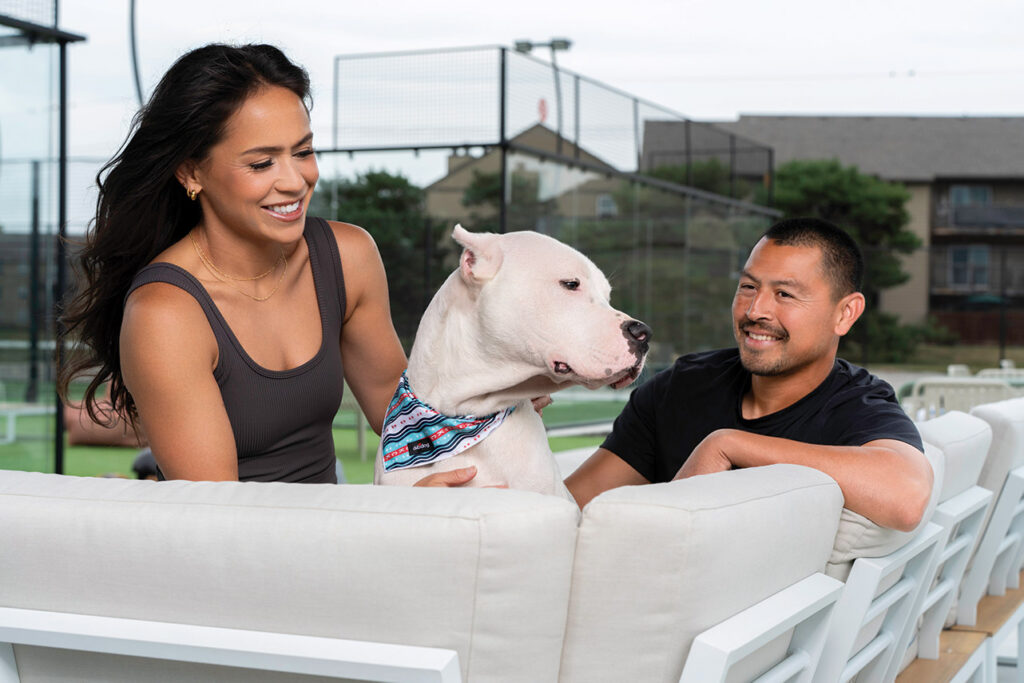
Lo'eau on a couch with her husband and dog.

“Being from California, I have the beach, the mountains,” she says. The rolling Midwestern plains were a change of pace. “[Roger] had lived in KC for almost 10 years, and he was the one who helped me look at KC from a different lens and actually embrace it for what it is.”

Just as she began finding her footing in the city of fountains, she was sent to the Utah Royals in 2018. Under the team’s steadier foundation and clearer direction at the time, Lo’eau’s career ascended. She became a starter, began doubling her number of goals and assists, and rose among the ranks of the NWSL as a true utility player –– quick to support and defend her teammates all over the field. 

When 2020 upended the world with the pandemic — and then shattered her own with the loss of her brother, Koa — Lo’eau turned to what she knew best: structure, movement and care. Fostering animals gave her purpose beyond the field; soccer kept her grounded. 

“As pro athletes, you’re just wired to always show up and be on time,” she says. “[Soccer was] the only thing that really kept me healthy and eating. Having that structure helped me maintain my sanity after losing my only sibling.”

Toward the end of 2020, the Utah Royals sold and transferred back to Kansas City, returning Lo’eau to the Midwest with her fellow teammates. At the time, Sporting KC was the established men’s soccer team, but professional women’s sports were still largely underground. After all, Lo’eau remembers being a part of FC Kansas City when the team won back-to-back NWSL championships (2014-2015), to little local fanfare. 

The formation of KC Current took some time, but Lo’eau was at the forefront for its rapid evolution. “We didn’t have an identity yet, we were playing on a baseball field,” she remembers of the early days. “We were trying to progress the game but were brought back to the reality that it’s just not there yet.” 

Five years on, the Current is one of Kansas City’s cornerstones — from its historical significance for women’s professional sports to the community ethos of its team. Lo’eau, who originated the infectious “KC BABY!” chant in a team huddle, has played a significant role in the accelerated development. It’s a role she takes seriously. 

As she reflects on the team’s roots, she looks at her early years as a rookie in a fledgling new league. “Being here at the beginning compared to what it is now — there was no culture, no standards,” she says. “That’s what we fought for, so that the younger generation had the best facilities and equality.” She credits co-owners Chris and Angie Long for spearheading the Current’s training facility and stadium, along with head coach Vlatko Andonovski, for rebuilding the team on the field and charging her to set the tone off the field. 

A natural-born connector, Lo’eau looked beyond the team’s early setbacks and cultivated unity, starting specifically in the locker room. 

“When I get to a place, I’m like, what does the locker room look like? Are we all spread out? Is it tight-knit?” she says. “That is where the true conversations happen and you see the true sides, personalities and character of your teammates.” 

With this particular team, she praised each player for setting the same standard of good-natured competition and authenticity. “It was the easiest job for me, because not only were these good quality players, but they were also genuine human beings,” Lo’eau says. “It’s everyone picking each other up and pushing them over the line, and there’s no organization if your players don’t believe in each other and put a product out there on the field.” 

The city itself has followed in step with fervor for the 2025 playoff-seeded team, routinely packing out the 11,500-capacity CPKC Stadium since its 2024 opening. That spirit of community is something Lo’eau recognized early on in her time in Kansas City. She and Roger have since bought a home in the Westside. 

“I love being in new spaces and meeting new people — I feed off the energy of others. You can find whatever you want in these different communities — that’s what I’ve enjoyed the most,” Lo’eau says of KC, often emphasizing her personality as a social butterfly. “Especially when they find out you’re with the Current, they immediately think it’s the coolest thing because of what we’re doing in the city.” 

The veteran midfielder has firsthand experience inside the evolving perspective on women’s sports within the city. “We’re in a pretty unique situation in KC. They embrace their sports teams,” she says, pointing to the Chiefs, the Royals and Sporting KC. “When [Roger and I] would go around town, it always used to be like, ‘Roger, can we get a photo?’, and now it’s actually ‘LaBonta! Lo’eau!’, and he’s right there with me, so I’ve seen the shift. I’ve seen the city now supporting us, and I’ve also been at the beginning, where our name was never discussed at all. So I think it’s the coolest, proudest moment for me.”

As the “cool big sister” of the KC Current, Lo’eau is a team leader in every sense of the word. She contributed to their record-breaking 2024 season, where they scored the most goals in a single season and established the longest team unbeaten streak at 17 games. In May 2025, she made history as the oldest player to debut on the U.S. Women’s National Team, and only the second player of Hawaiian heritage.

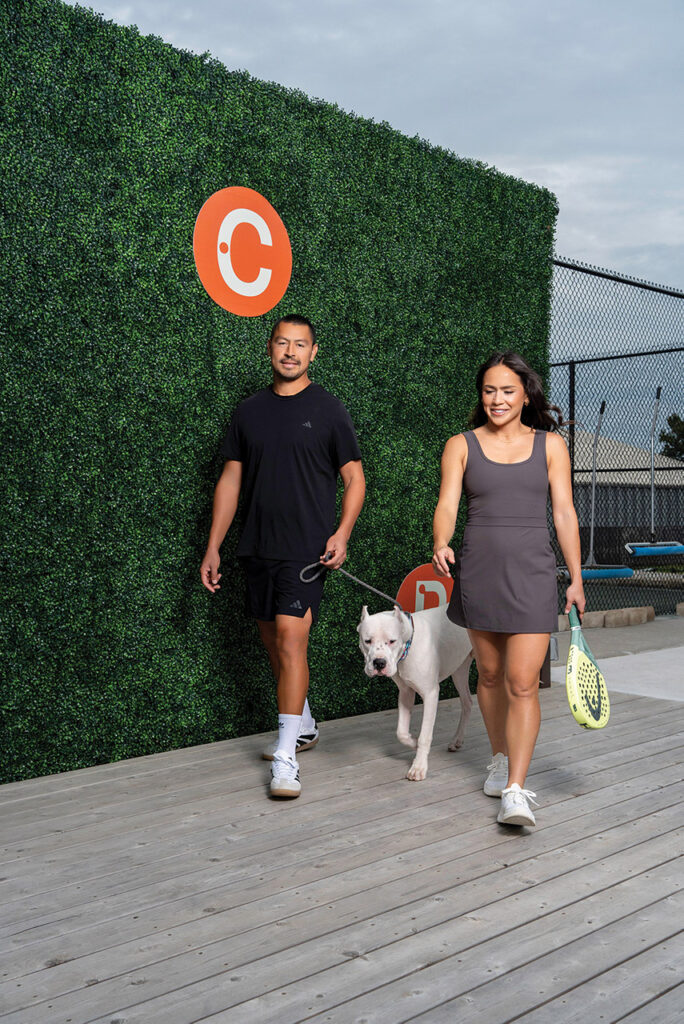
There’s no stopping Lo’eau off the field, either. With her dog Amigo, Lo’eau has teamed up with Purina to showcase Kansas City as a pet-friendly destination. She and Roger are involved with organizations like Big Brothers Big Sisters and have started offering soccer training and clinics on the side. Most recently, they also had a hand in opening the first padel center in Kansas — La Casa del Padel.

“Padel is the fastest-growing sport in the world, so we wanted to bring it to KC. It’s a true athlete’s sport. It’s so fun, it’s so quick. The ball is always moving,” she says of the sport, somewhat of a mix between tennis and squash, a more physically demanding contrast to pickleball. “Padel is known around the world, so whoever’s coming here to play the World Cup, they won’t have just soccer games. They can go play padel like they would at home.”

As for the future of Lo’eau and her beloved Kansas City team? According to her, there’s no expiration date in sight. “I don’t ever want to stop playing, [the Current] will continue to grow and I’m just seeing it develop in front of me.” Her legacy, as she sees it — the infamous Celly Dance — is characteristic of the traits that make her the leader she’s become.

“If that’s my legacy, I’m more than happy with it because it is my true personality on the field; it’s exactly who I am,” she says. “At the end of the day, I don’t score that many goals, but I celebrate the little moments, the big moments. I always try to have a good time and celebrate my team.”

She continues to be in awe of the Current’s growth and its stature within the city, the sport and the culture that surrounds it. 

“The stadium is always packed, it’s always loud, it’s teal and red everywhere. It’s such an advantage to play there and be that home team, and I think everyone’s looking at us now,” she says, believing that it sets a standard for other teams in the league as well as seeing how it will impact those coming after them.

“I can probably speak for every player on our team… that’s just the role we have in life — we want to inspire off the field and be in the community,” Lo’eau says. “Anybody on this team will immediately put up their hand to volunteer because that’s the human beings we have. They make you better on the field, but also off.” 

2026 World Cup + $2B Power Expansion: Why KC is Rising | KC SmartPort PULSE

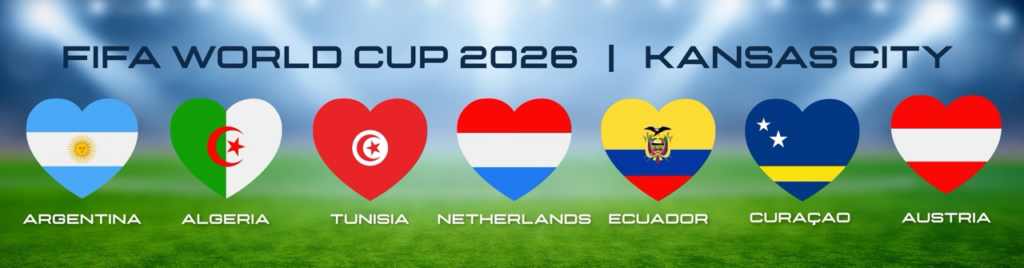
FIFA World Cup 2026 | Kansas City, Hearts in colors of national flags for: Argentina, Algeria, Tunisia, Netherlands, Ecuador, Curacao, Austria

KC’s 2026 World Cup Lineup is Locked In

Seven national teams. Six KC matches. One global spotlight on Kansas City.

FIFA has announced the group-stage matchups for the 2026 World Cup, and Kansas City will welcome seven national teams to play in the Soccer Capital of America next summer: Argentina, Algeria, Ecuador, Curacao, Netherlands, Tunisia and Austria.

In total, six matches will be played in KC, with an additional Round of 32 match and a Quarterfinal later in the tournament.

Why it matters:
Kansas City will be one of just a handful of U.S. metros showcased on the global stage — a once-in a generation opportunity to elevate the region’s economic momentum. The influx of fans, media and global attention will drive major tourism activity, international exposure for KC’s infrastructure assets and long-term branding impacts for the region.

New Power Investments Boost KC’s Competitiveness

Independence Power & Light (IPL) has unanimously approved a landmark $2 billion natural gas generation project in Independence, MO. The development will add up to 1,000 megawatts (MW) of new power capacity, with construction potentially starting as early as next year. This expansion positions Independence to better attract power-intensive users and strengthen long-term grid stability across the region.

Combined with other major power-generation investments – including Evergy’s two new 705 MW high-efficiency plants – this announcement demonstrates how the Kansas City region is scaling its energy capacity to meet rising demand and stay competitive for large-scale projects.

 Register Now for the 2026 Annual Industry Briefing

Learn more about registration and sponsorship opportunities for the Midwest’s premier industrial event on April 8.

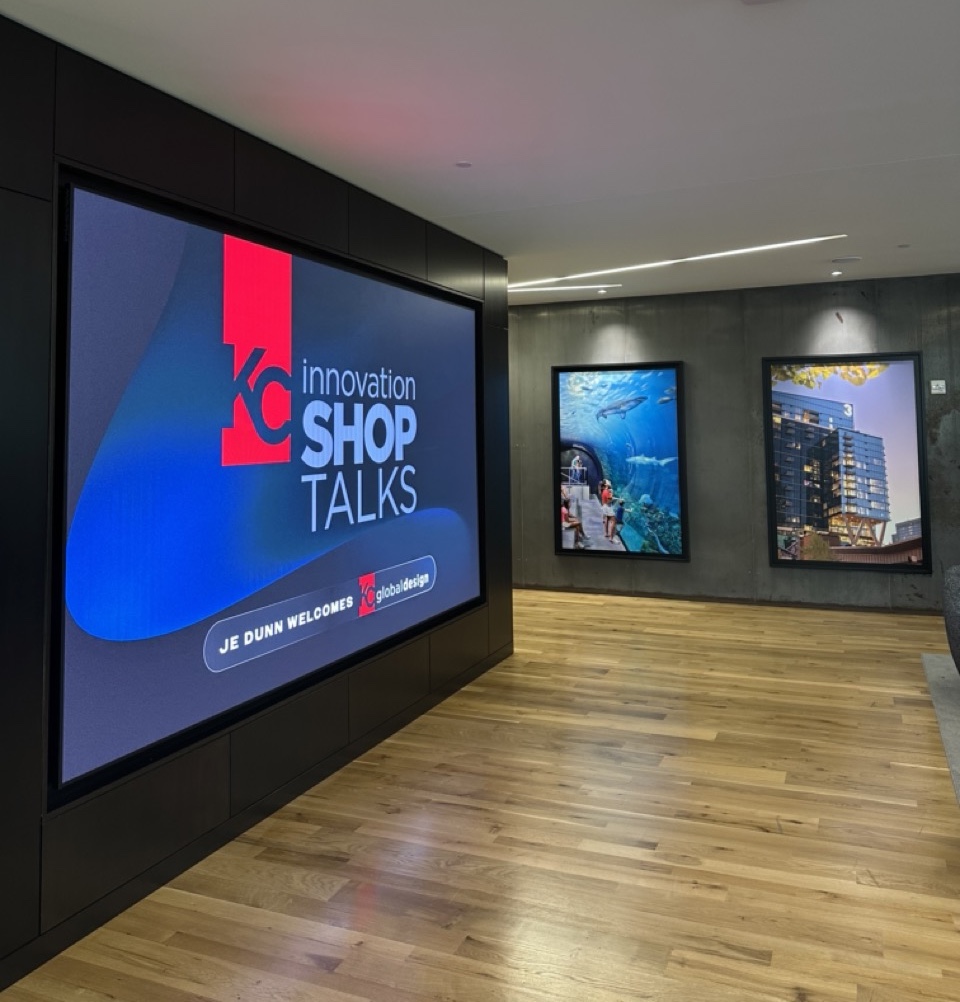
Innovation Shop Talk: Designing Spaces for Human Connection

KC Global Design’s latest Innovation Shop Talk brought together leaders across workplace strategy, real estate and design to explore how the next era of the built environment will be defined — not by square footage or capacity, but by connection. 

As organizations navigate new expectations around culture and employee experience, one message is clear: spaces that foster belonging create lasting value.

Key Takeaways

Designing for Belonging

Traditional markers for real estate success no longer reflect what employees need most. Instead, intentional design that prioritizes comfort, inclusion and a sense of welcome is reshaping how companies think about their spaces.

A hospitality approach — conversation-friendly spaces, amenities that bond and details that encourage people to engage — helps employees feel rooted and supported.

Connection as a Cultural Strategy

Connection is not a byproduct of culture; it’s a strategic decision. People may choose a job for opportunity, but they stay when they feel they belong.

Surveys show employees feel most connected to their organization’s culture while in the office, emphasizing the role of physical space in talent retention. Elements like food, coffee, art, music and natural light aren’t luxuries; they’re catalysts for everyday changes that build culture. 

Measuring the Emotional Experience 

The emotional side of the workplace is no longer just an abstract moving target. Organizations are leaning into surveys and engagement data to identify where connection naturally occurs, then intentionally enhancing those moments through thoughtful design. 

Flexible Spaces for a Multi-Generational Workforce

With five generations now sharing the workplace, flexibility is essential. Successful environments offer a spectrum of options: places for deep focus, areas for collaboration and informal settings for conversation. Designing for this range ensures that every employee can find a space that suits their work style, fostering comfort and independence. 

Looking Ahead

The future of workplace design is rooted in one belief: life runs on the rails of relationships. When organizations invest in spaces that make connection easy and authentic, they strengthen not only productivity but community, well-being and long-term retention.

As companies continue adapting their spaces, the commitment to thoughtful, people-first design will shape workplaces that inspire, support and keep talent rooted in Kansas City.


We’re grateful to JE Dunn for hosting this event in their brand new space designed by Helix Architecture + Design. And thank you to our moderator Sarah Brengarth (Gensler) and our panelists Chris Harren (Country Club Plaza), Tom Herzog (Netsmart) and Sara Greenwood (Greenwood Consulting).


KC Global Design: Elevating A/E/C Thought Leadership

This session is part of a series that brings together thought leadership to stimulate innovative design thinking across KC’s design + construction industry and the broader business community.

View all KC Global Design programming

Be Our Neighbor

No matter your pace or place in life, there is a corner of KC waiting for you. 

By Abby White

Don’t let the “city” in Kansas City fool you, the KC region is more than just skyline and sidewalks. It’s a collection of lifestyles: downtown living with cityscape views, tree-lined suburban streets, sprawling rural escapes and everything in between. Whether you’re chasing culture, community or quiet, KC has a spot that fits. 

What makes Kansas City truly special? It’s flexible. Start your journey in a downtown loft surrounded by nightlife, trade it for a few acres and a chicken coop. Or, find your sweet spot in a “sorta-suburb” — where metropolitan energy intersects with a classic neighborhood feel. No matter where you call home, you’re never far from the flavors, festivals and community that define this one-of-a-kind region. 

View from Three Light

Urban: Where the City Comes Alive

RIVER MARKET (MO) 
This historic district hugs the Missouri River and pulses with weekend energy. Home to one of the oldest farmers markets in the country (est. 1857), it’s a place to grab fresh produce, groove to live music and live in cool, converted lofts steps from the streetcar. 

CROSSROADS ARTS DISTRICT (MO) 
The creative heartbeat of KC. Think exposed-brick lofts, world-class galleries, First Fridays art walks and a culinary scene that punches way above its weight, all in a neighborhood that feels like one big canvas. 

POWER & LIGHT (MO) 
KC’s nightlife central. More than 50 bars, restaurants and shops are packed into nine buzzing blocks, with everything from concerts to happy hour rooftop views. 

PENDLETON HEIGHTS (MO) 
Tucked along KC’s first boulevard, this historic neighborhood boasts the largest collection of true Victorian homes in the region.  

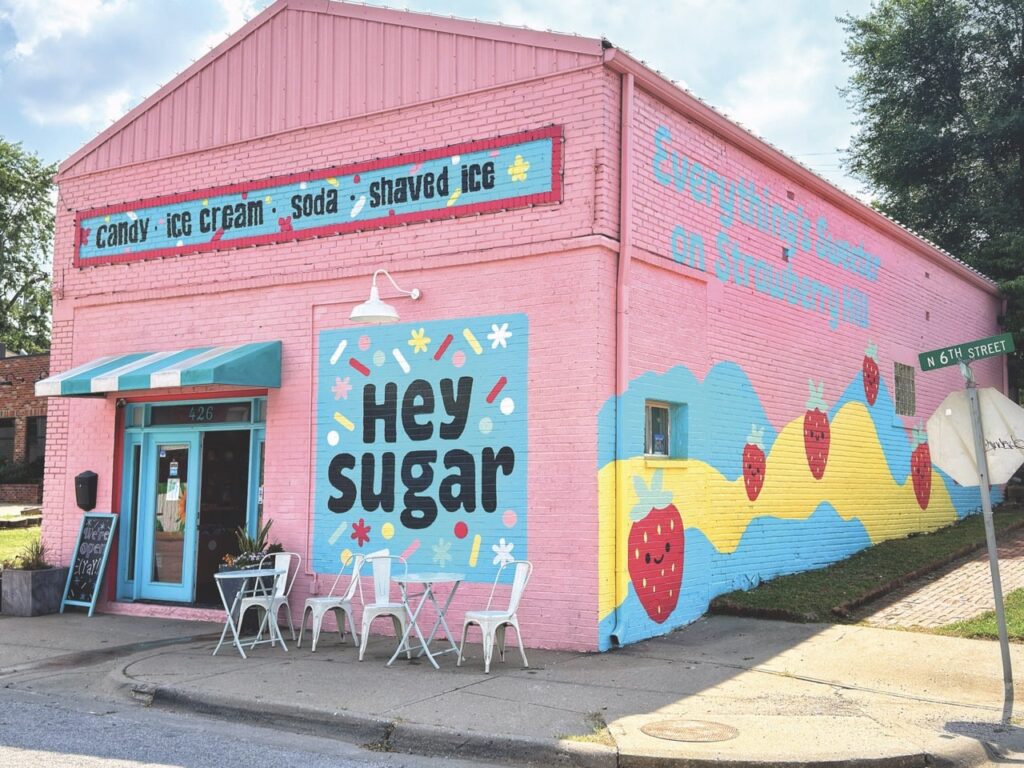
Exterior shot of Hey Sugar candy store.

Not Quite Suburbs: City Edges with Neighborhood Vibes

DOWNTOWN KCK (KS) 
Home to communities like Strawberry Hill and historic Rosedale, KCK is a revitalizing area with a strong cultural identity, historic buildings and proximity to the West Bottoms and Riverfront. 

NORTH KANSAS CITY (MO) 
Technically its own city, NKC is a hidden gem. Great breweries, walkable pockets, luscious parks and a growing arts and food scene — all just minutes from downtown KC.

BROOKSIDE (MO) 
Tree-lined streets, historic charm, cafes and boutique shopping help make Brookside feel like a little village within the city — community-oriented, but still urban-adjacent.

VOLKER / 39TH STREET (KS/MO) 
A cozy, character-rich strip with vintage homes, quirky apartments and an international food scene that delivers. This “sorta-suburb” is close to KU Med and always full of life.

A suburban home on a lush green lawn.

Suburban: Space, Schools and Easy Living

OVERLAND PARK (KS) 
Frequently earns top accolades for its exceptional quality of life, offering beautiful housing, great schools and renowned amenities like the Museum at Prairiefire. 

LEE’S SUMMIT (MO) 
Where small-town charm meets urban convenience. Award-winning parks and trails, a vibrant downtown and a food scene that keeps locals loyal.

PARKVILLE (MO) 
Quaint and historic, Parkville sits along the Missouri River and offers art galleries, antique shops, scenic views and a prestigious golf course — plus the charm of Park University’s college-town vibe. 

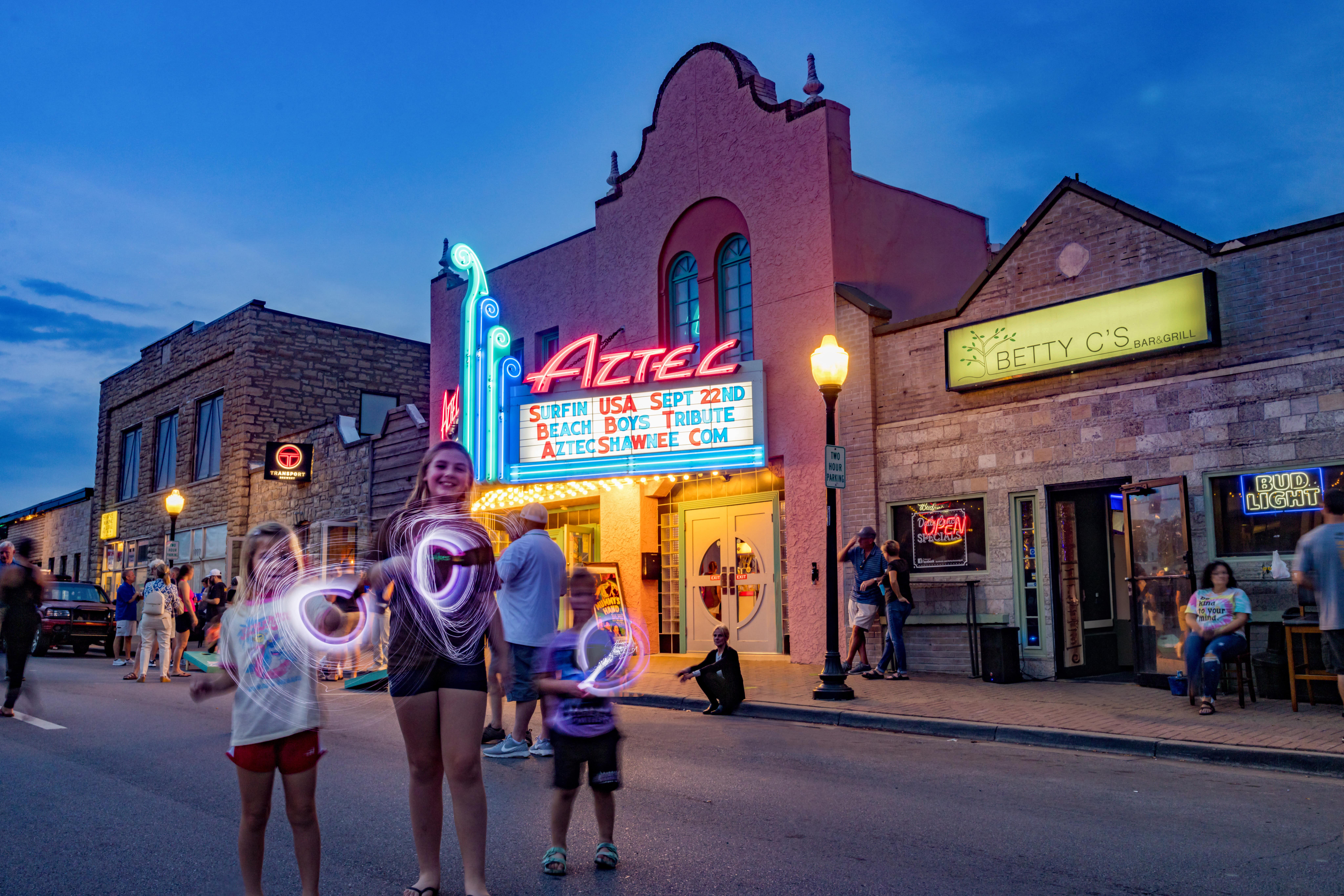
SHAWNEE (KS) 
Travel back in time at the Shawnee Town 1929 living history attraction or have a pint in one of its many thriving breweries.

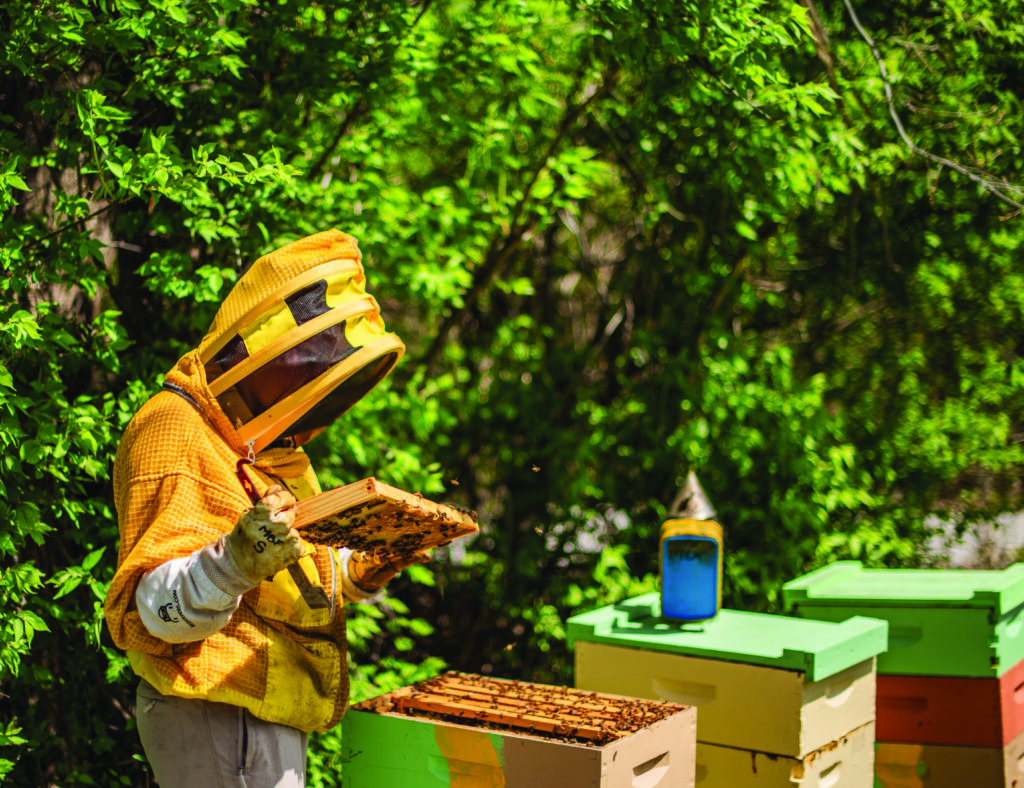
A beekeeper at Messner Bee Farm.

Rural: Slow Down, Spread Out and Savor More

LOUISBURG (KS) 
Home to one of America’s most beloved cider mills, Louisburg offers a cozy small-town quality, scenic drives and a calm, country pace just beyond the city’s edge. 

WESTON (MO) 
This rural town invites you to step back in time with its unique shops and thoughtfully crafted meals and treats, including local beer, wine, whiskey and roasted coffee. 

ATCHISON (KS) 
A riverside town with rich history and small-town heart. Best known as the hometown of Amelia Earhart, it’s also home to a new, immersive aviation museum that takes her legacy sky-high. 

BELTON (MO) 
Home to scenic parks, a close-knit community and the two-day Belton Fall Festival, featuring local vendors, food and live entertainment. 

Cultural Passport

Your guide to KC’s most vibrant celebrations.

By Michelle Bacon | Photo by Ali Nassir

KC’s presence on the global stage may be a recent development, but its ethos as a cultural hub has long been ingrained in its food, art and celebrations. From eagerly anticipated festivities to newly established customs, these events highlight the vibrant communities that live and thrive in the metro area.

AANHPI HERITAGE FESTIVAL | May
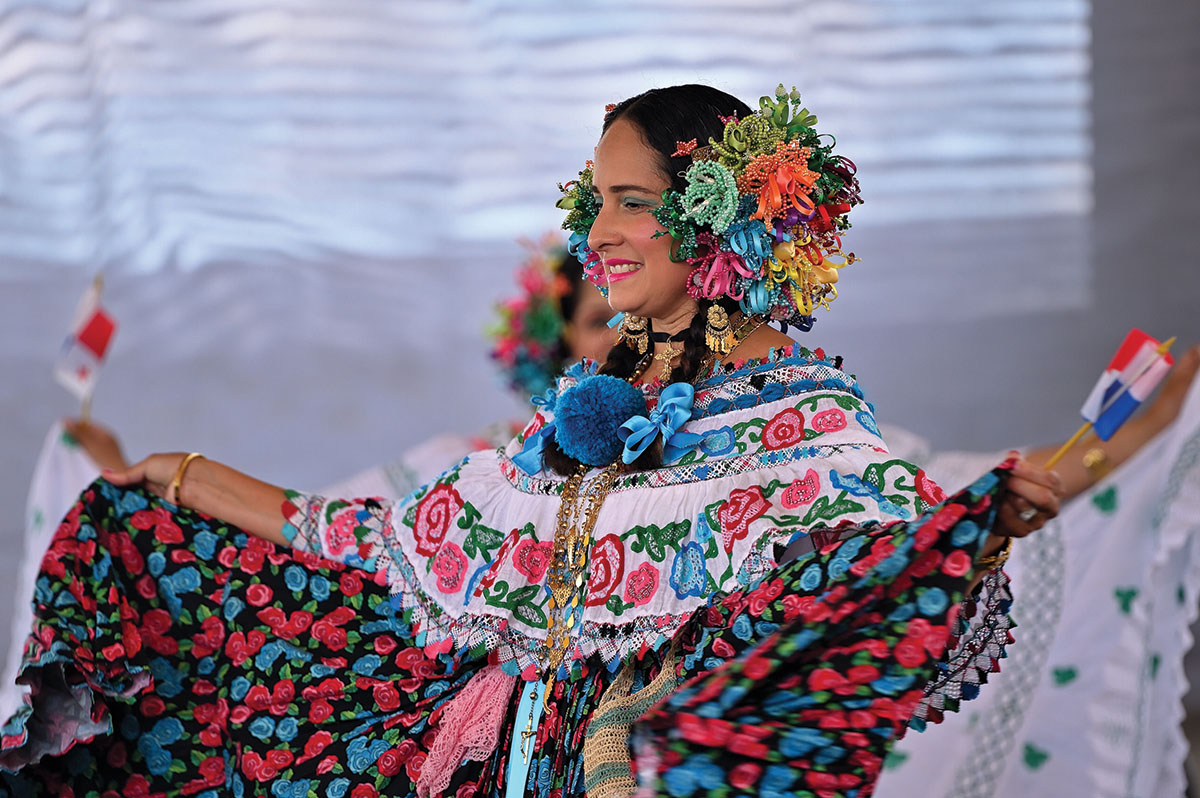
In 2021, the same year Asian American and Pacific Islander Heritage Month was officially recognized by the city, local activists organized the modest inaugural event. Now, Vietnamese coffee shop Café Cà Phê and its nonprofit arm Hella Good Deeds draw large crowds to a wide berth of Eastern cultures — encompassing 50+ local businesses, food trucks, visual and performing artists, fashion shows, live tattoo demonstrations and the endlessly captivating Chinese lion dance.

FIESTA FILIPINA | June
Observing its 50th anniversary in 2025, Fiesta Filipina marks the Philippines’ independence from Spain. Held by the Filipino Association of Greater KC, the event preserves cultural traditions with food staples including pancit and lumpia, folk dance troupes, martial arts demonstrations and storytelling.

JUNETEENTHKC HERITAGE FESTIVAL | June
While Juneteenth wasn’t recognized as a federal holiday until 2021, KC was one of the first Midwestern cities to commemorate the occasion. Introduced in 1980, JuneteenthKC now takes place at 18th & Vine — against the backdrop of a celebrated jazz history and the Negro Leagues Baseball Museum. Honoring the city’s African American foundations, the fest boasts 150+ vendors, gospel entertainers, a literacy zone and a health/cooling center with onsite medical and dental services.

ETHNIC ENRICHMENT FESTIVAL | August
Most of us are introduced to unfamiliar cultures through food — a big reason why the Ethnic Enrichment Festival has been a premier summer meetup for nearly 50 years. Grab a passport and stamp your way across 70+ represented countries, filling up on Jamaican beef patties, Greek moussaka and Egyptian sambusas.

KC FIESTA HISPANA | September
With roots dating back to 1981, Fiesta Hispana remains one of the Midwest’s largest Hispanic/Latino gatherings. In addition to 60+ vendors, a bevy of local entertainers/makers and children’s activities, the fiesta fosters community development through youth outreach efforts, employment opportunities and health services.