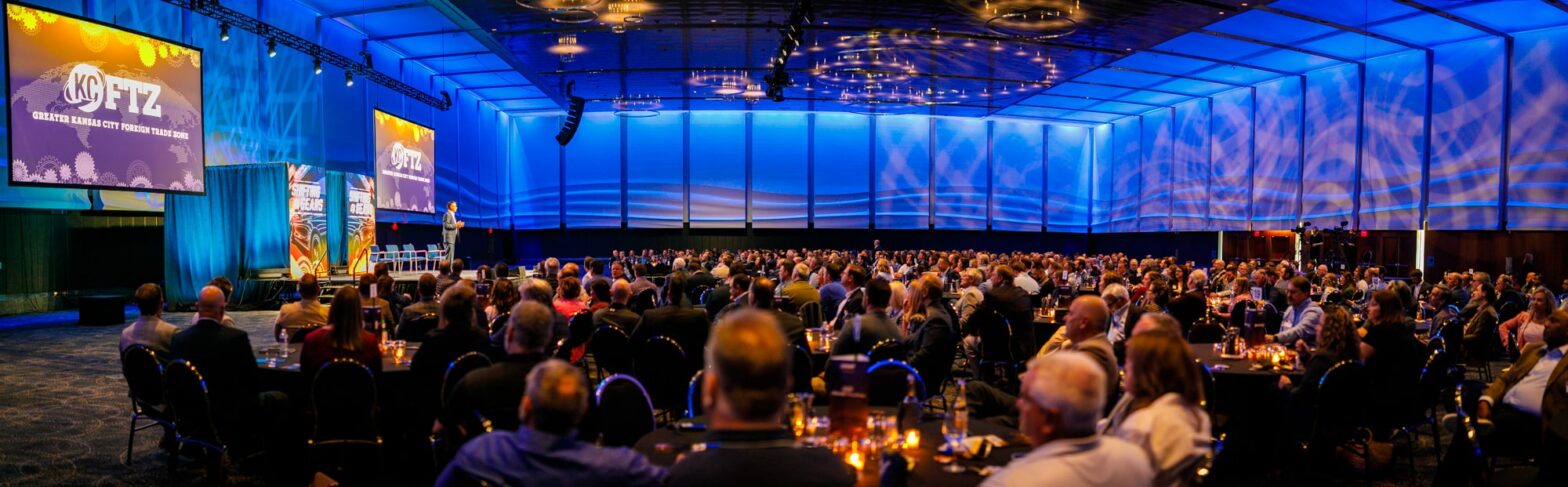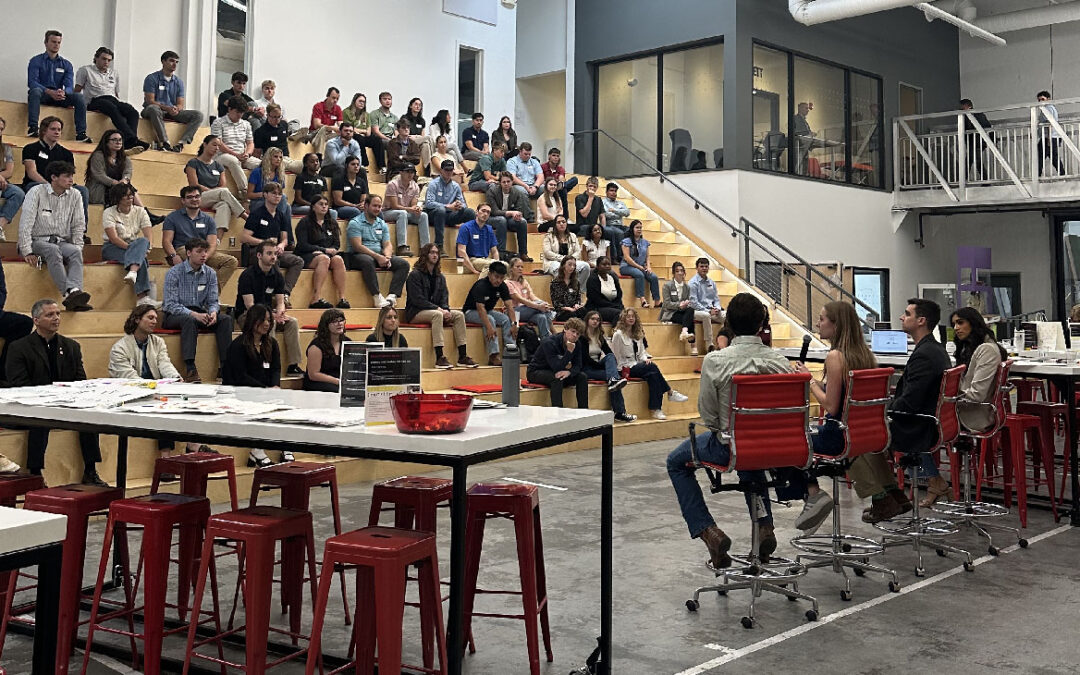
Designing the Future: Why A/E/C Talent Thrives in Kansas City

When people think of Kansas City, they might picture fountains, world-class barbecue or our passionate sports culture. But within the professional world of architecture, engineering and construction (A/E/C), Kansas City is known for something else: an unmatched depth of design talent and a legacy that shapes skylines around the globe.

Kansas City is home to more than 80,000 professionals in the A/E/C sector. It’s the fifth-most concentrated market for architecture and engineering jobs in the U.S. — 68% greater concentration than the national average. But numbers only tell part of the story.

As managing director of KC Global Design, the design and construction-focused initiative of the Kansas City Area Development Council (KCADC), I see firsthand the work that makes our region a global force in the built environment — and the powerful regional collaboration that continues to attract top talent.

Growing Talent at Every Level

Building a strong, sustainable workforce requires a steady pipeline of talent. KC Global Design, along with its partners and firms across the region, supports that pipeline through talent development at every career stage — from entry-level to executive.

Building the Talent Pipeline | Educators Tour

Educators are often among the earliest and most influential guides for emerging talent, making it critical to show them why Kansas City should be top of mind for their students’ careers.

In June 2025, we launched the KC Global Design Educators Tour — a three-day immersive experience for faculty from top architecture, engineering and construction management programs. Participants toured project sites, engaged with leading KC firms and met the people driving the region’s world-class work.
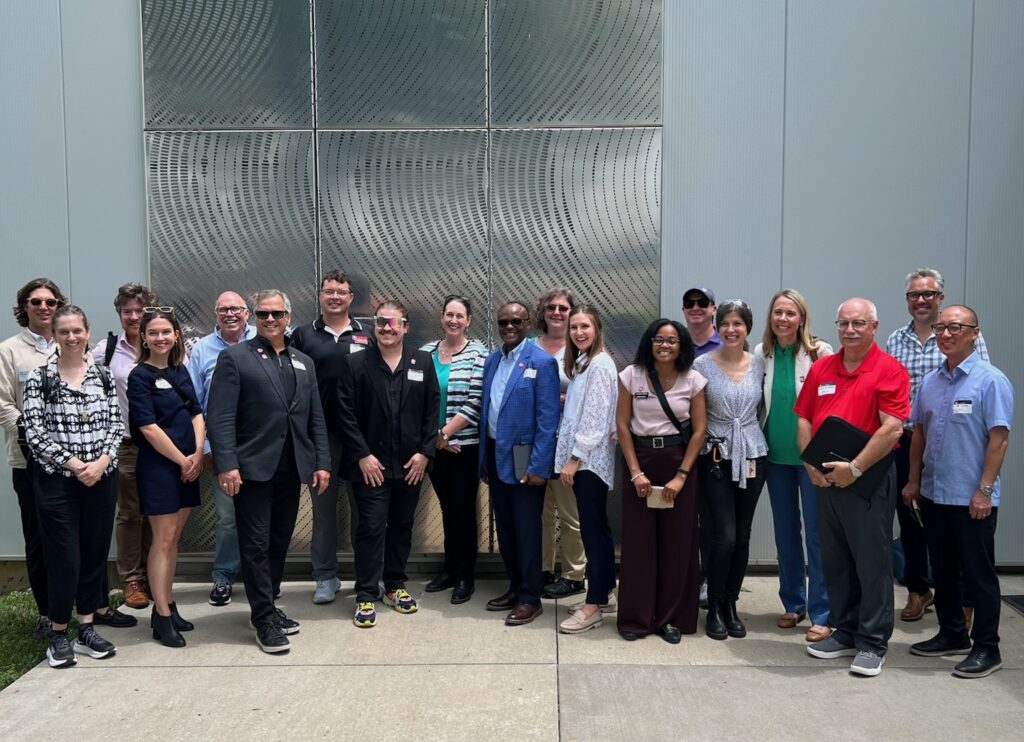
University educators from around the country join KC Global Design leadership to tour Zahner.

Growing the Industry While Retaining KC’s Best and Brightest | BD Boot Camp

KC Global Design’s Business Development Boot Camp equips professionals with the tools and resources to drive new opportunities and fuel the growth of Kansas City’s design + construction industry.

And a strong talent pipeline doesn’t stop at attraction; it’s also about retention. In an industry where career growth often means relocation, Kansas City offers A/E/C professionals a reason to stay and grow.

Through sessions on emotional intelligence, storytelling, strategic thinking and more, participants gain the skills and confidence to lead — and to build long-term careers right here in KC.
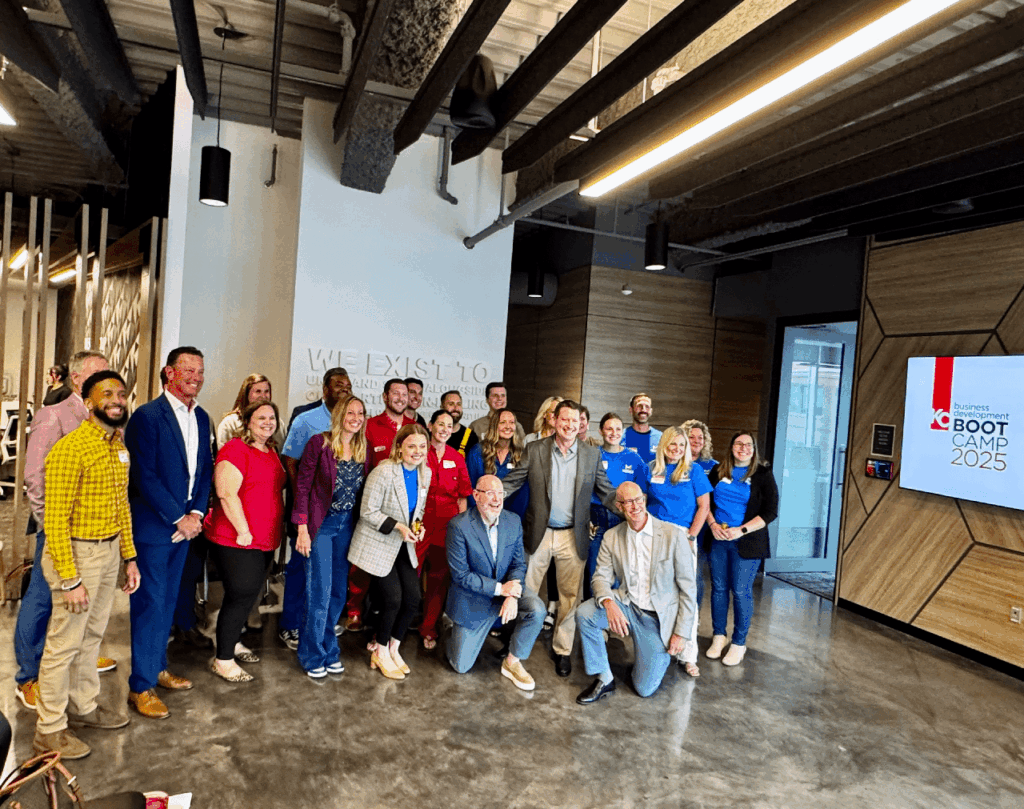
The 2025 BD Boot Campers take a photo after their final session.
The 2025 BD Boot Campers closed out their final session with dynamic pitches to a mock panel, showcasing their sharpened skills.

Collaborating for Collective Impact

Kansas City is home to more than 1,200 architecture, engineering and construction firms. And while competition is natural, collaboration remains KC’s defining strength because when the region thrives, we all thrive.

Harnessing Unique KC Moments

When Kansas City hosted the 2023 NFL Draft, our firms saw an opportunity to tap into the energy together. In partnership with Burns & McDonnell, BNIM, HNTB and JE Dunn, KC Global Design created The KC Design Draft, a video that cleverly illustrated how KC’s A/E/C firms “draft” top talent.

The campaign reached thousands of students at top design schools across the Midwest, positioning Kansas City as a premier destination to launch a career. It also earned finalist recognition in City Nation Place’s Global Awards for Best Communication Strategy | Economic Development.

Partnering with the Region’s Talent Experts

KC Global Design is proud to collaborate with TeamKC, KCADC’s talent attraction and retention initiative, to connect top talent with opportunity and inspire early career professionals to build their futures in Kansas City.

Each summer, TeamKC engages more than 1,000 interns across the region, many employed at KC Global Design investor firms. Through peer networking events, “KC 101” presentations and more, interns gain a deeper connection to the region — making them more likely to return after graduation.
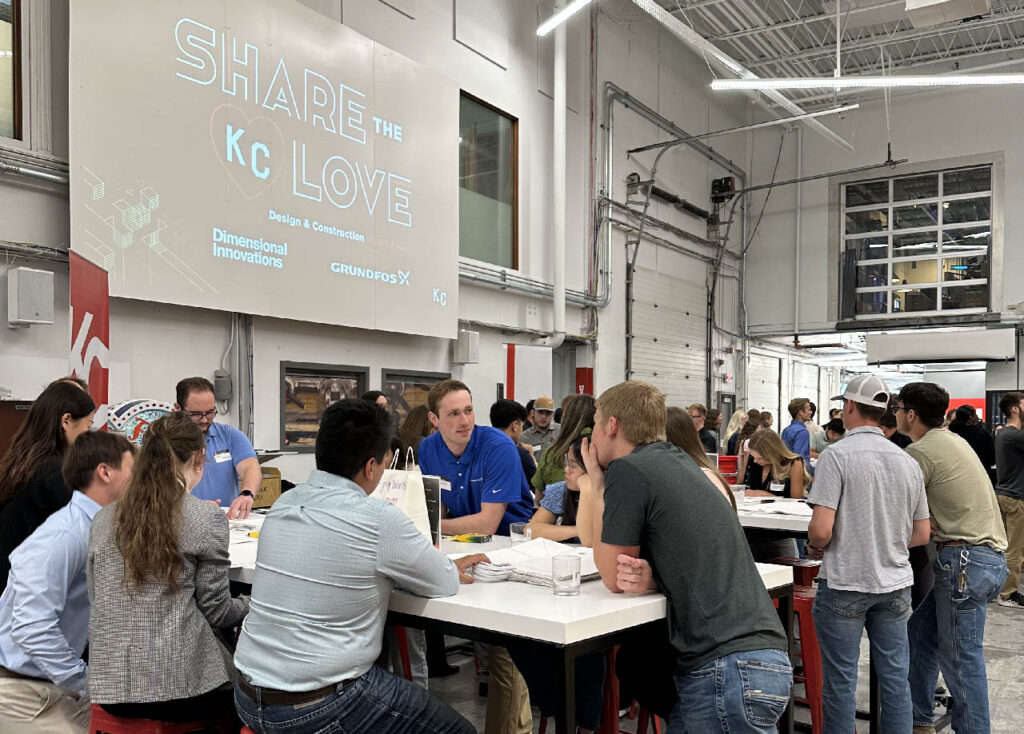
Interns gather around tables at the Share the Love KC event.
More than 130 interns working together on a community service project with Operation Breakthrough at the Share the KC Love event.

Timed with TeamKC’s intern season programming, KC Global Design’s annual Share the KC Love event brings together 100+ interns from leading design and construction firms. Interns have candid conversations with young professionals who’ve launched their careers in KC — offering an authentic, inspiring look at what’s possible here.

Why Kansas City?

KC isn’t just a great place to launch a career — here, A/E/C professionals find a rare combination of long-term opportunity, community and quality of life.

Career Flexibility

Kansas City’s diverse design landscape, from boutique studios to globally-recognized powerhouses, offers room to grow and tackle new challenges as career paths evolve alongside changing interests and goals.

Life Beyond Word

KC’s affordable cost of living means you can enjoy a comfortable lifestyle without compromise. A vibrant arts scene, numerous recreational options, strong connectivity and a welcoming community create a quality of life that makes Kansas City more than just a place to work — it’s a place to truly live.

Godfrey Echekwu

Take it from civil engineer Godfrey Echekwu, who landed his life and career in Kansas City after a successful internship at KC Global Design firm, Turner Construction.

Why Kansas City?

If you’re looking to grow your career or invest in the next generation, there’s no better place than Kansas City. And no better time than now.

Explore your next opportunity in the region on our LinkedIn job board, featuring hundreds of openings at architecture, engineering and construction firms across the region.

Want to join the community and get engaged? Connect with us today to help shape the future of A/E/C talent in Kansas City.

2026 Transportation Outlook

by Mary Boetcher | Intern, KC SmartPort

The transportation industry stands at a pivotal moment of transformation. Once defined by physical infrastructure and fuel costs, the sector is now being reshaped by intelligent technologies, shifting workforce dynamics and a growing emphasis on environmental sustainability. As global supply chains grow more complex, transportation leaders are rethinking their strategies for long-term impact.

The rise of automation, the acceleration of electrification and the changing role of labor in a tech-enabled industry are no longer future considerations. They are active drivers of competitiveness and are reshaping how goods and people move across the world.

Download Full Report

Water | Smarter Ships Amid Supply Chain Uncertainty

The global water transport market was projected to hit $618.04 billion by the end of 2024, driven by expanding international trade, increased demand for energy-efficient vessels and innovations in logistics technology — and while it ultimately fell just short of that mark, recent estimates show it came very close, highlighting strong sector resilience and steady growth.

That year, the barge sector rebounded from earlier disruptions, powered by increased investment in infrastructure and environmental regulations. Companies began adopting digital tools and automation to streamline their operations and improve transparency, while also focusing on cleaner fuels and sustainability initiatives to reduce their environmental impact. 

Ports worldwide are now investing in smart infrastructure and greener practices, aiming to support stricter emissions standards and reduce overall environmental impact. Growth remains strong despite challenges from fluctuating fuel costs and the uncertain pace of economic recovery.

As inland and ocean transport providers invest in modernization and sustainability, the pressure on shippers to adapt continues to grow. While carriers capitalize on increased demand and pricing power, ongoing issues, including congestion, labor constraints and climate risks could accelerate a shift toward more localized supply chains.

Air | Air Travel Reinvented: Efficiency Meets Accountability

In 2024, the aviation industry reached a critical inflection point, driven by sustainability and digital transformation.

Airlines and airports started using more sustainable aviation fuel (SAF) to cut down on emissions. At the same time, the International Civil Aviation Organization (ICAO) introduced an extensive plan called “Safe Skies, Sustainable Future” to guide the industry toward cleaner, safer skies from now through 2050. 

Meanwhile, breakthroughs in AI, biometrics, predictive maintenance and automation have enhanced efficiency and data-driven decision-making.

Despite progress, many industry insiders warn that current climate mitigation efforts fall short. Critics argue that the aviation industry relies too heavily on carbon offset programs instead of focusing on long-term solutions that reduce emissions and increase accountability.

In response, ICAO has started pushing digital upgrades and green fuel standards. Still, politics are getting in the way — such as when the U.S. pushed back on rules that seemed to favor Brazil’s farming methods for producing SAF.

Road | Logistics Reimagined with AI and Automation

The future of the road transportation industry is fueled by technology, sustainability and a changing labor landscape. As operations become more complex, companies are increasingly relying on advanced technologies like AI and automation to optimize routes, cut fuel use and enhance safety. Technology, including GPS tracking, smart maintenance tools and cloud software, is becoming more common, helping fleets run more smoothly and adapt more easily.

Labor shortages remain a critical challenge, pushing the industry to reimagine recruitment, retention and training. Automation is necessary for keeping up with demand and technology can be a useful tool for combating workforce issues. Transportation companies are increasingly turning to digital marketing and online platforms to engage customers, attract talent and build resilience in an unpredictable economic environment.

Looking ahead, the companies that succeed will be the ones that leverage technology to stay flexible, invest in greener infrastructure and adapt quickly to changes in the workforce and market. The future of transportation won’t just be about being fast and eco-friendly — it will also require industry players to be smart, connected and ready to evolve.

Rail | Rail’s Revival in Motion

The U.S. rail industry is undergoing a strategic shift after years of prioritizing cost-cutting through Precision Scheduled Railroading (PSR).

While PSR improved efficiency and boosted profits, it also reduced flexibility, strained labor capacity and contributed to service issues — prompting backlash from shippers and regulators. With freight volumes recovering and government infrastructure funding on the rise, the industry is now refocusing on clean energy, resiliency and customer service.

The push for sustainability amplifies rail’s long-term value. With a lower carbon footprint than trucking, rail is well-positioned to benefit from reshoring trends and stricter environmental standards.

Rail companies are stepping up their digital efforts, using tools like AI and predictive analytics to improve maintenance, safety and day-to-day operations. At the same time, major investments in smart infrastructure, modern signaling and clean energy are driving the growth of high-speed passenger rail around the world. While most high-speed development is focused on passenger service, these advancements also support industrial freight networks through shared technology and long-term system integration.

As railroads modernize, their ability to compete will depend on how effectively they scale new technologies, build collaborative ecosystems and attract skilled labor. Momentum is building, but the sector’s future hinges on its ability to evolve to a more agile, tech-enabled and customer-centric model.

Forecast | What Will Define the Next Five Years

Over the next three to five years, several key developments are expected to reshape the transportation landscape — driven by innovation, shifting market demands, and a renewed focus on efficiency, resilience and sustainability. 

AI and Automation Maturity: AI is quickly shifting from small test projects to widespread use across all aspects of industry.

In logistics alone, 38% of companies are already using AI, and the AI-in-transportation market is projected to grow from $3.8 billion in 2024 to $9.3 billion by 2029 — potentially cutting costs by as much as 50%. Tools including predictive analytics, self-driving systems and AI-powered operations are becoming the norm as the industry moves toward smarter infrastructure.

Sustainability as a Competitive Driver: Sustainability is no longer just about compliance  it’s a key competitive strategy.

In water transport, greener vessels and digitized ports are driving growth, while aviation and rail are evolving with lower-emission fuels and more efficient technologies to meet environmental goals. On the roads, electric vehicles and trucks are no longer niche — they’re quickly becoming the industry standard. Across all modes, sustainability is reshaping long-term investments, operational models and competitive positioning. 

Workforce Redesign: Ongoing labor shortages are pushing companies to rethink roles and invest in both people and automation. 

Rather than replacing workers, digital tools, including AI, drones and predictive platforms, are used to augment human capabilities and streamline operations. These technologies help reduce repetitive tasks and allow employees to focus on more strategic, high-value work.

At the same time, the industry is grappling with an aging workforce and a lack of young employees entering the industry. In response, companies are investing in reskilling, offering more flexible roles and rebranding logistics careers to appeal to tech-savvy talent. The most competitive organizations are aligning workforce strategies with digital transformation. 

The Edge of What’s Next

The transportation industry is no longer defined by its modes — air, water, road or rail — but by how intelligently, sustainably and flexibly it operates across all transportation modes. 

As the industry navigates this pivotal moment, success will favor those who strategically leverage technology, prioritize sustainability and adapt to workforce dynamics — using each to mitigate risk and build resilient operations in an increasingly unpredictable environment. 

Download Full Report

Letting Go to Further Grow in Life & Business

This month, I did something I’ve been mentally preparing for: I dropped my one and only child off at college.

The moment was full of pride, excitement, and more than a few quiet tears. As we helped set up his dorm room and made our final Target run, I found myself reflecting on how this experience mirrors lessons I’ve learned, and sometimes relearned, in business.

Trust the Process

As a parent, you spend years investing in your child: teaching, guiding, preparing. For me, I didn’t get the full 18 years, as I adopted my son when he was 11, but there was a lot packed into nearly a decade. It is hard to step back, and trust they’re ready. It’s no different in business. Whether you’re launching a new product or program, promoting a team member, or entering a new market, you do everything you can to prepare and then at some point you let go. Leaders must move from doing to trusting.

Growth Happens in Discomfort

College is the beginning of a new identity for your child, just like any pivot or scale-up is for a business. Both involve risk, unfamiliarity, and the discomfort that comes with stretching boundaries. And yet, we know this is where growth happens. Businesses, like people, don’t grow when things are easy, they grow when challenged.

Foundations Matter

Every lesson, value, and habit we try to instill in our children forms a foundation they now carry with them. In business, your culture, mission, and early decisions become that foundation. You can’t predict every obstacle your team or company will face, but if the groundwork is solid, they’ll have what they need to adapt and thrive.

Celebrate the Milestones

I’ve come to realize in both parenting and business, we don’t pause often enough to celebrate wins. It’s important to take a moment to appreciate the journey, whether it’s your child starting their next chapter or your team achieving a major goal. Reflecting on progress can create momentum. Enjoy the small wins along the way! 

You’re Still Part of the Journey

Just because we step back doesn’t mean we step away. I’ll still be a call or text away for my son, and in business, great leaders know how to stay engaged without micromanaging. Your role evolves, but your presence still matters.

As we drove home, the empty seat in the car was a stark reminder of change but also growth. The same holds true in business: moments of letting go aren’t signs of loss. These are signs that something is working and that what you’ve built is strong enough to continue without your constant presence. 

And in both parenting and business, isn’t that the ultimate goal?

Now, excuse me while I go grab a Kleenex.

The Ingredients Behind KC’s Food Industry Boom

Kansas City is rapidly solidifying its role as one of the top destinations for food and beverage manufacturing in the United States. Ranked sixth nationally in the Global Location Strategies 2025 Best Places for Food Manufacturing report, the region stands out for its exceptional blend of location quality, business-friendly operating costs and deep industry expertise.

Located in the heart of the West North Central region – spanning from North Dakota through Missouri as defined by the report – Kansas City anchors one of the fastest-growing food manufacturing corridors in the country. Despite the region having just half as many metros as its eastern counterpart, it captured 18% of all U.S. food manufacturing project announcements between 2023 and 2024. Kansas City played a leading role in that success, especially in high-demand sectors like animal food manufacturing, grain and oilseed milling and dairy products.

What makes the Kansas City region so attractive to food manufacturers is its unmatched combination of infrastructure, talent and proximity to agricultural supply chains. Companies benefit from a central U.S. location with strong rail, highway and distribution access, enabling fast and cost-effective movement of raw materials and finished goods. The region’s skilled workforce offers a reliable labor pipeline that continues to evolve alongside increased automation and industry innovation.

As food and beverage companies seek resilient and strategically located operations, Kansas City is proving it can deliver. Whether it’s a greenfield facility, expansion, or supply chain optimization, Kansas City has the infrastructure, workforce and momentum to support long-term success in this critical sector.

Get the full report.

Creating a Cat-Forward Animal Health Industry

While felines have always had a prominent part in family life, and even history, domesticated cats as pets is steadily climbing. With increased cat ownership globally, especially among urban, single-person, and millennial households, the animal health industry must adapt rapidly to meet the needs of feline health.

1. More Feline-Specific R&D Funding
Cats have historically been underserved in pharmaceutical development. Many treatments are dog-adapted, not cat-designed. But cats have unique physiology, metabolism, and behavior that demand tailored approaches.

Industry Solution- As an industry, we need to allocate more resources for research and development within pharma and biotech to develop feline-specific therapies. There also needs to be more global collaboration and cross-border research on feline zoonoses and aging.

2. Veterinary Education Updates to Close the Cat Care Gap
Veterinarians often receive less training in feline-specific diseases, behavior, and handling—despite cats being the most common pet in many regions.

Industry Solution- We need to work collaboratively with veterinary schools and the AVMA to reform curriculum to embed feline medicine as a core and not a specialization. Encouraging veterinary schools to develop clinical rotation partnerships with cat-only clinics and providing certification and CE programs that are feline-only tracks will take the next generation of veterinarians to a better place for servicing felines. And, finally, we need to develop online learning for busy veterinarians and veterinary technicians focused on feline pain, stress, and subtle symptom detection. 

3. Policy and Regulatory Advocacy 
There are fewer drugs and diagnostics approved specifically for cats in part due to small market assumptions and lack of feline-specific studies.

Industry Solution- We need to work with leading public policy organizations to make feline health a priority. Engage with regulators, create feline-specific pathways and find ways to reduce trial costs for small-market species, like cats.

The surge in cat ownership is more than a trend, it’s a transformational opportunity. By shifting from a dog-first model to a species-specific innovation ecosystem, the animal health industry can improve outcomes, open new markets, and meet the evolving expectations of cat owners worldwide.

Why Investment Firms Are Betting Big on Kansas City Industrial

Kansas City has emerged as one of the most attractive destinations in the country for institutional industrial investment — with out-of-market investors acquiring over 3.6 million square feet of Class A industrial space in the past six months. 

So, why is outside capital flowing in from investment firms at such a rapid pace?

It starts with infrastructure. Investors are drawn to Kansas City’s ability to move product efficiently across all primary modes of transportation. KC offers a central location that puts 90% of the U.S. population within a two-day truck drive — a key advantage in today’s fast-moving supply chain landscape.

That connectivity is further powered by four Class I railroads, strategic interstate access, a state-of-the-art airport and a robust intermodal network. Add in a steady stream of speculative development ready to meet tenant demand, and it’s clear why Kansas City has become a logistics powerhouse, catching widespread attention from national developers and real estate investment firms.

Then, there’s KC’s business climate. Compared to larger, higher cost markets, Kansas City provides an environment where firms can stretch their investment further without fear of market volatility.

“Kansas City’s business climate is a major draw for investors,” said Mark Long, president and CEO of Newmark Zimmer and chair of KC SmartPort’s Board of Directors. “With lower operating costs, a supportive regulatory environment and access to a skilled labor force, KC is a powerful, attractive option for both occupiers and capital partners.” 

And it’s all continuing to grow. Over the past year, a wave of institutional investment has flowed into KC’s industrial market, reflecting strong confidence in its long-term growth potential. Recent investments from Arch Street Capital, STAG Industrial and Sealy & Co. reflect a growing consensus — Kansas City is quickly rising to prominence as a national hub for industrial investment.

Some recent acquisitions from out-of-market investment firms include:

  • Arch Street Capital acquired three buildings totaling 2.4 million square feet at Logistics Park Kansas City in Edgerton, KS
  • Also at Logistics Park Kansas City, Sealy & Co. acquired 575,000 square feet
  • Nearly 700,000 square feet were purchased by STAG Industrial near the Kansas City International Airport 

In addition, major brands – including Amazon and Walmart – have recently acquired hundreds of thousands of square feet of industrial space, reflecting strong investor confidence in the region.

As companies need to optimize their processes more efficiently than ever before, investors are increasingly looking beyond the largest Tier One markets and choosing regions that offer infrastructure, scalability and long-term value. 

The outcome: National attention and capital continue to flow into Kansas City, attracting new development and cementing the region’s role as a vital link in the North American supply chain.

Supporting Career Growth Without Holding People Back

As a leader, watching someone on your team grow into their next opportunity can feel like a double-edged sword: pride in their progress paired with the sting of loss. You want to be the kind of leader who champions careers. However, when that growth means leaving the team, it can get complicated.

How do you strike the right balance? 

How do you mentor someone without micromanaging their path or worse, stalling it?

Here are a few tips for mentoring and encouraging upward or outward mobility, from someone who has moved for career advancements personally.

1. Normalize Career Growth — Even if It Means Leaving
If your team only hears praise for loyalty and longevity, they’ll feel torn when ambition pulls them elsewhere. Set a tone early that career progression is expected and supported both inside and outside your organization. Be focused on helping your team grow, even if one day that growth takes them beyond your team and organization.

When people know you care about them beyond their current role, they’re more likely to bring you into the conversation early, not at the resignation letter stage.

2. Shift From Ownership to Stewardship
It’s easy to feel possessive of top talent, especially if you’ve invested time and energy in their success. But strong leaders don’t own people, they steward their growth. Make sure you are not holding onto talent because they are essential, and you are uncomfortable with change. Be proud to see them thrive somewhere else.

3. Build Development into the Everyday
Don’t wait for someone to express a desire to leave to start talking about development. Regularly check in with team members on skills they want to develop, experiences they’re curious about, and roles they envision long-term. Regardless of if they stay, the investment pays off in motivation and a feeling that they matter to the team and organization.

4. Celebrate Wins with Grace
When someone lands a new opportunity, fight the urge to make it personal. Reinforce how proud you are of them, how they have earned the new opportunity and how grateful you are for everything they contributed to the team. That moment of grace will define how people remember your leadership.

5. Create a Legacy Culture
When people leave, help them shape their legacy. Have them document their knowledge, mentor others, or reflect on what they learned. Let them know their time mattered and contributions made a difference. Make sure the team hears you and sees you championing growth for those that stay and those that go. 

People don’t just talk about how you managed them, they talk about how you supported their next move. Be the kind of leader they thank in LinkedIn posts, job interviews, and years down the road. In the end, your legacy as a leader isn’t how many people stay under you, it’s how many grow because of you.

The Key Ingredients for Winning Large-Scale Animal Health Projects & Building Long-Term Success

Securing large-scale projects in any industry is never a solo effort—it’s a team sport. As the saying goes, “Success has many fathers, but failure is an orphan.” This rings especially true when the stakes are high. To win big, it takes collaboration across various conditions and stakeholders: state and local leadership, a pro-business environment, supportive communities, utility partners, a dynamic innovation ecosystem, and a highly skilled workforce.

While measurable business incentives—such as tax breaks, infrastructure support, and access to capital—are often top of mind when companies evaluate location options, it’s the intangible factors that make all the difference for long-term success. These are the elements that can’t easily be quantified but are critical to ensuring a project’s sustainability and growth over time.

One of the most significant intangibles is how well a project aligns with the region’s economic development strategy. A successful project isn’t about financial incentives alone. It’s about how it fits into a broader vision for the region’s growth and development. When regions invest strategically in industries, they create fertile ground for policy, innovation, workforce development, and the kind of collaborative ecosystem that drives sustained success.

In the case of the KC Animal Health Corridor, this kind of long-term thinking has been key to our rise as a global hub for animal health and bioscience over the last twenty years. The Corridor doesn’t attract companies simply because of its incentives—it draws them because of the strong partnerships, the supportive infrastructure, and the commitment to advancing the industry’s future. Over the last two decades, the Corridor has developed a unique ecosystem where innovation, collaboration, and workforce development thrive, fueling not only short-term wins but also the long-term growth of the animal health sector.

Ultimately, the success of large-scale projects depends on strong business incentives, a pro-business environment and a region that invests in its industries. Regions that align their economic strategy with emerging trends and foster an environment where collaboration and innovation can flourish will win. The Animal Health Corridor is a prime example of what’s possible when the right elements come together to build a sustainable, thriving industry.

Merck Animal Health Grows R&D and Manufacturing Footprint in KC Animal Health Corridor

Congratulations to our partners in De Soto, Kansas, on the selection of Merck Animal Health’s announcement to invest $895 million in the expansion of its manufacturing and R&D operations, creating 200 jobs and 200,000-square-feet of new space.

Merck Animal Health is a research-driven global leader in veterinary medicine, offering one of the industry’s most innovative and scientifically proven portfolios for disease prevention, treatment and control across major farm and companion animal species.

The Kansas City Area Development Council was proud to partner with the following organizations in attracting Merck Animal Health’s expansion to the KC region:

State of Kansas

Kansas Department of Commerce

City of De Soto, Kansas

De Soto Kansas Chamber of Commerce

De Soto Economic Development Council

Evergy

KC Animal Health Corridor

Read the News Release

Shifting Gears | Automotive Industry at a Crossroads

KC SmartPort’s 2025 Annual Industry Briefing gathered 650 industry leaders to share insights into transformations underway in the automotive sector — from electrification and advanced manufacturing to rapidly evolving supply chains, shifting trade policies and rising foreign investment.

Industry Leaders Share Vision for the Future of Mobility

Christopher Smith, chief government affairs officer for Ford Motor Company, delivered the keynote address, offering attendees a look at how Ford is building the future of mobility — emphasizing forward-looking investments in electrification and its commitment to American manufacturing.  

“The automotive industry is at an inflection point: rapid changes in electrification and global trade are fundamentally transforming the way we do business,” said Smith. “Ford is meeting the moment by making forward-looking investments in emerging technologies, and our commitment to building the next generation of automobiles in America is central to our long-term success.” 

Featured speakers also included Andy Hrasky, vice president of operations for Magna International, and Dan Lee, principal of automotive and strategy practice for Plante Moran.

Hrasky highlighted Magna’s agility in automotive innovation and sustainability, emphasizing Kansas City’s skilled workforce as a key competitive advantage as the company deepens its investment in the region. Lee, delving into shifting consumer demands and North American investment trends, discussed the critical role of battery supply chains — highlighting Panasonic Energy’s $4 billion EV battery plant in the KC region as a key driver of future competitiveness.

KC’s Momentum in Automotive on Full Display

With a Gross Regional Product (GRP) of $5 billion, the KC region continues to cement its role as a major North American hub for automotive manufacturing. The region is home to 112 auto industry suppliers, including production powerhouses for Ford and General Motors, and employs nearly 23,000 workers in transportation manufacturing — 60% higher than the national average.

Chris Gutierrez, president of KC SmartPort, emphasized the KC region’s long-standing leadership in the auto sector and how it’s positioned to lead the next era of mobility.

“Kansas City has been a driving force in the automotive industry for decades, and today, that leadership is accelerating into new territory. KC is not just building vehicles — we’re building the future,” said Gutierrez. “As global trends reshape the supply chain and drive new investment, our region is responding with innovation, talent and world-class manufacturing strength. From legacy automakers to new suppliers, the road ahead runs straight through Kansas City.”

Thank you to BNSF Railway, Elevate Edgerton, Panasonic Energy, and all of our sponsors, who made this year’s event possible.