Record Attendance at KC SmartPort Annual Industry Briefing Underscores Kansas City’s Industrial Momentum

More than 750 industry leaders convened as KC continues to strengthen its position as a top 15 U.S. industrial market

KANSAS CITY, Mo. – April 8, 2026 – KC SmartPort, the industrial-focused affiliate of the Kansas City Area Development Council, welcomed more than 750 industry leaders today at its annual industry briefing, spotlighting the region’s momentum as a top U.S. market for logistics, manufacturing and global investment.

The program featured insights from industry experts, including Lisa DeNight, managing director and head of North American industrial research at Newmark; Didi Caldwell, founder and president of Global Location Strategies; and Dave Harrison, president and CEO of VanTrust Real Estate.

“What we’re seeing across the industrial sector is a clear return to the fundamentals, with both occupiers and investors prioritizing assets that deliver efficiency, connectivity and durable long-term growth potential,” said DeNight, keynote speaker for the event. “In strategically-positioned North American logistics hubs like Kansas City, those priorities are translating into renewed confidence and a measurable uptick in activity.”

A Market Built for Scale and Speed

Boasting a deep talent pool, robust infrastructure and continued success in attracting new industrial operations, the Kansas City region has maintained steady industrial momentum. While many U.S. markets saw negative absorption in 2025, KC ranked seventh in the nation for positive net absorption and in the top 10 markets for highest pre-leasing rate.

Kansas City is also a thriving hub for international investment, attracting $4.43 billion in foreign direct investment over the past five years, creating 5,000 new jobs and occupying 5.7 million square feet of industrial space. The Kansas City Foreign Trade Zones support this growth, facilitating $2 billion in goods flow annually.

Driving Regional Growth

KC SmartPort continues to lead efforts to grow the region’s manufacturing and logistics industries. In the last five years, the initiative has attracted projects representing $6.9 billion in capital investment, over 9,400 jobs and 14 million square feet of space. 

“A top U.S. industrial market, nearly 200,000 industrial workers and a location that can move goods across North America fast — that’s Kansas City,” said Chris Gutierrez, president of KC SmartPort and KC Foreign Trade Zones. “KC provides certainty. In a rapidly evolving world, that’s exactly what companies need to keep growing and serving their customers efficiently, even amid economic headwinds.”

###

About KC SmartPort
An affiliate of the Kansas City Area Development Council, KC SmartPort is the authority on industrial operations in the 18-county, two-state Kansas City region. The nonprofit economic development organization promotes and enhances the Kansas City region’s status as a leading North American manufacturing and logistics hub, attracting industrial investment into the market. In the last five years, KC SmartPort has attracted projects representing $6.9 billion in capital investment, over 9,400 jobs and 14 million square feet of space to the KC region. | OneKC.org/KCSmartPort

About the Kansas City Area Development Council (KCADC)

The Kansas City Area Development Council is an economic development nonprofit that promotes the OneKC region’s business and lifestyle assets to companies and talent around the world. Working closely with its two states and 50-plus county and community partners, the region has attracted more than 64,000 new jobs over its 45-year history. KCADC also leads the efforts behind the KC Animal Health Corridor, KC SmartPort, TeamKC and KC Global Design. | OneKC.org

A/E/C Firms Are Betting on KC’s Future

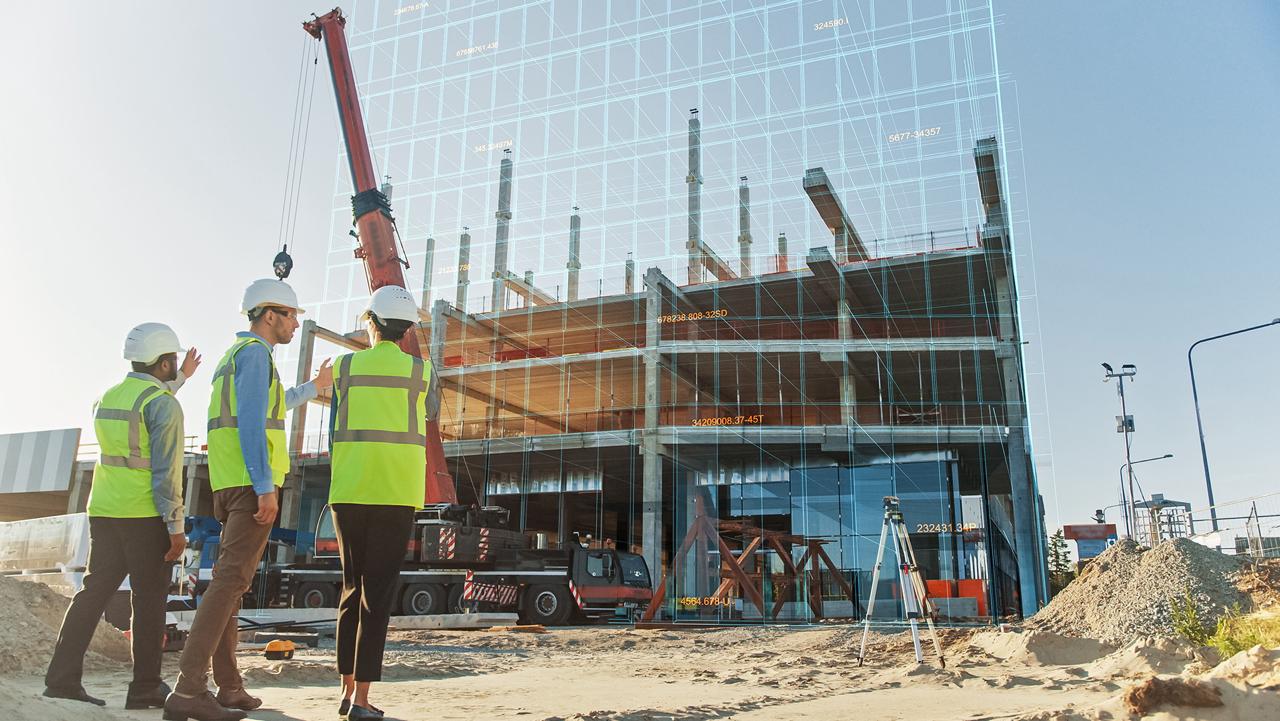
Kansas City’s A/E/C sector continues to scale — with in-market expansions proving this is no coincidence. These recent investments reflect a deeper commitment to the region and reinforce KC’s position as a global hub for design, engineering and construction innovation.

Here are some of the firms that have put that belief into action: 

  • Black & Veatch is advancing a $1.12B headquarters expansion in Overland Park, anchoring a 1-million-sq.-ft. mixed-use campus that will include a 750,000-sq.-ft. HQ, 788 housing units and 137,000 sq. ft. of retail space.
  • DRAW has relocated to the historic 1892 Henney Buggy building at 1400 W 13th St in the West Bottoms, creating a larger, more sustainable workspace.
  • Forge Construction invested more than $2.9M to relocate and expand its Kansas City headquarters, transforming a 10,000-sq.-ft. Crossroads building and creating nearly 20 new jobs in one of the city’s fastest-growing districts.
  • HDR opened a new health-focused architecture studio near the plaza that focuses on healthcare design, including pediatric and research facilities.
  • Helix Architecture + Design deepened its commitment to downtown Kansas City with a new 6,700-sq.-ft. headquarters in the Crossroads’ historic Film Row, blending adaptive reuse with modern workplace design.
  • HNTB reaffirmed its commitment to downtown Kansas City with its relocation to the 591-foot Town Pavilion — the city’s second-tallest building — signaling continued reinvestment in the urban core.
  • JE Dunn Construction invested $20M to renovate its 190,000-sq.-ft., six-story Kansas City headquarters, reimagining the workspace to support evolving work styles, enhance collaboration and deliver a modern, flexible environment.
  • TREKK Design Group more than doubled the size of its Kansas City headquarters by moving to a new South Kansas City office, supporting continued growth for the 120-person, woman-owned civil engineering firm.
  • POPULOUS relocated its global headquarters to a new 100,000+-sq.-ft. collaborative workspace at 1400 Baltimore, consolidating teams downtown and reinforcing Kansas City’s role as a global hub for sports design.

Have a recent expansion or relocation to add? Let us know. 

How KC is Attracting Global Firms — Without Being Asked

By Ashley McDonald, KC Global Design Managing Director

KC Global Design exists to amplify something truly special: an ecosystem of creativity, expertise and impact that stretches far beyond our region. Yes, world-class design + construction work is happening right here in Kansas City. But just as importantly, KC firms are shaping skylines, power systems, stadiums and communities across the globe.

As managing director of KC Global Design, I have the unique privilege of working alongside these firms every day, telling a story that continues to surprise even those of us closest to it. While many know KC for its deep roots in sports architecture — and rightfully so — there’s so much more beneath the surface. This is a multibillion-dollar design + construction industry, powered by more than 80,000 professionals, spanning disciplines and influencing projects at every scale imaginable.

But the real differentiator? It’s not just what happens here. It’s how it happens.

In Kansas City, competition and collaboration coexist in a way that’s rare. You’ll often hear it called “coopetition,” but it’s more than a buzzword. It’s a mindset. Firms compete at the highest levels, yet there’s an unmistakable willingness to share ideas, support one another and elevate the industry as a whole. It’s the belief that when one firm succeeds, our whole ecosystem moves forward — and it’s something people don’t just talk about. They live it.

That culture has created a growing sense of curiosity (and yes, even a bit of FOMO) from outside the region. Firms want to be part of what’s happening here.

While KC Global Design isn’t focused on the recruitment of more A/E/C firms to the region, the pull toward Kansas City is undeniable. The recent expansions of Gensler and Perkins&Will into Kansas City, along with Pape-Dawson’s acquisition of BHC to establish a regional headquarters, are clear signals that this ecosystem is resonating on a national scale. That momentum is also reflected in a number of local firms doubling down on Kansas City with recent in-market expansions. 

And we’re just getting started.

With Kansas City preparing to welcome the world in the months ahead, the spotlight is only getting brighter. The foundation is already here: talent, collaboration and a shared commitment to excellence across design + construction. What comes next is an even bigger opportunity: to showcase not just what we’ve built, but how we’ve built it, together.

Because in Kansas City, design + construction isn’t just an industry, it’s a collective force. And its impact is only growing.

To keep up with KC’s design + construction industry, follow KC Global Design on LinkedIn.

Axiota Animal Health Names Wamego, Kansas, as Global Headquarters

Move strengthens the KC Animal Health Corridor as a hub for animal health excellence

WAMEGO, Kan. (March 31, 2026) — Axiota Animal Health, global leader in cattle health solutions, announced today it will name its facility in Wamego, Kansas, as the company’s global headquarters.

The announcement formalizes the longstanding presence of Axiota Animal Health in Wamego, where the company operates manufacturing, research and development, and scientific operations for its products used by cattle producers in more than 30 countries worldwide.

“Wamego has long been a cornerstone of Axiota’s manufacturing and research, so designating it as our global headquarters is a natural next step,” said William (Bill) Weldon, CEO, Axiota Animal Health. “From here, we’re developing and producing technologies that help cattle producers around the world improve herd health and productivity. Leveraging our location within the KC Animal Health Corridor and our longstanding relationship with Kansas State University allows us to drive innovation and attract the top talent the industry demands.”

Located near Kansas State University, the facility benefits from proximity to one of the nation’s leading veterinary and animal health research institutions. That connection helps Axiota attract specialized scientific talent and collaborate with researchers advancing the future of livestock health.

From its Wamego facility, Axiota supports cattle producers worldwide in improving herd health and performance through prevention-based, non-antibiotic solutions. This includes:

  • Lactipro®, the only rumen-native probiotic that delivers Mega e®, proven to promote rumen health and performance.
  • Multimin® 90 (zinc, copper, manganese and selenium injection) is the only FDA-approved injectable supplement that delivers four trace minerals known to support cattle health and reproduction.

The decision highlights the global impact of the KC Animal Health Corridor, a hub stretching from Manhattan, Kansas, to Columbia, Missouri, with Kansas City at its heart. The region, home to the world’s largest concentration of animal health assets, serves as a leading center for life science research, development and collaboration.

“Axiota’s decision to locate its global headquarters in Wamego reflects the industry leadership that continues to define the Corridor,” said Kimberly Young, president of the KC Animal Health Corridor. “Companies here aren’t just participating in the industry — they’re driving the science, technology and production that support animal health and food security around the world.”


About Axiota Animal Health

Axiota Animal Health is an innovation-driven company that discovers, develops and markets products for beef and dairy producers around the world. Axiota’s non-antibiotic solutions prepare cattle to thrive during transition and stress and support producers’ goals of optimal health, performance and animal well-being. | axiota.com

About KC Animal Health Corridor

Representing more than half of the global animal health industry’s sales, and home to over 300 animal health companies, the KC Animal Health Corridor is the largest concentration of its kind worldwide. An initiative of the Kansas City Area Development Council, the Corridor is anchored by Manhattan, Kansas, and Columbia, Missouri, and serves as a thriving hub for innovation and collaboration. | kcanimalhealth.com

###

Leading Cattle Health Company Names Global Headquarters in KC Animal Health Corridor

Congratulations to our Kansas partners on Axiota Animal Health’s decision to name its Wamego facility as its global headquarters.

Strategically located between Manhattan and Topeka, the facility has long served as a key hub for the company’s production and research & development. Its proximity to Kansas State University — one of the nation’s leading veterinary and animal health research institutions — and the broader innovation network extending to Topeka and Kansas City enables Axiota to attract top scientific talent and accelerate its product development.

The decision underscores the global significance of the KC Animal Health Corridor, the world’s largest cluster of animal health assets and a leading hub for bioscience research, development and production.

The Kansas City Area Development Council was proud to partner with the following organizations as Axiota selected the KC Animal Health Corridor for its global headquarters:

State of Kansas
Kansas Department of Commerce
Greater Manhattan Economic Partnership
Evergy
Kansas State University

Read the News Release

14 Reasons Kansas City is a Top Design City

Updated March 2026

KC is among the leading cities in the world for architecture, engineering and construction, with a legacy of designing and building a better world — from right here in the Heartland.

  1. More than 1,400 architectural and engineering firms call KC home
  2. KC has more than 6,800 construction firms
  3. 94,000 workers in KC are employed in the A/E/C sector
  4. A/E/C is a $16 billion industry in KC
  5. KC led the Green Revolution in architecture
  6. Nearly half of sports architecture around the world originates in the KC region
  7. KC firms were key to the design of 28 of the 30 NFL Stadiums
  8. Kansas City created the gold standard for Olympic stadiums
  9. 23% of the world’s power systems are designed by KC companies
  10. 9% of global telecommunication systems are designed by KC companies
  11. 10% of the world’s transportation infrastructure and systems are KC-designed
  12. 21 of the top 25 U.S. design firms have a presence in KC — more than any other city
  13. KC has 7th-largest concentration in the U.S. for architecture and engineering jobs; 70% more concentrated than the national average
  14. Colleges and universities in the KC region award 1,400+ architecture and engineering degrees annually


Discover more:
 Explore why Kansas City is known as the sports architecture capital of the world.

Small Market. Global Impact. – Why Kansas City Punches Above Its Weight in Animal Health

March is a season of momentum. Across Kansas City, the crack of the bat signals the start of Spring Training as the Kansas City Royals prepare for a new season. In pastures across our region, calving season is underway which is a powerful reminder of renewal, growth, and the steady work that sustains our food system.

Spring has a way of reminding us that progress doesn’t always start loud. It starts with preparation. With resilience. With showing up.

In many ways, Kansas City, like the animal health industry, has long been viewed as an underdog. We aren’t the largest metro in the country. Animal health isn’t the largest sector in global life sciences. But when you show up with enthusiasm, grit, creativity, and a collaborative spirit, people notice. And you win.

This summer, Kansas City will step onto the world stage as one of the host cities for the 2026 FIFA World Cup. While we are the smallest U.S. market selected to host matches, four international teams (Argentina, England, Netherlands and Algeria) chose Kansas City as the location for their base camps.

Why?

Because we prepared. Because we listened. Because we curated experiences that met each team’s specific needs.

They saw what we already know: Kansas City is a metro that offers high-caliber amenities, ease of access, strong infrastructure, and a community that rallies around those who choose to be here. In Kansas City, you’re never just another stop on the map; you are part of something connected, intentional, and supportive.

Those same dynamics play out every day in business, particularly in animal health. For animal health companies and innovators to succeed, they need more than lab space and capital. They need a community that understands the regulatory complexity, manufacturing realities, commercialization pathways, and scientific rigor required to bring solutions to market.

They need partners. They need talent. They need infrastructure. And that’s exactly why the Animal Health Corridor exists.

The Corridor was designed specifically to help companies start, scale, and thrive. We work alongside local, state, and educational partners to ensure the right academic programs are in place building talent pipelines from manufacturing and quality control to regulatory affairs and commercial leadership.

Globally, animal health may not command the same headlines as human biopharma. But its impact touches every person on the planet. Animal health safeguards the food supply. It strengthens biosecurity. It combats zoonotic diseases before they become global crises. It advances care for pets that enrich our lives.

The work done here in the Heartland ripples outward: protecting families, supporting farmers, and strengthening public health systems worldwide.

Much like Kansas City itself, animal health’s influence far exceeds its size. There’s something powerful about being underestimated. It can breed focus, fuel creativity and build resilience. Kansas City doesn’t try to out scale the largest metros; we out prepare them.

Animal health companies in this region operate the same way. They innovate with urgency because the stakes are high. They work across disciplines because success requires integration. They build long-term because the health of animals and people depends on it.

Spring reminds us that growth is both natural and intentional. It requires the right environment, partners, and conditions. Kansas City has built those conditions, and the Animal Health Corridor sustains them.

As we move into this new season, whether in sports, in agriculture, in global competition, or in business, we are reminded you don’t have to be the biggest to make the biggest difference.

Sometimes the smallest markets and the most focused industries create the greatest global impact.

Emerging Companies Invited to Apply for 2026 Animal Health Summit

KC Animal Health Corridor seeks innovators in companion animal, ag tech and food animal sectors

KANSAS CITY, Mo. – March 3, 2026 – The KC Animal Health Corridor is now accepting Emerging Company applications for the 2026 Animal Health Summit, taking place Aug. 31 to Sept. 1 in downtown Kansas City. The Summit provides a global stage for early-stage companies in companion animal health, ag tech and food animal production to present their technologies and business plans to investors, strategic partners and industry leaders.

To date, companies selected to present — representing pharmaceutical, vaccine, nutrition, diagnostic and technology startups from around the world — have collectively raised nearly $1 billion following their participation, in addition to securing licensing agreements, distribution contracts and acquisition offers.

Application and instructions can be found at onekc.org/kc-animal-health-corridor/events/animal-health-summit/emerging-company-presentations/application.

Emerging company criteria

Companies must:

  • Serve the companion animal health, ag tech and/or food animal production industries
  • Be seeking $500,000 to $20 million in funding or strategic partnerships
  • Project $20 million in revenue within five to seven years

Benefits for selected companies

Participants receive:

  • Access to industry experts
  • Assistance developing a company pitch deck
  • Individualized mentoring
  • Two practice pitch sessions with real-time industry feedback
  • Development of an investor profile
  • Promotion to qualified investors
  • Media promotion

Applications must be submitted by 5 p.m. CDT on April 1, 2026. All applicants will be notified of their status by June 19, 2026. Additional details about the KC Animal Health Corridor and the Animal Health Summit are available at www.kcanimalhealth.com.

About the KC Animal Health Corridor
Companies with a business location in the KC Animal Health Corridor account for more than half of the sales generated by the global animal health industry. The Corridor, anchored by Manhattan, Kansas, and Columbia, Missouri, is home to more than 300 animal health companies, representing the largest concentration in the world. For more information, visit www.kcanimalhealth.com.

###

Media Contact:
Kristi Fender
kristi.fender@stephens-adv.com
913.396.1938

Leadership That Advances Our Industry 

Leadership in our industry is not conferred by title alone. It is earned through action. True leadership is about showing up, giving time and talent generously, and investing in the people and organizations that move our shared mission of improving animal health and wellbeing forward.

The Corridor is deeply grateful to the many leaders who contribute throughout the year to strengthen our industry across our strategic priorities of workforce, innovation, public policy, and industry engagement. Their collective commitment is what allows our ecosystem to thrive.

Our workforce committee members exemplify this spirit of leadership. In 2024 and 2025, their efforts helped shape a compelling industry brand and campaign designed to attract the next generation of talent. By investing in people today, they are building the foundation for our industry’s future.

Equally impactful are the leaders who serve on our Selection Committee, our Judging Panel, and as Coaches. These individuals stand at the forefront of innovation, supporting innovators and emerging companies as they bring new ideas, technologies, and solutions to life. Their guidance and insight help ensure that innovation remains a driving force within the animal health industry.

Behind the scenes, communications and public relations teams play a vital role by telling the important stories of brands, products, and impact. Their work ensures the world understands the significance of what we do and the role animal health plays in creating a globally safe food supply, preventing the next pandemic, and ensuring our pets live longer, healthier lives.

Our government relations and public policy leaders further extend this impact. Working across federal, state, and local jurisdictions, they help align policies that support healthier animals and a healthier planet. Their leadership ensures our industry’s voice is heard where it matters most.

The Corridor’s Advisory Board is at the tip of the spear in advancing our mission. Each member contributes countless hours of service, strategic guidance, and leadership each year. We are especially thankful for the leadership of our Chair and Vice Chair.

Shannon Kellner, our 2026 Chair, brings 25 years of experience in the animal health industry and currently serves as Vice President of Livestock for Merck Animal Health. His depth of knowledge and steady leadership continue to strengthen the Corridor’s impact.

Fiona Rey, our 2026 Vice Chair, brings more than 20 years of animal health experience and currently serves as Executive Director of U.S. Pet Health Marketing for Elanco Animal Health. Her perspective and leadership further enrich our board and our mission.

We are also grateful for Todd Zion, Co-Founder, President, and CEO of Akston Biosciences Corporation, who is serving a three-year term in the Corridor’s entrepreneurial board seat. Recognizing the critical role startups and entrepreneurs play in shaping the future of animal health, the Corridor established the Entrepreneur-in-Residence board seat in 2017. This position ensures emerging and growth-stage companies have a meaningful voice alongside established industry leaders.

Designed to bring a complementary and forward-looking perspective to the Board, this seat reflects the Corridor’s commitment to innovation and industry leadership. With his educational background and experience in scaling companies, Todd brings invaluable insight and energy to an already strong Advisory Board.

To all who lead, serve, and contribute, thank you. Your leadership strengthens the Corridor, advances our industry, and helps ensure a healthier future for animals everywhere.

2026 Trends and Focus Areas: Building the Future of Animal Health Together

As we look toward 2026, the Animal Health Corridor stands at the intersection of global change and unprecedented opportunity. The forces reshaping our industry, such as private equity investment, innovation models, workforce dynamics, species-specific care, and global visibility, are converging in ways that demand leadership, collaboration, and clarity of purpose. The Corridor’s role has never been more important.

What follows are four focus areas that will define the year ahead and guide how we partner with companies, innovators, educators, and communities to advance animal health worldwide.

1. Navigating Industry Transformation Across Investment, Manufacturing, and Workforce Growth

The animal health industry continues to experience high levels of engagement from private equity and strategic investors. We are seeing robust investment activity alongside divestments of business units, portfolio realignments, and renewed attention to operational efficiency. At the same time, economic pressures from inflation to shifts in federal policy to supply chain volatility are accelerating the onshoring of manufacturing and R&D capabilities.

These shifts place workforce at the center of every growth decision. In 2026, access to skilled talent, particularly in biomanufacturing, will be the defining factor for where companies choose to invest and expand.

The Animal Health Corridor is uniquely positioned to serve as an instrumental partner during this transformation. Our region offers a dense concentration of global animal health companies, advanced manufacturing capabilities, and a collaborative ecosystem that reduces friction for companies scaling operations. Just as importantly, we are deeply focused on attracting and developing the next generation of talent.

A key priority moving forward is regional alignment across Kansas and Missouri to support companies growing their manufacturing footprint. We are working alongside educational partners, workforce organizations, and industry leaders to establish a common language around what biomanufacturing is and what careers in biomanufacturing look like. This includes clearly defined and accessible pathways, from short-term certifications and two-year programs to four-year degrees and advanced training.

By aligning curricula with industry needs and clearly articulating career opportunities, the Corridor will help build sustainable talent pipelines that benefit both employers and communities ensuring our region remains the premier destination for animal health manufacturing and investment.

2. Doubling Down on External Innovation and the Pioneers Who Drive It

Breakthroughs in animal health increasingly come from beyond the walls of any single organization. Startups, university spinouts, and entrepreneurial teams are bringing forward new diagnostics, digital tools, therapeutics, vaccines, and platforms that can reshape care delivery and outcomes.

Continued investment in external innovation is not optional, it is essential. In 2026, we must do more than celebrate innovation; we must actively support innovators as they navigate regulatory pathways, scale manufacturing, access capital, and reach global markets.

The Animal Health Corridor plays a critical convening role here. By connecting innovators with established companies, investors, contract partners, and mentors, we help reduce time to market and increase the likelihood of success. Our focus is on creating an environment where bold ideas are met with practical support and where collaboration accelerates impact for animals, veterinarians, producers, and pet owners alike.

3. Advancing Species-Specific Care with a Growing Focus on Feline Health

Animal health is not one-size-fits-all, and species-specific care is gaining well-deserved attention across the industry. While advances in livestock, poultry, canine, and equine health remain vital, we are seeing a particularly strong and overdue focus on feline healthcare.

Cats represent a rapidly growing segment of the companion animal population, yet historically have been underserved in diagnostics, therapeutics, preventive care, and owner engagement resources. In 2026, innovation in feline health will be a critical growth area, spanning stress-free diagnostics, targeted therapeutics, digital engagement solutions, and care models designed with the cat in mind.

The Corridor’s ecosystem is ideally suited to support this evolution. With deep expertise across R&D, clinical development, regulatory science, biomanufacturing, and commercialization, our region can help bring more species-specific solutions to market and improve outcomes across the full spectrum of animal care.

4. A Global Stage: Showcasing the Corridor Through the World Cup

Finally, 2026 offers a once-in-a-generation opportunity to showcase our region to the world. Hosting the World Cup is about more than sport; it is about global visibility, connection, and leadership.

As international attention turns to our region, we have the chance to highlight what makes the Animal Health Corridor extraordinary: a collaborative culture, world-class innovation, economic vitality, and a deep commitment to workforce development. This global moment allows us to attract talent, investment, and partnerships while reinforcing our identity as a hub where science, manufacturing, and community thrive together.

Looking Ahead

The year ahead will demand adaptability, partnership, and long-term thinking. The Animal Health Corridor remains committed to being a catalyst by bringing industry and education together, supporting innovators, developing talent, and ensuring our region continues to lead the world in animal health.

Together, we will navigate change, unlock opportunity, and build a stronger, more resilient future for animals and the people who care for them.