Emerging Companies Invited to Apply for 2026 Animal Health Summit

KC Animal Health Corridor seeks innovators in companion animal, ag tech and food animal sectors

KANSAS CITY, Mo.March 3, 2026 – The KC Animal Health Corridor is now accepting Emerging Company applications for the 2026 Animal Health Summit, taking place Aug. 31 to Sept. 1 in downtown Kansas City. The Summit provides a global stage for early-stage companies in companion animal health, ag tech and food animal production to present their technologies and business plans to investors, strategic partners and industry leaders.

To date, companies selected to present — representing pharmaceutical, vaccine, nutrition, diagnostic and technology startups from around the world — have collectively raised nearly $1 billion following their participation, in addition to securing licensing agreements, distribution contracts and acquisition offers.

Application and instructions can be found at onekc.org/kc-animal-health-corridor/events/animal-health-summit/emerging-company-presentations/application.

Emerging company criteria

Companies must:

  • Serve the companion animal health, ag tech and/or food animal production industries
  • Be seeking $500,000 to $20 million in funding or strategic partnerships
  • Project $20 million in revenue within five to seven years

Benefits for selected companies

Participants receive:

  • Access to industry experts
  • Assistance developing a company pitch deck
  • Individualized mentoring
  • Two practice pitch sessions with real-time industry feedback
  • Development of an investor profile
  • Promotion to qualified investors
  • Media promotion

Applications must be submitted by 5 p.m. CDT on April 1, 2026. All applicants will be notified of their status by June 19, 2026. Additional details about the KC Animal Health Corridor and the Animal Health Summit are available at www.kcanimalhealth.com.

About the KC Animal Health Corridor
Companies with a business location in the KC Animal Health Corridor account for more than half of the sales generated by the global animal health industry. The Corridor, anchored by Manhattan, Kansas, and Columbia, Missouri, is home to more than 300 animal health companies, representing the largest concentration in the world. For more information, visit www.kcanimalhealth.com.

###

Media Contact:
Kristi Fender
kristi.fender@stephens-adv.com
913.396.1938

Leadership That Advances Our Industry 

Leadership in our industry is not conferred by title alone. It is earned through action. True leadership is about showing up, giving time and talent generously, and investing in the people and organizations that move our shared mission of improving animal health and wellbeing forward.

The Corridor is deeply grateful to the many leaders who contribute throughout the year to strengthen our industry across our strategic priorities of workforce, innovation, public policy, and industry engagement. Their collective commitment is what allows our ecosystem to thrive.

Our workforce committee members exemplify this spirit of leadership. In 2024 and 2025, their efforts helped shape a compelling industry brand and campaign designed to attract the next generation of talent. By investing in people today, they are building the foundation for our industry’s future.

Equally impactful are the leaders who serve on our Selection Committee, our Judging Panel, and as Coaches. These individuals stand at the forefront of innovation, supporting innovators and emerging companies as they bring new ideas, technologies, and solutions to life. Their guidance and insight help ensure that innovation remains a driving force within the animal health industry.

Behind the scenes, communications and public relations teams play a vital role by telling the important stories of brands, products, and impact. Their work ensures the world understands the significance of what we do and the role animal health plays in creating a globally safe food supply, preventing the next pandemic, and ensuring our pets live longer, healthier lives.

Our government relations and public policy leaders further extend this impact. Working across federal, state, and local jurisdictions, they help align policies that support healthier animals and a healthier planet. Their leadership ensures our industry’s voice is heard where it matters most.

The Corridor’s Advisory Board is at the tip of the spear in advancing our mission. Each member contributes countless hours of service, strategic guidance, and leadership each year. We are especially thankful for the leadership of our Chair and Vice Chair.

Shannon Kellner, our 2026 Chair, brings 25 years of experience in the animal health industry and currently serves as Vice President of Livestock for Merck Animal Health. His depth of knowledge and steady leadership continue to strengthen the Corridor’s impact.

Fiona Rey, our 2026 Vice Chair, brings more than 20 years of animal health experience and currently serves as Executive Director of U.S. Pet Health Marketing for Elanco Animal Health. Her perspective and leadership further enrich our board and our mission.

We are also grateful for Todd Zion, Co-Founder, President, and CEO of Akston Biosciences Corporation, who is serving a three-year term in the Corridor’s entrepreneurial board seat. Recognizing the critical role startups and entrepreneurs play in shaping the future of animal health, the Corridor established the Entrepreneur-in-Residence board seat in 2017. This position ensures emerging and growth-stage companies have a meaningful voice alongside established industry leaders.

Designed to bring a complementary and forward-looking perspective to the Board, this seat reflects the Corridor’s commitment to innovation and industry leadership. With his educational background and experience in scaling companies, Todd brings invaluable insight and energy to an already strong Advisory Board.

To all who lead, serve, and contribute, thank you. Your leadership strengthens the Corridor, advances our industry, and helps ensure a healthier future for animals everywhere.

2026 Trends and Focus Areas: Building the Future of Animal Health Together

As we look toward 2026, the Animal Health Corridor stands at the intersection of global change and unprecedented opportunity. The forces reshaping our industry, such as private equity investment, innovation models, workforce dynamics, species-specific care, and global visibility, are converging in ways that demand leadership, collaboration, and clarity of purpose. The Corridor’s role has never been more important.

What follows are four focus areas that will define the year ahead and guide how we partner with companies, innovators, educators, and communities to advance animal health worldwide.

1. Navigating Industry Transformation Across Investment, Manufacturing, and Workforce Growth

The animal health industry continues to experience high levels of engagement from private equity and strategic investors. We are seeing robust investment activity alongside divestments of business units, portfolio realignments, and renewed attention to operational efficiency. At the same time, economic pressures from inflation to shifts in federal policy to supply chain volatility are accelerating the onshoring of manufacturing and R&D capabilities.

These shifts place workforce at the center of every growth decision. In 2026, access to skilled talent, particularly in biomanufacturing, will be the defining factor for where companies choose to invest and expand.

The Animal Health Corridor is uniquely positioned to serve as an instrumental partner during this transformation. Our region offers a dense concentration of global animal health companies, advanced manufacturing capabilities, and a collaborative ecosystem that reduces friction for companies scaling operations. Just as importantly, we are deeply focused on attracting and developing the next generation of talent.

A key priority moving forward is regional alignment across Kansas and Missouri to support companies growing their manufacturing footprint. We are working alongside educational partners, workforce organizations, and industry leaders to establish a common language around what biomanufacturing is and what careers in biomanufacturing look like. This includes clearly defined and accessible pathways, from short-term certifications and two-year programs to four-year degrees and advanced training.

By aligning curricula with industry needs and clearly articulating career opportunities, the Corridor will help build sustainable talent pipelines that benefit both employers and communities ensuring our region remains the premier destination for animal health manufacturing and investment.

2. Doubling Down on External Innovation and the Pioneers Who Drive It

Breakthroughs in animal health increasingly come from beyond the walls of any single organization. Startups, university spinouts, and entrepreneurial teams are bringing forward new diagnostics, digital tools, therapeutics, vaccines, and platforms that can reshape care delivery and outcomes.

Continued investment in external innovation is not optional, it is essential. In 2026, we must do more than celebrate innovation; we must actively support innovators as they navigate regulatory pathways, scale manufacturing, access capital, and reach global markets.

The Animal Health Corridor plays a critical convening role here. By connecting innovators with established companies, investors, contract partners, and mentors, we help reduce time to market and increase the likelihood of success. Our focus is on creating an environment where bold ideas are met with practical support and where collaboration accelerates impact for animals, veterinarians, producers, and pet owners alike.

3. Advancing Species-Specific Care with a Growing Focus on Feline Health

Animal health is not one-size-fits-all, and species-specific care is gaining well-deserved attention across the industry. While advances in livestock, poultry, canine, and equine health remain vital, we are seeing a particularly strong and overdue focus on feline healthcare.

Cats represent a rapidly growing segment of the companion animal population, yet historically have been underserved in diagnostics, therapeutics, preventive care, and owner engagement resources. In 2026, innovation in feline health will be a critical growth area, spanning stress-free diagnostics, targeted therapeutics, digital engagement solutions, and care models designed with the cat in mind.

The Corridor’s ecosystem is ideally suited to support this evolution. With deep expertise across R&D, clinical development, regulatory science, biomanufacturing, and commercialization, our region can help bring more species-specific solutions to market and improve outcomes across the full spectrum of animal care.

4. A Global Stage: Showcasing the Corridor Through the World Cup

Finally, 2026 offers a once-in-a-generation opportunity to showcase our region to the world. Hosting the World Cup is about more than sport; it is about global visibility, connection, and leadership.

As international attention turns to our region, we have the chance to highlight what makes the Animal Health Corridor extraordinary: a collaborative culture, world-class innovation, economic vitality, and a deep commitment to workforce development. This global moment allows us to attract talent, investment, and partnerships while reinforcing our identity as a hub where science, manufacturing, and community thrive together.

Looking Ahead

The year ahead will demand adaptability, partnership, and long-term thinking. The Animal Health Corridor remains committed to being a catalyst by bringing industry and education together, supporting innovators, developing talent, and ensuring our region continues to lead the world in animal health.

Together, we will navigate change, unlock opportunity, and build a stronger, more resilient future for animals and the people who care for them.

When an Industry Shows Up, a Generation of Potential Grows

One of the questions we hear most often about our workforce priorities is: How do you measure the impact of talking to middle school and high school educators about career exploration in animal health? It’s a fair question and one we’ve reflected on deeply.

The truth is, it’s nearly impossible to draw a clean line from a single conversation with a teacher to a student ultimately stepping into a career in our industry. There’s no dashboard, no tidy funnel, no tracking mechanism that tells us which young minds were influenced by the resources, stories and insights we share.

But does that mean we stop? Absolutely not.

In a world where organizations rely on KPIs and measurable outcomes to justify their time, it’s easy to overlook the kind of work that shapes long-term possibility rather than short-term metrics. Inspiring future talent doesn’t fit neatly into a spreadsheet and that’s exactly why it requires leadership, commitment and collective effort.

In early December, we attended the National Association of Agricultural Educators Conference (NAAE) in Nashville. We spoke with more than 500 educators, from seasoned teachers to students preparing to enter the classroom for the first time. No matter what their level of experience, their reactions were strikingly consistent. Their first question was: “Are these resources free?” And when they learned that an entire industry rallied together to create, brand and share tools designed specifically to help them guide the next generation, they were amazed.

In that moment, the measurement became clear. Not in data points, but in human moments.

Not in metrics, but in momentum.

When educators feel supported, students feel possibility. When an industry shows up, a pathway appears.

We may never know exactly how many students choose animal health because of something they heard, saw or explored through the resources we have developed on exploreahcareers.com. But we do know one thing with absolute certainty: doing nothing guarantees we lose future talent to industries that consistently show up in classrooms.

If educators, students and parents only hear about careers in crop science and equipment, which are excellent careers, then we risk offering young people only a narrow snapshot of what agricultural innovation looks like. Our field has so much more to give. From science and technology to business, care, innovation and global impact, animal health holds a world of opportunity.

Building the next generation of talent isn’t the job of one company. It’s the responsibility and the opportunity of an entire industry.

By standing together, investing together and showing up together, we are shaping not only who enters animal health tomorrow, but how they see themselves today. And while we may not be able to measure that in numbers, we can measure it in purpose.

And purpose is what builds an industry’s future.

Kansas City’s FTZ Strengths Spotlighted on a Global Stage

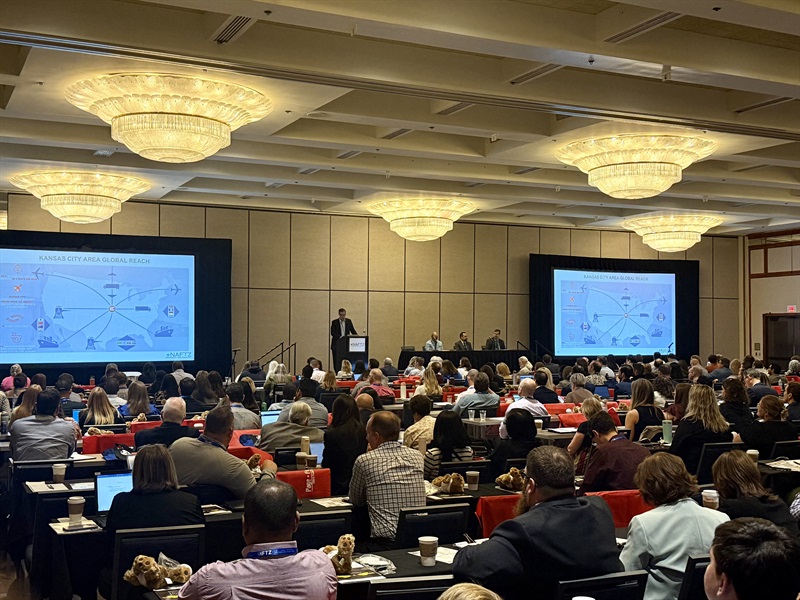
The National Association of Foreign-Trade Zones 2025 Annual Conference was held in Kansas City on September 14-17 at the Westin Crown Center. This year’s event was sold out, achieving record attendance. 

KC-AREA PANEL: Chris Gutierrez, President of the Greater Kansas City Foreign Trade Zone (GKCFTZ) & KC SmartPort, led a panel discussion with local Kansas City Operators – Kawasaki, Assa Abloy & MRI Global. The panel discussion and the conference were featured in this KC Business Journal article.

Panel of speakers at the NAFTZ Annual Conference

KC-STYLE RECEPTION: Attendees celebrated KC-style at Union Station Grand Hall with a reception featuring live jazz from KC native and jazz legend Lonnie McFadden along with KC-themed food and drinks on Tuesday, September 16. The reception was hosted by GKCFTZ, Miller & Co, Scarbrough Global and Union Station.

NAFTZ Annual Conference reception group photo

The conference provided only a preview of all that Kansas City has to offer. 

KANSAS CITY’S UNIQUE ADVANTAGES:

America’s Crossroads: KC sits at the heart of North America, where world-class transportation infrastructure meets unmatched connectivity. From this central location, companies can quickly deliver and reliably scale across the continent.

Workforce Ready: Advanced manufacturing and high-growth sectors thrive in KC, fueled by a deep talent pool ready to drive success – ensuring a seamless market entry. 

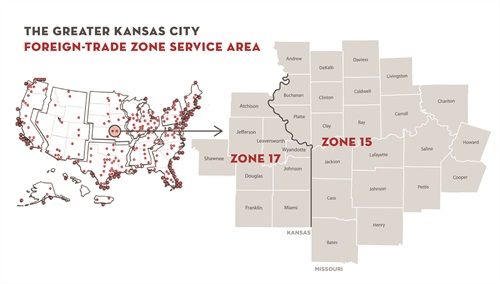
FTZ in the Heartland: The Greater Kansas City Foreign Trade Zone (Zones 15 & 17) provides our region and the companies located here a superior advantage. Industry leaders such as Bayer Crop Science, Kawasaki, Garmin, Panasonic Energy, Assa Abloy and others have realized the benefits of having an FTZ in the center of the country.

The Greater Kansas City Foreign Trade Zone (GKCFTZ) is the regional grantee of the national FTZ program. GKCFTZ sponsors both Foreign-Trade Zone No. 15 with 23 counties in western Missouri and Zone No. 17 with 9 counties in eastern Kansas.Map of the United States depicting all foreign trade zones, with a map depicting the two zones in the Kansas City region and the counties they encompass

Leading Together: Reflections on Collaboration, Competition and Industry Progress

As we approach the end of another busy year, many leaders are taking stock and reflecting on accomplishments, recalibrating priorities, and thinking about how best to give back in the year ahead. For those who serve on our Industry Advisory Board or other collaborative committees, this is also a moment to appreciate the unique role you play in shaping the future of our industry.

Serving on an advisory board like the Animal Health Corridor is unlike any other leadership experience. Here, competitors sit side by side, united by a shared mission: advancing the industry as a whole. That’s not always easy. It requires trust, vision, and the willingness to look beyond individual company interests to focus on what benefits everyone. For us, it is our focus on innovation, workforce development, public policy, and promotion of the animal health industry through our communication strategies and events.

Balancing Competition and Shared Purpose

The executives around our table represent organizations that often compete in the marketplace yet when they collaborate through our not-for-profit, they help build the foundation for long-term industry strength. The issues we tackle together are shared priorities where progress benefits all players and where a collective voice carries more weight than any single company could alone.

As a board member, your role in this process is both strategic and symbolic. You model what it looks like when leaders set aside rivalry to pursue shared progress. You show that the health of the industry is a shared responsibility and that collaboration is a mark of strength, not concession.

How Great Advisory Leaders Lead

Leading or contributing to an industry advisory board is not about authority. It’s about influence. It’s about inspiring action and alignment among peers. The most effective board leaders and members:

  • Keep the focus on shared priorities that serve the entire ecosystem.
  • Listen generously and seek common ground across diverse perspectives.
  • Champion collaboration both in and outside of meetings, reinforcing that the work we do together matters.
  • Celebrate collective wins, reminding everyone that progress is possible and powerful when we speak as one.

Our Staff: Your Partners in Impact

Behind the scenes, the staff of the Corridor work tirelessly to keep these collaborations moving by organizing meetings, facilitating discussions, synthesizing insights, and helping ensure follow-through. We are the steady hands that keep competitors around the table and progress on track.

As you reflect on your involvement, I encourage you to view our team not just as coordinators, but as strategic partners. Our role is to help you and the industry succeed. By working closely with our team by offering feedback and supporting our efforts, you strengthen the collective work we do together.

Looking Ahead

As we look to the year ahead, I hope you will continue to see the value of your participation and perhaps even consider ways to deepen it. The time, insight, and leadership you invest in this board ripple far beyond our meetings. You are shaping the policies, standards, and innovations that will define our industry for years to come.

Thank you for the trust, energy, and vision you bring to this shared endeavor. The progress we’ve made this year is proof that when competitors collaborate, industries advance and everyone benefits.

Here’s to another year of working together to make a lasting impact.

Leading Together: Reflections on Collaboration, Competition, and Industry Progress

As we approach the end of another busy year, many leaders are taking stock and reflecting on accomplishments, recalibrating priorities, and thinking about how best to give back in the year ahead. For those who serve on our Industry Advisory Board or other collaborative committees, this is also a moment to appreciate the unique role you play in shaping the future of our industry.

Serving on an advisory board like the Animal Health Corridor is unlike any other leadership experience. Here, competitors sit side by side, united by a shared mission: advancing the industry as a whole. That’s not always easy. It requires trust, vision, and the willingness to look beyond individual company interests to focus on what benefits everyone. For us, it is our focus on innovation, workforce development, public policy, and promotion of the animal health industry through our communication strategies and events.

Balancing Competition and Shared Purpose

The executives around our table represent organizations that often compete in the marketplace yet when they collaborate through our not-for-profit, they help build the foundation for long-term industry strength. The issues we tackle together are shared priorities where progress benefits all players and where a collective voice carries more weight than any single company could alone.

As a board member, your role in this process is both strategic and symbolic. You model what it looks like when leaders set aside rivalry to pursue shared progress. You show that the health of the industry is a shared responsibility and that collaboration is a mark of strength, not concession.

How Great Advisory Leaders Lead

Leading or contributing to an industry advisory board is not about authority. It’s about influence. It’s about inspiring action and alignment among peers. The most effective board leaders and members:

  • Keep the focus on shared priorities that serve the entire ecosystem.
  • Listen generously and seek common ground across diverse perspectives.
  • Champion collaboration both in and outside of meetings, reinforcing that the work we do together matters.
  • Celebrate collective wins, reminding everyone that progress is possible and powerful when we speak as one.

Our Staff: Your Partners in Impact

Behind the scenes, the staff of the Corridor work tirelessly to keep these collaborations moving by organizing meetings, facilitating discussions, synthesizing insights, and helping ensure follow-through. We are the steady hands that keep competitors around the table and progress on track.

As you reflect on your involvement, I encourage you to view our team not just as coordinators, but as strategic partners. Our role is to help you and the industry succeed. By working closely with our team by offering feedback and supporting our efforts, you strengthen the collective work we do together.

Looking Ahead

As we look to the year ahead, I hope you will continue to see the value of your participation and perhaps even consider ways to deepen it. The time, insight, and leadership you invest in this board ripple far beyond our meetings. You are shaping the policies, standards, and innovations that will define our industry for years to come.

Thank you for the trust, energy, and vision you bring to this shared endeavor. The progress we’ve made this year is proof that when competitors collaborate, industries advance and everyone benefits.

Here’s to another year of working together to make a lasting impact.

Leading Through the Storm: The Power of Listening, Empathy, and Integrity

In times of uncertainty, teams don’t just look to their leaders for answers, they look for presence, stability, and trust. Turbulent environments, whether driven by economic shifts, organizational change, or policy shifts, test not only the resilience of a business but the character and capability of its leadership.

Three traits become non-negotiable in these moments: active listeningcross-functional understanding, and moral clarity. Together, they form the foundation of what teams need most during difficult times: a leader they can believe in.

Active Listening: Being Fully Present

In periods of uncertainty, leaders often feel pressure to move fast and project confidence. But speed without listening can lead to missteps. Now more than ever, teams want to feel heard. They want to know their concerns aren’t just acknowledged, they’re genuinely understood.

Active listening isn’t about waiting to speak. It’s about creating space for others to share openly, without judgment or interruption. It’s about asking follow-up questions, reflecting back what you’ve heard, and making decisions that take people’s input seriously.

The best leaders in turbulent times don’t assume they know how their teams are doing. They ask, they listen, and they act based on what they learn.

Cross-Functional Empathy: Seeing the Bigger Picture

During uncertainty, stress rarely stays contained within one team. Decisions ripple across departments. Solving a problem for one function could inadvertently create challenges for another.

That’s why understanding cross-functional pressure points is critical. Great leaders seek out different perspectives before they act or make decisions. They know how to ask the right questions:

  • What will this mean for Sales?
  • How will Administration and Marketing be impacted?
  • What business functions/units will be impacted by this decision?

Empathetic leadership doesn’t mean avoiding hard choices or decisions. It means making informed ones with full awareness of the downstream effects. When people feel that their unique challenges are seen and respected, collaboration is strengthened, and silos start to disappear.

Being the Moral Compass: Leading with Integrity

Perhaps the most defining trait of a leader in uncertain times is the ability to be a moral compass for the organization. When people aren’t sure what comes next, they pay attention to how decisions are made and what values guide them.

Integrity shows up in small ways: owning mistakes, being transparent about what you know (and what you don’t), and choosing long-term trust over short-term convenience. It also shows up in big ways: standing up for what’s right, even when it’s not easy or popular.

When you lead with moral clarity, you give your team something to anchor to and values become the lens through which decisions are made.

No one can predict the future, but leaders can shape how their teams experience the journey. In the face of the unknown, being an active listener, understanding your organization cross-functionally, and being a consistent moral guide isn’t just good leadership, it’s what keeps organizations grounded, connected, and moving forward.

Twenty Years of Innovation, and the Animal Health Corridor is Just Getting Started

Twenty years ago, the Animal Health Corridor was just an idea—a bold vision to connect talent, ideas, and opportunity in one of the most vital industries in the world.

Today, it is a global movement.

We’ve helped bring 85 companies to the Kansas City region. We’ve partnered with more than 600 innovators from 30 countries. We’ve added 4,500 new jobs, $405 million in payroll, and over $4 billion in capital investment.

Twenty years of innovation. Twenty years of growth. Twenty years of shaping the future of animal health together.

But we’re not here to focus on the past. We’re here to build the future.

At the 2025 Animal Health Summit, we launched the Animal Health Corridor Workforce Campaign, a rallying cry for the next generation of our industry.

Because here’s the truth: animal health faces a growing talent gap. There’s a new generation full of passion, skill, and purpose who just don’t know we’re looking for them.

It’s time we changed the narrative.

Most people hear “animal health” and picture a veterinarian. And yes, veterinarians are vital. But our industry is so much more.

Animal health needs microbiologists and AI developers. It needs engineers, marketers, coders, and storytellers. It needs data analysts, technicians, and strategists. It needs people from every background who care about impact, purpose, and innovation.

Animal health takes all kinds.

So how do we reach them? How do we spark their curiosity and help them see a future here?

That’s where you come in.

Whether you’re a global enterprise or a startup founder, a scientist or a service provider, you have a role to play. We’ve built a powerful, ready-to-use campaign designed with the industry’s voice in mind, including outreach materials, videos, graphics, messaging templates, classroom-ready content, and more. It’s all waiting for you at ExploreAHCareers.com.

But more than tools, we need your voice.

Start a conversation with your team. Talk to a local school. Reach out to your alma mater. Tell someone, “This industry needs someone exactly like you.”

Because that single moment of encouragement? It could change a life.

And thousands of moments like that? They will transform our industry.

This is our moment to lead with unity, clarity, and heart.

Let’s make animal health impossible to overlook.

So don’t just be inspired. Take action. 

  1. Visit ExploreAHCareers.com
  2. Download the tools. 
  3. Share the message. 
  4. Start a conversation.

Together, we’re building the future of animal health.

And the best part? We’ve only just begun.

KC Animal Health Corridor at 20: ‘We’ve only scratched the surface’

As the KC Animal Health Corridor celebrates its 20-year anniversary, S&P Global’s head of animal health Joseph Harvey spoke to a range of industry insiders. They revealed how the region has helped shaped their careers and the evolution of the businesses they have worked for.

The KC Animal Health Corridor represents a hotbed of innovation and business development – all focused on veterinary medicine. The Corridor, centered in Kansas City, reaches from Columbia and St Joseph in Missouri to Manhattan in Kansas – an area that features over 300 companies and 20,000 people working in animal health. These companies represent 56% of animal health, diagnostics and pet
food sales worldwide.

The Corridor was established in 2006 and has since welcomed the relocation of about 85 companies, while many of the existing businesses in the region have continued to invest and expand their operations.

The businesses that have moved to the Corridor have enabled over 4,500 new jobs, more than $405 million in new payroll and around $4 billion in new capital investment. In addition, many of these firms started with a small presence in the Corridor and have gone on to grow beyond initial projections. Emerging companies presenting at the Animal Health Summit have raised over $500m, with many notable names getting their first public exposure at the event.

S&P Global Animal Health spoke to several experts about the impact of the Corridor. These included Corridor president Kimberly Young, Scott Bormann (senior vice president of North America operations for Merck Animal Health), Laura Olsen (a recent addition to the Corridor in her role as president of North America and chief marketing officer at Dechra Pharmaceuticals) and Yvonne Hsu (president of Hill’s Pet Nutrition), as well as animal health industry experts Dr Linda Rhodes, Dr Fabian Kausche and Craig
Wallace. The responses have been edited for length and clarity.

Joseph Harvey: When and how did you first become connected to Kansas City and the Corridor?

Kimberly Young: My connection to Kansas City evolved naturally through my work in economic development and public service. I began my career in healthcare administration but a chance conversation at a business event sparked a shift into the public sector. From there, I led workforce and finance initiatives for the State of Kansas and later played a key role in launching a sales and marketing organization for the State of Missouri.

Throughout those roles, I was closely involved with regional economic development efforts and had touchpoints with the Corridor from its inception. Those early interactions gave me a deep appreciation for the Corridor’s mission and potential. When the opportunity to join the organization arose in 2011, it felt like a natural next step in both my professional journey and my commitment to growing the region’s global leadership in animal health.

Laura Olsen: I’ve been in the animal health industry for many years and, over that time, I’ve watched Kansas City – and the Corridor – grow into a true epicenter for innovation, collaboration and leadership in our field. Even from afar, it was clear this community was becoming a hub that attracts talent, fosters partnerships and drives the industry forward. When I stepped into my role at Dechra, I was genuinely excited for the opportunity to not just observe that momentum but to be part of it – to engage directly with the Corridor’s initiatives, contribute to its growth, and invest in the relationships and community that make it so special.

Yvonne Hsu: My connection to the Kansas City area and the Corridor began when I stepped into leadership roles within Hill’s Pet Nutrition. Even early during my time at Hill’s, the Corridor was known as a major hub of significant advancement in animal health, veterinary medicine and bioscience. Now, leading Hill’s Pet Nutrition, and holding a position on the Corridor’s advisory board, my connection is deep and central to my daily work. I’m immersed in its dynamic ecosystem every day.

Craig Wallace: My first connection was during my time at Fort Dodge Animal Health around 2007. Fort Dodge was an early supporter of the idea for an economic development pillar in Kansas City focused on animal health. Later as the chief executive at Ceva Animal Health, I joined the board of the Corridor and participated as chairman in 2012 and 2017.

JH: What do you think makes the Kansas City area so unique?

Scott Bormann: KC is home to the largest concentration of animal health companies in the world, often called the ‘Animal Health Capital of the World’. This concentration creates an expansive ecosystem of manufacturers, research institutions, suppliers and service providers all focused on animal health. The intersection of a strong agricultural heritage, access to top universities and an innovative business environment makes Kansas City an ideal place to be, especially for those of us fortunate to be building careers in animal health.

Craig Wallace: There are historical reasons we have a cluster of animal health assets around Kansas City. We used to have a veterinary school located downtown – the Kansas City Veterinary College (at its peak it was one of the largest in the world). Kansas City was also home for one of the largest stockyards in the world. The combination of science and the concentration of animals created a perfect environment for early animal health entrepreneurs to create and develop new solutions for keeping animals healthy. In
addition, there’s the convergence of railroads, river systems and access to grains and prairie grasses all allowing for the feeding and transportation of animals and goods in and out of the area.

Laura Olsen: As an East Coaster myself, I’ve been struck by how the KC community blends world-class expertise with a welcoming Midwest authenticity. It’s a place where innovation is fueled by relationships and, every time I’m in Kansas City, I feel the energy and sense of purpose that sets it apart.

Yvonne Hsu: The uniqueness of the broader KC area, particularly for animal health, is two-pronged and stems from the sheer concentration of animal health companies within such a compact area. First, we have an incredible talent pool, right here in the Kansas City area, who are bringing a wealth of knowledge to Hill’s, but also to other animal health companies in the Corridor. We also have world-class academic institutions right in our backyard, consistently producing top-tier veterinarians, scientists and business professionals. Second, despite having competitors or industry adjacent companies in close proximity, there is a genuine willingness to work together to advance the industry as a whole.

Kimberly Young: The Corridor is home to everything from biotech innovation labs and research farms to ingredient suppliers, manufacturers, legal experts and marketing firms – all focused specifically on animal health. It therefore has an unparalleled ability to support both the establishment and growth of animal health businesses. The Corridor is guided by a board composed of chief executives and senior leaders from the world’s top animal health companies, providing immediate access to industry expertise, resources and strategic support that simply can’t be found elsewhere.

Linda Rhodes: I first learned of the Corridor when we established Aratana Therapeutics in Kansas City in 2013. Being in the middle of the country, the Corridor is far from the traditional centers for biotech (California and New York). So, perhaps that makes it a good place to try something different and, back in 2013, starting a biotech animal health company was groundbreaking.

JH: What benefits do you think the Corridor offers animal health businesses?

Fabian Kausche: The Corridor provides a unique blend of representing animal health businesses, outreach to other global animal health companies and a focus on connecting start-ups and next-generation innovation. They do all of this throughout the year and especially during the annual Summit – an event that is now a core meeting for the connection between business development teams of large corporations and small start-ups.

Yvonne Hsu: The innovation in this area alone is profound. The concentration of research, coupled with academic partnerships, creates the perfect environment for scientific breakthroughs. This is further amplified by the unparalleled networking and collaboration opportunities that are fostered among businesses. The Corridor is actively working to advance the industry, advocating for policies that support growth and providing resources for businesses to thrive, as well as attracting talent to our industry.

Linda Rhodes: There are plenty of talented support systems in the Corridor – such as legal, PR, accounting, etc. – that generally are more reasonably priced than the coastal equivalents. There is also a critical mass of talent. I was able to recruit the key people I needed at Aratana Therapeutics from the Kanas City area.

Craig Wallace: The Corridor offers everything a business needs to be successful. First, our communities embrace agriculture/animal health and understand the important role it plays in feeding the world, reducing zoonotic diseases and improving the human/animal bond. We have worldclass veterinary universities, research and manufacturing, and our labor force is well educated and they know what working a full day means. Add to all this the quality of life, schools, cost of living and you have a winning formula for attracting businesses.

Kimberly Young: Through strategic workforce development, we help businesses access and grow the specialized talent they need. Our advocacy efforts ensure the industry’s voice is heard on critical policy issues, and our commitment to innovation fuels collaboration between start-ups, research institutions and established companies.

Laura Olsen: The Corridor brings together a concentration of industry expertise, resources and partnerships that you simply can’t find anywhere else. Whether it’s access to top talent, opportunities for innovation through cross-company collaboration or the ability to have a stronger collective voice on industry priorities, the Corridor helps us serve our customers and drive more meaningful impact in the communities where we live and work.

JH: What benefits do you think the Corridor offers animal health employees?

Scott Bormann: Employees in the Corridor enjoy a wide range of career opportunities because of the dense concentration of companies in our region, which provides an array of job opportunities and career paths. Beyond career growth, those of us in the industry benefit from being part of a community of like- minded professionals and enjoy a high quality of life thanks to KC’s affordable cost of living, great schools and family-friendly environment.

Laura Olsen: For employees here in the Corridor, they have the opportunity to be a part of something truly special – a community where they can grow their careers, expand their skills and be part of something bigger than just their own organization. It’s a place where networking happens naturally, mentorship is accessible and opportunities for professional development are abundant.

Craig Wallace: The Corridor offers a range of career options with high-paying jobs and advancement opportunities with any number of potential employers. In the Kansas City metro area, you have outstanding school systems, affordable housing and cost of living expenses and a quality of life that attracts and retains talent from all over the world.

Yvonne Hsu: The Corridor offers a truly unique career landscape, thanks to the wide array of career paths and opportunities for growth. From networking with others in the industry to attending industry events and seminars, employees have the opportunity to continuously learn, grow their skills and build valuable professional relationships. This environment is crucial for developing the next generation of leaders who will drive our industry forward.

JH: How has the Corridor fostered innovation and change in the industry at large?

Yvonne Hsu: The Corridor has been intentional about cultivating an environment where innovation can thrive. The physical infrastructure plays a part, but the strategic support and engagement that has attracted and retained key players has been crucial. Specifically, the Corridor has championed policies and facilitated engagement that led to the development of world-class research facilities and cutting-edge manufacturing capabilities within the region. A prime example of this collaborative success is the establishment of the National Bio and Agro-Defense Facility in Manhattan – a project that came to fruition due in significant part to the strong presence and advocacy of the Corridor and its member companies.

Linda Rhodes: The groundbreaking annual meeting was a real engine for innovation in animal health. To my knowledge, it was one of the first groups to have such a large gathering of key players in the industry and highlighting start-ups was an important part of the meeting. The networking was critically important in matching up talent, capital and entrepreneurs.

Kimberly Young: We foster change by: championing emerging technologies through partnerships with research universities, incubators and accelerators that help turn ideas into market-ready solutions; providing platforms for cross-sector collaboration; driving workforce innovation through targeted talent development initiatives that align with the evolving needs of the industry; and supporting entrepreneurs and start-ups with connections to funding, mentoring and a strong regional network.

Fabian Kausche: The Corridor provides a unique venue that showcases innovative companies, presentations on key innovations and trends in the industry in combination with providing a platform for formal and informal exchanges among industry players, whether they are part of a large corporation, small start-up or individual players.

Laura Olsen: The Corridor provides an environment where ideas can move quickly from concept to reality. By bringing together companies of all sizes, research institutions, investors and talent, it sparks collaborations that wouldn’t happen otherwise. That kind of cross-pollination is what keeps our industry evolving and ensures we’re ready to meet the needs of animals, customers and the market in entirely new ways.

Scott Bormann: The Corridor continues to be the glue that affords our region a synergy that is leading to an array of industry breakthroughs. This concentration of expertise and resources is fueling collective industry progress that’s quite exciting to witness firsthand, and I’m hopeful it will continue to help shape animal health standards and practices for years to come.

Craig Wallace: The Corridor has been a model for industry cooperation around shared values and goals, even among competitors, for years. It stands alone in reputation and its ability to bring government entities, universities, companies and other stakeholders together for a common purpose. In animal health, we understand the value of giving back and building for the future.

JH: How have you seen the Corridor change in recent years?

Kimberly Young: The Corridor has evolved to meet the shifting needs of both established global companies and emerging market entrants. We’ve deepened our support for start-ups and international companies by offering hands-on help with site selection, incentive navigation and workforce planning. Our strategic connections across the industry make us a trusted guide for companies looking to establish and grow their US presence.

Yvonne Hsu: There’s a growing emphasis on leveraging data and digital solutions for animal health, and the Corridor is embracing this technological shift. Beyond the digital transformation, environmental and social responsibility are becoming more central to discussions and business practices, reflecting a deeper commitment to sustainable solutions across the industry. Lastly, the growth of start-ups has been inspiring. While established players remain dominant, there’s been an increase in the number of innovative start-ups choosing to locate within the Corridor. It’s helping to infuse fresh ideas and perspectives into the broader industry.

Fabian Kausche: The Corridor has become more effective and efficient in its execution of its mandate, whether through its efforts in attracting business and government organizations or organizing and executing the Corridor Summit.

JH: How has the Corridor changed your career?

Linda Rhodes: Without the resources we had in Kansas City, it would have been much harder to make Aratana the success that it was. The networking at the annual meeting raised Aratana’s profile and helped in recruiting amazing talent. In 2019, I received the Iron Paw award, which was a wonderful milestone in my career.

Scott Bormann: Being part of the Corridor has provided me with access to industry leaders, cutting-edge research and innovations, and a vibrant professional network. Perhaps most importantly, year after year, it inspires me – the future of animal health is bright and that’s in large part due to the ongoing efforts of the Corridor.

Fabian Kausche: They supported me in many ways in launching the consultant and key opinion leader part of my career. They invited me as speaker, allowed me to sit on the judging panel for the start-up company presentations and became close collaborators and friends in the industry.

JH: What excites you most about the future of the Corridor?

Laura Olsen: The momentum. The Corridor has already established itself as the global hub for our industry but I think we’ve only scratched the surface of what’s possible. I’m excited to see how we can continue to push boundaries together – not just in advancing animal health but in shaping the future of the industry in ways we can’t even imagine yet.

Kimberly Young: What excites me most is the bold step we’re taking to shape the future of the animal health industry through a national branding campaign focused on talent attraction. This initiative is about more than recruitment. It’s about reintroducing animal health as a dynamic, purpose-driven career path, one that offers meaningful work, global impact, and real opportunity for people of all backgrounds and education levels. We want the next generation to see themselves in this industry, not just as jobseekers,
but as innovators, leaders, and change-makers.

Craig Wallace: I’m most excited about the people and talent we’re attracting into our industry. Animal health is full of brilliant, driven and compassionate people committed to doing good. Our industry just continues getting better – all to the benefit of society and our planet. We have big issues to solve but I have no doubt the leadership of animal health and agriculture will help lead the way.

Linda Rhodes: I am pleased to see a growth in the number and quality of start-ups that take advantage of the annual meeting to promote their business and attract capital. As more human biotechs realize the potential of their technologies in animal health, I think the Corridor can play a key role in educating and connecting human pharma and biotech to our industry.

Yvonne Hsu: What excites us most at Hill’s is the continued potential for the Corridor to expand as the global epicenter of innovation and purpose-driven work in animal health. From discovering the next technological breakthrough to meeting the next generation of animal health professionals, I look forward to the next 20 years.

© S&P Global. 2025 Analyst Contact Details: Joseph Harvey