Kansas City Foreign Trade Zones
About KCFTZ
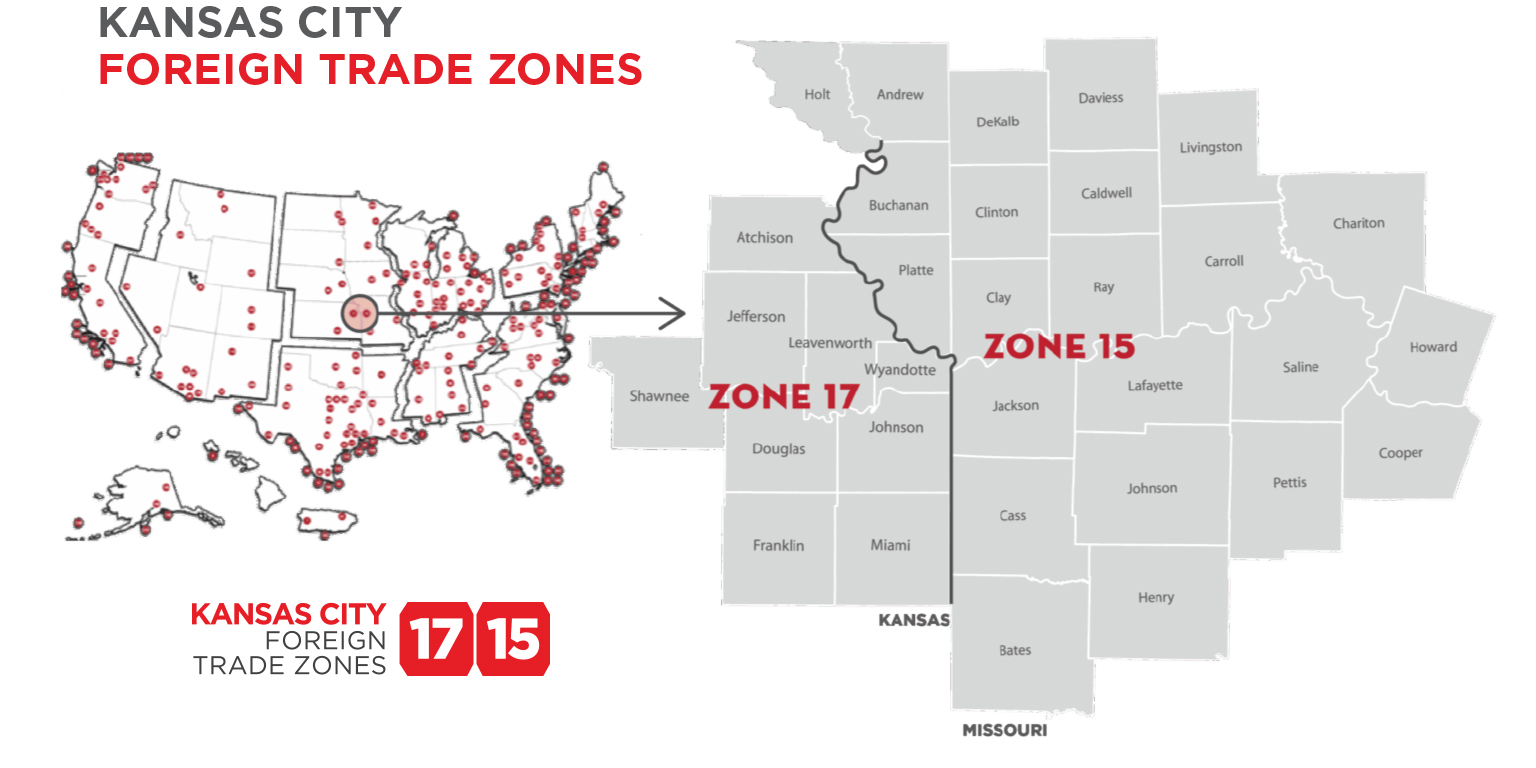
Kansas City Foreign Trade Zones (KCFTZ) is a nonprofit regional grantee of the U.S. Foreign-Trade Zone (FTZ) program and has served the Kansas City area since 1974. KC Foreign Trade Zones oversees one of the largest FTZ service areas in the country, sponsoring 23 counties in western Missouri (Zone 15) and nine counties in eastern Kansas (Zone 17).
KCFTZ’s broad coverage area and business-friendly approach enable faster FTZ approvals, supporting efficient manufacturing and distribution operations across the region.

KC FTZ Fast Facts
What is a U.S. Foreign Trade Zone?
U.S. Foreign-Trade Zones (FTZs) are designated areas within the United States that are treated as outside U.S. Customs territory, allowing companies to improve supply chain efficiency and reduce costs.
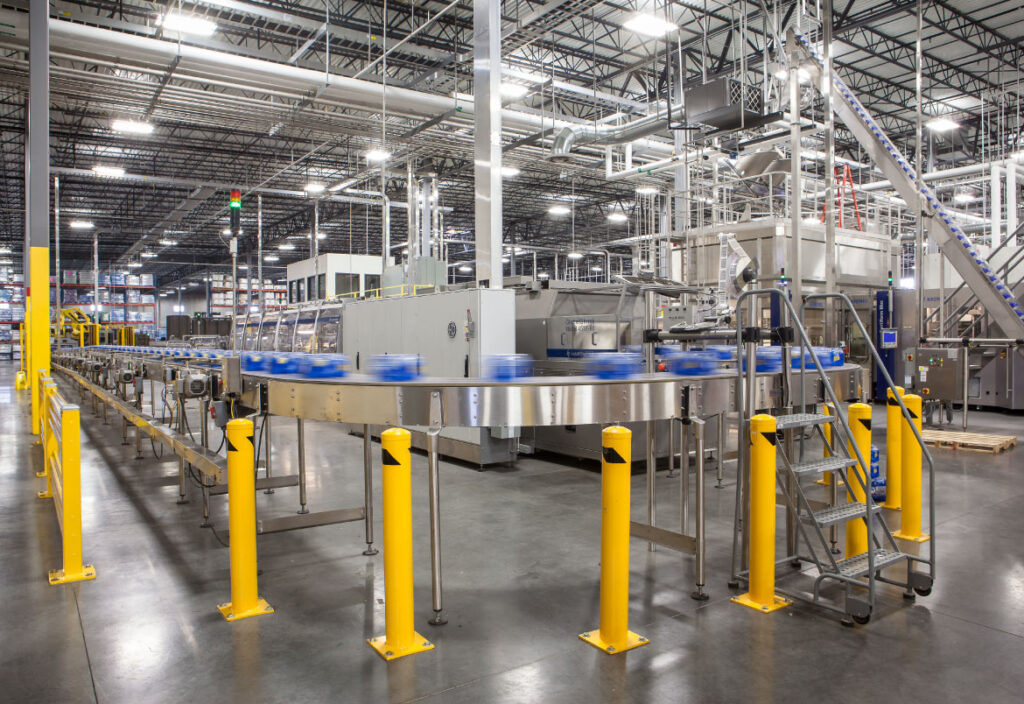
Businesses can assemble, process, store and distribute goods within an FTZ, and existing manufacturing or distribution facilities can often be designated as FTZ sites without relocating.
U.S. Foreign Trade Zone Benefits
Duty Deferral
Import duties, taxes and fees are paid only when goods leave the FTZ for U.S. consumption — not upon arrival — improving cash flow. There are no time limits on storage.
Duty Elimination
No duties are owed on goods exported from the FTZ. Damaged, obsolete or consumed inventory may be removed without duty liability.
Direct Delivery
Expedited Customs clearance at the port of entry allows goods to move directly into FTZ facilities. Cargo can be unsealed and entered into inventory without additional Customs supervision.
Weekly Entry & MPF Savings
Companies may pay lower duties on finished goods than on individual imported components, reducing overall tariff exposure.
Duty Reduction / Inverted Tariff
Eliminate or lower duties on foreign inputs or finished products manufactured in the zone.
Inventory Flexibility
Improved control of inventory timing helps companies manage Customs fees, supply chain disruptions and demand fluctuations.
Why Kansas City
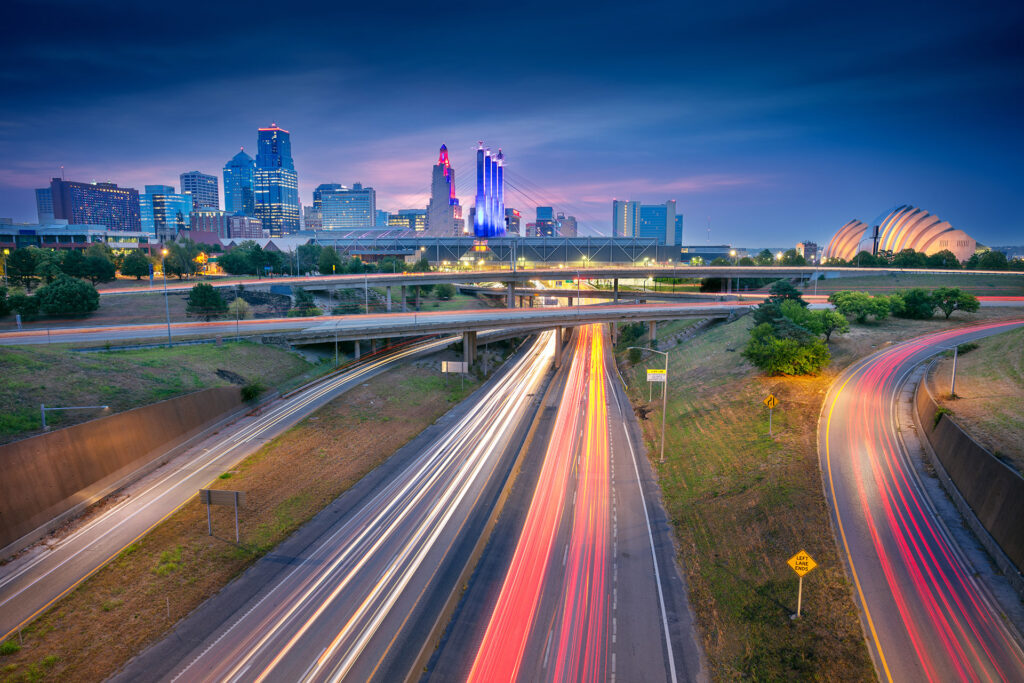
Two states. One powerful region.
With a central North American location, robust transportation network, strong utility infrastructure, available real estate, skilled workforce and low operating costs, Kansas City offers unmatched opportunity. That’s the power of OneKC.
U.S. Foreign Trade Zone FAQs
Why do FTZs matter?
Global Competitiveness
Improves cost position for U.S.-based operations competing in global markets.
Manufacturing Retention
Keeps value-added production, assembly, and processing in the United States.
Jobs & Investment
Supports U.S. job creation and attracts domestic and foreign direct investment.
Stronger Supply Chains
Improves speed, predictability, and Customs compliance in global logistics.
Who should consider an FTZ?
FTZs are a strong fit for companies that import goods for domestic distribution, export or manufacturing. They are especially valuable for companies that:
- Import raw materials or components for processing or assembly
- Handle high-volume or high-value imported goods
- Re-export large quantities of merchandise to international markets
- Need supply chain flexibility or tariff mitigation
- Want to reduce landed costs and improve cash flow through duty optimization
The following industries are the most active FTZ users:
- Vehicles / Vehicle parts
- Oil / Petroleum
- Electronics
- Machinery / Equipment
- Textiles / Footwear
- Pharmaceuticals
- Consumer Products
- Chemicals
Are there different types of FTZs?
Yes — Subzone and General Purpose.
Subzones are normally company controlled manufacturing or distribution facilities. This type of FTZ is most common in the Kansas City area. Subzones can be located outside of the 60-mile/90-minute limit.
General Purpose is often an industrial park or port complex with facilities for use by the general public. It must be located within 60 miles or 90 minutes from a U.S. Customs office.
What logistical benefits does an FTZ provide?
FTZs provide additional logistical benefits that include:
- Improved Customs & Border Protection compliance
- No limit on length of time merchandise can be in the FTZ
- Reduced inventory cycle time
- Lower security and insurance costs
- Improved inventory control and streamlined logistics
- Source component products at competitive prices
- Production equipment deferral
- Zone-to-Zone transfers
How does a company identify the potential benefits of an FTZ?
Companies should analyze potential savings based on import volumes and value, customs and MPF fees, export volumes, scrap losses, potential for inverted duty and other factors. Program costs can vary based on the size and nature of the FTZ operation and may include first-year application and activation, personnel training costs, grantee fees and U.S. Customs Bond. If the company decides to move forward, KCFTZ can support the application and activation process.
What is the application process for a Subzone/Usage-driven site?
If a company is interested in pursuing FTZ designation for its facility, the process is straightforward and can be completed in as little as 30 days, with a maximum time of five months. The KCFTZ can provide guidance on procedure and assist in preparing the application.
Are there any logistical benefits of an FTZ?
Yes, FTZ to provide additional logistical benefits that include:
- Improved Customs & Border Protection compliance - FTZs are recognized as a “best industry practice” by USCBP because they significantly improve supply chain security.
- No limit on length of time merchandise can be in the FTZ
- Reduced inventory cycle time
- Lower security and insurance costs
- Improved inventory control and streamlined logistics
- Source component products at competitive prices
- Production equipment - deferral
- Zone-to-Zone transfers
What is the application process for a Subzone/Usage-driven site?
If a company is interested in pursuing FTZ designation for its facility, the process under the FTZ Board's 2012 regulations is quick (as little as 30 days with a maximum time of 5 months, depending on the specific procedure used by the applicant) and straightforward. The GKCFTZ can provide guidance on specific procedure to follow and assist in preparing the application.
How do I gain production authority?
After completing a cost-benefit analysis, companies can submit a Production Notification to the FTZ Board.
The standard timeframe for the FTZ Board to authorize a Production Notification is 120 days. If the FTZ Board chooses not to authorize certain activity at the end of the notification process, the applicant may choose to use the more extensive application process.
What is the U.S. Foreign-Trade Zones Board?
The U.S. Foreign-Trade Zones Board is a federal body that authorizes and regulates FTZ operations. The U.S. Foreign-Trade Zones Board is composed of the Secretary of Commerce (chair) and the Secretary of the Treasury. The Commissioner of U.S. Customs and Border Protection also plays a key advisory role on customs security, control and resource matters. Most matters are handled by a Committee of Alternates, made up of senior officials from the Departments of Commerce and Treasury.
Let's Talk FTZ in KC
Connect with Kansas City Foreign Trade Zones to tap into one of the nation’s leading logistics hubs.
Chris Gutierrez


President
KCFTZ
gutierrez@OneKC.org
816.591.7311
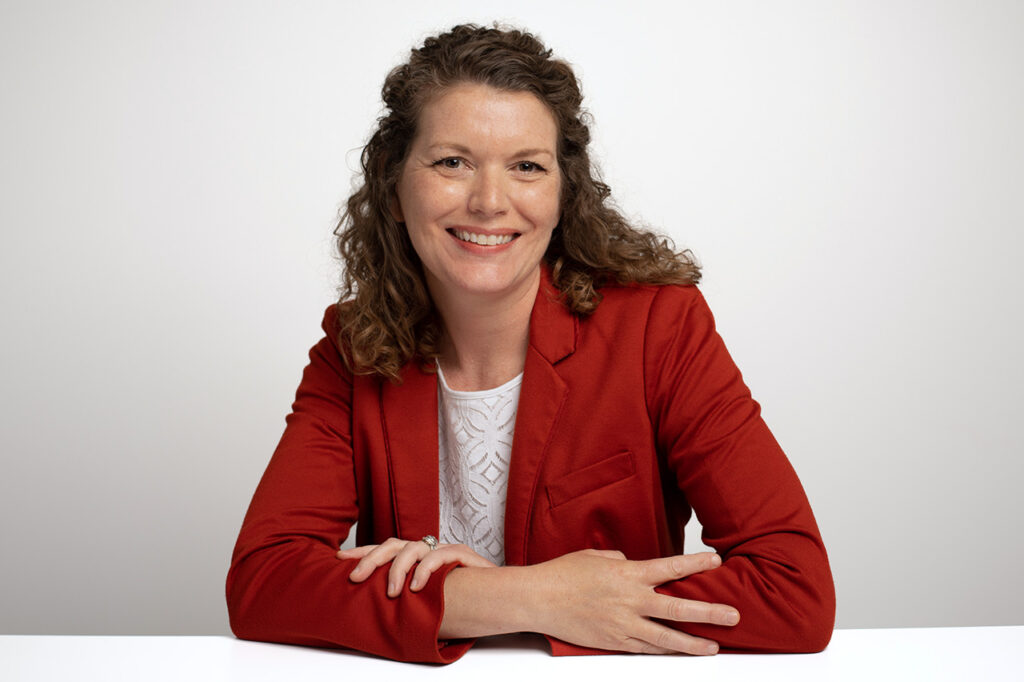
Mary Rooney
Vice President
KCFTZ
rooney@OneKC.org
913.488.1061
Site Selection
Data & Resources
KCADC Newsroom
KCADC Events
About KCADC


© 2026 KCADC. All rights reserved.